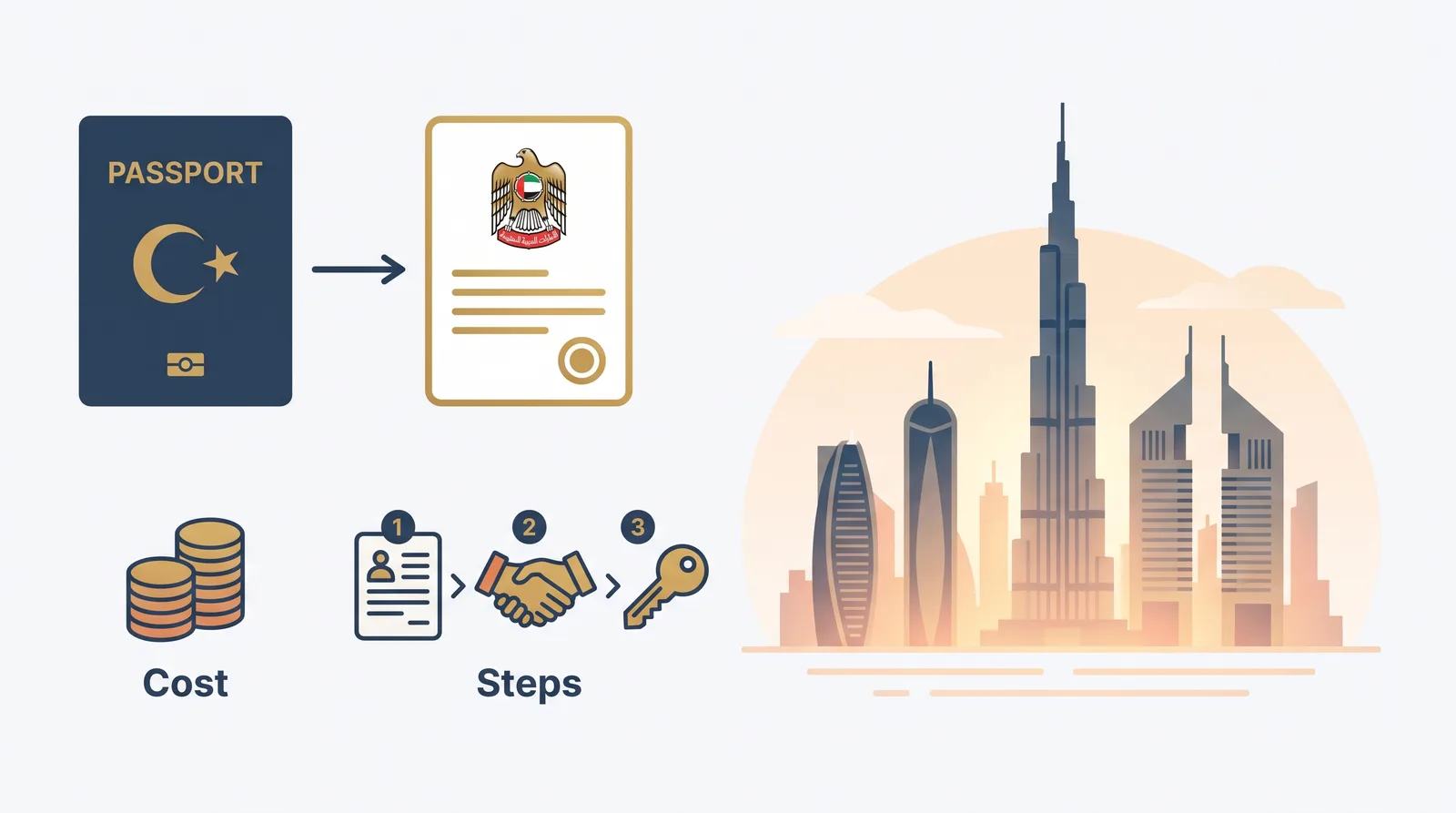
Topic Summary
Choose the Right Jurisdiction From Day One
Dubai operates across mainland, free zone, and offshore structures, each with different ownership rights, visa allocations, and permitted activities. Selecting a jurisdiction based purely on cost without checking operational fit can create structural limitations that are costly to reverse later.
Match Your License Activities to Your Revenue
Every Dubai license is tied to specific regulated activity categories, and a mismatch between your license and what you actually invoice for can trigger compliance reviews. With stricter bank and Federal Tax Authority vetting in 2026, precision at incorporation is more important than ever.
Budget Beyond the License Fee
The license price is just one component of your total setup cost — Emirates ID fees, visa allocation, medical tests, and office space (even virtual) all add up. New 2026 tax and VAT rules also make proper bookkeeping a necessary expense that founders should factor into their runway from the start.
Understand Free Zone Limitations Before Committing
Free zones offer 100% foreign ownership and international flexibility, making them well-suited for businesses serving global clients, but they typically restrict direct retail or trading activity within the UAE mainland. Founders should map where their clients are located and how revenue is generated before choosing this route.
Don't Let Process Uncertainty Cause Costly Delays
Many first-time founders hesitate not because of market conditions but because of uncertainty around compliance and administrative processes. A single structural misstep, such as selecting the wrong license category, can stall operations before a business even launches.
Plan for Banking Compliance Early On
Banks in Dubai conduct detailed assessments that cross-reference your license activities against your actual transactions. Inconsistencies between your stated business activity and your financial records can slow or block account approvals, making accurate setup documentation a banking prerequisite, not just a legal one.
Dubai has positioned itself as one of the most supportive environments globally for entrepreneurs. For four consecutive years, the United Arab Emirates (UAE) has ranked first in the National Entrepreneurship Context Index. Infrastructure continues to expand, trade corridors are strengthening, and districts such as Dubai South are being developed around long-term economic planning.
Yet even in a high-performing ecosystem, early structural decisions determine how smoothly a business launches. This raises an important consideration for first-time founders: what are the most common business setup mistakes in Dubai? For more detail, see our guide on common business setup mistakes in Dubai.
Many founders select a jurisdiction that does not fully align with their operations, choose business activities that do not reflect their revenue model, or underestimate the overall costs involved in a company formation. These early decisions can require amendments if they are not structured properly from the beginning.
Hesitation is often linked not to market conditions but to uncertainty around processes and compliance. A single structural misstep, such as selecting the wrong license category, can slow progress before operations start.
Understanding common business setup mistakes in Dubai allows founders to align correctly at incorporation and move forward with operational clarity.
Mistake #1: Picking the wrong home for your business
Dubai operates across multiple jurisdictions, including mainland, free zones, and offshore structures. One of the biggest business setup mistakes founders in Dubai make is choosing a jurisdiction based purely on price without checking if it actually lets them do what they want. For more detail, see our guide on common free zone setup mistakes in Dubai. For more detail, see our guide on avoiding free zone license rejection in Dubai. For more detail, see our guide on what to do if your Dubai startup faces bankruptcy. For more detail, see our guide on costly mistakes founders make in Dubai.
If you plan to open a retail showroom serving customers directly on Sheikh Zayed Road, you will typically require a mainland license. If you are building a software development company serving international clients, a free zone structure is often more suitable due to the 100% foreign ownership and international operating flexibility.
Jurisdiction selection affects ownership rights, visa allocation, office requirements, banking processes, and the scope of permitted activities. A decision made purely on price can create structural limitations later. Founders should evaluate where their clients are located, how revenue will be generated, and whether local UAE business operations are required before selecting a setup pathway. For more detail, see our guide on challenges of opening a new business in the UAE. For more detail, see our guide on overcoming business setup challenges in the UAE.
Mistake #2: The activity mismatch
Every license is tied to specific activities. Business activities are regulated into categories. Each activity under a license permits specific operations. If your selected activity does not match what you invoice for, amendments may be required. A common startup mistake UAE founders encounter is selecting a general activity that does not fully cover their operations.
In 2026, the Federal Tax Authority and banks have created stricter vetting processes. If your license says consultancy, but your bank statements show trading, this may trigger additional compliance review during banking assessments. It's better to be precise from day one.
Mistake #3: Underestimating the all the costs
People often see the license price and think that's the total cost. In reality, founders often overlook Emirates ID fees, visa allocation, medical tests for your residency visa, or the cost of a physical office space (even a virtual one).
Starting January 1, 2026, new tax rules and VAT amendments mean you also need to account for proper bookkeeping. If you don't budget for these, your runway budget can erode the working capital faster than expected.
Fast facts: The 2026 setup landscape
Feature | Mainland | Free Zone (Dubai South Business Hub Free Zone) |
Ownership | Up to 100% foreign ownership for many activities, subject to regulatory approval | 100% Foreign Ownership across permitted activities |
Market Access | Direct access to the UAE local market | International focus with structured local access pathways |
Corporate Tax | 9% on profits above AED 375,000 | 0% corporate tax on eligible Free Zone income; 9% where standard Corporate Tax applies |
Office Requirement | Physical space required (Ejari) | Flexi-desk and scalable workspace options |
Beyond ownership and tax positioning, founders should also consider process clarity, visa scalability, and long-term operational flexibility. As a master-planned district, Dubai South is designed to facilitate trade, logistics, and professional services within an integrated economic corridor.
Mistake #4: Doing it all manually
In a digitally advanced economy, manual incorporation processes can slow progress unnecessarily. A major business setup mistake Dubai founders make is not using digital tools. They spend days driving around when they could have done everything from their laptop.
This is where a structured digital setup model becomes important. Dubai South Business Hub Free Zone offers a fully digital assistance pathway. Founders can use the cost calculator for business setup on the official website to obtain upfront cost visibility and plan with accuracy. A company name check tool is also available to confirm availability and regulatory alignment before submission. For more detail, see our guide on Dubai company setup before your business plan is ready.
Dubai South Business Hub Free Zone operates a structured digital setup pathway. Founders can review costs, verify company names, and complete applications online. The process is defined in four clear stages, reducing repetition and limiting administrative uncertainty. This allows founders to focus on building operations rather than navigating fragmented procedures.
Mistake #5: Forgetting the post-setup life
Obtaining the license is only the starting point. The real work is staying compliant. With the corporate tax rate of 9% on profits over AED 375,000 now firmly in place for 2026, proper accounting and registration are essential to maintaining compliance.
Small businesses can get Small Business Relief (SBR) if their revenue is below AED 3 million, but you still have to register and file. Failing to complete registration and filing requirements is one of the startup mistakes UAE founders later need to rectify, often resulting in regulatory penalties for late compliance.
The smart founder checklist
Check Your Name: Use the tool at Dubai South Business Hub Free Zone to see if your preferred business name is available.
Know Your Activity: Make sure it matches your bank account and your business plan.
Understand Location Advantage: Remember that being near Al Maktoum International Airport is a huge win for logistics, but you need to be in the right zone to use that proximity.
Digital First: Prioritise digital submissions where available.
Visa Planning: Find out how many visas you really need. Ensure the visa allocation aligns with actual operational needs. The Dubai South Business Hub Free Zone website also provides detailed information on the applicable fees.
Conclusion
Dubai has strategically invested in aviation, trade corridors, and economic diversification. With the expansion of Al Maktoum International Airport, districts such as Dubai South sit within a long-term development strategy aligned with national growth objectives.
However, sustainable success begins with structure. Avoiding business setup mistakes in Dubai requires clarity in jurisdiction selection, accurate activity alignment, realistic cost planning, and ongoing compliance awareness.
When those foundations are established correctly, founders move from incorporation to operation with greater confidence and fewer disruptions.
Useful Resources
Citations
UAE Ministry of Economy and Tourism.. moet.gov.ae. MOET UAE, 2024.
Federal Tax Authority.. tax.gov.ae. FTA UAE, 2023.
Dubai Airports.. dubaiairports.ae. Dubai Airports, 2024.
UAE Cabinet.. uaecabinet.ae. UAE Cabinet, 2023.
UAE Government Portal.. u.ae. UAE Government, 2024.
Frequently Asked Questions