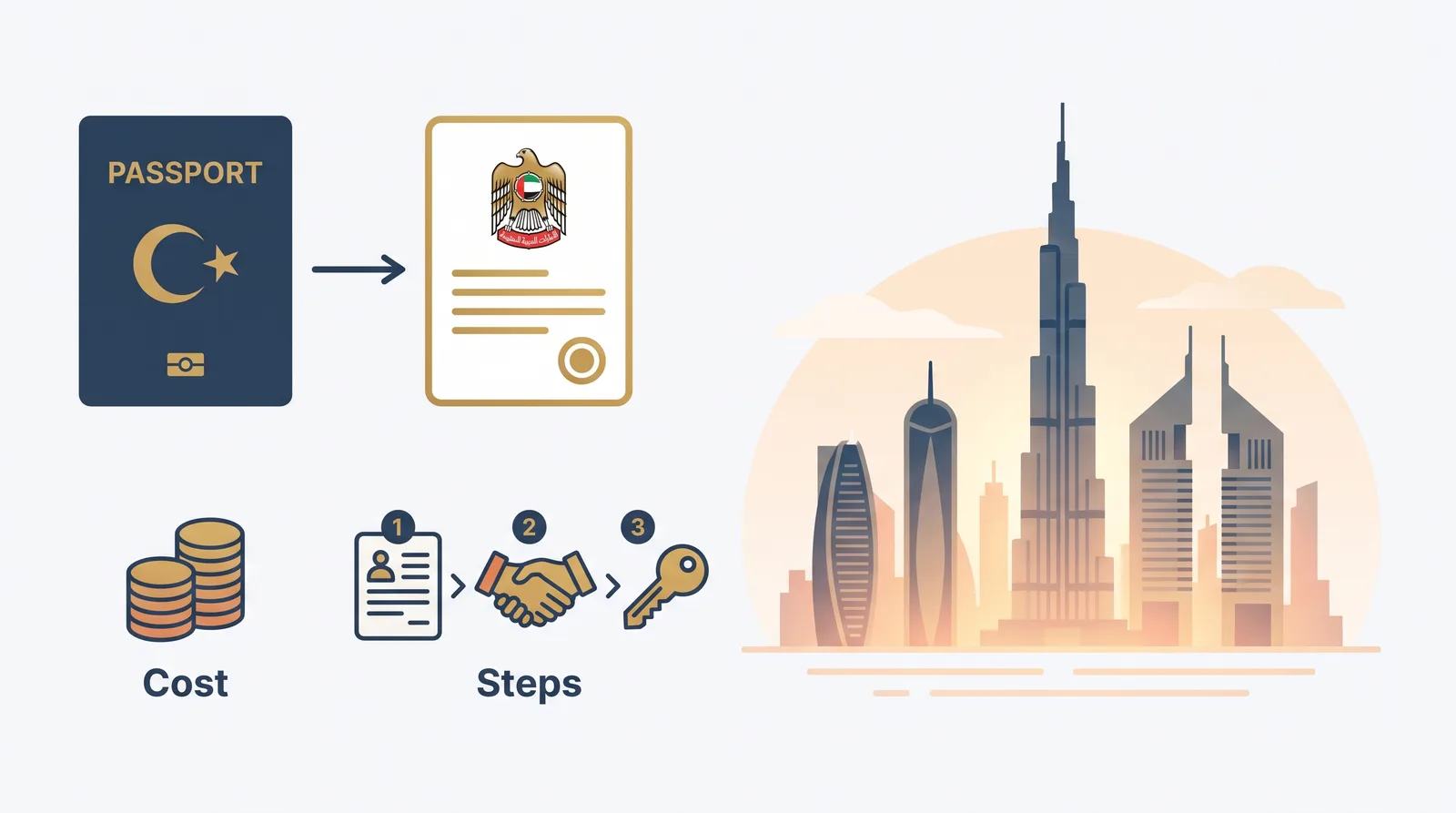
Topic Summary
Compare Corporate Tax Rates Before Moving
Germany's combined corporate tax can exceed 30% once trade tax is included, while the UAE charges just 9% on mainland profits above AED 375,000. Qualifying free zone income can attract 0%, making the tax differential a primary driver for relocation.
Understand You Cannot Simply Transfer a GmbH
There is no formal process to convert a German GmbH directly into a UAE entity, so most founders open a new UAE company and run both in parallel during a transition period. The German entity may need to be wound down or kept dormant depending on ongoing EU revenue streams.
Separate Tax Residency from Company Registration
Registering a UAE company and establishing personal tax residency are two distinct legal steps that must be planned together, not sequentially. Treating them as separate decisions is one of the most common mistakes German founders make during relocation.
Leverage the UAE-Germany Double Taxation Agreement
The UAE and Germany have a Double Taxation Agreement in force that reduces withholding tax risk on cross-border payments between the two countries. This makes it more practical to maintain EU revenue streams while billing through a UAE entity.
Factor in Licensing Costs and Setup Speed
UAE free zone licenses start from AED 12,500, and same-day approval is available at hubs like Dubai South Business Hub. This contrasts sharply with Germany's multi-week notarial process required to establish a GmbH.
Use the Company License to Secure Residency
A UAE company license gives founders a direct path to an investor residency visa, including the option to sponsor family members. Germany offers no equivalent direct link between company registration and personal residency status.
Consider Operational Geography, Not Just Tax
For businesses with significant Gulf or Asian client bases, Dubai can offer genuine logistical and relationship advantages over Frankfurt or Munich. The USD 35 billion expansion of Al Maktoum International Airport further strengthens Dubai's position as a regional business hub.
In 2026, combined corporate tax in Germany can exceed 30% once trade tax is added (Federal Tax Authority, 2023). The UAE charges 9% on mainland profits above AED 375,000. Qualifying free zone income can attract 0%. German VAT sits at 19%; UAE VAT is 5%. UAE free zone licenses start from AED 12,500. And Al Maktoum International Airport is undergoing a USD 35 billion expansion (Dubai South, 2024). Those 6 figures tell you why from Germany to the UAE: business relocation considerations are being taken seriously by more founders every year.
This guide covers the key points: legal structures, tax rules, licensing, visa options, and the mistakes that catch German founders off guard before they make the move.
What Business Relocation from Germany to the UAE Means
Business relocation from Germany to the UAE means moving your company's legal base, operations, or tax residency to the UAE. German founders do this to access lower corporate tax rates, 100% foreign ownership in free zones, and a faster-growing market in the Gulf region.
What Relocation Actually Means in Legal Terms
There is no formal process to transfer a German GmbH directly into the UAE. Most founders open a new UAE entity and run both companies in parallel for a period. That parallel period is where the planning gets complicated. For more detail, see our guide on why European companies choose the UAE for expansion.
The German company may need to be wound down or kept dormant, depending on whether you still have EU revenue streams. Tax residency and company registration are two separate decisions. You must plan them together, not one after the other.
A Munich-based software consultancy, for example, opens a free zone company at Dubai South Business Hub (DSBH), shifts its billing there, and keeps the German GmbH for existing EU contracts while it winds down over 12 months. That is a common and workable path. The UAE Corporate Tax Law sets the mainland rate at 9% (Federal Tax Authority, 2023). Free zone qualifying income can attract 0%, subject to Federal Tax Authority (FTA) conditions.
Why This Decision Is Growing in 2026
Rising energy costs and complex rules in Germany are pushing founders to look at options. The UAE signed a Double Taxation Agreement with Germany, which cuts withholding tax risk on cross-border payments.
Gulf and Asian client bases are growing. For many service businesses, Dubai is a better hub than Frankfurt or Munich. And a UAE company license gives founders a path to personal tax residency outside the EU.
The 4 main drivers:
Germany's combined corporate tax rate above 30%
UAE-Germany Double Taxation Agreement in force
Gulf client bases that are easier to serve from Dubai
UAE residency tied directly to a company license
A Berlin e-commerce founder with 60% of clients in the Gulf finds logistics and client meetings faster from Dubai than from Germany. That is a practical reason, not just a tax one.
Germany vs UAE: Key Business and Tax Factors
Feature | Germany | UAE (Free Zone) |
|---|---|---|
Corporate tax rate | 15% base plus trade tax 7–17%; combined rate above 30% in most cities | 0% on qualifying free zone income; 9% on mainland profits above AED 375,000 |
Personal income tax | Progressive rate; marginal rate above 42% for high earners | No personal income tax (u.ae) |
Foreign ownership | 100% permitted; no local partner needed | 100% in free zones; no local sponsor needed (u.ae) |
VAT rate | 19% on most goods and services | |
Time to set up a company | Several weeks; notarial steps required for a GmbH | Same-day approval available at DSBH; license from AED 12,500 |
Residency visa linked to business | No direct link between company registration and personal residency visa | Investor residency visa tied to the company license; family sponsorship available |
Why German Entrepreneurs Are Reassessing Their Base
German entrepreneurs are reassessing their business base because combined corporate tax in Germany can exceed 30%, energy and compliance costs are rising, and the UAE offers a 9% mainland rate with 0% on qualifying free zone income, 100% foreign ownership, and no personal income tax.
The German Tax and Cost Picture
Germany's corporate tax (Körperschaftsteuer) sits at 15%. Add trade tax (Gewerbesteuer) of 7–17% depending on the city, and the combined rate passes 30% in most urban areas (OECD data). That is before VAT at 19% and cross-border EU compliance costs.
The 4 cost drivers pushing founders to look elsewhere:
Combined corporate tax above 30% in most German cities
VAT at 19% with complex EU cross-border rules
Energy costs for manufacturing and logistics still elevated post-2022
Works council rules, social insurance, and employment law adding weight
A Hamburg logistics firm paying 32% combined corporate tax and €40,000 a year in compliance fees models its UAE free zone equivalent at 0% qualifying income tax with simpler annual audit needs. The numbers shift fast.
What the UAE Offers Instead
UAE corporate tax is 9% on mainland profits above AED 375,000. Free zone qualifying income can be 0% under FTA conditions. There is no personal income tax in the UAE at all (u.ae). A Frankfurt consultant earning EUR 200,000 a year pays no personal income tax on UAE-sourced income once UAE tax residency is set up, compared to a marginal rate above 42% in Germany.
100% foreign ownership is permitted in UAE free zones without a local sponsor. And a UAE residency visa tied to a company license gives founders legal residency and a path to long-term stay. Free zone companies at DSBH can access the 0% qualifying income rate. German founders whose clients are mostly outside the UAE will generally find the free zone structure more tax-efficient than a mainland setup.
Key Steps to Relocate Your Business from Germany to the UAE
To relocate a business from Germany to the UAE, you need to choose a legal structure, pick a free zone or mainland license, register your company, open a UAE bank account, apply for a residency visa, and handle your German company exit correctly. Plan for 4–8 weeks from start to license.
Step 1: Choose Your UAE Structure
Most German founders with international client bases choose a free zone structure first. Here are the 3 main options:
Free zone LLC: 100% foreign owned; best for international clients; cannot sell directly to UAE mainland buyers
Mainland LLC via DET: full UAE market access; 9% tax on profits above AED 375,000; no foreign ownership cap since 2021
Branch of a foreign company: keeps the German parent as the legal entity; useful for short-term project work
A Stuttgart B2B SaaS company with clients in Saudi Arabia, India, and the UK sets up a free zone company at DSBH rather than a mainland entity because all revenue comes from outside the UAE. That is the right call for that client profile. You can explore business activities at DSBH to confirm your activity is covered before you commit.
Step 2: Register, License, and Bank
A Düsseldorf marketing founder uses the DSBH cost calculator online to compare license packages before committing, then completes registration and name reservation in a single day. The process is straightforward once you know your activity.
The 4 steps in order:
Step 1, reserve your trade name: Use the DSBH portal; same-day approval is available
Step 2, submit your activity and pay the fee: Licenses start from AED 12,500
Step 3, open a UAE corporate bank account: Most banks need a business plan; allow 4–12 weeks
Step 4, apply for your investor residency visa: Issued once the license is in place
Step 3: Exit Germany Cleanly
Finanzamt notification. You must tell the German tax office (Finanzamt) that your tax residency is changing. Germany taxes worldwide income until residency formally ends. Do not skip this step.
Exit tax. Germany applies a Wegzugsteuer (exit tax) on unrealised gains in company shares when a shareholder leaves German tax residency. This applies to shareholdings above 1%. A Leipzig founder who owns 100% of a GmbH worth EUR 1 million faces an exit tax assessment on the unrealised gain before they can cleanly shift tax residency to the UAE.
GmbH status. Keep the German GmbH active only if you have ongoing EU contracts that need it. A dormant company still carries filing duties. Plan the wind-down timeline early.
Sequencing. Get German tax advice before you sign any UAE documents. The order of steps matters for your exit tax position. Getting it wrong can cost more than the UAE tax saving is worth.
How to Set Up in a UAE Free Zone as a German Founder
German founders set up in a UAE free zone by selecting a license type, registering a company name, submitting passport copies and a business plan, paying the license fee, and applying for a residency visa. Dubai South Business Hub Free Zone offers packages from AED 12,500 with same-day approval.
What DSBH Offers German Founders
DSBH sits next to Al Maktoum International Airport, which is undergoing a USD 35 billion expansion (Dubai South, 2024). That location matters for trading, logistics, and consulting businesses that need fast access to Gulf and global routes.
License categories cover 4 main areas:
Trading: import, export, and general trade
Services and consulting: professional and advisory work
ICT: software, technology, and digital services
Logistics: freight, storage, and supply chain
A Cologne import-export firm sets up a trading license at DSBH to use the proximity to Al Maktoum International Airport and Jebel Ali Port for Gulf distribution. Flexi-desk options mean founders do not need to rent a full office from day one. Visa packages are tied to the license, giving founders and their families a path to UAE residency.
Documents You Need to Get Started
A Munich freelance consultant transitioning to a UAE free zone company submits only a passport copy and activity description to begin registration at DSBH. The document list is short:
Passport copy valid for at least 6 months
Recent passport photo on a white background
Business activity description matching the DSBH approved list
No local UAE sponsor needed in the free zone
100% foreign ownership is permitted in UAE free zones (u.ae). You do not need a UAE national partner or agent to hold your shares.
What You Must Comply With in the UAE
UAE companies must register for corporate tax with the Federal Tax Authority, file annual returns, register for VAT if turnover exceeds AED 375,000, keep financial records for 7 years, and meet Qualifying Free Zone Person conditions to access the 0% rate. Free zone companies cannot sell directly to the UAE mainland market.
Corporate Tax and VAT Rules
Corporate tax. Every UAE company must register with the FTA once it is set up, whatever its turnover. A Stuttgart consulting firm sets up a DSBH free zone company and registers for corporate tax with the Federal Tax Authority on day one. It earns all income from foreign clients, meets the qualifying conditions, and pays 0% on that income.
VAT. VAT registration is needed once taxable turnover exceeds AED 375,000 in a 12-month period. The rate is 5%, well below Germany's 19%. Late VAT registration carries a penalty of AED 10,000 (Federal Tax Authority). Do not miss the threshold.
Record keeping. Keep financial records for 7 years. The FTA can ask to see them. Good records are also what you need to prove qualifying free zone status if you are audited.
Free Zone Rules German Founders Miss
These are the 4 most common gaps:
Free zone companies cannot sell directly to UAE mainland buyers without a distributor or customs entry
Qualifying Free Zone Person status needs most income from qualifying activities with qualifying counterparties
Substance rules apply: real operations and staff must exist in the free zone
German founders serving UAE mainland clients should add a mainland DET license
A Berlin e-learning company sets up in a free zone but later finds its UAE school clients count as mainland counterparties. It adds a mainland education license to sell to them directly. That is a fixable problem, but it costs time and money. Plan your client base before you choose the structure.
Is the 0% free zone rate guaranteed?
No. The 0% qualifying income rate applies only if your company meets the Qualifying Free Zone Person conditions the FTA sets. Those conditions cover the type of income, who you earn it from, and whether your company has real substance in the free zone. Meeting the conditions is your responsibility, not automatic.
Visa and Residency Options Tied to Your UAE Company
A UAE free zone company license gives the founder an investor residency visa, which grants UAE tax residency and the right to live and work in the UAE. Visa packages at DSBH are tied to the license. Founders can also sponsor family members once their own visa is issued.
Investor Visa and Tax Residency
Investor visa. The investor residency visa is issued to the founder as the license holder. It is not a freelance visa. It is tied to the company and gives you the legal right to live in the UAE.
Tax residency. UAE tax residency is set up when you spend 183 days or more in the UAE in a calendar year, or when the UAE is your primary home (u.ae). The UAE-Germany Double Taxation Agreement is in force, which helps manage the transition period.
German exit. A Frankfurt founder applies for a UAE investor visa through DSBH, moves her primary home to Dubai, and formally ends German tax residency by telling the Finanzamt and closing her German flat. That is the clean path. German tax residency ends only when no home is available in Germany and fewer than 183 days are spent there per year.
Family Sponsorship and Long-Term Stay
Once your investor visa is issued, you can sponsor a spouse and children for UAE residency. DSBH residency visa packages can include allocations for employees as well as the founder. Key benefits:
Sponsor a spouse and children for UAE residency
UAE Golden Visa: 10-year residency for qualifying investors (u.ae)
Emirates ID issued alongside the visa; needed for banking and tenancy
Employee visa allocations available within DSBH packages
A Munich couple where one partner holds the DSBH investor visa sponsors the other as a dependent, giving both legal UAE residency and Emirates ID within 4 weeks of the company being set up. That timeline is realistic when documents are in order.
Common Mistakes German Founders Make When Relocating
German founders most often make mistakes around German exit tax timing, free zone trading limits, UAE bank account delays, and treating UAE tax residency as automatic. Planning the German exit before the UAE setup, not after, avoids the biggest legal and financial risks.
Exit Tax and Timing Errors
Exit tax. Germany's Wegzugsteuer applies at the point you leave German tax residency, not when you sell your shares. It covers shareholdings above 1%. Founders are often caught off guard by a tax bill on gains they have not yet realised in cash.
Timing. A Dresden founder sets up a DSBH company in January but does not formally end German tax residency until October. That leaves 10 months of UAE income potentially within German tax reach. The overlap period is the danger zone.
Clearance. Not getting a German tax clearance letter before closing the GmbH can result in unexpected assessments years later. Get the letter. Keep it. The safe sequence: German tax advice first, then build the UAE setup around the exit plan.
Banking and Substance Gaps
These are the 4 most common banking and substance mistakes:
Not allowing 4–12 weeks for UAE bank account opening; new companies cannot invoice without one
Failing to prepare a reference letter from a German bank before applying
Holding a UAE license while living full-time in Germany; this does not create UAE tax residency
Having no real activity in the free zone; this risks losing the qualifying income status
A Hamburg IT founder opens a DSBH company but spends 11 months a year in Germany. The company holds a UAE license but the founder remains a German tax resident and loses the personal tax benefit entirely. The license is not enough. You must genuinely move. DSBH's business support services can help you plan the substance requirements from the start.
What documents do UAE banks need from new free zone companies?
Most UAE banks need a valid trade license, a business plan showing projected revenue and client sources, a passport copy, and proof of address. Some ask for a reference letter from your existing bank. Prepare all of these before you apply. Banks can take 4 to 12 weeks to approve a new corporate account, so start early.
From Germany to the UAE: Is It the Right Move for Your Business?
Moving a business from Germany to the UAE works best for founders with international clients, high German tax burdens, and the ability to spend 183 or more days a year in the UAE. It is less
Frequently Asked Questions