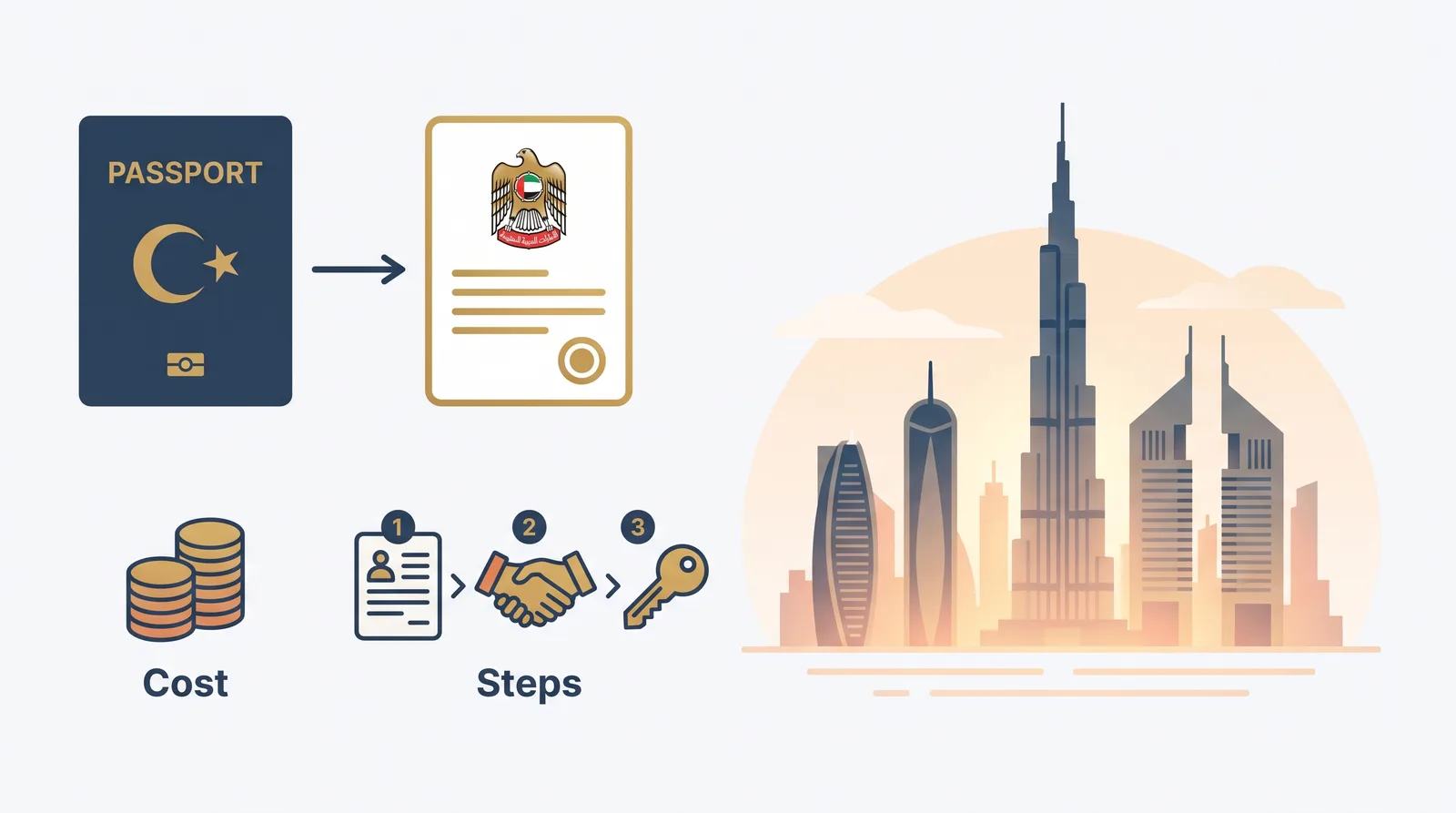
Topic Summary
100% Foreign Ownership With No Local Sponsor
Dubai South Business Hub is a free zone, meaning Omani owners retain full ownership of their UAE company without needing a local Emirati partner. This removes a major barrier that historically made mainland UAE setup complicated for foreign investors.
Corporate Tax Can Be 0% for Qualifying Companies
The UAE charges 9% corporate tax on non-qualifying income, but free zone companies that meet Federal Tax Authority conditions pay 0%. Omani business owners who structure correctly can significantly reduce their tax burden compared to operating solely from Oman.
Trade Licenses Start From AED 12,500
A Dubai South Business Hub trade license begins at AED 12,500, making entry costs relatively accessible for small and mid-sized Omani businesses. The license can be issued in as little as 3 working days, allowing owners to start operating quickly.
Access to 130+ Country Tax Treaty Network
The UAE holds tax treaties with over 130 countries, simplifying cross-border invoicing and reducing withholding tax exposure for international transactions. This is a practical advantage for Omani exporters billing clients in Europe, Asia, or North America.
Three Relocation Structures to Choose From
Omani owners can fully wind down their Oman entity and move all operations to the UAE, run both entities in parallel, or register a UAE branch of the existing Oman company. The right structure depends on whether the business still needs a GCC domestic presence.
Strategic Location for Logistics and Aviation
Dubai South sits adjacent to Al Maktoum International Airport, Jebel Ali Port, and Expo City, giving businesses direct access to one of the world's busiest trade corridors. This makes the hub especially attractive for Omani logistics, freight, and trading companies.
Investor Visas Valid for Up to Five Years
Residency visa packages at Dubai South Business Hub offer either 2-year or 5-year investor visas, providing long-term stability for owners and key staff relocating from Oman. UAE banking access for USD and EUR accounts is an additional practical benefit that comes with establishing residency.
In 2026, over 45,000 foreign investors registered new companies in the UAE, and Omani business owners are among the fastest-growing group making the move (u.ae, 2026). UAE corporate tax sits at 9% on non-qualifying income. Free zone companies can pay 0% if they meet Federal Tax Authority conditions (Federal Tax Authority, 2026). UAE trade licenses at Dubai South Business Hub start from AED 12,500. Setup can complete in 3 working days. The UAE holds tax treaties with over 130 countries (Ministry of Finance, 2025). Investor visas are valid for 2 or 5 years depending on your package.
This guide walks you through every step of relocating a business from Oman to the UAE via Dubai South Business Hub: what it costs, what papers you need, how long it takes, and what to watch out for along the way.
What Relocating a Business from Oman to the UAE Means
Relocating a business from Oman to the UAE means closing or restructuring your Omani entity and setting up a new licensed company in the UAE, often in a free zone such as Dubai South Business Hub. You get a UAE trade license, 100% foreign ownership, and direct access to global markets from a single base.
Oman to UAE Relocation: Key Facts at a Glance
Item | Detail |
|---|---|
License fee from | AED 12,500 at DSBH |
Corporate tax rate | 9% on non-qualifying income; 0% for Qualifying Free Zone Persons |
VAT rate | 5% standard rate; AED 375,000 registration threshold |
Foreign ownership | 100% in DSBH free zone; no local sponsor needed |
Setup timeline | As fast as 3 working days for the license |
Tax treaty countries | 130+ countries (Ministry of Finance, 2025) |
Investor visa duration | 2 or 5 years depending on DSBH package |
What the Move Actually Involves
Most Omani owners set up a brand-new UAE entity rather than legally transferring the Oman company. The three main options look like this:
Full relocation: wind down the Oman entity and move all operations to the UAE
Parallel structure: keep the Oman entity active and add a UAE company alongside it
Branch setup: register a UAE branch of the existing Oman company (less common for free zones)
DSBH issues a free zone license, not a mainland DET license. That means you can trade internationally and within the free zone. For direct UAE mainland sales, you need a local distributor or a separate mainland structure.
A Muscat logistics firm, for example, might set up a new DSBH free zone entity to handle international freight contracts while keeping the Oman entity for GCC domestic work. DSBH licenses start from AED 12,500 and can be ready in 3 working days.
Why Omani Owners Are Making This Move
The pull factors are concrete. Here is what drives most relocations:
100% foreign ownership in the free zone; no local sponsor needed
UAE tax treaties with 130+ countries for simpler cross-border invoicing
Al Maktoum International Airport and Jebel Ali Port give unmatched logistics reach
UAE banking is easier to access for international USD and EUR transactions
DSBH sits next to Expo City and the Dubai South aviation and logistics corridor
A Muscat-based trading company relocating to DSBH can open a UAE corporate bank account and invoice European clients in USD without currency controls. That alone removes a friction point that holds back many Omani exporters.
Key Facts at a Glance: Oman to UAE Business Relocation
A UAE free zone company at Dubai South Business Hub gives Omani owners 100% foreign ownership, a UAE trade license, and access to a 0% corporate tax rate if qualifying conditions are met. Setup takes as little as 3 working days. License fees start from AED 12,500, with residency visa packages available.
Quick Numbers to Know
License fee from | AED 12,500 at DSBH |
|---|---|
Corporate tax | 9% on non-qualifying income; 0% for Qualifying Free Zone Persons – Federal Tax Authority |
VAT rate | 5% standard; register at AED 375,000 turnover |
Late VAT registration penalty | AED 10,000 |
Tax treaty countries | 130+ – Ministry of Finance, 2025 |
Investor visa duration | 2 or 5 years depending on package |
Setup timeline | License in 3 working days; full setup in 3 to 4 weeks |
Important Considerations Before You Apply
A few things catch Omani owners off guard. Worth knowing before you start:
0% corporate tax is not automatic. You must meet the Qualifying Free Zone Person conditions the FTA sets
The bank account is separate from the license. Allow 2 to 6 weeks on top of your setup timeline
Arabic Oman company papers need English translation and attestation. Add 1 to 3 weeks if this applies to you
Use the DSBH cost calculator to get an exact figure before you commit
A UK-based founder who set up at DSBH in early 2025 told us she had underestimated the bank account timeline by three weeks. Plan for it from day one.
Step-by-Step Guide to Relocating a Business from Oman to the UAE
Relocating a business from Oman to the UAE involves 6 key steps: deciding your UAE structure, booking a trade name, picking your license activity, submitting your papers, getting your license, and opening a UAE bank account. The full process at Dubai South Business Hub can complete in under two weeks.
Steps 1 to 3: Structure, Name, and Activity
Step 1, choose your structure: A free zone LLC at DSBH is the most common choice for Omani owners wanting 100% ownership.
Step 2, book your trade name: Use the DSBH portal; confirm it does not conflict with an existing UAE registered name.
Step 3, pick your activity code: Check the DSBH business activities list before you go further; confirm your exact activity is approved.
One practical tip: if you run multiple activities in Oman, list all relevant ones on the UAE license from day one. Amendments cost time and money later. An Omani IT consultancy, for example, can add both "software development" and "IT consultancy" on a single DSBH license rather than applying for two separate ones.
Steps 4 to 6: Papers, License, and Bank Account
Step 4, submit your papers: Passport copies, a business plan summary, proof of Oman company if applicable, and a white-background passport photo.
Step 5, receive your license: DSBH issues it digitally; keep it ready for bank account opening and visa applications.
Step 6, open a UAE bank account: Most major UAE banks ask for the trade license, shareholder passport, and proof of business address. Use the DSBH banking and taxation service for guidance.
The bank account is a separate process from the license. Allow 2 to 6 weeks depending on the bank. A Salalah-based trading firm that submitted papers digitally via the DSBH portal received its license in 3 working days and opened its UAE bank account within the following month.
Is a UAE mainland license better than a free zone license for Omani owners?
For most Omani owners, a DSBH free zone license is the faster, cheaper starting point. It gives 100% ownership and 0% corporate tax eligibility on qualifying income, subject to applicable Corporate Tax rules. A mainland DET license gives open UAE market access but requires a local service agent for some structures and typically costs more to set up. If your main clients are outside the UAE, the free zone model fits better.
What Papers You Need Before You Start
To relocate a business from Oman to the UAE you need valid passports for all shareholders, a recent passport photo, your Oman company papers if you are restructuring an existing entity, and a basic business plan. DSBH may ask for additional papers depending on your license activity.
Core Papers for All Applicants
Passport copy for each shareholder, valid for at least 6 months
Passport-size photo on a white background
Completed DSBH application form
Business plan or activity summary (1 to 2 pages is enough)
No UAE residency needed at the application stage
A sole-shareholder Omani owner can start the DSBH application with a single passport copy, one photo, and a one-page activity summary. That is it. No UAE residency is required at this stage. You can apply from Muscat and fly over only for the medical test once your license is issued.
Extra Papers If You Have an Existing Oman Company
Certificate of incorporation from the Oman Ministry of Commerce
Memorandum and articles of association, attested and translated into English
Board resolution approving the UAE expansion (for multi-shareholder companies)
Oman commercial registration number
Attestation note: Plan for 1 to 3 extra weeks if your Oman papers need legalisation. Arabic documents must be translated into English before DSBH can accept them.
A 3-shareholder Omani LLC provides a board resolution, attested memorandum, and commercial registration alongside the standard shareholder papers. The DSBH business support team can handle document attestation and PRO services on your behalf.
Tax and Compliance Rules You Must Know
UAE corporate tax is 9% on non-qualifying income. Free zone companies at Dubai South Business Hub can pay 0% if they meet the Qualifying Free Zone Person conditions the Federal Tax Authority sets. VAT is 5%. You must register for corporate tax once your company exists, whatever your turnover.
Corporate Tax: What You Owe and When
Corporate tax
UAE corporate tax came into effect in June 2023. The rate is 9% on non-qualifying income. A DSBH free zone company can pay 0% if it qualifies as a Qualifying Free Zone Person. The FTA sets the exact conditions; confirm your status with them directly.
Registration
You must register for corporate tax once your company is set up. Turnover does not matter. Most companies use a January to December financial year.
Records
Keep your books for at least 7 years. The FTA can ask to see them at any point.
An Omani-owned DSBH trading company should register for corporate tax within 3 months of license issue, confirm its Qualifying Free Zone Person status with the Federal Tax Authority, and file its first return in year two.
VAT and Other Duties
VAT
UAE VAT is 5%. Register once your taxable turnover hits AED 375,000 or more. The late registration penalty is AED 10,000, so do not let it slip.
Customs
Customs duty applies to goods entering the UAE. Oman and UAE are both GCC members, so goods moving between GCC states follow GCC Customs Union rules, not standard UAE import duty. An Omani goods importer moving stock through Jebel Ali Port into a DSBH warehouse should check GCC Customs Union rules before assuming standard UAE import duty applies. DSBH's proximity to Jebel Ali can cut clearance time considerably.
Do DSBH free zone companies always pay 0% corporate tax?
No. A DSBH free zone company pays 0% corporate tax only if it meets the Qualifying Free Zone Person conditions set by the Federal Tax Authority. These conditions cover where income is earned, the nature of the business, and substance requirements inside the free zone. If your company does not meet them, the 9% rate applies to non-qualifying income.
Visa and Residency Steps for Business Owners
After you get your DSBH trade license, you can apply for a UAE investor visa. This gives you UAE residency, an Emirates ID, and the right to sponsor family members. The visa is valid for 2 or 5 years depending on your package. ICP processes the visa application.
Getting Your Investor Visa
Your DSBH trade license triggers eligibility for a UAE investor residency visa. Apply through ICP or via the DSBH residency services team.
Papers needed:
Trade license (digital copy is accepted)
Passport copy, valid for at least 6 months
Passport-size photo on a white background
Emirates ID application form
A medical test and biometrics are required in the UAE. You must be physically present for both. An Omani founder can get their DSBH license remotely, fly to Dubai, complete the medical test within 2 days, and have their investor visa stamped within the same week.
Sponsoring Your Family
Once you hold a UAE investor visa, you can sponsor your spouse, children, and in some cases parents. Each family member needs their own Emirates ID. Check current ICP rules on the minimum monthly income threshold before you apply, as it changes periodically.
Sponsor: spouse, children, eligible parents
Each family member needs a separate Emirates ID
School enrolment and health insurance follow once residency is confirmed
An Omani business owner who relocated with a spouse and two children sponsored all three after receiving their own investor visa. The process ran in parallel with the Emirates ID applications, saving about two weeks overall.
Why Dubai South Business Hub Works for Omani Companies
Dubai South Business Hub sits inside Dubai South Free Zone, next to Al Maktoum International Airport and Jebel Ali Port. It gives Omani companies 100% foreign ownership, a fast license process, and a logistics hub that connects to over 200 destinations. It is built for trade, freight, and services businesses.
Location and Logistics Advantages
The location is the argument. DSBH sits inside Dubai South Free Zone, which gives Omani companies direct access to two of the region's biggest gateways.
Al Maktoum International Airport: planned to be the world's largest airport by capacity
Jebel Ali Port: largest port in the Middle East, top 10 globally
Flexi-desk and warehouse options inside the zone; no external office needed to start
Close to Expo City and the Dubai South aviation and logistics corridor
An Omani freight company that set up at DSBH used Al Maktoum Airport for air cargo and Jebel Ali for sea freight. Consolidating under one UAE license cut its regional hub costs and removed the need for a second GCC entity. See the full trading license options at DSBH for more detail.
Best Business Types to Move Here
Trading companies: import, export, and general trading licenses all available at DSBH
ICT and technology firms: software, IT consultancy, and digital services fit the free zone model well; see the ICT license options
Services businesses: management consultancy, marketing, and professional services
Logistics and freight: direct port and airport access makes this a natural fit
Activities not offered at DSBH: DSBH does not license financial services, insurance brokerage, clinical healthcare, or real estate brokerage. Check the full DSBH business activities list before you apply.
An Omani management consultancy that moved its regional operations to DSBH under a professional services license can now invoice GCC and European clients from a UAE entity with 0% corporate tax eligibility, provided it meets the FTA's Qualifying Free Zone Person conditions.
Costs, Timelines, and What to Budget
Relocating a business from Oman to the UAE at Dubai South Business Hub starts from AED 12,500 for a trade license. Add visa fees, medical test costs, Emirates ID fees, and bank account setup charges. Total first-year cost for a solo founder with one visa typically runs between AED 15,000 and AED 30,000.
License and Visa Cost Breakdown
Cost item | Typical figure |
|---|---|
Trade license | From AED 12,500 at DSBH |
Investor visa fee | Set by ICP; varies by visa duration – icp.gov.ae |
Emirates ID fee | Set by ICP; paid at application |
Medical test | Required in UAE; cost varies by clinic |
Oman paper attestation | Varies; add 1 to 3 weeks to timeline if needed |
First-year total (solo founder, 1 visa) | AED 15,000 to AED 30,000 typical |
Use the DSBH cost calculator to get an exact figure for your specific setup before you commit. Packages vary by activity type, visa count, and office requirement.
How Long the Whole Process Takes
Here is a realistic timeline for a solo Omani founder with no Oman company papers to attest:
License issued: as fast as 3 working days after papers are submitted
Visa processing: 5 to 10 working days after the medical test
Emirates ID: 7 to 14 working days after biometrics
Bank account: 2 to 6 weeks depending on the bank
Oman paper attestation (if needed): add 1 to 3 weeks before you start
A Muscat-based founder with no Oman company papers to attest completed the full DSBH setup, license, visa, and Emirates ID, in under 4 weeks. The bank account followed within the next month. That is a realistic end-to-end picture for a straightforward single-shareholder case.
Relocating a business from Oman to the UAE through Dubai South Business Hub gives you 100% ownership, a fast license, and a base next to two of the world's top logistics gateways. Corporate tax rules and VAT apply from day one, so plan your structure before you apply. The process is clear when you have the right papers ready. Check your trade name availability to start, then use the cost calculator to build your budget.
References
u.ae (u.ae)
Federal Tax Authority (tax.gov.ae)
Ministry of Finance (mof.gov.ae)
ICP (icp.gov.ae)
Frequently Asked Questions