Topic Summary
Own 100% Without a Local Partner
French entrepreneurs can hold full ownership of a UAE free zone company with no UAE national sponsor required. This removes a major barrier that deters many founders from expanding into Gulf markets.
Pay 0% Corporate Tax in Free Zones
Qualifying free zone companies are subject to a 0% corporate tax rate under Federal Tax Authority conditions. Mainland companies pay 9% only on profits exceeding AED 375,000, keeping the tax burden manageable either way.
Register Your Company in Five Working Days
Free zone setups in the UAE can be completed in as few as five working days, far faster than most European jurisdictions. Flexi-desk options mean you can start operating without committing to a long-term physical office lease.
Choose the Right Structure for Your Clients
A free zone LLC suits French founders serving international or GCC-based clients, while a mainland company under Dubai DET gives direct access to UAE consumers and government contracts. Matching your structure to your target market avoids costly restructuring later.
Reduce Double-Taxation Risk With the France-UAE Treaty
A bilateral tax treaty between France and the UAE lowers the risk of being taxed twice on the same income. French entrepreneurs should still seek advice on their French tax residency status before relocating profits.
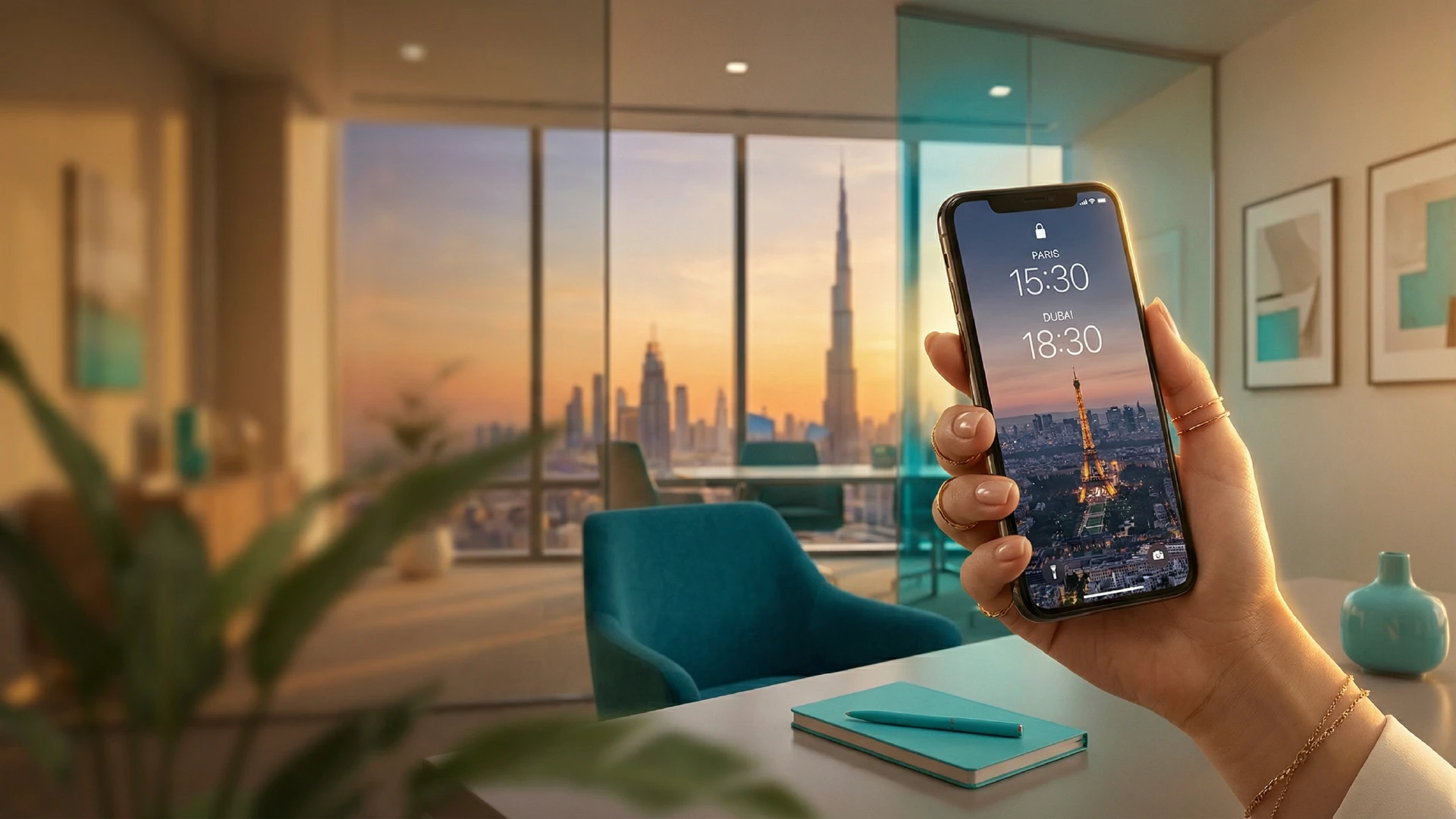
Manage Both Markets From a Seven-Hour Flight
Dubai is only seven hours from Paris by air, making it realistic to oversee operations in both France and the UAE without a permanent relocation. Over 750,000 companies already operate in UAE free zones, reflecting how accessible the market has become.
In 2026, over 750,000 companies operate inside UAE free zones (UAE Government Portal, 2026). French nationals rank among the top ten nationalities setting up each year. The qualifying corporate tax rate for free zone firms is 0% (Federal Tax Authority, 2026). Mainland companies pay 9% on profits above AED 375,000. Setup takes as few as 5 working days. No UAE national sponsor is required for a free zone company. And Dubai sits just 7 hours from Paris by air.
This guide covers what UAE company formation for French entrepreneurs involves, which structure fits your goals, the exact steps to register, what it costs, and how to stay on the right side of UAE and French tax rules once you are up and running.
What Is UAE Company Formation for French Entrepreneurs and Why It Matters
UAE company formation for French entrepreneurs is the process of registering a legal business entity in the UAE. French nationals can own 100% of a free zone company, pay 0% corporate tax if they meet qualifying conditions set by the Federal Tax Authority, and set up in as few as 5 working days without a UAE national sponsor.
Why French Entrepreneurs Choose the UAE
The UAE removes most of the friction that French founders face when expanding abroad. Here is what makes it stand out:
No UAE national sponsor needed for free zone companies
100% foreign ownership across all UAE free zones
No residency requirement to own a free zone company
A bilateral tax treaty with France reduces double-taxation risk
Dubai sits 7 hours from Paris, making it practical to manage both markets
A French e-commerce founder can register a trading company at Dubai South Business Hub, hold 100% of the shares, and operate across the GCC without relocating permanently. Over 750,000 companies now operate in UAE free zones, and setup takes as few as 5 working days (UAE Government Portal, 2026).
Free Zone vs Mainland: Which Suits French Founders
Most French founders starting out choose a free zone for speed, cost, and full ownership. But the right answer depends on who your clients are.
Free zone companies suit French entrepreneurs who serve international clients or manage holding structures. A French management consultant targeting Gulf-region multinationals will find a professional license in Dubai through a free zone more cost-effective than a mainland setup. Mainland companies, licensed under Dubai DET, let you trade directly with UAE consumers without a local agent.
Free Zone vs Mainland: Key Differences for French Entrepreneurs
Feature | Free Zone (e.g. Dubai South Business Hub) | Mainland (Dubai DET) |
|---|---|---|
Foreign ownership | 100%, no local partner required | 100% since 2021 reforms for most activities |
Corporate tax rate | 0% for qualifying free zone persons (FTA conditions apply) | 9% on taxable income above AED 375,000 |
Client access | International clients; UAE market via a local distributor | Direct access to UAE consumers and government contracts |
Setup time | As few as 5 working days | Typically 2 to 4 weeks |
Office requirement | Flexi-desk options available from day one | Physical office address usually required |
Local sponsor needed | No | No (for most activities since 2021 reforms) |
Five Structures French Entrepreneurs Use for UAE Company Formation
French entrepreneurs most often set up a free zone LLC, a free zone branch of a French company, or a mainland LLC under Dubai DET. Each structure differs in ownership rules, client access, and tax treatment. The right choice depends on your activity, your clients, and whether you need UAE residency.
Free Zone LLC
The free zone LLC is the most common structure for French nationals new to the UAE. You get 100% ownership with no local partner required. One or more shareholders can be French nationals or French-registered companies.
It suits a wide range of business activities in Dubai, including consulting and professional services, technology and software, e-commerce and trading, and media and marketing.
A French SaaS company can open a free zone LLC at Dubai South Business Hub, issue invoices in AED or euros, and send profits back to France with no restrictions. License fees start from roughly AED 10,000 per year, and qualifying free zone persons pay 0% corporate tax (Federal Tax Authority, 2026).
Branch of a French Company
A branch lets an existing French entity extend into the UAE without forming a new legal person. The parent company carries full liability. You must register the branch activity with the Ministry of Economy and Tourism (moet.gov.ae).
This route works well when a French firm wins a UAE contract and needs a local presence fast. A French engineering firm awarded a Dubai infrastructure contract can open a branch office to invoice locally while keeping accounts consolidated in Paris. The parent company retains 100% ownership.
Worth flagging: branch profits may still be subject to French corporate tax depending on the structure. Get advice from a French tax specialist before you choose this route.
Sole Establishment and Civil Company
Both are mainland structures licensed under Dubai DET. A sole establishment suits a single French founder running a professional service. A civil company works for two or more French professionals in a shared practice. No corporate shareholders are allowed in either structure.
Professional activities such as legal advice, accounting, or architecture often use this route. Two French architects relocating to Dubai can register a civil company under DET, split ownership equally, and take on UAE construction projects. There is no minimum share capital for most professional activities.
Step-by-Step Guide to UAE Company Formation for French Entrepreneurs
UAE company formation for French entrepreneurs follows six main steps: choose your structure and activity, pick a trade name, apply for your license, submit your documents, pay your fees, and collect your license. The process takes as few as 5 working days for a free zone company at Dubai South Business Hub.
Step 1 to Step 3: Name, Activity, and Application
Step 1, choose your business activity: Confirm it is approved in your chosen free zone or on the Dubai DET mainland list before anything else. Activity codes follow the ISIC Rev.4 structure used by UAE authorities.
Step 2, book your trade name: Use the trade name availability search online before paying fees. The name must not copy an existing brand, must not include offensive words, and must match your activity.
Step 3, submit your application: For a free zone company, apply through the zone authority portal. For mainland, apply through Dubai DET online. You need your French passport, a recent passport photo, and proof of home address at this stage.
Corporate shareholders also need a certified copy of the French company's registration papers. A French digital marketing consultant can check name availability online, confirm the consulting activity code is approved at Dubai South Business Hub, and submit the application the same day.
Step 4 to Step 6: Documents, Payment, and License
Step 4, upload your documents: French passports are accepted without a UAE visa stamp. Documents in French need a certified Arabic or English translation, not a machine-generated one.
Step 5, pay your fees: Pay your license fee and any visa package fee at the same time. Most free zones let you pay online.
Step 6, collect your license: You receive your trade license and Memorandum of Association. You can then apply for your investor residency visa.
A French founder based in Lyon uploads certified documents, pays AED 15,000 online, and receives the digital license within 7 working days. The whole process takes 5 to 10 working days for a free zone setup. Once the license is in hand, you can open a UAE corporate bank account.
Documents French Nationals Need for UAE Company Formation
French nationals registering a UAE company need a valid passport, a recent passport photo, and proof of home address. Corporate applicants also need certified French company registration papers. Documents in French must be translated into Arabic or English by a certified translator before submission to UAE authorities.
Personal Applicant Documents
A French national living in Paris can complete the full registration remotely. They upload a scanned passport, a translated bank statement, and a passport photo through the online portal. No UAE entry stamp is required to own a free zone company.
Valid French passport with at least 6 months remaining
Recent passport photo on a white background
Proof of home address: a utility bill or bank statement dated within 3 months
Certified English or Arabic translation of any French-language document
Corporate Shareholder Documents
A French holding company opening a UAE subsidiary sends a notarised Kbis extract, a certified translation, and a board resolution naming the CEO as the UAE signatory. France is a signatory to the Hague Apostille Convention, which removes the need for consular legalisation.
Certified copy of the Kbis (French company registration extract), translated into English or Arabic
Articles of association of the French parent company
Board resolution authorising the UAE setup and naming the authorised signatory
Passport of the authorised signatory
Apostille stamp (required by some free zones under the Hague Convention)
Need help managing the paperwork? Business support services at Dubai South Business Hub cover document attestation and government transactions.
Costs, Taxes, and What French Entrepreneurs Pay in the UAE
UAE company formation costs for French entrepreneurs start from around AED 10,000 per year for a free zone trade license. Corporate tax is 0% for qualifying free zone companies and 9% on mainland profits above AED 375,000. VAT is 5% once taxable turnover exceeds AED 375,000, and you must register with the Federal Tax Authority.
License Fees and Setup Costs
A French consultant taking a single-visa package at Dubai South Business Hub can budget roughly AED 15,000 to AED 20,000 all in for year one, covering the license, visa, and Emirates ID. Use the company formation cost calculator to get an exact figure before you commit.
Cost item | Typical amount (AED) |
|---|---|
Free zone trade license (annual) | From AED 10,000 |
Visa package (per visa) | AED 3,000 to AED 7,000 |
Flexi-desk or office (annual) | Varies by zone; ask for a quote |
Emirates ID and medical test | Included in most visa packages |
Year-one total (single visa, flexi-desk) | AED 15,000 to AED 20,000 |
UAE Corporate Tax and French Tax Rules
UAE corporate tax: The 0% rate applies to qualifying free zone persons. You only get that rate if you meet the conditions the Federal Tax Authority sets (tax.gov.ae, 2026). The 9% rate applies to mainland companies on taxable income above AED 375,000. VAT registration is required once turnover passes AED 375,000.
French tax exposure: The UAE and France have a double tax treaty in force. It sets rules on where income is taxed when you operate in both countries. But the treaty does not remove all French tax risk. French tax residents who own a UAE company may still owe French tax on dividends or undistributed profits under CFC rules.
A French founder who keeps their French tax residency and owns 100% of a UAE free zone company should check whether French CFC rules apply to their structure before the first invoice goes out. Get advice from a French tax adviser before you set up, not after.
Is a free zone company right if I stay tax-resident in France?
It can be, but the UAE-France double tax treaty does not automatically protect you. French CFC rules may apply to profits sitting inside a UAE subsidiary if you remain French tax-resident and hold a controlling stake. A French tax specialist should review your structure before you trade.
Residency Visas and Banking After UAE Company Formation
French entrepreneurs who form a UAE company can apply for an investor residency visa tied to their trade license. The visa gives UAE residency, an Emirates ID, and the right to open a personal and corporate bank account in the UAE. Visa processing typically takes 2 to 4 weeks after license issue.
Investor Visa for French Nationals
A trade license issued to a French national supports an investor residency visa application through UAE residency visa services at Dubai South Business Hub. A French entrepreneur based partly in Paris and partly in Dubai uses a 3-year investor visa to stay legally in the UAE during business trips and client meetings.
Visa is valid for 2 or 3 years depending on the package, and is renewable
You need a medical fitness test and Emirates ID biometrics in the UAE
The visa lets you sponsor dependants, including a spouse and children
You must re-enter the UAE at least once every 180 days to keep the visa active
You do not need to live in the UAE full time. The 180-day rule is the key condition to track. Miss it and your visa lapses, which also affects any dependants you have sponsored.
Opening a UAE Corporate Bank Account
A French trading company sets up at Dubai South Business Hub, then applies to a UAE bank with the trade license, a business plan in English, and 6 months of French bank statements to show prior trading activity. Account opening takes 4 to 8 weeks on average. Enhanced due diligence is standard for new free zone companies.
Trade license: the first document every UAE bank asks for
Passport and Emirates ID of the shareholder and authorised signatory
Proof of business activity: contracts, invoices, or a signed business plan
6 months of personal or company bank statements from France
Personal and corporate accounts are separate. You need both if you pay yourself a salary from the company. For more on bank account opening in the UAE, the Dubai South Business Hub beyond-hub service covers the full process.
Key Benefits of UAE Company Formation for French Entrepreneurs
UAE company formation gives French entrepreneurs 100% ownership, a 0% qualifying corporate tax rate, fast setup, and access to a market of over 3 billion people within a 4-hour flight. The UAE's location between Europe, Asia, and Africa makes it a strong base for French businesses expanding beyond the EU.
Tax and Ownership Advantages
A French tech founder who qualifies as a free zone person pays 0% on UAE-sourced profits, keeps all shares, and can wire dividends to a French bank account with no UAE withholding tax. The ownership and tax picture looks like this:
100% foreign ownership in all UAE free zones, no local partner required
0% corporate tax for qualifying free zone persons (FTA conditions apply)
No personal income tax in the UAE
Capital gains may fall within UAE corporate tax
Full profit repatriation allowed, subject to applicable tax obligations, AML and CFT requirements and banking compliance
Location, Market Access, and Speed
A French logistics firm uses Dubai South Business Hub's location next to Al Maktoum International Airport and Jebel Ali Port to run a regional distribution operation covering the Gulf, East Africa, and South Asia. Al Maktoum International Airport handles over 800,000 tonnes of cargo per year (Dubai Airports, 2026). Jebel Ali Port processes more than 14 million TEUs annually (DP World, 2026).
Dubai sits within a 4-hour flight of markets covering over 3
Frequently Asked Questions