Air-Condition, Refrigeration Spare Parts & Components Trading License in Dubai
Topic Summary
What Products You Can Legally Trade
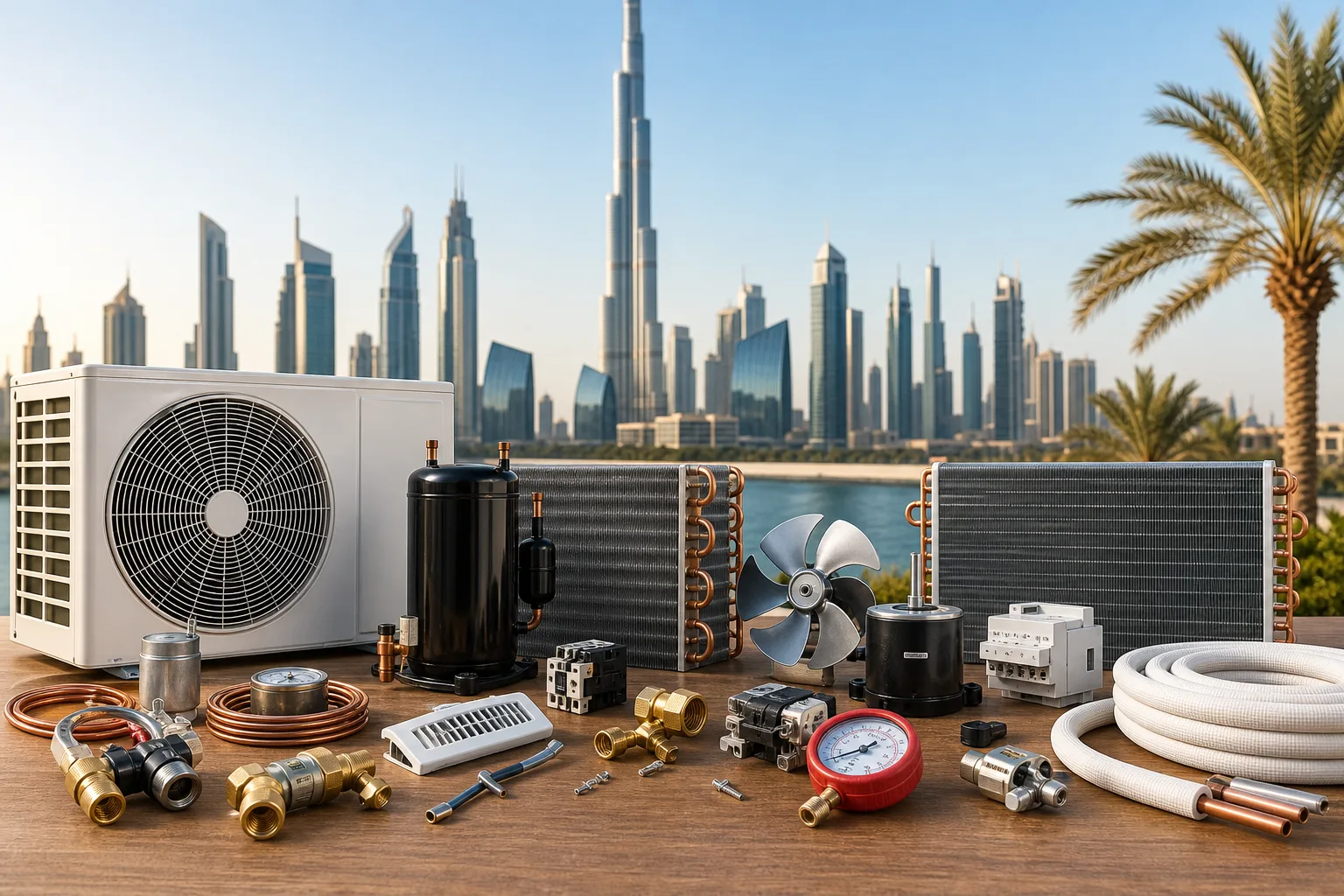
This license covers a broad range of AC and refrigeration components, including compressors, condenser coils, thermostats, expansion valves, fans, motors, and cold-room electrical parts. You can trade both branded and generic items, and you're permitted to import, stock, and re-export to GCC buyers.
Know the Limits of This License
This license covers trading only — it does not authorize on-site installation, repair work, or manufacturing of parts. Those activities each require a separate license, so plan your business scope carefully before applying.
Mainland vs. Free Zone: Key Differences
Mainland setup through DET gives you open access to the entire UAE market and suits businesses selling directly to local contractors or retailers. A free zone setup through DSBH offers 100% foreign ownership, faster registration, and simpler re-export processes, making it ideal for import-and-distribute models.
Choose Your Setup Based on Sales Channel
If your primary customers are UAE-based businesses, the mainland option removes the need for a local agent and lets you reach any buyer in the country. If you plan to import stock and ship regionally, Dubai South Business Hub's proximity to Jebel Ali Port and Al Maktoum Airport significantly reduces transport time and cost.
Six Steps to Get Your License
The process runs from booking a trade name and confirming your activity, to selecting an office package, submitting documents, paying fees, and receiving your license. Free zone applications through DSBH can often be completed within a few working days.
Documents to Prepare Before Applying
You'll need a valid passport with at least six months remaining, a recent passport photo on a white background, proof of UAE address if applicable, and a completed DSBH application form. Having all documents ready upfront prevents delays in the approval process.
IMAGES ON THIS PAGE: none
NOTE: no images on this page. Adding 1 infographic would help SEMrush flag 3.
H1 (for the CMS title field, do not paste into the body): Air-Condition, Refrigeration Spare Parts & Components Trading License in Dubai
What This License Covers
Dubai's heat never lets up. Construction sites, hotels, supermarkets, and homes all need working AC and cold storage year-round. That steady demand makes spare parts trading one of the most active supply chains in the UAE.
A trading license for air-condition and refrigeration spare parts lets you buy, stock, and sell these goods legally in Dubai. You can supply local businesses or ship to buyers across the region.
What You Can Trade
Under this license, you can trade a wide range of parts and fittings. These include items for both AC systems and refrigeration units.
Compressors and condenser coils
Expansion valves and flow controls
Thermostats and digital control boards
Refrigerant lines and copper fittings
Fans, motors, and filter units
Evaporator coils and heat exchangers
Electrical parts for cold-room systems
You can trade branded or generic parts. You can also import, store, and re-export to GCC buyers.
What It Does Not Cover
This license covers trading only. It does not let you install or repair equipment on site. You need a separate services license for that work. Making or building parts is also outside this activity. That falls under a manufacturing license.
Activity type | Trading – spare parts and components |
|---|---|
Goods covered | AC parts, refrigeration fittings, related electrical and mechanical items |
Foreign ownership | 100% in the free zone |
Visa quota | Based on office package chosen |
Installation or repair | Not included – needs a separate license |
Manufacturing | Not included – needs a manufacturing license |
Mainland vs Free Zone Setup
You have 2 main options in Dubai. You can set up on the mainland through DET, or in a free zone through DSBH. Each suits a different type of business.
The right choice depends on who you sell to and how you move your goods.
Factor | Mainland (DET) | Free zone (DSBH) |
|---|---|---|
Foreign ownership | Up to 100% for most activities | 100% |
Client access | Open UAE market | Mainly international and free zone clients |
Office needs | Physical office required | Flexi-desk options available |
Customs duties | Standard import duties apply | Duty deferral possible on imports |
Setup speed | Moderate | Fast, often within days |
Re-export | Possible but more steps | Simple, close to port and airport |
Which Option Suits You
Choose mainland if you sell direct to UAE contractors, retailers, or service firms. You can reach any buyer in the country without a local agent.
Choose a free zone if you import parts, hold stock, and ship to regional buyers. Dubai South Business Hub sits close to Jebel Ali Port and Al Maktoum International Airport. That cuts your transport time and cost. It also makes re-export to GCC markets fast and simple.
If you plan to set up a trading company in Dubai, think about your main sales channel first. That one decision shapes everything else.
How to Get Your License
The process is straightforward. Most free zone applications finish within a few working days. Here are the steps.
Step 1, book your trade name: Pick a name and check company name availability before you go further.
Step 2, choose your activity: Confirm the AC and refrigeration spare parts trading activity is on your license.
Step 3, pick your office package: Choose a flexi-desk, shared office, or warehouse unit based on your stock needs.
Step 4, send your papers: Upload your documents through the DSBH portal.
Step 5, pay the fee: Settle the license and setup costs.
Step 6, get your license: Receive your trade license and start trading.
Documents You Need
Keep these ready before you apply. Missing one document slows the whole process.
Valid passport copy, at least 6 months remaining
Recent passport photo on a white background
Proof of UAE address, if you already live here
Completed application form from the DSBH portal
Costs and Timeline
License fees at DSBH vary by package. The cost covers your trade license and your chosen office option. Visa fees and the establishment card are charged on top.
You can calculate your business setup cost using the DSBH online tool. It gives you a clear figure before you commit.
License fee | Varies by package – use the cost calculator for your figure |
|---|---|
Visa fees | Charged per visa applied for |
Establishment card | Charged separately at setup |
Typical timeline | A few working days for free zone approval |
Renewal | Annual – same portal, same documents |
Rules You Must Follow
Once your company is active, a few ongoing duties apply. These are not complex, but missing them has a cost.
Corporate tax
You must register with the Federal Tax Authority once your company exists. Your turnover level does not change this duty. Free zone companies may pay 0% corporate tax. You only get that rate if you meet the Qualifying Free Zone Person conditions the FTA sets.
VAT
Register for VAT once your taxable turnover hits the threshold. The FTA sets that figure. Late sign-up carries a fine of AED 10,000.
Customs
Parts you import into Dubai go through Dubai Customs. You need the right HS codes for your goods. Free zone imports may qualify for duty deferral while stock sits in the zone.
Annual renewal
Your license must be renewed each year. Log in to the DSBH portal, submit your papers, and pay the renewal fee. Let it lapse and you cannot trade legally.
Record keeping
Keep your books for at least 7 years. The FTA can ask to see them at any time.
Market Opportunity in Dubai
Dubai's building pipeline is one of the largest in the world. New towers, hotels, hospitals, and malls all need AC and cold storage systems from day one. When those systems need parts, someone has to supply them. That is your market.
Demand comes from several sectors.
Property developers and fit-out contractors
Hotels and serviced apartment operators
Supermarkets and food retail chains
Cold-chain logistics and warehouse firms
Facilities management companies
Industrial and manufacturing plants
Re-export is a strong second revenue stream. Dubai sits at the centre of GCC trade routes. Parts you import can be re-shipped to Saudi Arabia, Kuwait, Oman, and beyond. Jebel Ali Port is one of the busiest ports in the world. Al Maktoum International Airport handles heavy cargo. Both are minutes from Dubai South.
You can explore the full range of business activities in Dubai at DSBH if you want to add more trading lines later.
Once your company is running, you will also need a UAE bank account. DSBH offers banking and taxation services to help you get set up fast.
Conclusion
An AC and refrigeration spare parts trading license gives you legal access to one of Dubai's most active supply chains. Demand from construction, hospitality, and food retail keeps order books busy. Re-export to the wider region adds another layer of growth.
Dubai South Business Hub puts you close to the port and airport, which cuts your import and shipping costs from day one. The setup process is fast, and the free zone structure keeps things simple.
Speak to a DSBH advisor to pick the right package and start your business in Dubai today.
Do I need a special permit to import AC spare parts into Dubai?
Your trading license covers the buying and selling of AC and refrigeration parts. You also need the correct HS codes for your goods at customs. Dubai Customs handles import checks. Free zone imports may qualify for duty deferral while stock stays in the zone.
Can I sell to UAE mainland customers from a free zone license?
You can sell to mainland buyers, but you may need a local distributor or a customs entry for each shipment. Many free zone traders work with a mainland agent for direct UAE sales. Speak to a DSBH advisor about the best setup for your sales model.
How long does it take to get the license?
Free zone approval at DSBH typically takes a few working days. Have your documents ready before you apply. Delays usually happen when a paper is missing or a name is not available.
Can I add installation services to my trading license later?
Trading and installation are separate activities. You would need to add a services license to carry out on-site work. Talk to DSBH about adding activities to your existing license.
What is the minimum office space I need?
DSBH offers flexi-desk options for trading companies that do not need a large space. If you plan to hold physical stock, a warehouse unit is a better fit. Your office choice also affects how many visas you can apply for.
Do I need to register for VAT right away?
You must register for VAT once your taxable turnover hits the threshold the FTA sets. If you are below that level, sign-up is optional. Late mandatory sign-up carries a fine of AED 10,000. Check the FTA website for the current threshold.
---
FLAG: License fee not stated on source page. Cost calculator link used instead. Verify fee figures before publishing.
CHECK: table wrapper class not found on source page. Confirm the correct class before publishing.
NOTE: no images on this page. Adding 1 infographic (for example, a simple flow chart of the setup steps) would help SEMrush flag 3.
HEADING OUTLINE
H2 What This License Covers
H3 What You Can Trade
H3 What It Does Not Cover
H2 Mainland vs Free Zone Setup
H3 Which Option Suits You
H2 How to Get Your License
H3 Documents You Need
H3 Costs and Timeline
H2 Rules You Must Follow
H2 Market Opportunity in Dubai
H2 Conclusion
H2 References
H2 Frequently Asked Questions
H3 Do I need a special permit to import AC spare parts into Dubai?
H3 Can I sell to UAE mainland customers from a free zone license?
H3 How long does it take to get the license?
H3 Can I add installation services to my trading license later?
H3 What is the minimum office space I need?
H3 Do I need to register for VAT right away?
References
Frequently Asked Questions