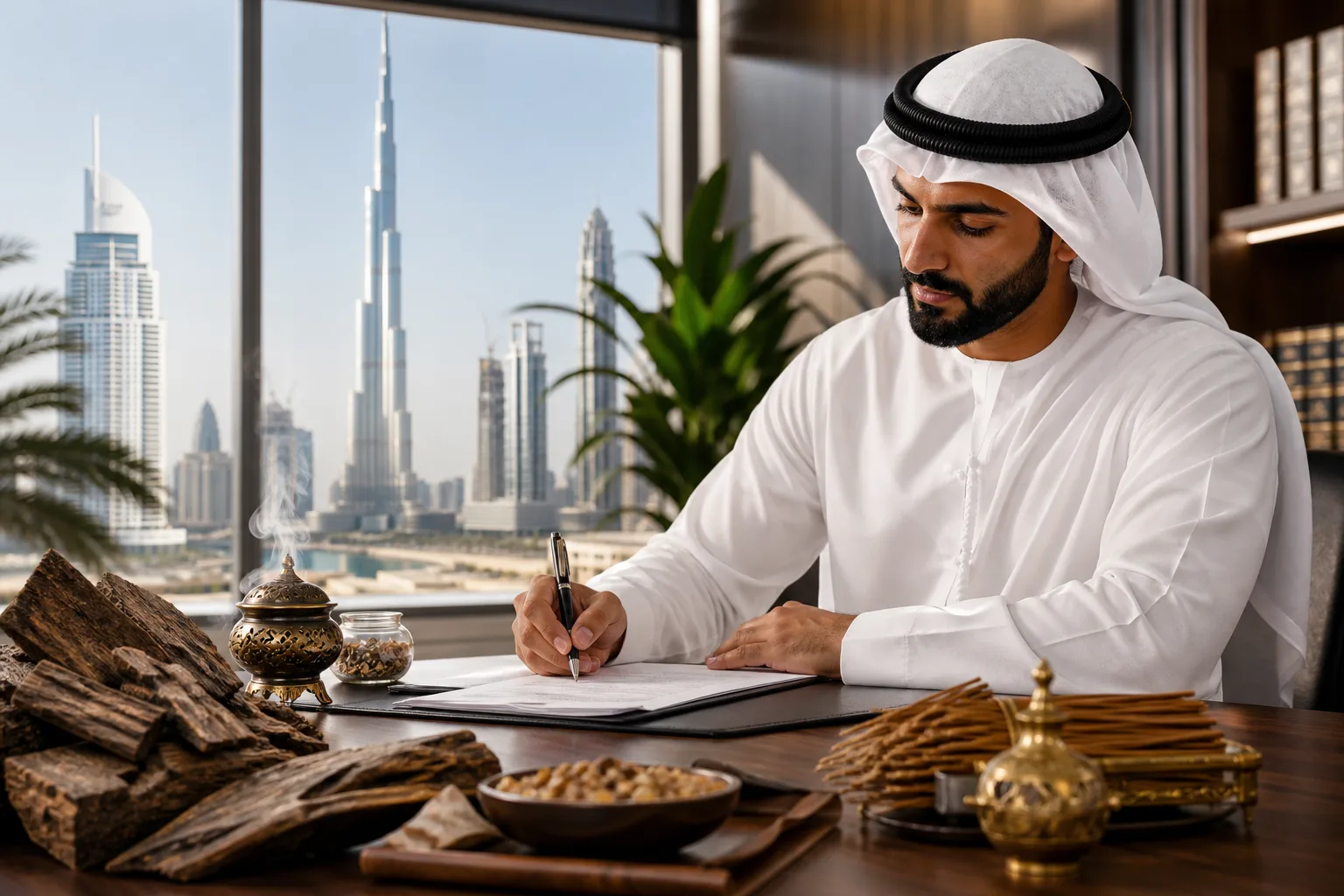
Apply for a Agarwood & Incense Trading License in Dubai

Topic Summary
Dubai Dominates Global Agarwood Trade
Dubai handles millions of dollars in oud and bakhoor transactions annually, driven by deep cultural demand across UAE households, hotels, and luxury retail. Its strategic location connects Southeast Asian suppliers with buyers across the GCC, Europe, and Asia.
Multiple Sales Channels Offer Diverse Revenue
Licensed traders can tap into traditional souks, luxury boutiques, hospitality suppliers, and fast-growing e-commerce platforms. Each channel provides distinct revenue streams, from local retail to corporate gifting and international re-export.
Choose the Right License From the Start
Selecting the correct license type early is critical, as it determines ownership structure, market access, and compliance obligations. The two main options are a mainland commercial license through DET or a free zone license.
Mainland Licenses Unlock Direct UAE Market Access
A DET mainland license allows direct sales to UAE consumers, government entities, and local businesses without needing a distributor. Under recent UAE reforms, 100% foreign ownership is now permitted for mainland commercial companies.
Free Zones Suit International Import and Export Focus
Free zone licenses offer full foreign ownership, no local sponsor requirement, and streamlined customs procedures ideal for global supply chains. They work best for traders sourcing agarwood from Southeast Asia and re-exporting to international markets.
Accurate Business Activity Codes Prevent Delays
When applying, you must select the correct activity codes — typically covering aromatic products, natural resins, or perfumery goods. Vague or incorrect codes are a common cause of application delays and rejections.
Dubai is the global hub for agarwood and incense trade. The city handles millions of dollars in oud and bakhoor transactions every year. Demand is deeply rooted in Gulf culture, and the market shows no signs of slowing down.
Oud oil, bakhoor, and premium incense blends are everyday essentials across UAE households, hotels, and luxury retail outlets. This consistent cultural demand creates a stable, high-value trading environment. Entrepreneurs entering this market benefit from both local consumption and strong export potential.
Dubai's geographic position connects agarwood suppliers in Southeast Asia — particularly Indonesia, Malaysia, and Vietnam — with wholesale buyers across the GCC, Europe, and Asia. The city's world-class logistics infrastructure makes it an efficient re-export corridor. According to the Dubai Chamber, trade in fragrance and related products continues to grow year on year.
Market Opportunity at a Glance
The agarwood and incense sector spans multiple retail channels. These include traditional souks, luxury fragrance boutiques, hospitality suppliers, and fast-growing e-commerce platforms. Each channel offers distinct revenue streams for licensed traders.
High retail demand from UAE residents and tourists seeking authentic oud products
Wholesale supply opportunities to hotels, spas, and corporate gifting companies
Re-export potential to GCC neighbours, European niche markets, and Asian buyers
Growing online sales channels serving regional and international customers
Dubai's trade infrastructure — including Dubai Trade corridors — makes import, export, and re-export operations efficient and well-regulated. Businesses can scale quickly once licensed and compliant.
License Types and the Right Business Structure
Choosing the correct license type is the most important early decision. Your choice affects ownership structure, market access, and ongoing compliance obligations. Two main options exist: a mainland commercial license or a free zone license.
Mainland License via DET
The Department of Economy and Tourism (DET) issues mainland commercial trading licenses in Dubai. A mainland license allows you to trade directly with UAE consumers, government entities, and local businesses. This is the preferred structure for businesses planning retail or wholesale operations inside the UAE market.
Requires a registered office address in Dubai (Ejari-certified tenancy contract)
Trade name must be approved by DET before submission
Allows direct sales to UAE-based customers without a distributor
100% foreign ownership is now permitted under UAE commercial company law reforms
You must select the correct business activity codes when applying. For agarwood and incense, relevant codes typically fall under trading in aromatic products, natural resins, or perfumery goods. Vague or incorrect codes cause delays and rejections.
Free Zone License Options
A free zone license suits businesses focused on import, export, and re-export rather than direct UAE retail. Free zones offer 100% foreign ownership with no local sponsor requirement. They also provide simplified customs procedures for international shipments.
Full foreign ownership — no local partner needed
Streamlined import and export processes through dedicated customs channels
Ideal for traders sourcing agarwood from Southeast Asia and re-exporting globally
Direct mainland retail sales require a local distributor or separate mainland entity
If you want to set up a trading company in Dubai, a free zone structure can reduce setup complexity and cost. It works particularly well for businesses with an international supply chain. You can explore business activities available in Dubai to confirm the right activity codes for your products before applying.
Consider your primary revenue model carefully. If most of your sales will be to UAE-based buyers, a mainland license gives you broader market access. If your focus is international trade, a free zone license may be more cost-effective.
Step-by-Step Application Process
The application process follows a clear sequence. Completing each step in order avoids unnecessary delays. Here is a practical breakdown of what to expect.
Step 1 — Reserve a trade name. Submit your preferred business name for approval through DET or your chosen free zone authority. The name must comply with UAE naming conventions. You can check company name availability before submitting to avoid clashes with existing registrations.
Step 2 — Submit an initial approval application. Include your selected business activity codes with this application. Authorities review whether the activities are permitted and whether you meet eligibility requirements.
Step 3 — Secure a business address. A mainland license requires an Ejari-registered office or retail space. Free zone licenses require a tenancy contract within the zone. Virtual office options may be available in some free zones for non-retail activities.
Step 4 — Obtain CITES permits. This step is mandatory for agarwood traders. See the section below for full details.
Step 5 — Submit final documents and pay fees. Once all documents are verified, pay the applicable license fees. Your trade license is issued upon payment confirmation.
CITES Compliance for Agarwood
Agarwood — derived from Aquilaria tree species — is listed under CITES Appendix II. This means international trade is permitted but strictly regulated. You must obtain valid CITES permits before importing or exporting any agarwood products.
Apply for import and export permits through the UAE Ministry of Climate Change and Environment
Each shipment requires a separate permit tied to the specific quantity and species
Permits must be presented to customs at the point of entry or exit
Non-compliance can result in shipment seizure, heavy fines, and license cancellation
The UAE government portal provides detailed guidance on CITES obligations for businesses operating in the UAE. Review these requirements carefully before placing any purchase orders with overseas suppliers.
CITES compliance is not optional. Authorities actively enforce these rules at UAE ports and airports. Ensure your suppliers also hold valid export permits from their country of origin. Request documentation before any shipment departs.
Required Documents Checklist
Prepare these documents before starting your application. Missing paperwork is the most common cause of delays.
Passport copies of all shareholders and managers
Emirates ID (for UAE residents) or valid entry visa copy
Memorandum of Association (MOA) or Articles of Association
Ejari-certified tenancy contract or free zone tenancy agreement for business premises
CITES permit documentation for agarwood species (import and export permits)
No Objection Certificate (NOC) if the applicant is currently employed in the UAE
Bank reference letter (required by some authorities)
Having certified translations ready for any non-English or non-Arabic documents will speed up the review process. Work with a licensed business setup consultant if you are unfamiliar with UAE document requirements.
Costs, Fees, and Ongoing Compliance
Understanding the full cost of a trading license helps you budget accurately. Costs vary depending on your license type, office size, and business activity. Here is a realistic overview.
Mainland license fees: Typically range from AED 10,000 to AED 20,000 per year, depending on activity codes and office space
Free zone license packages: Generally start from AED 12,000 to AED 25,000 annually, including basic facilities
CITES permit fees: Charged per shipment — costs vary by quantity and species
Office or warehouse lease: A significant additional cost, particularly for mainland setups
Annual renewal: Both the trade license and CITES permits must be renewed every year
Use a business setup cost calculator to estimate your total first-year investment. This helps you plan cash flow before committing to a specific structure.
VAT and Customs Obligations
VAT registration is mandatory if your annual taxable turnover exceeds AED 375,000. Register through the Federal Tax Authority. Standard 5% VAT applies to most incense and agarwood product sales within the UAE.
File VAT returns quarterly or monthly depending on your assigned tax period
Keep detailed sales and purchase records for all transactions
Import declarations for all incoming agarwood and incense shipments must be filed through the Dubai Trade portal
Customs duty rates vary by product classification — verify current rates through the Federal Tax Authority
Customs compliance is closely linked to your CITES obligations. Every agarwood shipment must be declared accurately. Misclassification of goods can trigger audits and penalties. Maintain organised records from day one.
Tips for a Smooth License Approval
A well-prepared application moves through the approval process much faster. These practical tips help you avoid the most common pitfalls.
Choose activity codes precisely. Vague descriptions such as "general trading" may not cover agarwood or oud oil specifically. Request clarification from DET or your free zone authority before submitting.
Secure CITES permits before importing stock. Never order agarwood shipments without confirmed permits in place. Customs will hold or seize non-compliant goods.
Verify supplier documentation. Your overseas suppliers must also hold valid CITES export permits. Request copies before finalising any purchase agreement.
Work with a registered business setup consultant. Experienced consultants know DET requirements and can flag issues before they become problems. This is especially valuable for first-time applicants.
Keep all trade records organised. Customs authorities and the Federal Tax Authority may request records during audits. Digital record-keeping systems make compliance much easier.
Open a dedicated business bank account early. Separating business finances from personal accounts simplifies VAT filing and financial reporting. Learn more about bank account opening in the UAE for your new company.
If you need support with visa applications for yourself or your staff, explore UAE residency visa services available through free zone business hubs. Investor visas tied to your company license are typically the most straightforward route for business owners.
Staying compliant is an ongoing responsibility — not a one-time task. Schedule annual license and permit renewals well in advance. Missing renewal deadlines can result in fines and temporary trading suspensions.
Conclusion
Getting an agarwood and incense trading license in Dubai is straightforward when you follow the correct steps. Choose the right license type for your business model. Meet CITES requirements before importing any stock. Register for VAT through the Federal Tax Authority once your turnover threshold is reached.
Dubai offers a genuinely exceptional environment for this trade. Cultural demand is strong, logistics infrastructure is world-class, and the regulatory framework is clear. Businesses that enter this market with proper licensing and compliance in place are well-positioned to grow.
Start your license application today and tap into one of Dubai's most culturally rich and commercially rewarding trade sectors. With the right preparation, you can be operational and trading within weeks.
References
Frequently Asked Questions