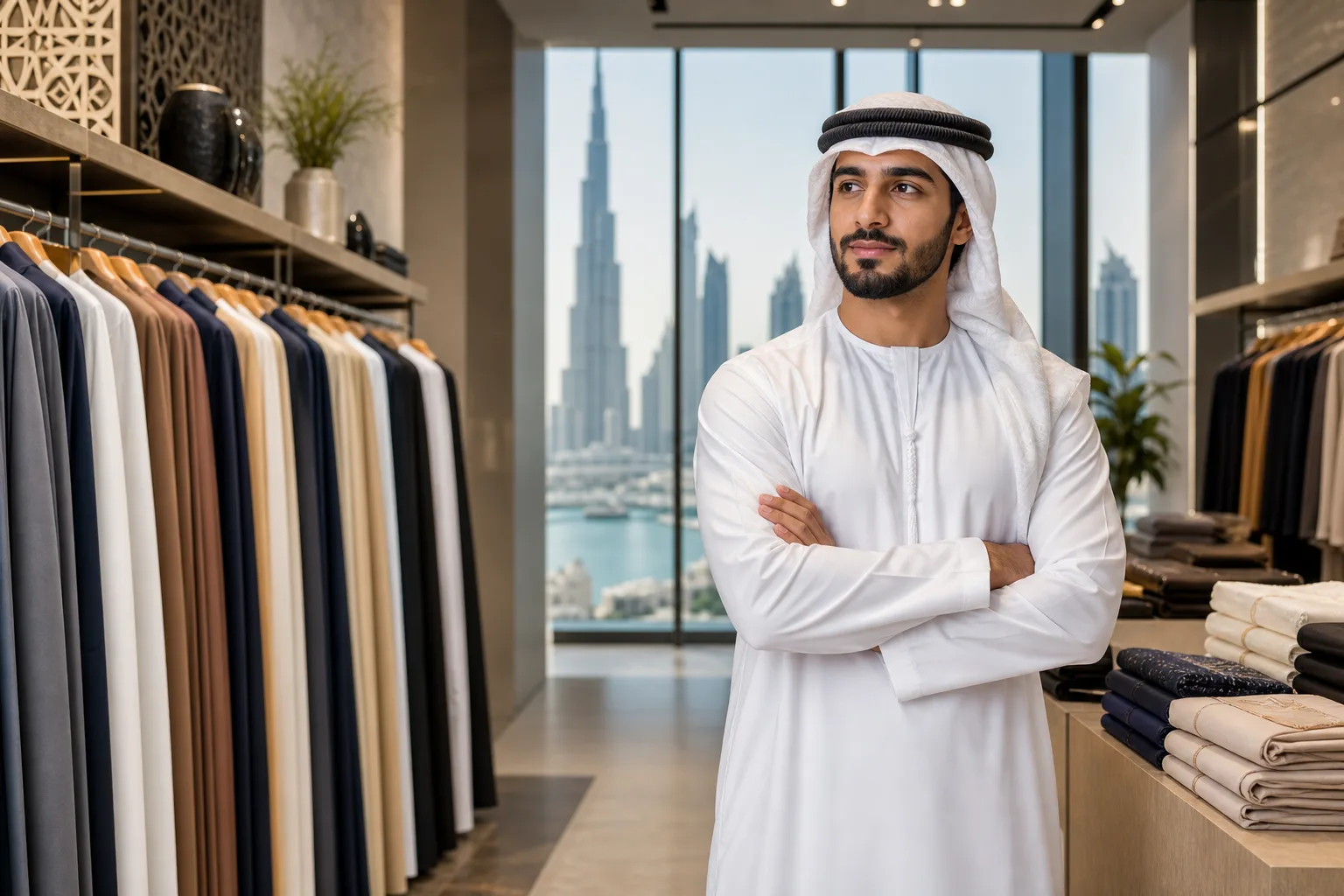
Arab Wear Trading License in Dubai: Cost and Requirements
Topic Summary
What the Arab Wear Trading License Covers
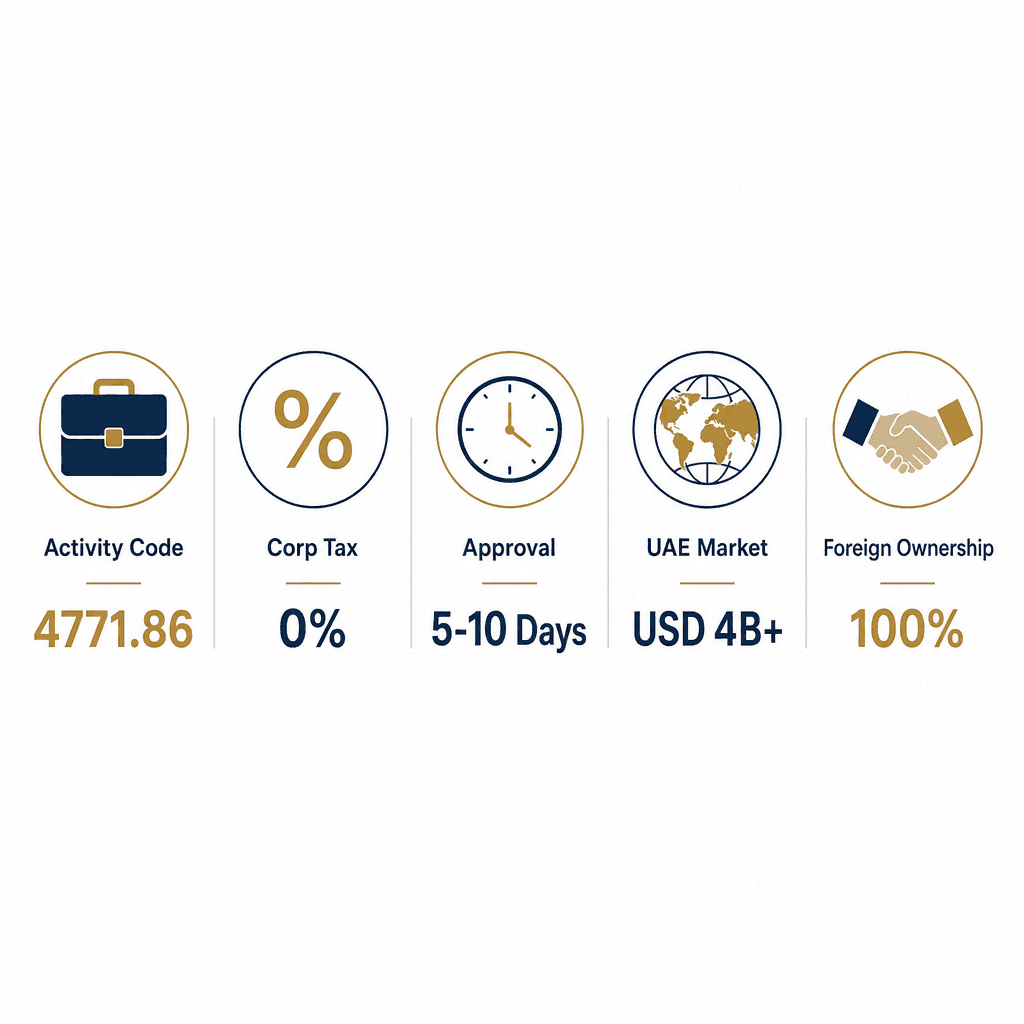
Activity Code 4771.86 authorises businesses to buy, sell, import, export, and re-export traditional Arab garments such as thobes, abayas, kaftans, and jalabiyyas. Holders can source from international manufacturers and distribute goods regionally and globally from within the free zone.
100% Foreign Ownership With Zero Corporate Tax
Dubai South Business Hub Free Zone permits full foreign ownership of the licensed entity, with a 0% corporate tax rate applying within the free zone. This makes it a highly attractive structure for international entrepreneurs and established importers alike.
Fast Approval: Licenses Issued in 5–10 Days
The typical approval timeline for an Arab Wear Trading License at Dubai South is just five to ten working days. This regulatory efficiency allows traders to get operations underway quickly compared to many other jurisdictions.
A USD 4 Billion Market With Growing Demand
The UAE's textile and apparel market exceeds USD 4 billion in value, with traditional and modest wear forming a significant and expanding segment. Demand comes from GCC nationals, Muslim-majority expatriate communities, and a rising global modest fashion movement.
Strategic Location Near a World-Class Cargo Hub
Dubai South's proximity to Al Maktoum International Airport — being developed into one of the world's largest cargo hubs — gives Arab wear traders direct air freight access to East Africa, South Asia, and the wider MENA region. Combined with Jebel Ali Port access, goods can move efficiently across continents.
Understanding Free Zone Versus Mainland Trading Rules
A free zone license covers international trade and distribution within the free zone itself, but selling directly to UAE mainland retailers or consumers requires a mainland-registered distributor or a separate mainland entity. This is a standard structural consideration traders should plan for from the outset.
Who This License Is Best Suited For
The license suits entrepreneurs, SMEs targeting GCC and Muslim-majority markets, and international fashion importers seeking a UAE base for regional distribution. Businesses sourcing from suppliers in Turkey, Egypt, Pakistan, or Southeast Asia will find Dubai South a natural and cost-effective hub.
Dubai's position as a global fashion and textile hub makes it one of the most strategic locations in the world to trade Arab wear, with demand surging across the GCC, Africa, and South Asia. Whether you are an established importer or an entrepreneur entering the traditional garment market for the first time, Dubai offers an unmatched combination of infrastructure, market access, and regulatory efficiency.
This guide covers everything you need to know about obtaining an Arab Wear Trading License (Activity Code 4771.86) at Dubai South Business Hub Free Zone, including costs, requirements, and setup steps.
Key Stats at a Glance
Activity Code: 4771.86
License Type: Trading License
Category: Trading
Free Zone: Dubai South Business Hub
Foreign Ownership: 100% permitted
Corporate Tax Rate: 0% (within free zone)
Typical License Approval Timeline: 5 to 10 working days
UAE Apparel and Textile Market Size: Over USD 4 billion
Double Taxation Treaties: Over 200 signed by the UAE
What Is an Arab Wear Trading License and What Does It Cover?
An Arab Wear Trading License issued under Activity Code 4771.86 at Dubai South Business Hub Free Zone is a Trading License that authorises businesses to buy and sell traditional Arab garments and related accessories. This includes items such as thobes, abayas, kaftans, jalabiyyas, and accompanying accessories commonly associated with Arab and Islamic dress traditions.
The license permits the import, export, re-export, and local distribution of Arab wear within and beyond the UAE. Holders can source garments from international manufacturers, stock them within the free zone, and distribute them to buyers across the region and globally.
It is important to understand the distinction between free zone trading scope and mainland distribution. A free zone license allows you to trade internationally and within the free zone itself. To sell directly to end consumers or retailers on the UAE mainland, you would typically need to work through a mainland-registered distributor or establish a separate mainland presence. This is a standard structural consideration for any free zone trading business in Dubai.
UAE Market Context and Opportunity for Arab Wear Traders
The UAE's textile and apparel market is valued at over USD 4 billion, with traditional wear forming a significant and growing segment of that figure. Demand comes from multiple directions: GCC nationals who wear traditional garments as everyday attire, South Asian and other Muslim-majority expatriate communities seeking culturally appropriate clothing, and a rising global interest in modest fashion as a mainstream retail category.
The global modest fashion market has attracted significant investment and media attention in recent years, with Arab wear sitting at the heart of that movement. Designers and manufacturers across Turkey, Egypt, Pakistan, and Southeast Asia are producing Arab-style garments at scale, and Dubai has become a natural trading hub connecting those supply chains with consumer markets across the Middle East, Africa, and beyond.
Dubai South's proximity to Al Maktoum International Airport is a particularly important advantage for Arab wear traders. The airport, which is being developed into one of the largest cargo hubs in the world, provides direct air freight connectivity to key markets in East Africa, South Asia, and the wider MENA region. Combined with easy access to Jebel Ali Port, Dubai South positions traders to move goods efficiently and cost-effectively across continents.
Who Should Apply for This License?
The Arab Wear Trading License at Dubai South Business Hub Free Zone is suited to a wide range of business profiles. Entrepreneurs and small to medium-sized enterprises targeting GCC and Muslim-majority consumer markets will find the free zone structure both accessible and commercially practical.
International fashion importers who want a UAE base for regional distribution are also well served by this license. Rather than navigating multiple country-by-country registrations, a single Dubai South entity can manage sourcing, storage, and re-export operations from one location.
Manufacturers and wholesalers looking to re-export Arab wear across MENA and beyond will benefit from the free zone's customs advantages and logistics infrastructure. Critically, 100% foreign ownership is permitted under free zone regulations, meaning non-UAE nationals can establish and fully own their trading company without requiring a local sponsor or partner. This makes the license particularly attractive to international investors.
Setup Costs, Steps, and Licensing Requirements
Setting up an Arab Wear Trading License at Dubai South Business Hub Free Zone involves a structured process with transparent costs. Fees typically include the license registration fee, government and authority charges, and any optional add-ons such as visa packages or workspace arrangements. While exact figures vary depending on the package selected and the number of visas required, the overall setup cost for a basic free zone trading license in Dubai generally starts from a few thousand US dollars annually. It is advisable to request a tailored cost breakdown from a registered business setup adviser to get accurate current pricing.
The required documents for the application are straightforward. You will need a valid passport copy for each shareholder and director, a completed application form, and a basic business plan outlining your trading activities. A No Objection Certificate may be required if an applicant is currently employed or holds a UAE residence visa under another sponsor.
The step-by-step process typically runs as follows:
Reserve your company name with the free zone authority
Select Activity Code 4771.86 as your registered trading activity
Submit your documents for review and approval
Receive your trading license upon approval
Apply for residence visas under your license allocation
Facility options at Dubai South include flexi-desk arrangements for startups operating at a minimal footprint, shared office spaces for small teams, and dedicated warehousing for businesses that require physical storage of garment stock. The right option depends on your operational scale and whether you intend to hold inventory within the free zone.
The typical timeline for license approval is 5 to 10 working days from the point of complete document submission, making it one of the faster free zone setup processes available in the UAE.
Compliance and Regulatory Obligations
Once your license is issued, there are ongoing compliance obligations to maintain your trading status. The license must be renewed annually, and renewal fees are payable to the free zone authority. Businesses must also adhere to UAE customs regulations when importing and re-exporting textiles, including accurate declaration of goods and compliance with any applicable trade controls.
Under Activity Code 4771.86, there is no requirement for additional ministerial or sector-specific approvals for standard Arab wear trading. This simplifies the compliance burden compared to regulated industries such as food, pharmaceuticals, or financial services.
Setting up a corporate bank account is a post-license requirement for operational readiness. UAE banks will require your license documents, shareholder information, and a description of your business activities as part of their due diligence process.
Why Dubai South Is the Right Base for Arab Wear Trading
Dubai South offers a compelling combination of strategic location, infrastructure quality, and financial advantages that make it one of the most effective bases for Arab wear trading in the region. Its position adjacent to Al Maktoum International Airport and within reach of Jebel Ali Port means that goods can be moved by air or sea with minimal friction, reducing lead times and logistics costs for traders operating across multiple markets.
The free zone's financial benefits are equally significant. Businesses registered at Dubai South benefit from 0% corporate and personal income tax, full repatriation of profits, and 100% foreign ownership. These advantages allow traders to retain more of their earnings and reinvest in growth without the structural constraints common in other jurisdictions.
Dubai South's master-planned infrastructure supports scalable operations, meaning a business can start with a flexi-desk and expand into warehousing as trade volumes grow. The UAE's network of over 200 double taxation treaties further supports cross-border trade efficiency by reducing the risk of double taxation on international transactions, a meaningful advantage for businesses trading across multiple countries simultaneously.
Related Activities
Baby Wear Trading Trading License
Sports Wear Trading Trading License
Face Masks & Gloves Trading Trading License
Frequently Asked Questions