Start a Building Metal Products Trading Business in Dubai

Topic Summary
Dubai's Construction Boom Fuels Metal Demand
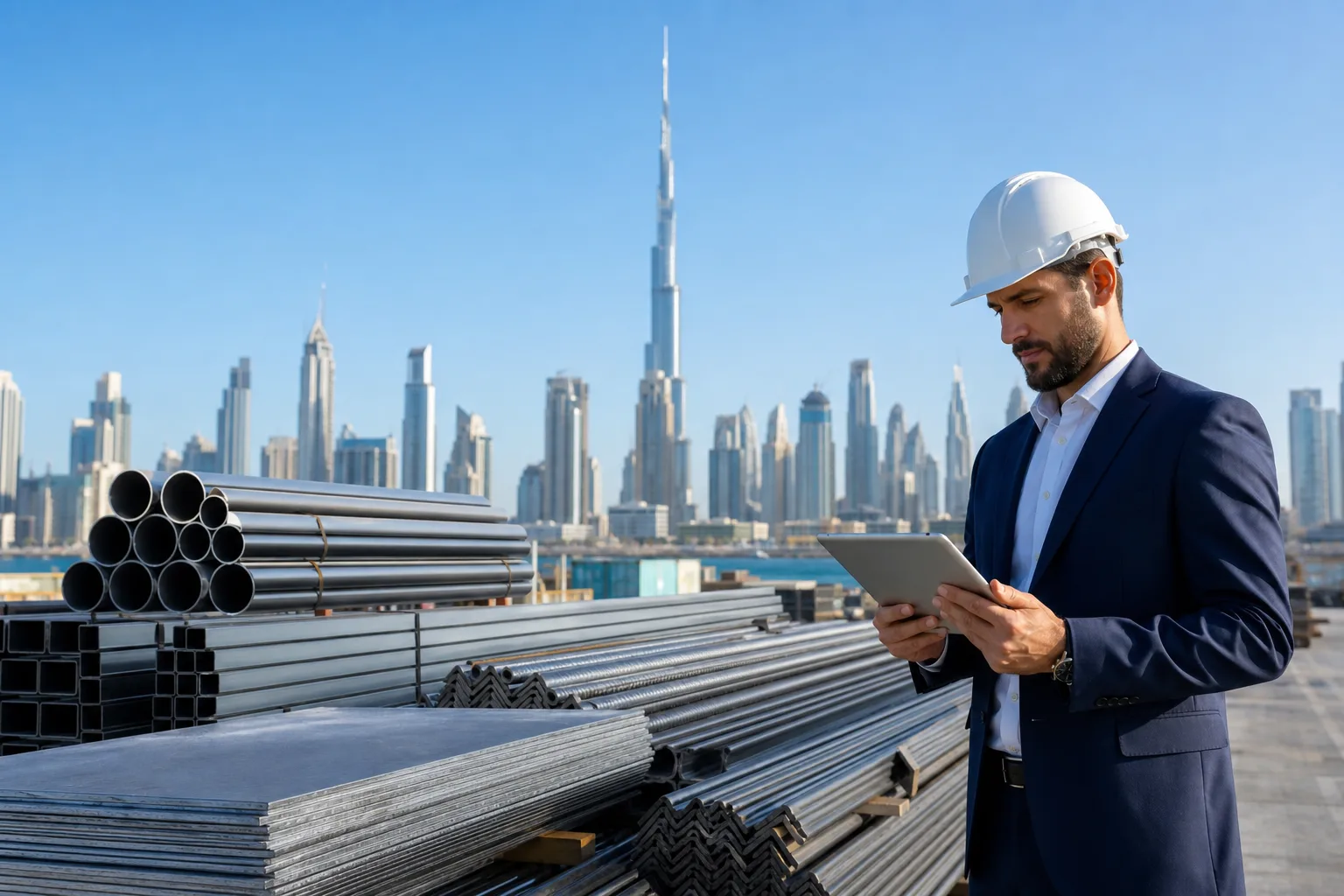
The UAE construction industry is projected to grow steadily through 2027, backed by government investment in housing, transport, and commercial real estate. Hundreds of active Dubai projects create consistent demand for structural and finishing metal products.
Know Exactly What Your License Covers
Activity code 4752.47 authorises trading in structural steel, aluminium profiles, metal roofing, steel doors, fasteners, and prefabricated components. Manufacturing or fabrication activities fall outside this license and require a separate industrial permit.
100% Foreign Ownership Is Permitted
Setting up through Dubai South Business Hub Free Zone allows international entrepreneurs to retain full ownership of their company without a local sponsor. This makes it straightforward for overseas manufacturers and traders to establish a UAE distribution base.
Dubai Is a Gateway for Regional Re-Export
Metal products imported from China, India, Turkey, or Europe can be stored and redistributed across the Middle East, Africa, and South Asia using Dubai's world-class logistics network. Proximity to Jebel Ali Port and Al Maktoum cargo routes makes this model highly efficient.
The Setup Process Takes Two to Four Weeks
Establishing a Free Zone Limited Liability Company under this activity is designed to be investor-friendly and can typically be completed within two to four weeks. Costs vary based on office package choice and the number of visas required.
This License Suits a Wide Range of Business Profiles
From first-time entrepreneurs entering the building materials sector to established construction supply companies expanding their portfolio, the license is broadly applicable. International manufacturers seeking a UAE distribution hub are also well-positioned to benefit.
Dubai's construction sector continues to expand at a remarkable pace, driven by mega-infrastructure projects, a growing population, and the UAE's long-term economic diversification agenda. At the heart of this growth lies a consistent and rising demand for building metal products, from structural steel and aluminium cladding to metal doors, frames, and roofing systems. For entrepreneurs and established traders looking to capitalise on this opportunity, setting up a building metal products trading business in Dubai offers a clear and commercially rewarding path.
Under activity code 4752.47, a Trading License issued through Dubai South Business Hub Free Zone authorises the holder to trade in building metal products. This guide covers everything you need to know, from market context and license scope to setup costs, compliance requirements, and the strategic advantages Dubai offers for this trade.
The UAE Market Opportunity for Building Metal Products
The UAE construction industry is one of the most active in the world. According to GlobalData, the UAE construction output is projected to grow steadily through 2027, supported by government investment in housing, transport, and commercial real estate. Dubai alone has hundreds of active construction projects at any given time, creating sustained demand for structural and finishing metal products.
The UAE also serves as a re-export hub for the wider Middle East, Africa, and South Asia. Metal products sourced from global manufacturers can be imported, stored, and redistributed across these regions through Dubai's world-class logistics infrastructure, making a free zone trading license particularly well-suited to this model.
What the Building Metal Products Trading License Covers
Activity code 4752.47 falls under the Trading category and is classified within the broader ISIC framework for retail sale of hardware, paints, and glass. A trading license under this activity permits the holder to buy and sell a wide range of building metal products, including but not limited to:
Structural steel sections, beams, and columns
Aluminium profiles and cladding systems
Metal roofing and wall panels
Steel doors, frames, and window systems
Metal fittings, fasteners, and anchoring systems
Prefabricated metal building components
The license does not cover manufacturing or fabrication activities. Any value-added processing would require a separate industrial or manufacturing license.
Who This License Is Suited To
This license is an excellent fit for a broad range of business profiles, including:
International metal product manufacturers seeking a UAE distribution base
Traders importing from China, India, Turkey, or Europe for regional resale
Construction supply companies expanding their product portfolio
Entrepreneurs entering the building materials sector for the first time
Businesses looking to leverage Dubai's re-export capabilities into GCC and African markets
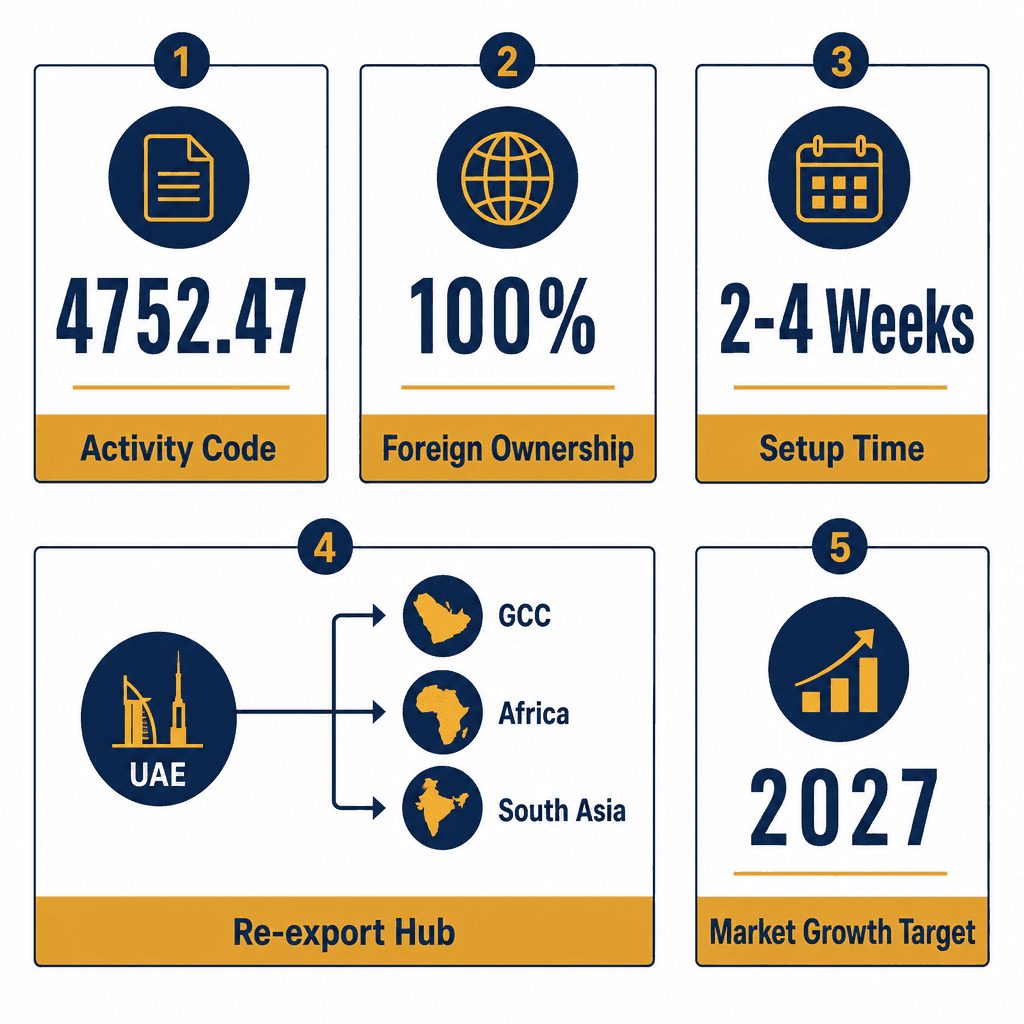
Infographic: Building Metal Products Trading in Dubai South Free Zone
Activity Code: 4752.47
License Type: Trading License
Free Zone: Dubai South Business Hub
UAE Construction Market Growth: Projected multi-year expansion through 2027
Typical License Setup Timeline: 2 to 4 weeks
Minimum Share Capital: Varies by authority; often no mandatory minimum in free zones
Re-export Access: Full access to GCC, Africa, and South Asia via Jebel Ali and Al Maktoum cargo routes
Setup Costs and Steps
Setting up a building metal products trading company at Dubai South Business Hub Free Zone involves several straightforward steps. Costs vary depending on office package, visa requirements, and additional approvals, but the process is designed to be efficient and investor-friendly.
Step-by-Step Setup Process
Step 1: Choose your business activity and confirm activity code 4752.47 applies to your intended trade
Step 2: Select a company structure, typically a Free Zone Limited Liability Company (FZ-LLC)
Step 3: Reserve your trade name in line with UAE naming conventions
Step 4: Submit incorporation documents, including passport copies, business plan, and application forms
Step 5: Choose a facility option, such as a flexi-desk, shared office, or warehouse unit depending on storage needs
Step 6: Pay license and registration fees and receive your trading license
Step 7: Apply for residence visas for shareholders and employees as required
Step 8: Open a corporate bank account with a UAE-registered bank
Typical all-in costs for a basic free zone trading license, including one visa and a flexi-desk arrangement, generally start from AED 15,000 to AED 25,000 per year, though businesses requiring warehouse space or multiple visas should budget accordingly.
Licensing and Compliance Requirements
Once your license is issued, ongoing compliance is straightforward but important. Key requirements include:
Annual license renewal with updated documentation
VAT registration if annual taxable turnover exceeds AED 375,000
Corporate tax registration under the UAE's 9% corporate tax regime, applicable from June 2023
Customs registration for import and export activities through Dubai Customs
Adherence to UAE product safety and standards requirements where applicable
Certain metal products may require conformity certificates or Emirates Authority for Standardisation and Metrology (ESMA) compliance, particularly for structural or safety-critical applications. It is advisable to confirm product-specific requirements before trading.
Why Dubai Is Strategically Positioned for This Trade
Dubai offers a combination of advantages that few other global trading hubs can match for the building metal products sector. The emirate sits at the crossroads of Europe, Asia, and Africa, with Jebel Ali Port ranked among the world's top ten busiest container ports. Al Maktoum International Airport, located within the Dubai South free zone itself, adds a powerful air freight dimension for high-value or time-sensitive metal components.
Free zone businesses benefit from zero import and export duties within the zone, full repatriation of profits and capital, no personal income tax, and streamlined customs procedures. Combined with a stable regulatory environment and a well-developed financial services sector, Dubai removes many of the friction points that traders face in other markets.
Related Activities
Plastic Doors Windows & Building Products Trading Trading License
Basic Non Ferrous Metal Products Trading Trading License
Cement Products Trading Trading License
Frequently Asked Questions