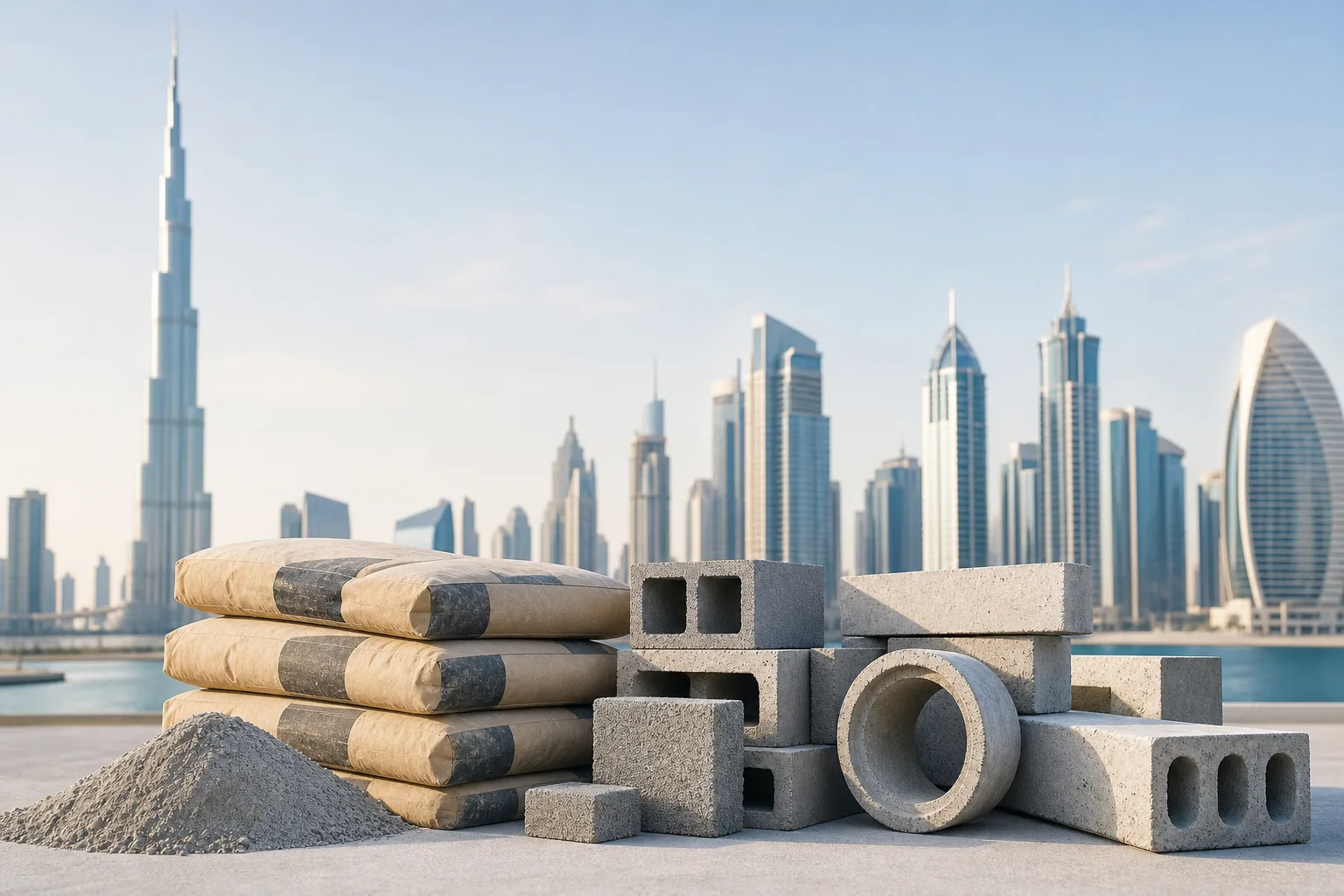
Apply for a Cement Products Trading License in Dubai

Topic Summary
Why Dubai Is Ideal for Cement Trading
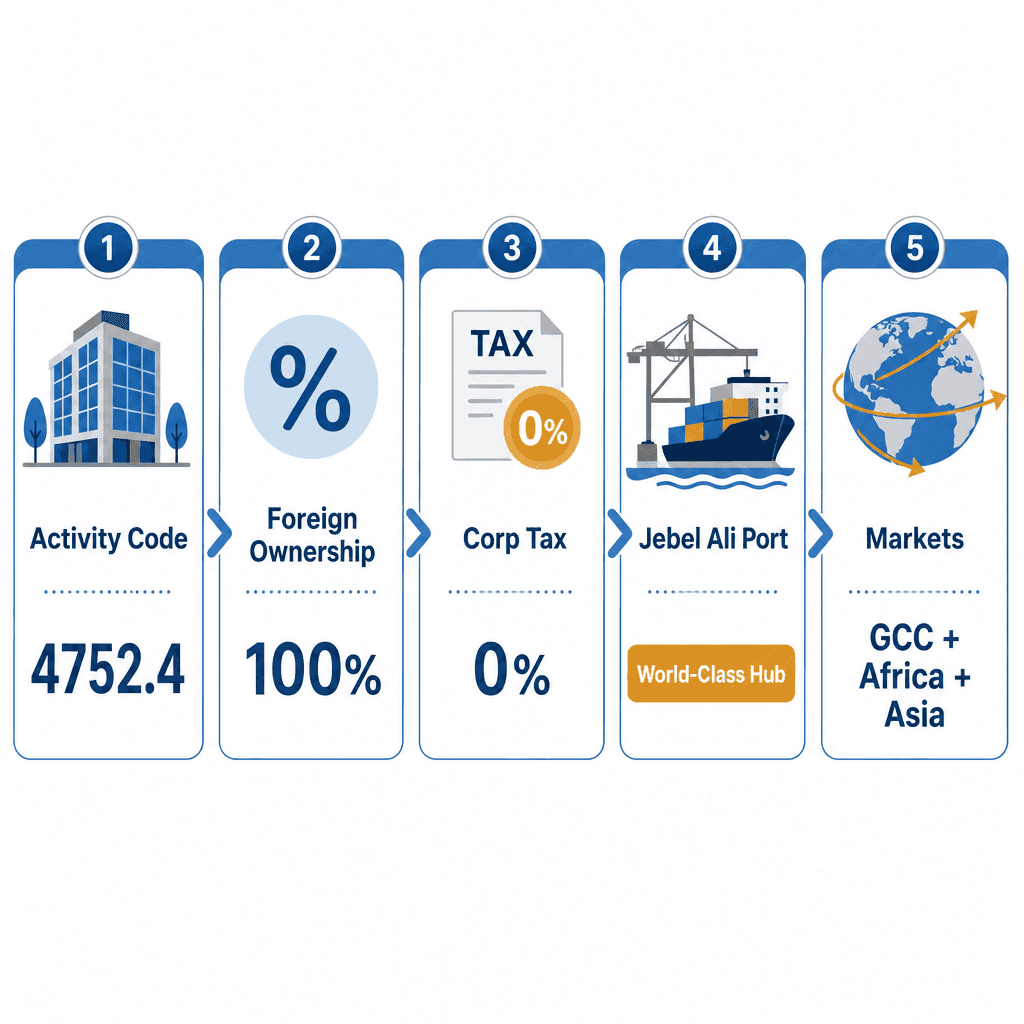
Dubai serves as a regional re-export hub with access to markets across Africa, South Asia, and the GCC. Its world-class Jebel Ali Port, one of the largest globally, makes it a prime base for both local and international cement trade.
Products Covered Under Activity Code 4752.4
The Cement Products Trading License authorises trade in a broad range of goods, from Portland cement and ready-mix concrete to fibre cement boards, precast panels, and cement-based adhesives. This wide scope gives license holders flexibility across multiple construction supply segments.
Who Should Apply for This License
The license suits building materials distributors, international cement manufacturers, construction supply companies, and re-export traders targeting regional markets. Solo entrepreneurs are also eligible, as a single-shareholder structure is permitted.
Key Benefits of Dubai South Free Zone
Businesses licensed at Dubai South Business Hub enjoy 100% foreign ownership, full profit repatriation, and zero corporate or personal income tax under the free zone framework. Its proximity to Al Maktoum International Airport and Jebel Ali Port adds significant logistical advantage.
Fast Setup Timeline: Two to Four Weeks
From document submission, most applicants can expect their license to be issued within two to four weeks. This relatively quick turnaround makes it practical for businesses eager to enter the market without lengthy delays.
Re-Export Rights Included With the License
The license explicitly permits import, export, re-export, and local sale of covered cement products. Re-export activities require the relevant customs documentation, making it straightforward to operate across multiple markets from a single UAE base.
Start With the Right Business Structure
Most trading businesses choose a Free Zone Limited Liability Company (FZ-LLC) as their legal entity, which balances liability protection with operational simplicity. The first formal step is reserving a trade name with the free zone authority before proceeding with full registration.
Dubai's construction sector continues to expand at a remarkable pace, driven by mega-infrastructure projects, a growing population, and sustained government investment. At the heart of this growth lies a consistent and rising demand for cement and cement-based products. For entrepreneurs and established businesses looking to enter this market, obtaining a Cement Products Trading License in Dubai is a strategic and commercially sound decision.
This guide covers everything you need to know about securing a trading license under Activity Code 4752.4 at the Dubai South Business Hub Free Zone, including costs, steps, compliance requirements, and why Dubai remains one of the world's most attractive locations for building materials trade.
The UAE Construction and Cement Market: Why Now?
The UAE cement industry is one of the most active in the Middle East. The country's construction sector accounts for a significant share of GDP, and cement remains a foundational input across residential, commercial, and infrastructure development. The UAE government's ongoing investment in projects linked to urban expansion, transport infrastructure, and tourism facilities continues to sustain strong demand.
Dubai, in particular, serves as a regional hub for re-export, with access to markets across Africa, South Asia, and the wider GCC. The emirate's world-class port infrastructure, including Jebel Ali Port, one of the largest in the world, makes it an ideal base for cement products trading at both local and international scale.
What Does a Cement Products Trading License Cover?
A Cement Products Trading License (Activity Code 4752.4) authorises the holder to trade in a range of cement and cement-related goods. This includes, but is not limited to:
Ordinary Portland cement and blended cement variants
Ready-mix concrete products
Cement blocks, bricks, and precast panels
Cement-based adhesives and grouts
Fibre cement boards and sheets
Cement mortar and plaster products
Other value-added cement composites used in construction
The license falls under the Trading category and permits the import, export, re-export, and local sale of these products within the permitted scope of the free zone.
Who Is This License Suited To?
This license is appropriate for a wide range of business profiles, including:
Building materials distributors seeking a GCC or regional base
International cement manufacturers looking to establish a UAE trading entity
Construction supply companies expanding their product portfolio
Entrepreneurs entering the building materials wholesale market
Re-export traders targeting African, South Asian, or Middle Eastern markets
Dubai South Business Hub Free Zone: A Strategic Location
Dubai South is one of the UAE's fastest-growing free zones, strategically located near Al Maktoum International Airport and within close proximity to Jebel Ali Port. It offers businesses a purpose-built environment for trading, logistics, and light manufacturing. Companies licensed here benefit from 100% foreign ownership, full profit repatriation, and exemption from corporate and personal income taxes under the free zone framework.
Key Facts at a Glance
Activity Code: 4752.4 - Cement Products Trading
License Type: Trading License
Free Zone: Dubai South Business Hub
Foreign Ownership: 100% permitted
Corporate Tax: 0% within free zone framework (subject to qualifying conditions)
Minimum Share Capital: Subject to authority requirements at time of application
Typical Setup Timeline: 2 to 4 weeks from document submission
Re-export Permitted: Yes, with relevant customs documentation
Step 1: Choose Your Business Structure
Select the appropriate legal entity. Most trading businesses opt for a Free Zone Limited Liability Company (FZ-LLC). A single shareholder structure is permitted, making it accessible to solo entrepreneurs as well as larger corporate groups.
Step 2: Reserve Your Trade Name
Submit your preferred company name to Dubai South for approval. Names must comply with UAE naming conventions and must not include references to religious or governmental bodies unless specifically approved.
Step 3: Submit Your Application and Documents
Prepare and submit the required documentation, which typically includes:
Passport copies of all shareholders and directors
Completed application forms
Business plan (required for certain categories)
No Objection Certificate (NOC) if applicable
Proof of address for shareholders
Step 4: Lease Your Business Facility
Dubai South requires license holders to have a registered business address within the free zone. Options range from flexi-desk arrangements to dedicated office and warehouse units, depending on your operational requirements.
Step 5: Pay License Fees and Receive Approval
Once documents are verified and fees paid, the authority issues your trading license. The process typically takes between two and four weeks, subject to document completeness and authority workload.
Step 6: Open a Corporate Bank Account
Following license issuance, you can proceed with opening a UAE corporate bank account. Several local and international banks operate in the UAE and support free zone entities.
Costs Involved in Setting Up
Setup costs for a Cement Products Trading License at Dubai South Business Hub vary depending on the chosen facility type, visa requirements, and additional services. Typical costs include:
License registration and issuance fees payable to Dubai South
Office or flexi-desk lease costs
Visa fees per individual (investor, employee, or dependent visas)
Government processing and attestation fees
It is advisable to request a detailed cost breakdown directly from the free zone authority or through a registered business setup consultant to obtain the most current fee schedule, as these are subject to periodic revision.
Compliance and Regulatory Requirements
Businesses trading in cement products in Dubai must remain compliant with several regulatory frameworks:
UAE Standards and Metrology Authority (ESMA): Certain cement products must meet UAE product conformity standards before being sold locally.
Dubai Municipality: For products entering the local Dubai market, relevant health and safety standards apply.
Customs and Import/Export Regulations: All goods must be accompanied by correct documentation, including certificates of origin and conformity where required.
UAE Corporate Tax: Businesses must assess their obligations under the UAE Corporate Tax Law, which came into effect in June 2023, and determine whether free zone qualifying conditions apply.
Anti-Money Laundering (AML) Compliance: Trading businesses must maintain appropriate AML controls in line with UAE federal law.
Why Dubai Is Well-Positioned for Cement Products Trade
Several structural advantages make Dubai an exceptional base for cement products trading:
Logistics infrastructure: Jebel Ali Port handles millions of containers annually and provides direct shipping routes to over 150 countries.
Re-export hub: Dubai's re-export model allows traders to import, store, and redistribute goods across the region with minimal friction.
Business-friendly regulation: Free zones offer streamlined setup processes, 100% foreign ownership, and tax efficiencies.
Stable demand: Ongoing construction activity across the UAE and wider GCC sustains consistent demand for cement and cement-based products.
Access to suppliers: Proximity to major cement-producing countries in Asia and the Middle East supports competitive sourcing.
Related Activities
Cement & Gypsum Trading Trading License
Gypsum Products Trading Business
Wooden Products Trading Trading License
Frequently Asked Questions