Apply for a Ceramic & Chinaware Trading License in Dubai
Topic Summary
Dubai's Location Makes Re-Export Easy
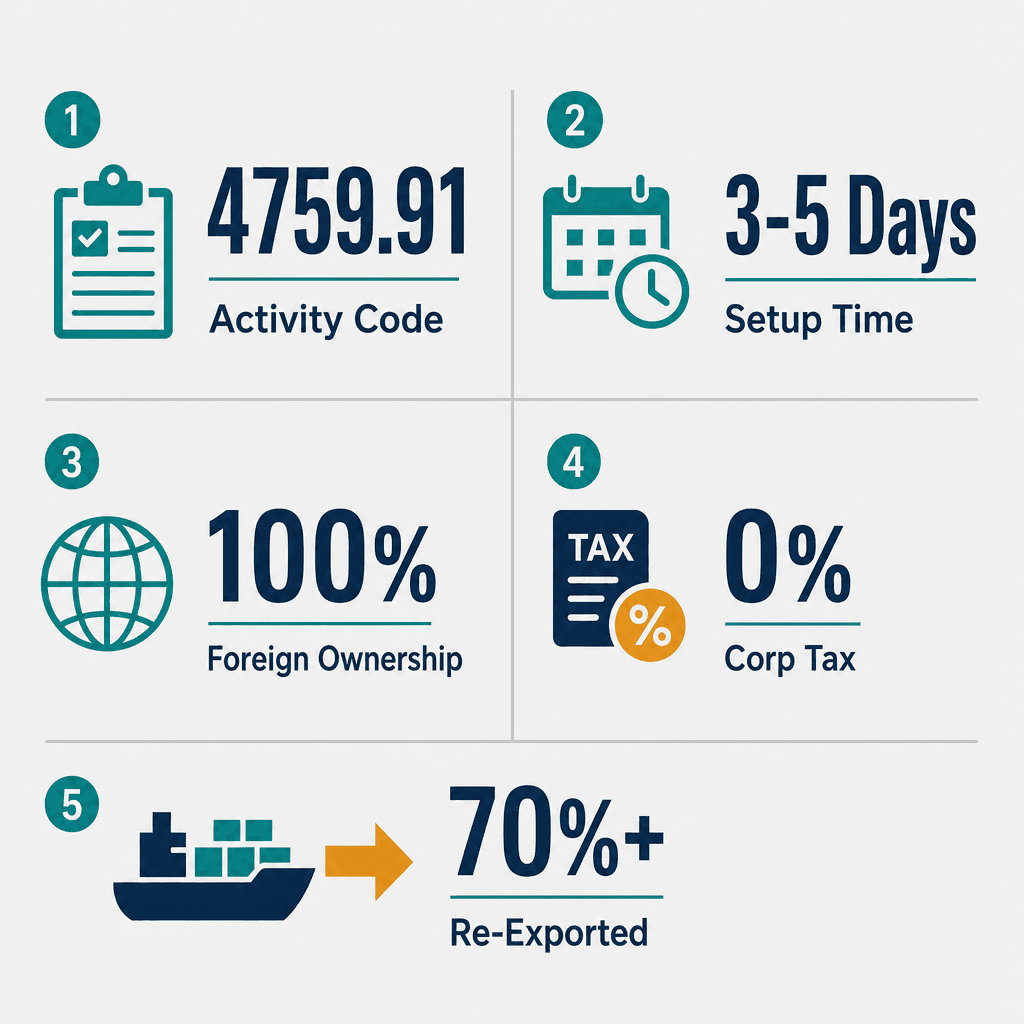
Dubai sits within an eight-hour flight of two-thirds of the global population, connecting ceramic suppliers in Asia and Europe with buyers across the Middle East, Africa, and South Asia. Over 70% of ceramics traded through Dubai are re-exported, reflecting its strength as a distribution hub.
The License Covers a Wide Product Range
Activity Code 4759.91 authorises trading in ceramic floor and wall tiles, porcelain tableware, sanitary ceramics, decorative chinaware, industrial ceramics, and related glassware. This breadth makes a single license suitable for businesses serving construction, hospitality, and retail markets simultaneously.
100% Foreign Ownership Is Permitted
Setting up at Dubai South Business Hub Free Zone allows entrepreneurs to retain full ownership of their business without requiring a local partner. There is also no mandatory minimum share capital for most free zone structures, lowering the barrier to entry.
Setup Can Be Completed in Under a Week
The licensing process at Dubai South Business Hub can take as few as three to five working days once documents are submitted. Required paperwork typically includes passport copies, a business plan outline, and completed application forms.
Startup Costs Are Transparent and Manageable
Core setup costs include a license registration fee of AED 5,000 to 15,000, a flexi-desk or office package from AED 8,000 annually, and visa allocation fees of AED 3,000 to 5,000 per visa. Total costs scale based on visa requirements and office space preferences.
Strong Market Demand Supports the Business Case
The UAE construction sector is valued at over USD 130 billion and generates consistent demand for ceramic tiles and building materials. The hospitality and food service industries add further demand for fine porcelain and tableware, creating multiple revenue channels for license holders.
Zero Corporate Tax Applies to Qualifying Income
Businesses operating within the free zone pay 0% corporate tax on qualifying free zone income, alongside Dubai's zero-tariff import policy on most goods. These combined advantages give ceramic traders a meaningful cost edge over competitors based in higher-tax jurisdictions.
The global ceramics and chinaware market continues to expand, driven by growth in construction, interior design, hospitality, and retail sectors. Dubai sits at the centre of this trade, connecting manufacturers across Asia and Europe with buyers throughout the Middle East, Africa, and South Asia. For entrepreneurs and established businesses looking to enter this market, obtaining a Ceramic & Chinaware Trading License in Dubai is a straightforward and commercially sound decision.
This guide covers everything you need to know about setting up under Activity Code 4759.91 at the Dubai South Business Hub Free Zone, including what the license covers, who it suits, setup costs, and the steps involved.
Why Dubai for Ceramic & Chinaware Trading?
Dubai handled over 14 million tonnes of cargo through its ports and airports in 2023, reinforcing its position as one of the world's most active re-export hubs. The emirate's strategic location places it within an eight-hour flight of two-thirds of the global population, making it ideal for distributing ceramic tiles, sanitary ware, tableware, and decorative chinaware to markets across three continents.
The UAE construction sector, valued at over USD 130 billion, continues to generate consistent demand for ceramic tiles and building materials. Meanwhile, the hospitality and food service industries sustain strong demand for fine chinaware and porcelain tableware. Dubai's zero-tariff import policy on most goods, combined with its world-class logistics infrastructure, gives traders a significant competitive advantage.
What the Ceramic & Chinaware Trading License Covers
Under Activity Code 4759.91, a Ceramic & Chinaware Trading License authorises the holder to trade in a wide range of products, including:
Ceramic floor and wall tiles
Porcelain and bone china tableware
Decorative ceramic and chinaware products
Sanitary ceramics and bathroom fittings
Industrial and technical ceramics
Glassware and related household items
The license falls under the Trading category and is issued as a Trading License. It permits import, export, re-export, and local distribution of covered goods within the free zone and to international markets.
Who This License Suits
This license is well-suited to a broad range of business profiles, including:
International ceramic manufacturers seeking a distribution hub in the Middle East
Wholesale traders importing from China, Spain, Italy, or India for regional resale
Entrepreneurs entering the home furnishings and interiors supply chain
Hospitality procurement businesses sourcing tableware and kitchenware
E-commerce businesses selling ceramic goods to GCC consumers
Ceramic & Chinaware Trading in Dubai: Key Facts
Activity Code: 4759.91
License Type: Trading License
Free Zone: Dubai South Business Hub
Foreign Ownership: 100% permitted
Corporate Tax: 0% on qualifying free zone income
Setup Timeline: As few as 3 to 5 working days
UAE Re-export Share: Over 70% of ceramics traded are re-exported
Minimum Capital Requirement: No mandatory minimum share capital for most free zone structures
Estimated Costs
Cost Component | Estimated Range (AED) |
|---|---|
License registration fee | 5,000 to 15,000 |
Visa allocation (per visa) | 3,000 to 5,000 |
Office or flexi-desk package | 8,000 to 20,000 per annum |
Government and admin fees | 1,000 to 3,000 |
Total setup costs vary depending on the number of visas required, office space preferences, and any additional activity endorsements. Consulting a licensed business setup adviser will provide a precise quote tailored to your requirements.
Steps to Obtain the License
Choose your business structure: Most free zone applicants opt for a Free Zone Establishment (FZE) or Free Zone Company (FZCO) structure.
Submit your application: Provide passport copies, a business plan outline, and completed application forms to the Dubai South Business Hub authority.
Select a workspace: Choose from a flexi-desk, serviced office, or warehouse unit depending on your storage and operational needs.
Pay fees and receive initial approval: Once fees are settled, initial approval is typically granted within a few working days.
Obtain your trade license: The formal license is issued following document verification.
Open a corporate bank account: Several UAE banks offer business accounts for free zone companies.
Apply for visas:Residence visas for owners and employees can be processed through the free zone authority.
Licensing and Compliance Requirements
Ceramic and chinaware traders operating from Dubai South must comply with the following:
Annual license renewal with the free zone authority
Compliance with UAE customs regulations for import and re-export
Adherence to Emirates Authority for Standardisation and Metrology (ESMA) product standards where applicable
Maintaining valid trade documentation including certificates of origin, packing lists, and commercial invoices
Corporate tax registration with the Federal Tax Authority if annual turnover exceeds AED 375,000
Free zone companies trading exclusively with overseas markets or other free zones generally benefit from a 0% corporate tax rate on qualifying income under the UAE Corporate Tax Law introduced in 2023.
Dubai South Business Hub Free Zone: Why It Stands Out
Dubai South is home to Al Maktoum International Airport, which is projected to become the world's largest airport by capacity. The free zone offers direct airside access, bonded warehousing, and streamlined customs clearance, making it particularly advantageous for high-volume ceramic and chinaware traders who rely on efficient logistics. Its proximity to Jebel Ali Port, one of the busiest container ports globally, further strengthens its appeal for sea freight operations.
Related Activities
Musical Instruments & Requisites Trading Trading License
Chandeliers Trading Trading License
Light Fitting & Fixtures Trading Business
Frequently Asked Questions