How to Get a Confectionery & Chocolate Trading License in Dubai

Topic Summary
Understand Exactly What the License Covers
Activity Code 4721.77 authorises trading in chocolate bars, candies, caramels, chewing gum, and packaged sweets. It does not cover manufacturing, so businesses wanting to produce confectionery in the UAE will need a separate industrial license.
Choose Dubai South for Strategic Logistics Advantage
Dubai South Business Hub sits directly beside Al Maktoum International Airport and the Jebel Ali Port corridor, giving confectionery traders fast access to air and sea freight. This location enables re-export to over 140 countries across the Middle East, Africa, and South Asia.
Enjoy 100% Foreign Ownership and Zero Tax
Setting up in Dubai South means no local sponsor is required and qualifying free zone entities pay zero corporate and personal income tax. Traders also benefit from full repatriation of profits and capital.
Prepare the Right Documents Before Applying
You will need passport copies for all shareholders and directors, proof of residential address, a completed application form, and potentially a business plan. Securing a registered office or flexi-desk within the free zone is also a requirement.
Meet Food Safety and Halal Compliance Standards
Confectionery traders must register with Dubai Municipality's Food Safety Department and comply with UAE food labelling rules under ESMA. Halal certification is required where applicable, and all imported goods must meet UAE customs and country-of-origin regulations.
Expect a Fast Setup Timeline of 3–7 Days
The licensing process at Dubai South Business Hub is designed to be efficient, with most applications completed within three to seven working days. This makes it one of the quicker routes to legally trading confectionery in the UAE.
Identify Whether This License Suits Your Business Model
The license is well matched to international brands seeking a regional hub, wholesale distributors, e-commerce sellers, and entrepreneurs in the gifting confectionery segment. It covers both import and re-export activities, making it highly versatile for GCC and African market entry.
The global confectionery market is projected to surpass USD 300 billion by 2030, and the UAE sits at the heart of one of the world's most active re-export corridors. Dubai's strategic location, world-class logistics infrastructure, and business-friendly regulations make it an exceptional base for trading confectionery and chocolate products across the Middle East, Africa, and South Asia. Whether you are importing premium European chocolates or distributing regional sweets, obtaining the right license is your first and most important step.
This guide walks you through everything you need to know about securing a Confectionery and Chocolate Trading License in Dubai, specifically under Activity Code 4721.77 at the Dubai South Business Hub Free Zone.
What the License Covers
The Confectionery and Chocolate Trading License falls under Activity Code 4721.77, classified as a Trading License within the Trading category. It authorises the holder to buy, sell, import, export, and re-export confectionery and chocolate products commercially. This includes:
Chocolate bars, truffles, pralines, and cocoa-based products
Hard and soft candies, toffees, and caramels
Packaged sweets and gifting confectionery ranges
Wholesale and retail distribution of branded confectionery
The license does not cover manufacturing or processing. Businesses that wish to produce confectionery within the UAE would require a separate industrial or manufacturing license.
Why Dubai South Business Hub Free Zone
Dubai South is a purpose-built economic zone adjacent to Al Maktoum International Airport, the world's largest airport by design capacity. For confectionery traders, the proximity to air freight facilities and the Jebel Ali Port corridor is a significant commercial advantage. Key benefits of setting up at Dubai South Business Hub include:
Full repatriation of profits and capital
Streamlined customs procedures for import and re-export
Access to a growing network of logistics and warehousing partners
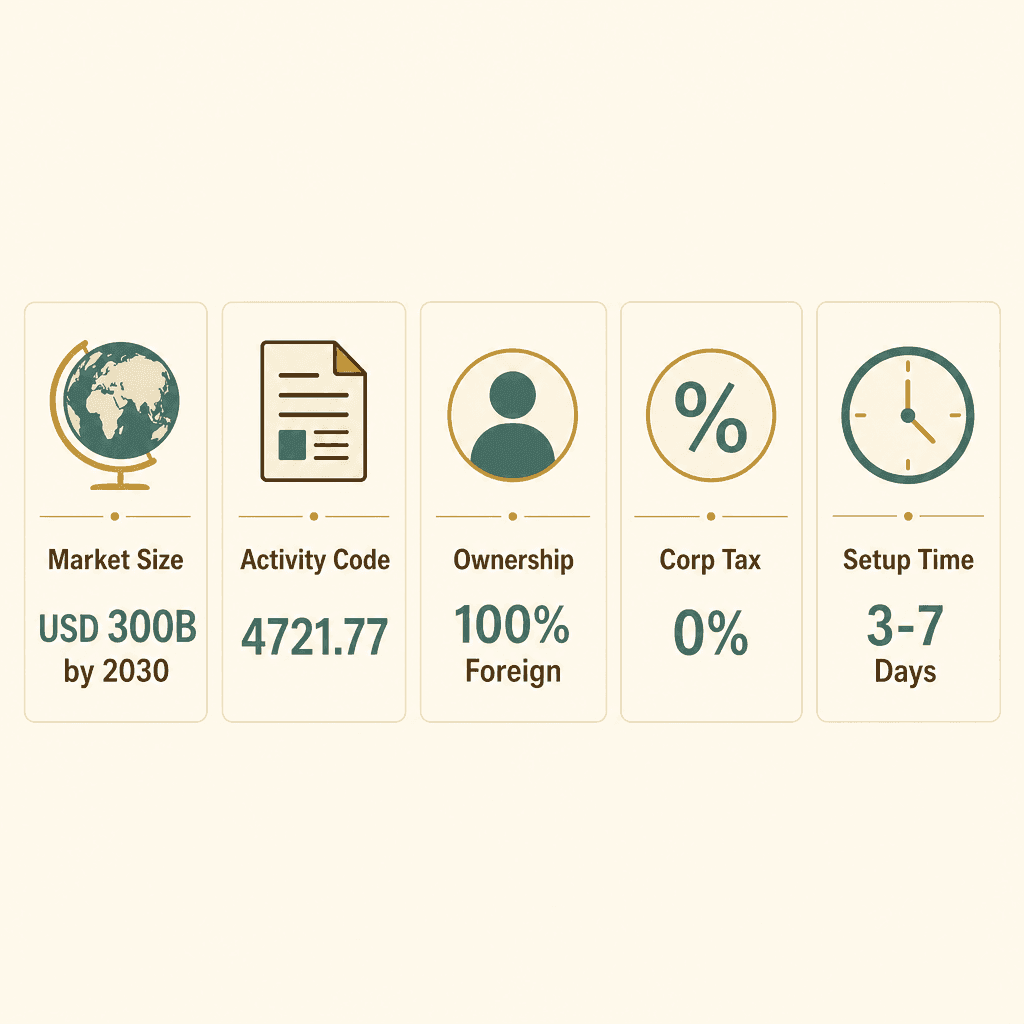
Key Stats at a Glance
Activity Code: 4721.77
License Type: Trading License
Ownership: 100% foreign ownership permitted
Corporate Tax: 0% for qualifying free zone entities
UAE Confectionery Imports: Valued at over USD 500 million annually
Re-export reach: 140+ countries accessible via Dubai's logistics network
Typical Setup Timeline: 3 to 7 working days
Minimum Share Capital: Subject to authority requirements at time of application
Who This License Suits
This license is ideally suited to a broad range of entrepreneurs and businesses, including:
International confectionery brands seeking a regional distribution hub
Import and export traders looking to serve GCC and African markets
E-commerce businesses selling confectionery to UAE consumers
Wholesale distributors supplying supermarkets, hotels, and retailers
Entrepreneurs entering the gifting and seasonal confectionery segment
Licensing and Compliance Requirements
To obtain your Confectionery and Chocolate Trading License at Dubai South Business Hub, you will need to meet the following requirements:
Completed application form from the free zone authority
Passport copies of all shareholders and directors
Proof of residential address for all shareholders
Business plan outlining trading activities (may be requested)
Selection of a registered office or flexi-desk within the free zone
For food-related trading activities, including confectionery, you may also need to register with the Dubai Municipality's Food Safety Department and comply with UAE food labelling standards under the Emirates Authority for Standardisation and Metrology (ESMA). Products must meet halal certification requirements where applicable, and imported goods must comply with UAE customs declarations and country-of-origin rules.
Setup Costs and Steps
Setting up a confectionery trading business at Dubai South Business Hub is a straightforward process. The typical steps are as follows:
Choose your business activity: Confirm Activity Code 4721.77 as your primary trading activity.
Select a company structure: Most applicants register as a Free Zone Establishment (FZE) for sole ownership or a Free Zone Company (FZC) for multiple shareholders.
Reserve your trade name: Submit your preferred company name for approval, ensuring it complies with UAE naming conventions.
Submit your application and documents: Provide all required documents to the free zone authority.
Choose your office package: Select from flexi-desk, shared office, or dedicated office space options.
Pay license fees and receive your license: Upon approval and payment, your trading license is issued, typically within 3 to 7 working days.
License fees vary depending on the office package selected and the number of visa allocations required. It is advisable to contact the Dubai South Business Hub directly for the most current fee schedule.
Market Opportunity and Margins
The UAE confectionery market benefits from a young, affluent population, high tourist footfall, and a strong gifting culture during Ramadan, Eid, and festive seasons. Retail margins for premium imported chocolate typically range from 30% to 60%, while wholesale distribution margins vary between 10% and 25% depending on volume and product category. Dubai's re-export model also allows traders to source competitively from European or Asian manufacturers and distribute across the wider MENA region with minimal tariff barriers under existing free trade agreements.
Related Activities
Vegetables & Fruit Trading Trading License
Fresh, Chilled & Frozen Meat Trading Trading License
Fresh Fish & Marine Animals Trading Trading License
Frequently Asked Questions