How to Get a Dried Vegetables & Fruit Trading License in Dubai

Topic Summary
Dubai's Location Makes Trade Exceptionally Strategic
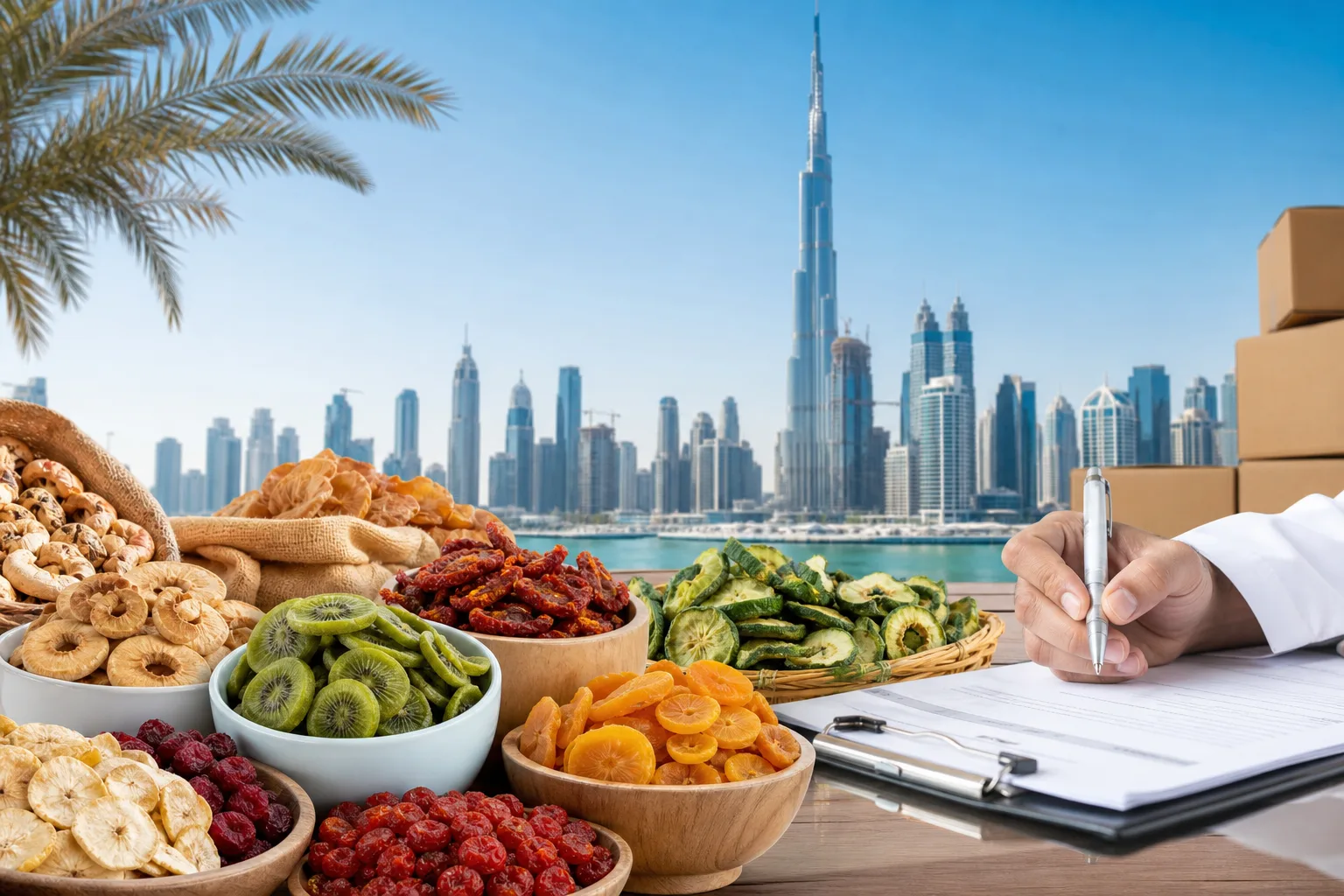
Dubai sits at the crossroads of Asia, Africa, and Europe, making it one of the world's most active food re-export corridors. Its proximity to Al Maktoum International Airport and Jebel Ali Port gives dried produce traders unmatched inbound and outbound connectivity.
100% Foreign Ownership, Zero Corporate Tax
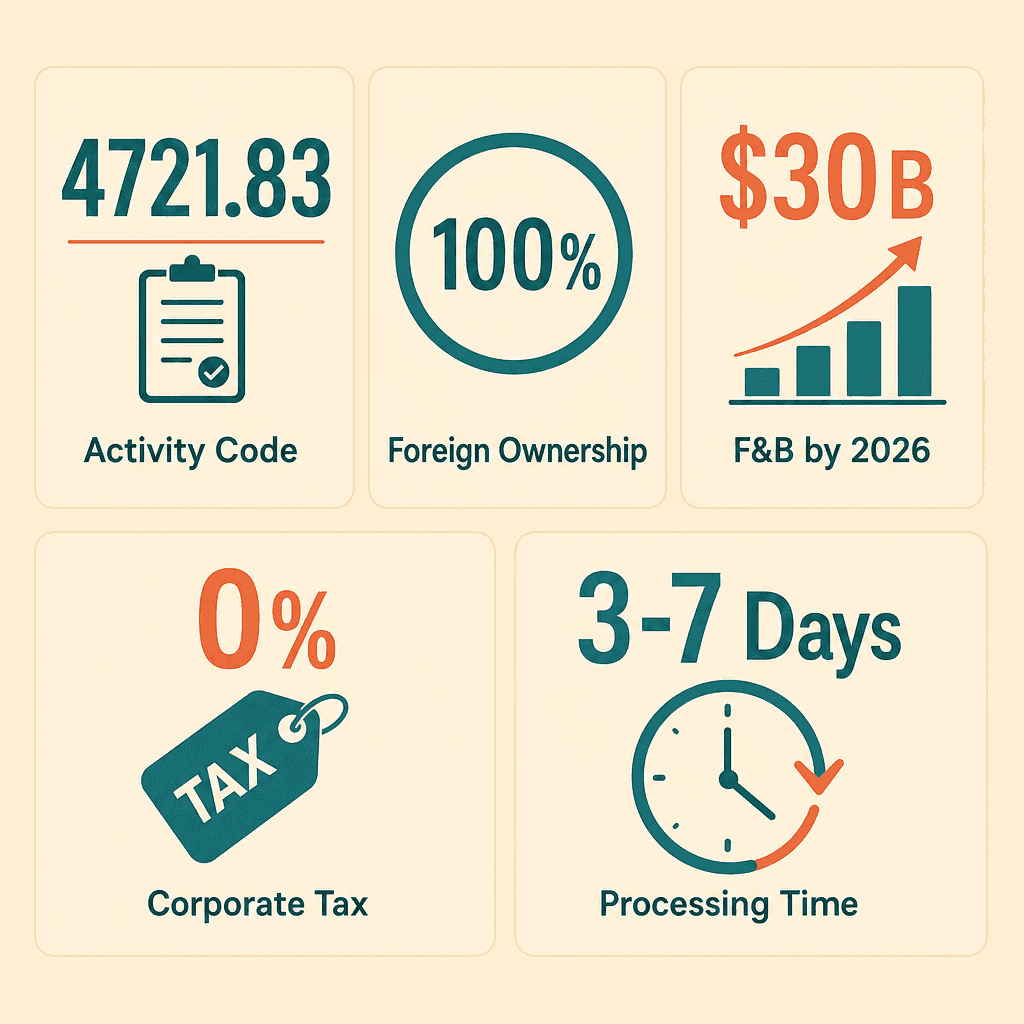
Traders operating through Dubai South Business Hub Free Zone can retain full ownership of their business without needing a local sponsor. Qualifying free zone income is subject to 0% corporate tax, and 100% of capital and profits can be repatriated.
License Covers a Wide Range of Dried Produce
Activity Code 4721.83 permits the import, export, re-export, and wholesale distribution of dried and dehydrated fruits and vegetables, including sultanas, prunes, sun-dried tomatoes, and dehydrated onions. There are no restrictions on the volume or variety of permitted dried produce.
Fast Processing Time Gets You Trading Quickly
The Dried Vegetables and Fruit Trading License can typically be processed in just 3 to 7 working days. This rapid turnaround allows entrepreneurs and established operators alike to launch operations without lengthy bureaucratic delays.
Surging Demand for Shelf-Stable Health Foods
Post-pandemic consumer behaviour has driven consistent volume growth in dried fruits and dehydrated vegetables across the Gulf Cooperation Council. The UAE's food and beverage market is projected to exceed USD 30 billion by 2026, fuelled by a growing expatriate population and rising health consciousness.
Suitable for a Broad Range of Business Operators
The license is designed to accommodate food importers, wholesale distributors, re-export traders, and health food entrepreneurs. Its straightforward activity scope means a single license covers the full supply chain from sourcing to international distribution.
Dubai's position as a global logistics hub makes it one of the most strategically valuable locations in the world for trading dried vegetables and fruit across Asia, Africa, Europe, and beyond. With world-class port infrastructure, a business-friendly regulatory environment, and a rapidly growing regional appetite for shelf-stable food products, the opportunity for dried produce traders has never been stronger.
This guide explains exactly how to obtain a Dried Vegetables and Fruit Trading License (Activity Code 4721.83) at Dubai South Business Hub Free Zone, covering costs, steps, compliance requirements, and why this market represents a strong commercial opportunity.
Key Stats at a Glance
Activity Code: 4721.83 - Retail sale of dried vegetables and fruit
License Type: Trading License | Category: Trading
Free Zone: Dubai South Business Hub Free Zone
Foreign Ownership: 100% permitted, no local sponsor required
Corporate Tax:0% on qualifying free zone income
Profit Repatriation: 100% of capital and profits
Typical License Processing Time:3 to 7 working days
UAE Food & Beverage Sector Value: Projected to exceed USD 30 billion by 2026
Why Dubai Is a Prime Market for Dried Vegetables and Fruit Trading
The UAE sits at the crossroads of three major continents, making it one of the world's most active food re-export corridors. The country imports significant volumes of food commodities from Asia and Europe, processes or repackages them, and redistributes them across Africa, the Middle East, and South Asia. Dried vegetables and fruit, with their long shelf life and ease of transport, are particularly well suited to this trade model.
Post-pandemic consumer behaviour has accelerated demand for shelf-stable, health-oriented food products across the Gulf Cooperation Council. Dried fruits such as dates, apricots, figs, and raisins, alongside dehydrated vegetables used in ready meals and food manufacturing, have seen consistent volume growth. The UAE's food and beverage market is projected to exceed USD 30 billion by 2026, supported by a growing expatriate population and increasing health consciousness.
Dubai South Free Zone offers a decisive logistical advantage. Its location adjacent to Al Maktoum International Airport, one of the world's largest cargo airports, and its proximity to Jebel Ali Port, the largest port in the Middle East, give traders unmatched connectivity for inbound and outbound shipments. Combined with the UAE's zero personal income tax environment and free zone entitlement to 100% foreign ownership, Dubai South presents a compelling base for dried produce trading operations of any scale.
What the Dried Vegetables and Fruit Trading License Covers
The Dried Vegetables and Fruit Trading License operates under Activity Code 4721.83, classified within the International Standard Industrial Classification (ISIC) framework. This activity code covers the retail and wholesale trading of dried, dehydrated, and preserved fruit and vegetables, including products such as sultanas, prunes, dried apricots, sun-dried tomatoes, dehydrated onions, and similar shelf-stable produce.
Issued as a Trading License under the Trading category at Dubai South Business Hub Free Zone, this license permits the holder to engage in the import, export, re-export, and wholesale distribution of dried produce. Traders may source goods internationally, hold stock within the free zone, and distribute to customers both within the UAE and across global markets without restriction on the volume or variety of permitted dried produce.
This license is well suited to a broad range of operators, including food importers looking to consolidate supply chains, wholesale distributors supplying supermarkets and food manufacturers, re-export traders using Dubai as a transit hub, and entrepreneurs entering the fast-growing health food supply chain. The straightforward activity scope means that a single license covers the full spectrum of dried produce trading without requiring multiple registrations.
Setup Costs and Steps to Get Licensed
Establishing a dried vegetables and fruit trading company at Dubai South Business Hub Free Zone involves a clear sequence of steps, with the process typically completed within a few working days once all documents are in order.
License fees at Dubai South vary depending on the legal structure chosen, the number of shareholders, and whether a physical office or flexi-desk package is selected. As a general guide, free zone trading license packages typically start from approximately AED 12,000 to AED 20,000 per year, inclusive of registration, the trading license itself, and a flexi-desk facility. Warehouse options carry additional costs depending on the size and specification required. Annual renewal fees are broadly comparable to initial registration costs. It is advisable to request a current fee schedule directly from the free zone authority, as pricing is subject to periodic revision.
The step-by-step process is as follows:
Select the business activity (4721.83) and confirm the legal structure
Submit the completed application form to Dubai South Business Hub Free Zone
Provide the required supporting documents
Pay the applicable registration and license fees
Receive the trade license and company incorporation documents
Open a corporate bank account and commence trading
Key documents required typically include passport copies for all shareholders and directors, a business plan or activity description, proof of residential address, and shareholder details. No minimum share capital is mandated for most free zone trading structures, though individual banks may have their own account-opening requirements.
The estimated timeline from document submission to license issuance is generally three to seven working days, making Dubai South one of the faster free zone jurisdictions for business setup in the UAE.
Choosing the Right Legal Structure
Dubai South Business Hub Free Zone permits two primary legal structures for trading companies: a Free Zone Company (FZCO), which accommodates two or more shareholders, and a Free Zone Establishment (FZE) or sole establishment for a single shareholder. Both structures benefit from 100% foreign ownership, meaning there is no requirement for a UAE national sponsor or local partner. This is a significant advantage compared with mainland Dubai company formation, where certain activities may still require local shareholding arrangements. Entrepreneurs and corporate groups alike can hold their full equity stake directly, simplifying profit distribution and governance.
Licensing, Compliance, and Regulatory Requirements
Trading dried vegetables and fruit in Dubai involves compliance with several regulatory bodies beyond the free zone authority itself. Dubai Municipality's Food Safety Department oversees the safety standards applicable to food products imported, stored, and distributed within Dubai. Traders importing dried produce must ensure their goods meet UAE food safety standards, including permissible pesticide residue levels, moisture content specifications, and contamination controls.
Labelling requirements are strictly enforced. All dried produce sold or distributed in the UAE must carry Arabic and English labelling that includes the product name, country of origin, ingredients, net weight, expiry date, and storage instructions. For products marketed to the UAE's Muslim-majority population or distributed to regional markets, halal certification from an approved certifying body may be required or commercially expected.
Import and export documentation is processed through Dubai Customs and the Federal Customs Authority. Re-export traders must obtain the relevant customs declarations, certificates of origin, and any phytosanitary certificates required by the destination country. The UAE's extensive network of bilateral trade agreements can reduce tariff burdens on re-exported goods across many markets.
Ongoing compliance obligations include annual license renewal with Dubai South, maintaining accurate trade records, and ensuring that any changes to shareholders, directors, or business activities are promptly notified to the free zone authority.
Facility and Storage Requirements
Dubai South Business Hub Free Zone offers both flexi-desk and warehouse options to suit different operational needs. A flexi-desk arrangement is sufficient for traders who manage logistics through third-party warehousing or who operate primarily as brokers and distributors without holding physical stock within the free zone. For traders who require on-site storage, Dubai South offers warehouse units of varying sizes, which can be configured to meet food-grade dry storage specifications.
Dried produce does not generally require cold-chain storage, but it does require dry, temperature-controlled conditions to maintain quality and shelf life. Traders should ensure that any storage facility used, whether within the free zone or via a third-party logistics provider, meets the applicable Dubai Municipality food storage standards to avoid compliance issues during inspections.
Commercial Advantages of Operating from Dubai South Business Hub Free Zone
Beyond the logistical benefits, Dubai South Business Hub Free Zone offers a compelling financial and operational framework for dried produce traders. Qualifying free zone companies benefit from a 0% corporate tax rate on eligible income under the UAE's corporate tax regime introduced in 2023, alongside 100% repatriation of profits and capital with no foreign exchange restrictions.
The UAE has signed double taxation treaties with over 130 countries, reducing withholding tax burdens on cross-border payments and making the UAE an efficient holding and trading location for international food commodity businesses. Dubai South's integrated economic zone, situated adjacent to Expo City Dubai and directly connected to Al Maktoum International Airport, positions traders at the centre of one of the most ambitious logistics and commercial developments in the world.
The free zone operates a single-window licensing authority, meaning that business registration, license issuance, and facility allocation are managed through one point of contact, reducing administrative complexity and setup time considerably.
Related Activities
Vegetables & Fruit Trading Trading License
Fresh, Chilled & Frozen Meat Trading Trading License
Fresh Fish & Marine Animals Trading Trading License
Frequently Asked Questions