Start a Food Supplements Trading Business in Dubai
Topic Summary
Dubai's Logistics Edge Is Hard to Beat
Dubai South Free Zone sits next to Al Maktoum International Airport and Jebel Ali Port, two of the world's busiest cargo gateways. The emirate also handles roughly 80% of UAE re-exports, giving supplement traders direct reach into South Asia, Africa, and the wider GCC.
One License Covers Multiple Trade Activities
Activity code 4721.79 permits the holder to import, export, store, and distribute vitamins, dietary supplements, herbal products, and protein powders. It is purpose-built for wholesale and distribution, making it ideal for supplying retailers, gyms, clinics, and online platforms.
Foreign Owners Keep Full Control and Profits
Free zone companies in Dubai South enjoy 100% foreign ownership with no local sponsor required. Operators also benefit from zero corporate tax on qualifying free zone income and full repatriation of profits.
Startup Costs Are Accessible for New Entrants
A starter license and flexi-desk arrangement typically costs between AED 12,000 and AED 25,000, with the setup process taking just two to four weeks. Businesses needing dedicated warehouse space will pay additional lease costs on top of that baseline.
A Booming Market Backs Your Investment
Dubai's health and wellness retail sector has surpassed USD 1.5 billion, fuelled by a health-conscious expatriate population and rising Gulf disposable incomes. The UAE's Vision 2031 agenda actively supports growth in health, wellness, and life sciences, offering long-term policy stability.
This License Suits a Wide Range of Operators
The food supplements trading license is a strong fit for international brands seeking a regional hub, e-commerce entrepreneurs targeting Middle East consumers, and existing supplement businesses expanding into MENA. Wholesale traders sourcing from Europe, North America, or Asia are equally well-positioned.
Global demand for vitamins, minerals, protein powders, and wellness supplements has surged over the past decade, and the Middle East sits at the centre of that growth. Dubai alone recorded health and wellness retail sales exceeding USD 1.5 billion in recent years, driven by a health-conscious expatriate population and rising disposable incomes across the Gulf. For entrepreneurs looking to capitalise on this momentum, establishing a food supplements trading business in Dubai offers a compelling combination of strategic geography, favourable regulation, and world-class logistics infrastructure.
This guide covers everything you need to know about obtaining a food supplements trading license under activity code 4721.79 at Dubai South Business Hub Free Zone, including setup costs, compliance requirements, and why Dubai remains one of the most attractive locations in the world for this trade.
Why Dubai for Food Supplements Trading?
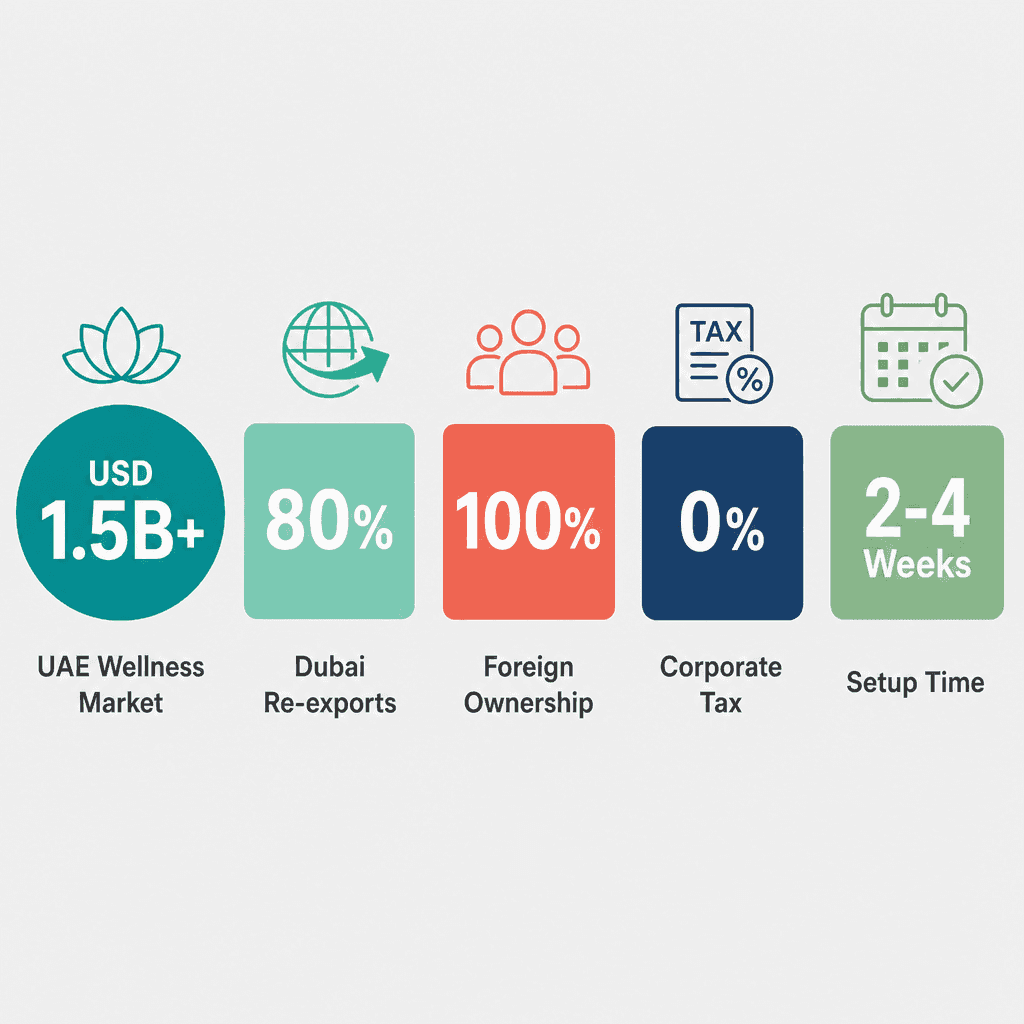
Dubai's position as a global re-export hub makes it uniquely suited to the food supplements trade. The emirate handles roughly 80% of the UAE's total re-exports, with goods flowing to South Asia, Africa, and the wider GCC. Dubai South Free Zone sits adjacent to Al Maktoum International Airport and Jebel Ali Port, giving license holders direct access to two of the world's busiest cargo gateways.
Beyond logistics, the UAE's regulatory environment is transparent and business-friendly. Free zone companies benefit from 100% foreign ownership, zero corporate tax on qualifying income up to the applicable thresholds, and full repatriation of profits. The UAE's Vision 2031 economic agenda actively encourages diversification into health, wellness, and life sciences, providing long-term policy stability for operators in this sector.
Understanding the Food Supplements Trading License
The food supplements trading license at Dubai South Business Hub Free Zone is classified under activity code 4721.79. It falls within the Trading license category and permits the holder to import, export, store, and distribute food supplements including vitamins, dietary supplements, herbal products, protein supplements, and related wellness goods.
The license does not cover manufacturing or retail pharmacy activities. It is specifically designed for wholesale and distribution operations, making it ideal for businesses sourcing products internationally and supplying retailers, clinics, gyms, and online platforms across the region.
Who Is This License Best Suited For?
International supplement brands seeking a regional distribution hub
Wholesale traders importing from Europe, North America, or Asia for GCC distribution
E-commerce entrepreneurs selling supplements to consumers across the Middle East
Fitness and wellness entrepreneurs building a product portfolio
Existing supplement businesses looking to expand into the MENA market
Food Supplements Trading in Dubai: Key Facts
Activity Code: 4721.79
License Type: Trading License
Free Zone: Dubai South Business Hub
Foreign Ownership: 100% permitted
Corporate Tax: 0% on qualifying free zone income
UAE Health & Wellness Market: USD 1.5 billion+
Re-export Share: Dubai handles ~80% of UAE re-exports
Typical Setup Timeline: 2 to 4 weeks
Setup Costs and Steps
Setting up a food supplements trading company at Dubai South Business Hub Free Zone is a straightforward process. Costs vary depending on the visa package selected and whether physical warehouse space is required, but the typical investment for a starter package ranges from approximately AED 12,000 to AED 25,000 for the license and flexi-desk arrangement. Larger operations requiring dedicated storage facilities will incur additional lease costs.
Step-by-Step Setup Process
Step 1 - Choose your business structure: Most applicants register as a Free Zone Establishment (FZE) with a single shareholder or a Free Zone Company (FZC) with multiple shareholders.
Step 2 - Submit the application: Provide passport copies, a business plan summary, and completed application forms to Dubai South Business Hub.
Step 3 - License approval: The free zone authority reviews and approves the trading license, typically within 5 to 10 working days.
Step 4 - Lease your facility: Select a flexi-desk, shared office, or warehouse unit depending on operational needs.
Step 5 - Open a corporate bank account: Several UAE banks and digital banking providers serve free zone entities.
Step 6 - Obtain product approvals: Register supplements with the UAE Ministry of Health and Prevention (MoHAP) before importing or selling.
Licensing and Compliance Requirements
Trading food supplements in the UAE requires compliance beyond the free zone license itself. The UAE Ministry of Health and Prevention mandates that all food supplements sold or distributed within the country carry valid product registration. The Emirates Authority for Standardisation and Metrology (ESMA) also sets labelling and quality standards that imported products must meet.
Key compliance considerations include:
Product registration with MoHAP prior to importation for local sale
Compliance with UAE.S GSO standards for labelling, including Arabic language requirements
Halal certification where relevant to the product formulation
Customs documentation aligned with Dubai Customs requirements for each shipment
Storage conditions that meet temperature and hygiene guidelines for health products
For re-export operations, products destined for markets outside the UAE may follow different regulatory pathways, though Dubai Customs clearance procedures still apply at the point of exit.
Profit Margins and Market Opportunity
Food supplements typically carry healthy gross margins. Wholesale distribution margins in the GCC generally range from 20% to 45% depending on product category, brand strength, and distribution channel. Private-label supplement trading can yield margins at the higher end of this range. The GCC nutraceuticals market is projected to grow at a compound annual growth rate of around 7% through to 2028, underpinned by increasing health awareness, sports participation, and ageing population demographics.
Related Activities
Baby Food Trading Trading License
Canned & Preserved Food Trading Trading License
Snack Food Trading Trading License
Frequently Asked Questions