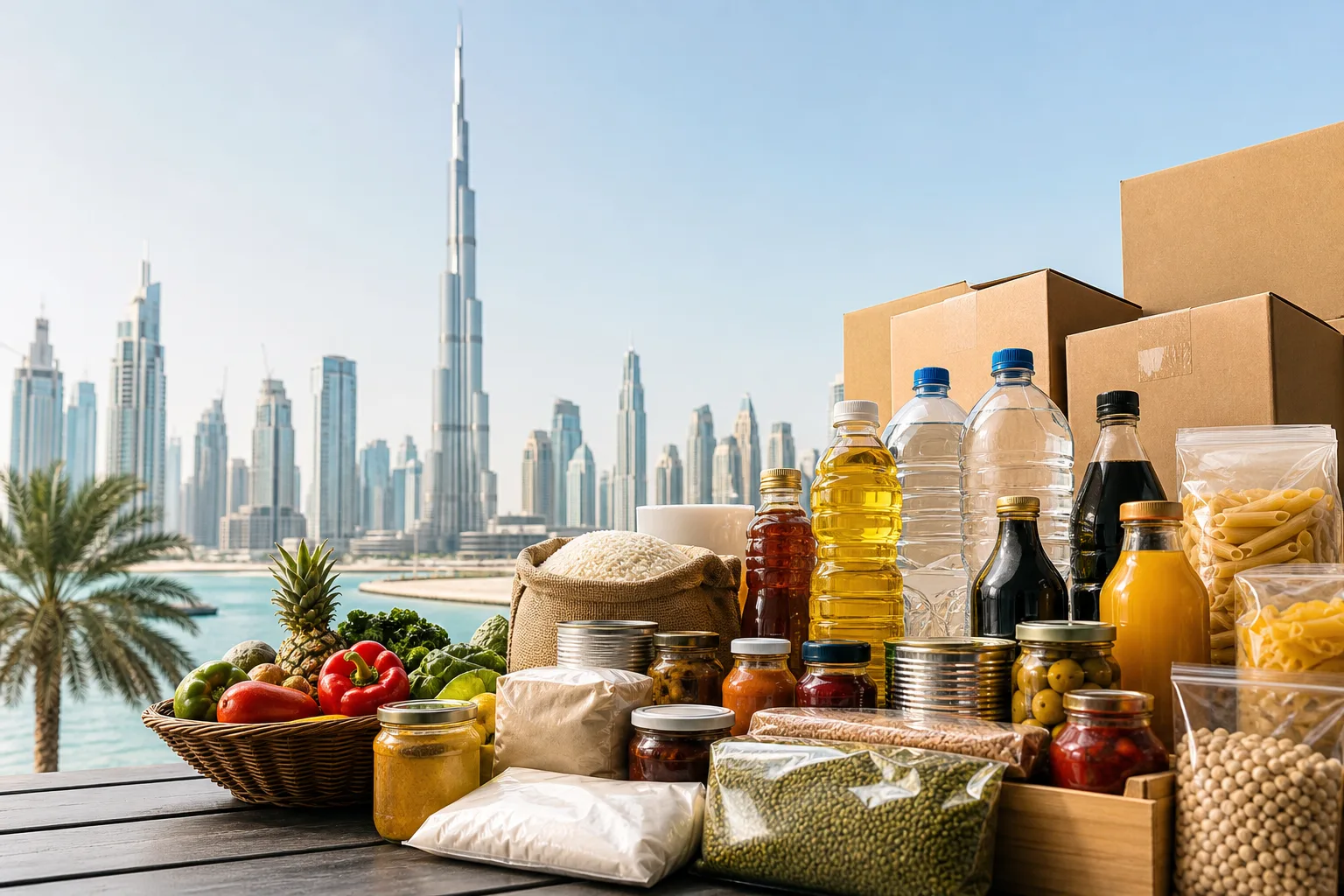
Start a Foodstuff & Beverages Trading Business in Dubai
Topic Summary
Dubai's Market Scale Is Hard to Ignore
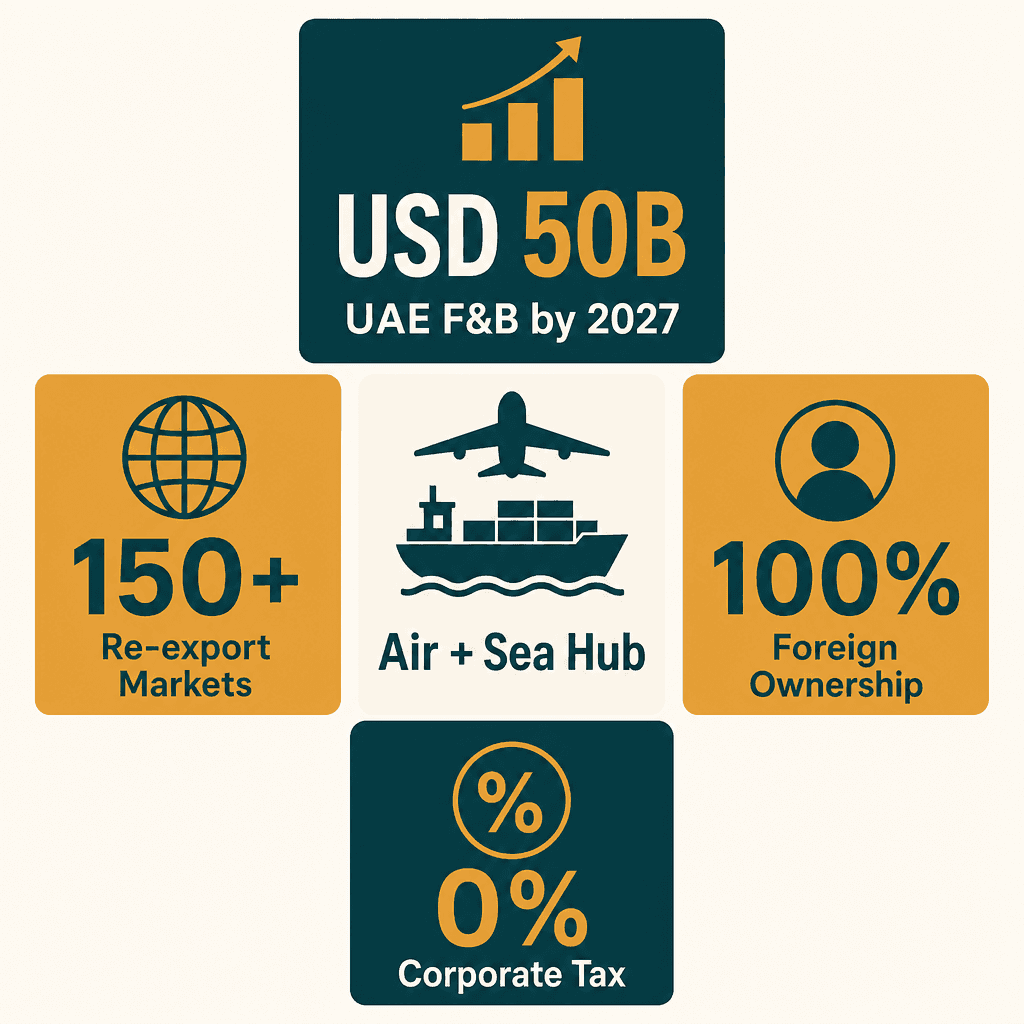
The UAE food and beverages market is projected to exceed USD 50 billion by 2027, with Dubai acting as a re-export corridor to over 150 countries. This makes it one of the most lucrative entry points for food traders targeting the GCC, Africa, and South Asia.
100% Foreign Ownership From Day One
Setting up under a Dubai South Business Hub Free Zone trading license means foreign entrepreneurs retain full ownership of their business without needing a local partner. This is a significant advantage compared to mainland structures that historically required Emirati sponsorship.
Activity Code 4721.98 Covers a Wide Product Range
The license permits import, export, re-export, and wholesale distribution of packaged foods, dry goods, canned products, bottled beverages, condiments, and related consumables. Traders should note it does not extend to manufacturing, food processing, or direct retail to end consumers.
Unmatched Air and Sea Logistics Access
Dubai South sits next to Al Maktoum International Airport, planned to become the world's largest by capacity, and is close to Jebel Ali Port, the busiest in the Middle East. This dual freight corridor makes moving both perishable and non-perishable goods fast and cost-effective.
Significant Tax and Customs Advantages Apply
Free zone companies benefit from zero corporate tax on qualifying income and face no customs duties on goods traded within the free zone. These incentives meaningfully reduce operating costs for wholesale and distribution-focused business models.
Government Policy Actively Supports Food Trade
The UAE's National Food Security Strategy 2051 prioritises trade diversification and investment in food supply infrastructure, creating a stable, policy-backed environment for traders. This long-term government commitment reduces regulatory uncertainty for incoming businesses.
Ideal for Wholesalers and Regional Distributors
The 4721.98 license is specifically designed for trading and intermediary business models, making it well-suited to entrepreneurs sourcing products from Asia, Europe, or the Americas for onward sale into GCC markets. Established food businesses looking to add a regional distribution hub will also find the structure straightforward.
Dubai sits at the crossroads of global food supply chains, handling billions of dirhams in foodstuff and beverages trade each year and offering free zone licenses that let foreign entrepreneurs own 100% of their business from day one. This guide covers everything you need to know about launching a foodstuff and beverages trading company under activity code 4721.98 at Dubai South Business Hub Free Zone, from license scope and setup costs to compliance requirements and market opportunity.
Key Stats: Foodstuff & Beverages Trading in Dubai
The UAE food and beverages market is projected to exceed USD 50 billion by 2027
Dubai re-exports food commodities to more than 150 countries across the GCC, Africa, and South Asia
Al Maktoum International Airport and Jebel Ali Port together form one of the world's largest logistics corridors
Activity Code: 4721.98 | License Type: Trading License | Ownership: 100% foreign permitted
Free zone companies benefit from zero corporate tax on qualifying income and no customs duty within the free zone
Why Dubai Is a Strategic Hub for Food and Beverages Trade
The UAE food and beverages sector is one of the most dynamic in the Middle East. The country imports a significant proportion of its food supply, with annual food import values consistently running into tens of billions of US dollars. Dubai alone serves as a re-export corridor connecting producers in Asia, Europe, and the Americas with consumers across the GCC, East Africa, and South Asia, making it an indispensable node in global food supply chains.
Dubai South's geographic position is a particular advantage. The free zone sits adjacent to Al Maktoum International Airport, which is planned to become the world's largest airport by capacity, and is within close reach of Jebel Ali Port, the busiest port in the Middle East and among the top ten globally. This dual-access to air and sea freight makes it straightforward to move perishable and non-perishable goods quickly and cost-effectively.
Consumer demand within the UAE continues to grow, driven by a rising population, a thriving hospitality sector, and a steady flow of international tourists. The UAE government has also placed food security at the centre of its national agenda, with initiatives under the National Food Security Strategy 2051 actively encouraging trade diversification and investment in food supply infrastructure. For traders, this translates into a stable, policy-backed environment with genuine long-term growth prospects.
What the Foodstuff and Beverages Trading License Covers
The foodstuff and beverages trading activity operates under ISIC activity code 4721.98 and is issued as a Trading License by Dubai South Business Hub Free Zone. The license permits the holder to import, export, re-export, and engage in wholesale distribution of a broad range of foodstuff and beverages, including packaged foods, dry goods, canned products, bottled beverages, condiments, and related consumables.
It is important to understand what the license does not cover. Manufacturing, processing, and direct retail sale to end consumers fall outside the scope of this particular activity. Businesses intending to produce food products or open a consumer-facing retail outlet would require separate or additional licensing. The 4721.98 license is specifically designed for trading and distribution operations, making it well-suited to wholesale and intermediary business models.
Who This License Is Suited To
This license is an excellent fit for a wide range of business profiles. International food traders and wholesalers who want a UAE base from which to manage regional distribution will find the free zone structure straightforward and cost-effective. Entrepreneurs sourcing products from manufacturing hubs in Asia, Europe, or the Americas for onward sale into GCC markets will benefit from Dubai South's logistics infrastructure. Equally, established food businesses looking to add a re-export arm or set up a regional distribution entity alongside their existing operations will find activity code 4721.98 provides the necessary commercial scope.
License Requirements and Regulatory Compliance
Setting up under Dubai South Business Hub Free Zone begins with registering the company and obtaining the trading license through the free zone authority. The process involves submitting an application, reserving a company name, providing shareholder documentation, and completing the free zone's standard onboarding requirements.
Beyond the free zone license itself, foodstuff and beverages traders must comply with several regulatory layers. Dubai Municipality oversees food import approvals and product registration for goods entering the local market. Importers are generally required to register food products and ensure that labelling meets UAE standards, including Arabic language requirements and clear indication of ingredients, country of origin, and expiry dates.
The UAE Federal Food Safety Law sets out overarching standards for food safety, halal certification where applicable, and shelf-life compliance. Certain food categories, particularly those involving animal products, agricultural commodities, or items with phytosanitary considerations, fall under the oversight of the Ministry of Climate Change and Environment (MOCCAE), which may require additional permits or inspections.
For import and re-export operations, businesses must also register with Dubai Customs. A customs registration number is required to clear goods through UAE ports and airports, and traders involved in re-export will need to comply with relevant rules of origin and transit documentation requirements.
Setup Process and Costs at Dubai South Business Hub Free Zone
The setup process at Dubai South Business Hub Free Zone follows a clear sequence. It begins with company name reservation and submission of the license application, accompanied by shareholder identification documents, passport copies, and a completed application form. Once the license is approved, the company can proceed with visa allocation for shareholders and employees, followed by opening a corporate bank account with a UAE-based financial institution.
The typical timeline from initial application to license issuance is between five and ten working days for straightforward cases, though additional regulatory approvals related to food trading may extend this slightly. Overall, most businesses are operational within two to four weeks of submitting complete documentation.
In terms of costs, entrepreneurs should budget for the free zone license fee, a company registration fee, and visa costs for each shareholder or employee requiring UAE residency. Dubai South Business Hub Free Zone offers competitive pricing, and the free zone structure means there is no requirement for a local Emirati sponsor, keeping ownership costs and ongoing obligations straightforward. There is no mandatory minimum share capital for most trading licenses in this free zone, though banks may have their own requirements when opening a corporate account.
Facility and Storage Requirements
Not every foodstuff and beverages trading company needs to hold physical stock on-site. Dubai South Business Hub Free Zone offers flexi-desk options that allow trading operations to be managed from a registered office address without the need for a dedicated warehouse. This is a practical and cost-effective starting point for traders who rely on third-party logistics providers or who trade on a back-to-back basis.
For businesses that do need to store inventory, warehouse and cold-storage facility options are available within the Dubai South ecosystem. Companies handling temperature-sensitive products such as dairy, frozen goods, or fresh beverages can access purpose-built cold-chain facilities. Additionally, bonded warehouse arrangements near Jebel Ali Port are available through third-party logistics providers, allowing goods to be held in a customs-controlled environment before onward distribution or re-export without incurring immediate duty liability.
Market Opportunity and Profit Potential
The UAE food and beverages import market has demonstrated consistent growth over recent years and is forecast to continue expanding as the population grows and tourism numbers recover and surpass pre-pandemic levels. The country's heavy reliance on food imports, combined with its role as a regional distribution hub, creates sustained demand for well-positioned trading companies.
Re-export margins represent a particularly attractive opportunity. Dubai's role as a consolidation and redistribution centre means that traders can add value through product consolidation, repackaging, and onward shipment to markets across the GCC, East Africa, and South Asia. Product categories seeing the strongest demand include staple commodities such as rice, grains, and edible oils, alongside growing segments such as health beverages, organic products, and specialty international foods driven by the UAE's diverse expatriate population.
Operating from a free zone adds a meaningful financial dimension to these margins. Qualifying income is subject to zero corporate tax under the UAE's free zone tax regime, there is no customs duty on goods transiting through the free zone, and there are no restrictions on the repatriation of profits or capital. These structural advantages make the cost of doing business in Dubai South genuinely competitive when set against other regional trading hubs.
Conclusion
A foodstuff and beverages trading license at Dubai South Business Hub Free Zone gives entrepreneurs 100% ownership, access to world-class logistics infrastructure, and a compliant platform to trade across the GCC and beyond under activity code 4721.98. The combination of a straightforward setup process, a supportive regulatory environment, and strong underlying market demand makes this one of the most compelling opportunities available to food and beverages traders looking to establish or expand their presence in the region.
Get in touch with our business setup specialists today to receive a tailored cost breakdown and start your foodstuff and beverages trading company in Dubai.
Related Activities
Vegetables & Fruit Trading Trading License
Fresh, Chilled & Frozen Meat Trading Trading License
Fresh Fish & Marine Animals Trading Trading License
Frequently Asked Questions