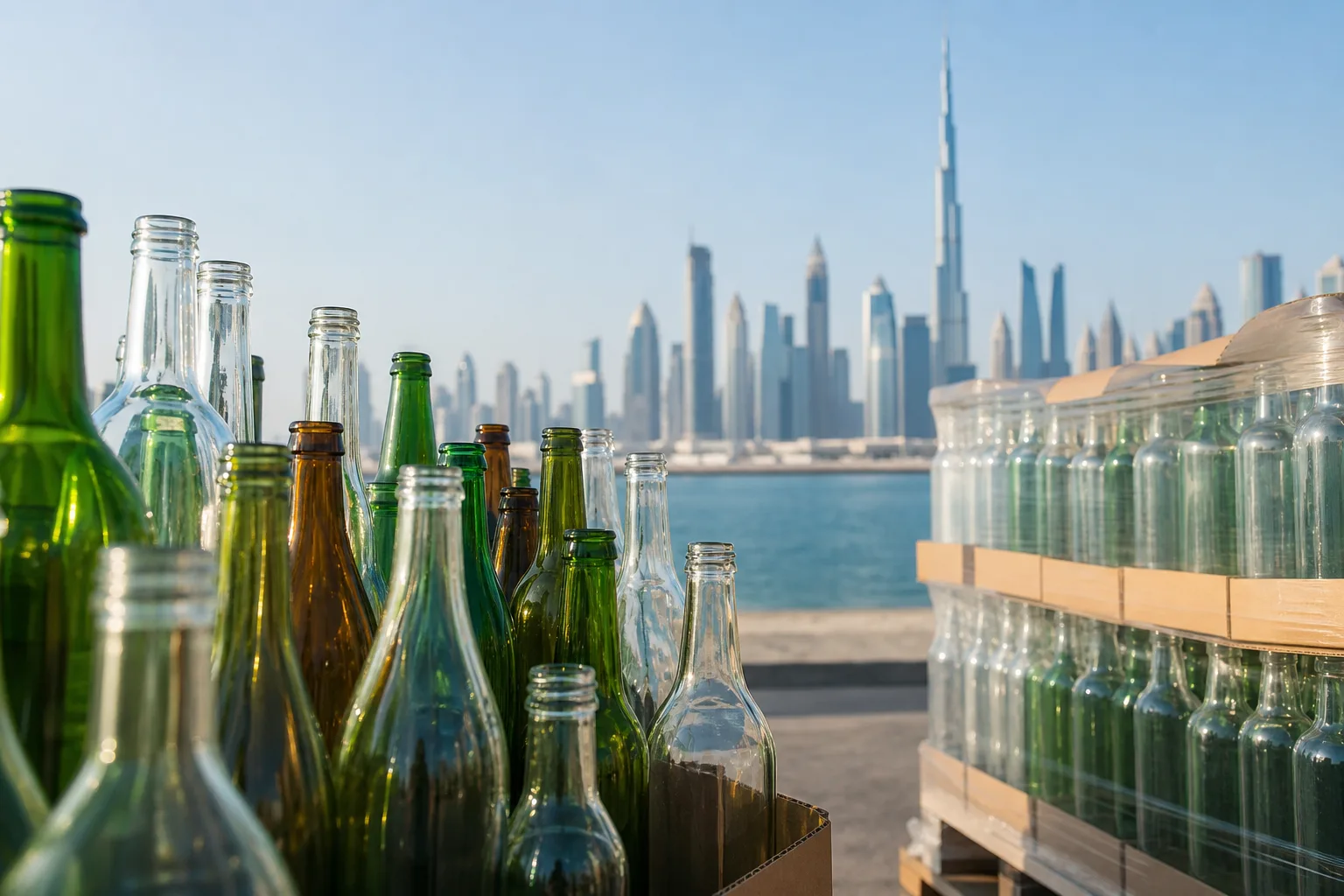
Start a Glass Bottles Trading Business in Dubai
Topic Summary
Dubai's Location Unlocks Global Market Access
Dubai sits at the crossroads of Europe, Asia, and Africa, allowing goods to reach over two billion consumers within a four-hour flight. Combined with zero-tariff GCC trade agreements, this makes it an ideal hub for glass bottle distribution and re-export.
Activity Code 4690.9 Covers Broad Trading Rights
This Non-Specialised Wholesale Trade classification permits the import, export, re-export, purchase, and sale of glass bottles across commercial, industrial, and consumer segments. It also covers associated glass packaging products, giving your business room to expand its range over time.
Free Zone Setup Means 100% Foreign Ownership
Registering at Dubai South Business Hub as an FZ-LLC allows international entrepreneurs to own their business outright without a local sponsor. The structure requires just one shareholder and one director to get started.
Corporate Tax Advantages Boost Profit Margins
Qualifying free zone businesses pay 0% corporate tax on eligible income and face no personal income tax. Combined with full profit repatriation rights, this makes Dubai South a cost-efficient base for glass bottle traders.
Rising Demand Driven by Sustainability Trends
The UAE glass packaging market is growing at approximately 4–5% annually, fuelled by food and beverage producers, pharmaceutical manufacturers, and premium cosmetics brands shifting away from plastic. Government circular economy initiatives are also increasing institutional demand for glass containers.
Licensing Can Be Completed in Days, Not Months
The typical license setup timeline at Dubai South Business Hub is just three to five working days, making it one of the faster free zone registration processes in the UAE. This speed allows traders to begin operations and pursue contracts quickly.
World-Class Port Infrastructure Supports High-Volume Trade
Dubai handles over 14 million tonnes of cargo annually through its ports and airports, providing reliable logistics capacity for glass bottle importers and exporters. This infrastructure is a critical advantage for businesses building regional supply chains across the GCC's 57 million-plus consumers.
Global demand for glass packaging continues to rise, driven by sustainability trends, food and beverage growth, and tightening regulations on single-use plastics. Dubai, positioned at the crossroads of Europe, Asia, and Africa, offers traders an exceptional gateway to capitalise on this demand. Whether you are sourcing glass bottles for local distribution or building a re-export operation, establishing a trading license in Dubai gives you access to world-class infrastructure, a business-friendly regulatory environment, and a rapidly expanding consumer market.
This guide covers everything you need to know about launching a glass bottles trading business in Dubai, with a specific focus on the Dubai South Business Hub Free Zone, activity code 4690.9, and the practical steps to get your license in place.
Why Dubai Is Ideally Positioned for Glass Bottles Trading
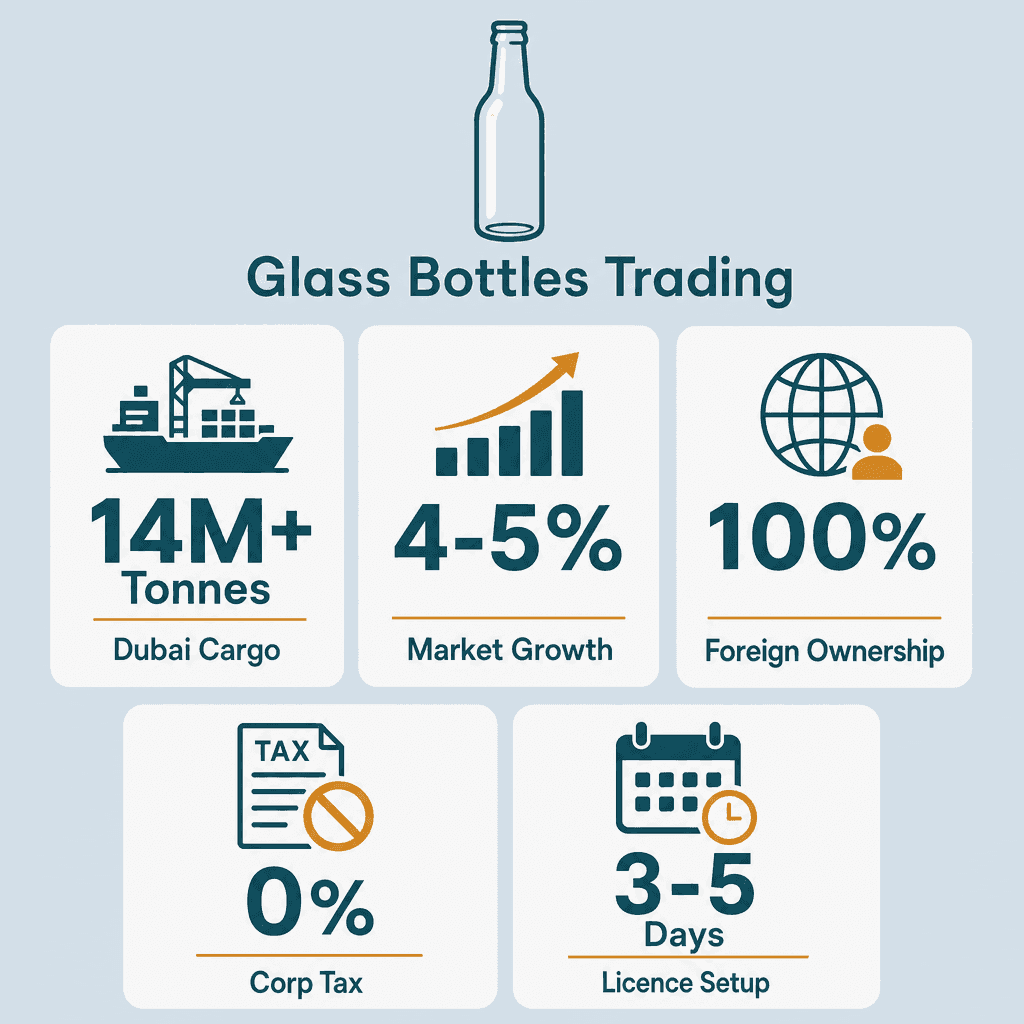
Dubai handles more than 14 million tonnes of cargo annually through its ports and airports, making it one of the busiest logistics hubs in the world. The UAE's strategic location means goods can reach over two billion consumers within a four-hour flight, and the country's zero-tariff trade agreements with GCC nations further reduce friction for regional distribution.
The UAE glass packaging market has been growing steadily, supported by the food and beverage sector, pharmaceutical manufacturers, and premium cosmetics brands that prefer glass over plastic for quality and sustainability reasons. The government's push toward a circular economy and reduced plastic waste has also increased institutional demand for glass containers across retail and hospitality.
Free zones such as Dubai South Business Hub offer 100% foreign ownership, full profit repatriation, and exemption from corporate and personal income taxes, making them particularly attractive for international traders looking to establish a cost-efficient base.
Infographic: Glass Bottles Trading in Dubai South
Activity Code: 4690.9 - Non-Specialised Wholesale Trade
License Type: Trading License
Foreign Ownership: 100% permitted in free zone
Corporate Tax: 0% on qualifying free zone income
UAE Glass Packaging Market: Growing at approximately 4-5% annually
Dubai Port Cargo Throughput: Over 14 million tonnes per year
Typical License Setup Timeline: 3 to 5 working days
GCC Consumer Market Reach: Over 57 million people
What Activity Code 4690.9 Covers
Activity code 4690.9 falls under Non-Specialised Wholesale Trade and permits the holder to trade in a broad range of goods, including glass bottles and glass containers. Under this classification, your license covers the purchase, sale, import, export, and re-export of glass bottles across commercial, industrial, and consumer segments.
This means your business can legally supply glass bottles to food and beverage manufacturers, pharmaceutical companies, cosmetic brands, hospitality operators, and retail distributors. The license also supports trading in associated glass packaging products, giving you flexibility to expand your product range over time.
Who This License Suits
International glass bottle manufacturers seeking a UAE distribution hub
Import and export traders targeting GCC and African markets
Entrepreneurs supplying the UAE food, beverage, and pharmaceutical sectors
Recycling and circular economy businesses handling reclaimed glass containers
Wholesale distributors looking to consolidate regional supply chains
Step 1: Choose Your Business Structure
Most applicants register as a Free Zone Limited Liability Company (FZ-LLC) at Dubai South Business Hub. This structure requires a minimum of one shareholder and one director, and allows 100% foreign ownership without the need for a local sponsor.
Step 2: Reserve Your Trade Name
Submit two to three preferred company names to the free zone authority for approval. Names must comply with UAE naming conventions and must not include references to political or religious organisations.
Step 3: Submit Your Application
Prepare and submit the required documentation, which typically includes passport copies of all shareholders and directors, a completed application form, a business plan or activity description, and proof of address. No notarisation is required for most free zone applications.
Step 4: Obtain Your Trading License
Once your application is approved, you will receive your trading license covering activity code 4690.9. The process typically takes three to five working days from submission of complete documents.
Step 5: Open a Corporate Bank Account
With your license in hand, you can open a UAE corporate bank account. Several local and international banks operate within or near Dubai South, and many offer dedicated free zone business packages.
Step 6: Arrange Warehouse or Office Space
Dubai South Business Hub offers a range of flexi-desk, office, and warehouse solutions. Glass bottle traders with physical stock requirements should consider a warehousing unit to comply with customs and storage regulations.
Estimated Setup Costs
Cost Component | Estimated Range (AED) |
|---|---|
License Fee (Annual) | 12,500 - 20,000 |
Registration and Administration | 2,000 - 5,000 |
Visa Allocation (per visa) | 3,500 - 5,000 |
Office or Flexi-Desk (Annual) | 8,000 - 15,000 |
Warehouse Space (if required) | From 25,000 per annum |
Total setup costs for a straightforward glass bottles trading license at Dubai South Business Hub typically range between AED 25,000 and AED 45,000 in the first year, depending on visa requirements and facility choices.
Compliance and Regulatory Considerations
Glass bottle traders must comply with UAE customs regulations administered by the Federal Customs Authority. Imports must be accompanied by accurate commercial invoices, certificates of origin, and packing lists. Traders dealing in pharmaceutical-grade glass containers may require additional approvals from the UAE Ministry of Health and Prevention.
All businesses in the UAE are subject to the Federal Tax Authority's VAT framework, currently set at 5%. Businesses with annual turnover exceeding AED 375,000 must register for VAT. Free zone businesses trading exclusively with overseas parties or other free zones may qualify for zero-rated treatment on eligible supplies.
Under the UAE's Corporate Tax Law, free zone businesses earning qualifying income benefit from a 0% corporate tax rate, provided they meet substance requirements and do not conduct business with mainland UAE entities in a manner that triggers standard tax rates.
Re-Export Opportunities
One of the strongest commercial advantages of operating from Dubai South is the ability to use the UAE as a re-export platform. Glass bottles sourced from manufacturers in Asia or Europe can be imported, stored, repackaged if necessary, and re-exported to markets across the GCC, East Africa, South Asia, and beyond. Dubai's Jebel Ali Port, the largest port in the Middle East, sits adjacent to Dubai South, dramatically reducing logistics costs and transit times.
Related Activities
General Non-Specialised Wholesale Trade Trading License
Caps & Lids Trading Trading License
Frequently Asked Questions