Apply for a Glass Waste Trading License in Dubai

Topic Summary
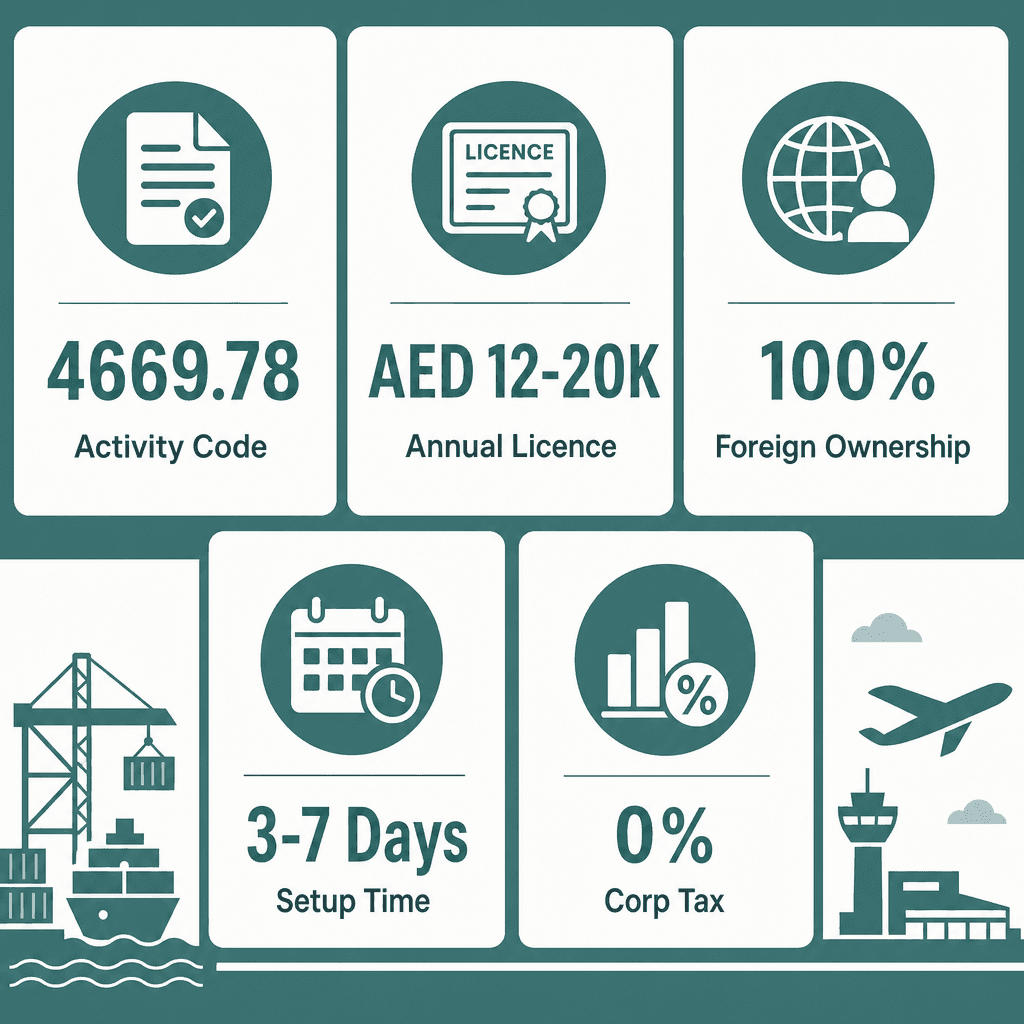
100% Foreign Ownership With No Local Sponsor
Dubai South Business Hub Free Zone allows complete foreign ownership of your glass waste trading company, eliminating the need for a local Emirati sponsor. This makes it straightforward for international entrepreneurs and companies to establish and fully control their UAE trading entity.
Fast Setup in 3 to 7 Working Days
The licensing process for Activity Code 4669.78 is designed for efficiency, with most businesses operational within a week. This rapid timeline reduces downtime and allows traders to begin sourcing and supplying glass waste quickly.
Affordable Annual License Fees From AED 12,000
Annual licensing costs range from AED 12,000 to AED 20,000, making this a relatively low-overhead entry point into the UAE recycling and commodities market. The free zone structure keeps operational costs lean, particularly for SMEs and startups.
Zero Corporate Tax on Qualifying Free Zone Income
Businesses operating under a qualifying free zone entity pay zero corporate tax on eligible income, a significant financial advantage for commodity traders managing thin margins. This tax efficiency makes Dubai South an attractive base for glass scrap trading operations.
Prime Location Near Jebel Ali Port and Al Maktoum Airport
Dubai South's proximity to Jebel Ali Port, one of the world's busiest container ports, and Al Maktoum International Airport provides exceptional logistics access for bulk material movement. This positioning supports efficient import, export, and re-export of glass cullet across Asia, Africa, and Europe.
License Covers Import, Export, and Re-Export Activities
Activity Code 4669.78 authorises the wholesale buying and selling of glass waste and scrap, including cross-border re-export operations. Traders can act as commercial intermediaries connecting glass waste generators with manufacturers and recycling facilities worldwide.
Aligned With UAE Net Zero and Circular Economy Goals
The UAE's Net Zero 2050 strategy and national recycling targets have made glass waste trading a strategically supported activity. Licensed traders benefit from operating within a regulatory environment that actively encourages circular economy businesses and sustainable commodity trade.
As the UAE accelerates its circular economy agenda, glass waste trading has emerged as a commercially viable and strategically supported activity within Dubai's free zone ecosystem. This guide explains how to obtain a Glass Waste Trading License (Activity Code 4669.78) at Dubai South Business Hub Free Zone, covering costs, compliance, and why Dubai is ideally placed for this trade.
Key Stats at a Glance
Activity Code: 4669.78 - Wholesale of glass waste and scrap
License Type: Trading License | Category: Trading
Free Zone: Dubai South Business Hub Free Zone
Estimated License Fees:AED 12,000 to AED 20,000 per year
Foreign Ownership: 100% permitted, no local sponsor required
Typical Setup Timeline: 3 to 7 working days
Corporate Tax: Zero on qualifying free zone income
Key Trade Links: Jebel Ali Port and Al Maktoum International Airport
The UAE Glass Waste Market: Context and Opportunity
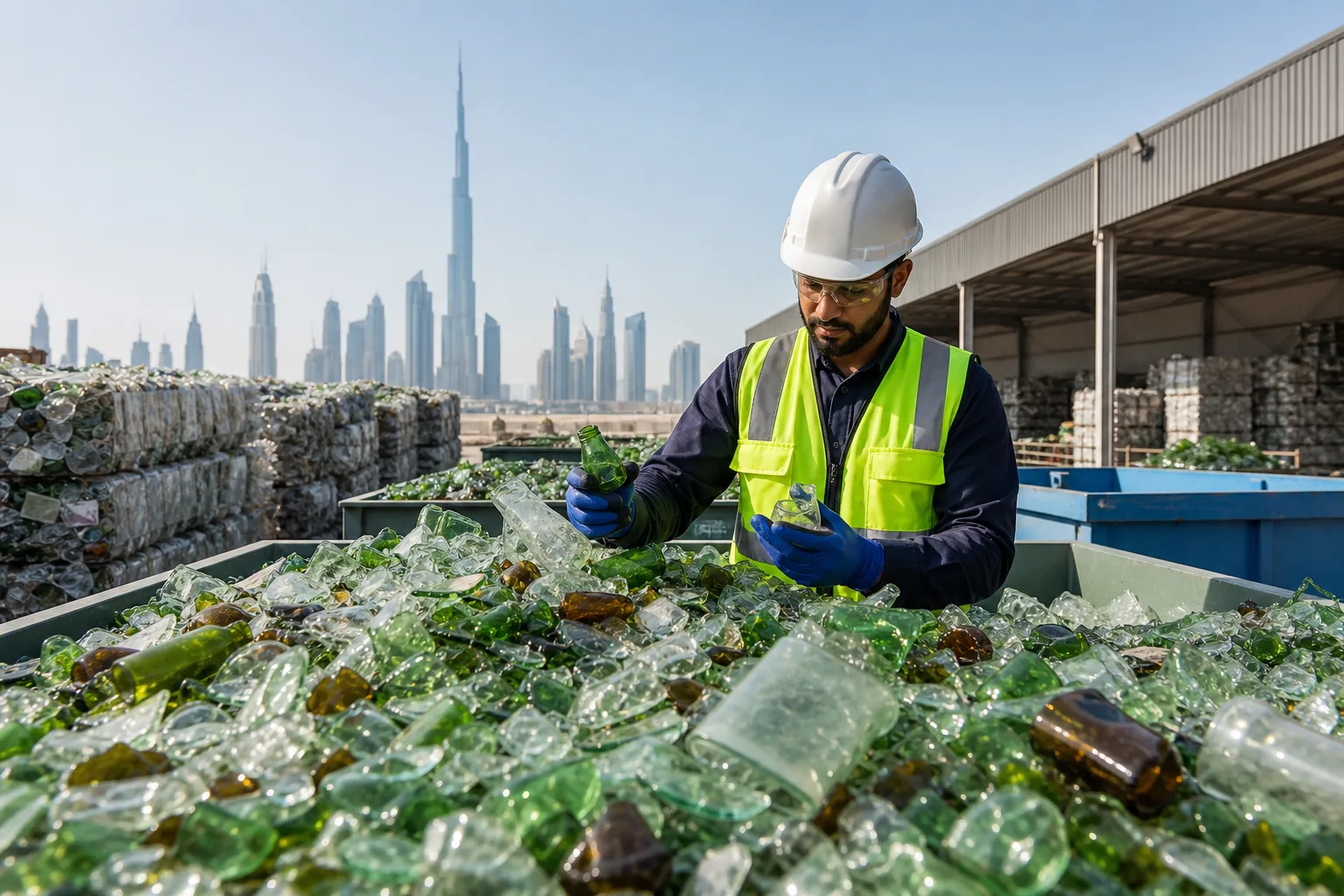
The UAE generates substantial volumes of glass waste each year, driven by its construction boom, a thriving hospitality sector, and high retail activity. From commercial glazing projects to food and beverage packaging, the sources of recyclable glass are diverse and growing. This creates a consistent supply base for licensed glass waste traders operating within the country.
The UAE Net Zero 2050 strategic initiative and national recycling targets have placed renewed emphasis on circular economy practices, with glass recycling forming a core part of waste diversion strategies. Licensed traders play a critical role in aggregating, sorting, and channelling glass scrap and cullet to manufacturers and processors who depend on it as a raw material input.
Dubai's position as a global re-export hub, connecting trade flows between Asia, Africa, and Europe, makes it particularly well-suited for commodity trading in recyclable materials. Dubai South Free Zone's proximity to Al Maktoum International Airport and Jebel Ali Port, one of the world's busiest container ports, provides a significant logistical advantage for businesses engaged in the movement of bulk waste materials across borders.
What the Glass Waste Trading License Covers
Activity Code 4669.78 specifically authorises the wholesale trading of glass waste and scrap materials. Issued by Dubai South Business Hub Free Zone as a Trading License under the Trading category, this license provides a legal framework for businesses to import, export, re-export, and supply glass cullet and glass scrap within the domestic UAE market and internationally.
The license covers the commercial intermediary function of buying and selling glass waste without requiring the holder to undertake any transformation or manufacturing process. It is important to note that processing or manufacturing activities, such as melting cullet into new glass products, fall outside the scope of this license. A separate industrial license would be required for any such transformation activities.
Holders of this license can operate as trading intermediaries, managing supply chains between glass waste generators and end-users such as glass manufacturers, construction material producers, or recycling facilities in other jurisdictions.
Who This License Is Suited To
The Glass Waste Trading License is well-matched to a range of business profiles:
Recycling and waste management companies seeking a UAE-based trading entity to access regional markets and benefit from Dubai's logistics infrastructure
International glass manufacturers looking to source cullet as a cost-effective and environmentally preferable raw material input
Commodity traders who are diversifying their portfolios into sustainable and ESG-aligned product categories in response to investor and regulatory pressure
Entrepreneurs and SMEs seeking a low-overhead free zone structure that offers 100% foreign ownership, a simple setup process, and access to a globally connected trade environment
Setup Costs, Steps, and Licensing Requirements
Setting up under Activity Code 4669.78 at Dubai South Business Hub Free Zone is a structured and relatively straightforward process. License and registration fees typically range from AED 12,000 to AED 20,000 per year, depending on the office package selected and any additional services required. Additional costs to budget for include visa fees, establishment card fees, and any environmental or customs approvals that may be applicable to your specific operations.
The core steps to obtain the license are as follows:
Select the business activity (Activity Code 4669.78) and confirm it aligns with your intended operations
Reserve a trade name in accordance with UAE naming conventions
Obtain initial approval from the free zone authority
Sign the license agreement and pay the applicable fees
Receive the issued license and proceed with operational setup
Required documentation typically includes passport copies of all shareholders and directors, a business plan or No Objection Certificate where applicable, and proof of address. Since 100% foreign ownership is permitted, there is no requirement to engage a UAE national sponsor or local partner.
Ongoing compliance obligations include annual license renewal, adherence to UAE Federal Law No. 12 of 2018 on Integrated Waste Management, and any applicable approvals from Dubai Municipality for environmental matters. Physical facility requirements depend on whether you intend to hold stock; a flexi-desk arrangement may be sufficient for pure intermediary trading. For straightforward applications with complete documentation, the license is typically issued within 3 to 7 working days.
Key Regulatory and Environmental Approvals
Beyond the free zone license itself, traders should be aware of several regulatory requirements:
Dubai Municipality may require an environmental permit for businesses handling classified waste streams, including certain categories of glass waste
Traders engaged in the re-export of glass waste internationally must comply with the Basel Convention on the control of transboundary movements of hazardous wastes and their disposal, ensuring that destination countries permit the import of the relevant materials
Customs registration with the UAE Federal Customs Authority is required for all import and export activities, and traders should ensure their commodity classifications are correctly declared
Why Dubai Is Well-Positioned for Glass Waste Trading
Dubai's strategic location at the crossroads of major trade routes between Europe, Asia, and Africa gives it a structural advantage for commodity trading of all kinds, including recyclable materials. Glass cullet sourced in the UAE or transshipped through Dubai can reach manufacturing hubs across the Gulf, South Asia, and East Africa with competitive transit times.
The city's world-class logistics infrastructure underpins this advantage. Jebel Ali Port is one of the busiest container ports globally, while Al Maktoum International Airport provides airfreight capacity for higher-value or time-sensitive cargo. Together, they make Dubai South an exceptionally well-connected base for logistics-intensive trading activities.
The UAE's expanding network of free trade agreements reduces tariff friction on re-exports, while government-backed sustainability initiatives create a supportive and stable regulatory environment for circular economy businesses. For eligible entities operating within a qualifying free zone, zero corporate tax applies to qualifying income under the UAE Corporate Tax Law, offering a meaningful financial advantage for trading operations structured appropriately.
Related Activities
Waste Paper Trading Trading License
Scrap & Metal Waste Trading Trading License
Trading of Waste Plastic Trading License
Frequently Asked Questions