How to Get a Lubricants & Petroleum Wastes Transport Business License in Dubai

Topic Summary
Understand Exactly What the License Covers
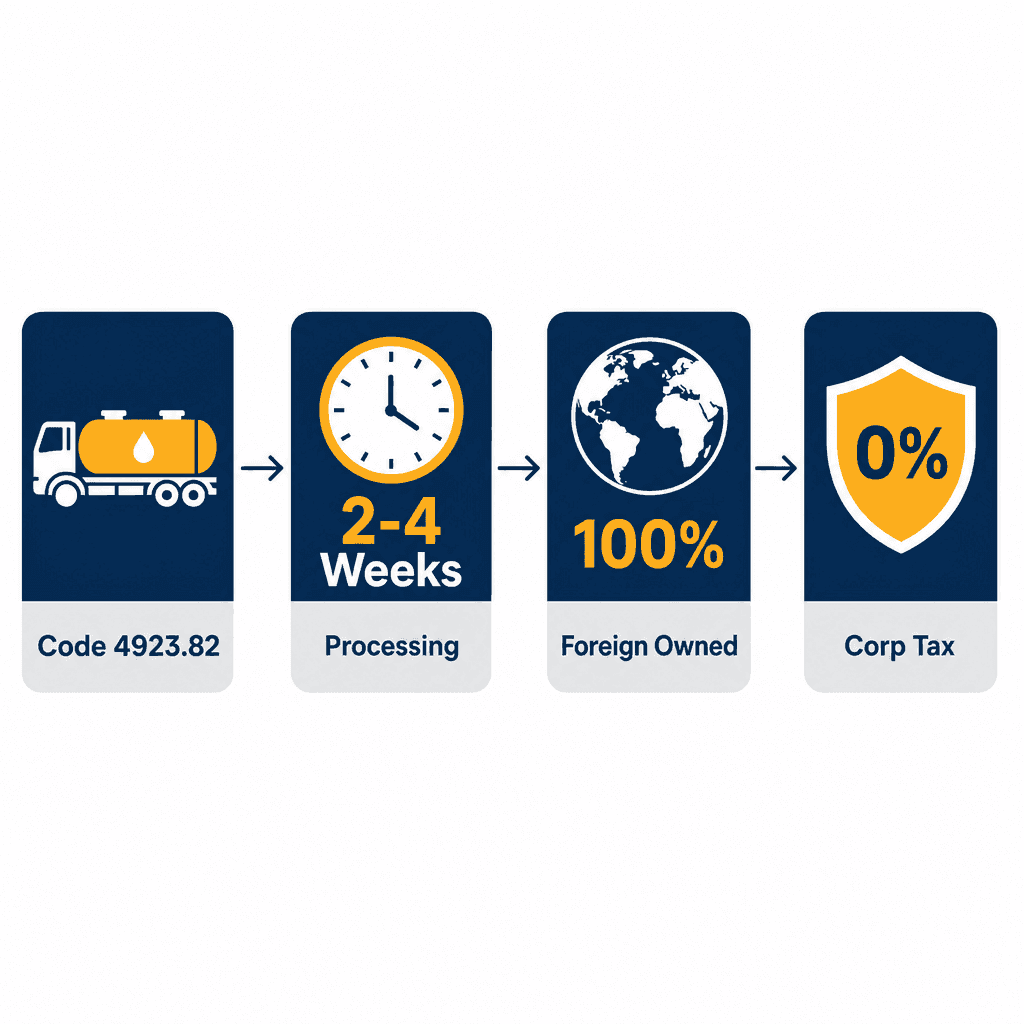
Activity Code 4923.82 authorises the commercial road transport of lubricating oils, used engine oils, and petroleum-derived waste fluids within and from Dubai. It is scoped strictly to logistics and does not extend to retail sale or refining activities.
Confirm Dubai South Free Zone Is Right for You
Dubai South Business Hub Free Zone sits alongside Al Maktoum International Airport and the Jebel Ali Port corridor, offering direct access to two of the world's busiest logistics gateways. The free zone also permits 100 per cent foreign ownership and full profit repatriation.
Know Who This License Is Designed For
The license suits a wide range of operators, including hazardous materials haulage companies, industrial waste management firms, petroleum product distributors, and environmental services businesses managing oil recycling supply chains. Re-export operators moving petroleum wastes to regional GCC markets are also well served.
Budget Realistically for Setup Costs
Core costs include a business license fee of AED 10,000 to 15,000, registration fees of AED 3,000 to 5,000, and an office or flexi-desk package ranging from AED 8,000 to 20,000 annually. Visa allocation and any external regulatory approvals carry additional variable costs.
Expect a Two to Four Week Processing Timeline
Once documentation is submitted and fees are paid, the typical license processing time at Dubai South is two to four weeks. Confirming current fee schedules directly with the free zone authority before applying is strongly advisable.
Leverage International Hazardous Goods Standards
The UAE's regulatory framework for hazardous goods transport aligns with ADR protocols, the international standard governing the road carriage of dangerous goods. This alignment gives multinational clients confidence when working with operators licensed in this jurisdiction.
Take Advantage of the UAE Tax Environment
Free zone license holders can benefit from corporate tax exemptions under qualifying income rules, and there is no personal income tax in the UAE. These structural advantages make Dubai South a cost-efficient base for international operators entering the regional petroleum logistics market.
Dubai's position as a global energy and logistics hub makes it one of the most strategically valuable locations in the world for businesses involved in the movement of specialised petroleum products. As industrial activity across the UAE continues to expand, the demand for compliant, professional transport of lubricants and petroleum wastes is growing steadily. Whether you are an established operator or an entrepreneur entering this space for the first time, securing the correct license is the essential first step.
This guide covers everything you need to know about obtaining a Lubricants & Petroleum Wastes Transport Business License under Activity Code 4923.82 at the Dubai South Business Hub Free Zone, including costs, compliance requirements, and why this jurisdiction offers a compelling commercial advantage.
What the License Covers
The Lubricants & Petroleum Wastes Transport license (Activity Code 4923.82) falls under the Services category and is classified as a Business License. It authorises the holder to commercially transport lubricating oils, used engine oils, petroleum-derived waste fluids, and related hazardous liquid materials by road within and from Dubai.
This activity sits within the broader land transport of freight sector and is subject to specific environmental and safety regulations given the hazardous nature of the materials involved. The license does not cover retail sale or refining; it is specifically scoped to the physical transport and logistics component of the supply chain.
Who This License Suits
Logistics and haulage companies specialising in hazardous materials
Industrial waste management firms handling used lubricants
Petroleum product distributors requiring compliant transport operations
Re-export operators moving petroleum wastes through Dubai to regional markets
Environmental services companies managing oil recycling supply chains
Investors seeking to establish a regulated freight business in a free zone environment
Why Dubai and Dubai South Free Zone
Dubai South Business Hub Free Zone is located adjacent to Al Maktoum International Airport and the Jebel Ali Port corridor, giving license holders direct access to two of the world's busiest logistics gateways. The UAE handles a significant share of global petroleum product re-exports, and Dubai's road network connects seamlessly to Abu Dhabi, Sharjah, and the wider GCC.
The free zone model offers 100 per cent foreign ownership, full profit repatriation, and exemption from corporate and personal income taxes. These structural advantages make Dubai South a preferred base for international operators seeking a compliant and cost-efficient regional hub.
The UAE's regulatory framework for hazardous goods transport is aligned with international standards, including ADR (European Agreement Concerning the International Carriage of Dangerous Goods by Road) protocols, giving multinational clients confidence in operators licensed within this jurisdiction.
Key Stats at a Glance
Activity Code: 4923.82
License Type: Business License
Category: Services
Free Zone: Dubai South Business Hub
Foreign Ownership: 100 per cent permitted
Corporate Tax Exemption: Available under free zone qualifying income rules
Proximity: Adjacent to Al Maktoum International Airport and Jebel Ali Port
Typical License Processing Time: 2 to 4 weeks
Estimated Costs
Cost Component | Approximate Range (AED) |
|---|---|
Business License Fee | 10,000 to 15,000 |
Registration and Administration Fees | 3,000 to 5,000 |
Office or Flexi-Desk Package | 8,000 to 20,000 per annum |
Visa Allocation (per visa) | 3,000 to 5,000 |
External Approvals (where applicable) | Variable |
All figures are indicative and subject to change. It is advisable to confirm current fee schedules directly with the free zone authority.
Step-by-Step Setup Process
Step 1: Select your business activity and confirm Activity Code 4923.82 with the Dubai South Business Hub Free Zone authority.
Step 2: Choose your legal structure, typically a Free Zone Limited Liability Company (FZ-LLC) for most operators.
Step 3: Submit your application with required documents, including passport copies, a business plan, and proof of address.
Step 4: Obtain initial approval from the free zone authority.
Step 5: Secure any external regulatory approvals required for hazardous goods transport, including those from Dubai Municipality and the Roads and Transport Authority (RTA) where applicable.
Step 6: Sign your lease agreement for office or flexi-desk space within the free zone.
Step 7: Pay license fees and receive your Business License.
Step 8: Open a UAE corporate bank account and apply for employee visas as required.
Licensing and Compliance Requirements
Operators transporting lubricants and petroleum wastes must comply with UAE Federal Law No. 24 of 1999 on the Protection and Development of the Environment, as well as guidelines issued by the Ministry of Climate Change and Environment. Vehicles used must meet hazardous materials transport standards, and drivers are typically required to hold ADR or equivalent hazardous goods handling certifications.
Waste oil and petroleum waste transport may also require coordination with the Environment Agency Abu Dhabi or Dubai Municipality depending on the origin and destination of the consignment. Manifest documentation, spill containment equipment, and proper labelling of loads are standard compliance obligations.
Related Activities
Frequently Asked Questions