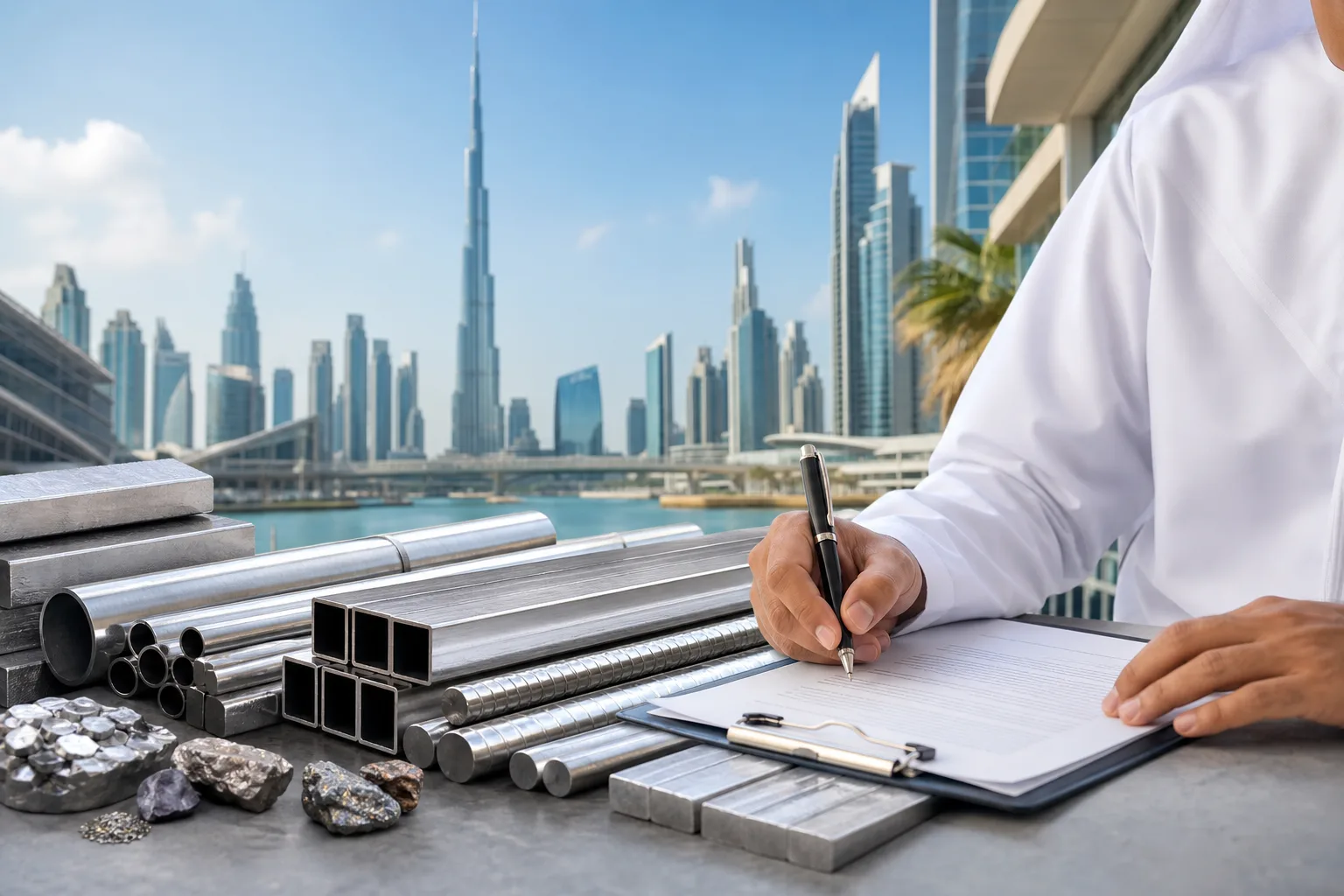
Apply for a Metal Alloys Trading License in Dubai
Topic Summary
Dubai South Offers Unmatched Logistics Access
Dubai South sits adjacent to Al Maktoum International Airport and near Jebel Ali Port, the Middle East's largest. This dual connectivity gives metals traders fast, reliable access to global supply chains across Asia, Africa, and Europe.
100% Foreign Ownership With No Local Sponsor
The Metal Alloys Trading License at Dubai South Business Hub Free Zone allows full foreign ownership, eliminating the need for a local Emirati partner. This makes it especially attractive for international entrepreneurs entering the UAE market.
One License Covers Multiple Alloy Product Lines
Activity Code 4752.79 permits trading in ferrous alloys, non-ferrous metals like aluminium and copper, and speciality industrial metals under a single license. Traders supplying diverse industrial clients don't need separate licenses for each product category.
Re-Export Within the Free Zone Is Customs-Duty Free
Goods can enter the free zone, be stored or processed, and then shipped onward to regional markets without attracting customs duties inside the zone. This is a significant cost advantage for traders managing thin margins across complex supply chains.
Setup Is Fast and Costs Are Transparent
The typical setup timeline runs between 5 and 15 working days, with annual license fees ranging from AED 12,000 to AED 20,000. VAT registration only becomes mandatory once annual turnover exceeds AED 375,000, keeping early-stage costs manageable.
Strong Regional Demand Supports Long-Term Growth
GCC construction megaprojects, manufacturing expansion, and energy infrastructure development are driving sustained demand for both ferrous and non-ferrous alloys. The UAE's non-oil foreign trade has already surpassed AED 2 trillion, signalling a robust trading environment.
Dubai's position at the crossroads of global supply chains makes it one of the world's most strategic hubs for metal alloys trading, with the UAE's non-oil foreign trade surpassing AED 2 trillion in recent years. For traders seeking to capitalise on this momentum, the Metal Alloys Trading License (Activity Code 4752.79) at Dubai South Business Hub Free Zone provides a structured, tax-efficient, and internationally connected platform. This guide explains how to obtain the license, what it covers, the associated costs, and why this jurisdiction suits serious metals traders.
Key Stats at a Glance
Activity Code: 4752.79 (Metal Alloys Trading)
License Type: Trading License
Free Zone: Dubai South Business Hub
Foreign Ownership: 100% permitted
Typical License Fee: AED 12,000 to AED 20,000 per year
VAT Registration Threshold: AED 375,000 annual turnover
Estimated Setup Timeline: 5 to 15 working days
UAE Non-Oil Foreign Trade: Surpassed AED 2 trillion
Why Dubai Is a Global Hub for Metal Alloys Trade

The UAE occupies a uniquely advantageous geographic position, sitting at the intersection of Asia, Africa, Europe, and the Middle East. This connectivity is not merely theoretical. Dubai South is located adjacent to Al Maktoum International Airport, one of the world's largest cargo airports, and within close reach of Jebel Ali Port, the largest port in the Middle East. Together, these facilities create a logistics corridor that few other jurisdictions can match for speed, scale, and reliability.
Regional demand for industrial metals continues to grow. Construction megaprojects, manufacturing expansion, and energy infrastructure development across the GCC are driving sustained appetite for ferrous and non-ferrous alloys. The UAE's zero personal income tax environment further enhances the appeal for international traders looking to establish a cost-efficient regional base.
Re-export is a particular strength of the Dubai model. Goods can enter the free zone, be stored or processed, and then shipped onward to markets across Africa, South Asia, and the wider Middle East without attracting customs duties within the zone. For metals traders managing tight margins across complex supply chains, this is a meaningful commercial advantage.
What the Metal Alloys Trading License Covers
The Metal Alloys Trading License is issued under Activity Code 4752.79, which falls within the ISIC trading category covering wholesale and retail trade in metal alloys. The license is issued as a Trading License by Dubai South Business Hub Free Zone, giving the holder authority to conduct commercial activity within the free zone and internationally.
In practical terms, the license permits the import, export, re-export, and domestic supply of alloy products. Permitted goods include ferrous alloys such as steel and iron-based materials, non-ferrous alloys including aluminium, copper, nickel, and titanium variants, as well as speciality metals and related raw materials used across industrial applications.
Importantly, the license does not restrict traders to a single product line within the alloys category. A business can trade across multiple alloy types under the same license, provided all activities fall within the scope of Activity Code 4752.79. This flexibility makes it well suited to traders supplying diverse industrial clients across multiple sectors.
Who This License Is Suited For
This license is appropriate for a broad range of business profiles. International metals traders seeking a tax-efficient re-export base will find Dubai South particularly well-suited, given its customs duty exemptions and logistics connectivity. Manufacturers and distributors supplying the GCC construction and industrial sectors can use the license to manage regional inventory and distribution from a single UAE-based entity.
Entrepreneurs entering the metals market for the first time will benefit from the 100% foreign ownership permitted within the free zone, removing the need for a local sponsor or partner. This is a significant structural advantage compared to mainland UAE business setup for many nationalities.
Companies already operating in multiple jurisdictions can use a Dubai South entity to consolidate regional operations, simplify supply chain management, and reduce overall tax exposure, all within a well-regulated and internationally recognised framework.
Setup Costs, Steps, and Compliance Requirements
License fees at Dubai South Business Hub Free Zone vary depending on the package selected. Trading licenses typically start from approximately AED 12,000 to AED 20,000 annually. This figure excludes visa costs, office or flexi-desk fees, and any third-party professional service charges. There is no minimum share capital requirement for most free zone trading licenses, which reduces the upfront financial commitment for new entrants.
The setup process follows a clear sequence. The applicant first selects the business activity and confirms the legal structure, most commonly a Free Zone Establishment (FZE) for a sole shareholder or a Free Zone Company (FZC) for multiple shareholders. The application is then submitted along with the required documentation, fees are paid, and the license is issued.
Required documents typically include passport copies for all shareholders and directors, a business plan or activity description, a No Objection Certificate (NOC) if the applicant is currently employed in the UAE, and proof of residential address. All documents must meet the free zone's Know Your Customer (KYC) standards.
Ongoing compliance obligations include annual license renewal, VAT registration if annual turnover exceeds AED 375,000, and adherence to UAE customs regulations for all import and re-export activities. A physical office or flexi-desk arrangement within the free zone is required as the registered address of the business.
Key Regulatory and Customs Considerations
Goods traded within and through the free zone benefit from customs duty exemptions, provided they are not entering the UAE domestic market. Traders must comply with UAE Federal Customs Authority rules regarding the classification of metals and alloys, ensuring that all shipments are correctly documented and coded.
Anti-money laundering (AML) obligations are applicable to commodity traders under UAE law. Businesses must maintain appropriate transaction records, conduct due diligence on counterparties, and report suspicious activity in line with the requirements of the UAE's AML regulatory framework. Failure to comply can result in significant penalties, making it important to establish proper internal compliance procedures from the outset.
Profit Potential and Market Outlook for Metal Alloys Traders
The outlook for metal alloys trading in the UAE remains positive. Infrastructure megaprojects tied to the Dubai Urban Master Plan 2040 are generating sustained demand for construction-grade and specialist metals across the region. Beyond construction, the energy transition is creating new demand for specialist alloys used in solar panels, wind turbines, and battery storage systems, sectors that are growing rapidly across the Middle East and North Africa.
Re-export margins are enhanced by the zero customs duty environment within the free zone and by Dubai's proximity to high-demand markets in South Asia, East Africa, and the broader Middle East. Competitive trading margins typically range from 3% to 15%, depending on the alloy type, order volume, and the trader's supply chain positioning. Higher-value speciality alloys with limited regional supply tend to command stronger margins than commodity-grade materials.
For traders able to establish reliable supplier relationships and build a regional client base, the combination of low operational costs, strong logistics infrastructure, and growing end-market demand creates a commercially attractive environment for long-term business development.
Related Activities
Building Metal Products Trading Business
Metal Drums & Barrels Trading Trading License
Metal Cans & Containers Trading Trading License
Frequently Asked Questions