Metal Ores & Minerals Trading License in Dubai: Cost and Requirements
Topic Summary
Dubai's Strategic Position in Global Metals Trade
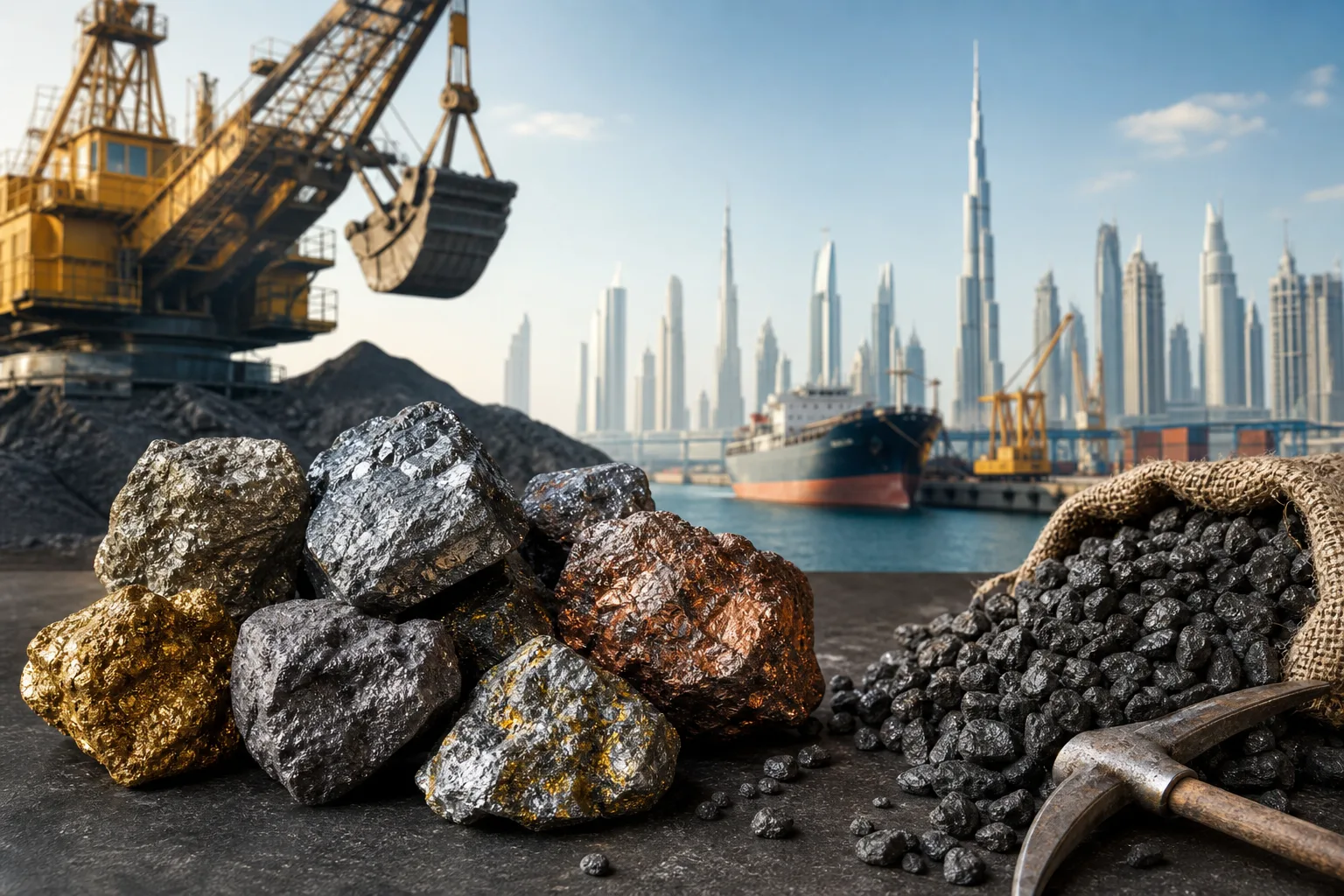
Dubai sits at the crossroads of major shipping lanes connecting Asia, Africa, and Europe, processing billions of dollars in metals trade annually. Its role as a re-export and transit hub makes it a natural price discovery and distribution centre for regional buyers and sellers.
What Activity Code 4662.03 Actually Covers
This ISIC-aligned code covers wholesale trade in metal ores, minerals, and ferrous and non-ferrous semi-finished products including billets, ingots, slabs, wire rods, and blooms. It is designed for traders who buy and sell commodities without undertaking manufacturing or primary processing.
Key Tax and Ownership Benefits for Traders
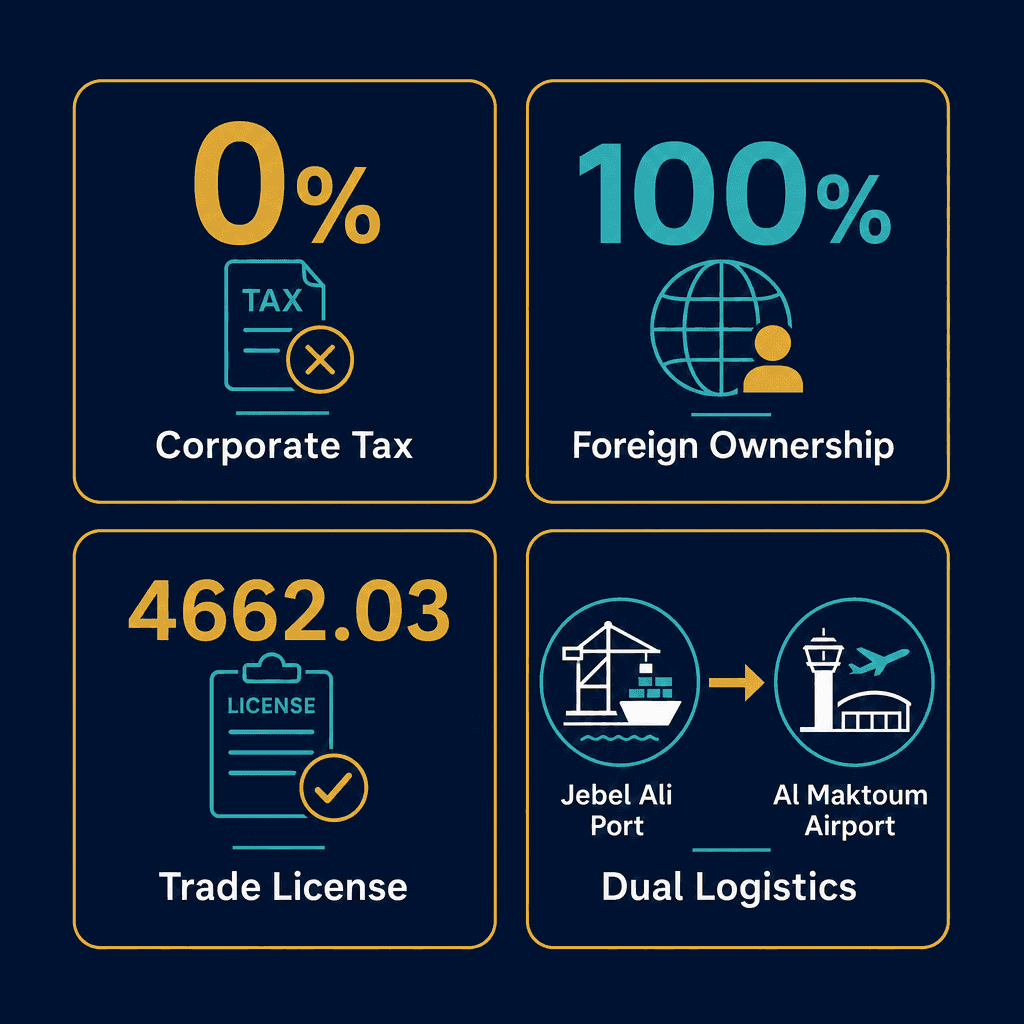
Businesses licensed under Dubai South Business Hub Free Zone can enjoy 100% foreign ownership, 0% corporate tax on qualifying free zone income, and 0% personal income tax. Profits can be fully and unrestricted repatriated, making it highly attractive for international operators.
Unmatched Logistics Access Near Jebel Ali Port
Dubai South's proximity to both Al Maktoum International Airport and Jebel Ali Port, one of the world's busiest container ports, gives commodity traders a decisive logistical edge. Rapid movement between air and sea freight corridors reduces lead times and improves working capital cycles.
Growing GCC Demand Driving Sustained Procurement
Large-scale construction programmes, manufacturing expansion, and infrastructure projects across the GCC are generating consistent demand for steel billets, aluminium ingots, and copper wire rods. Free zone traders are well positioned to serve this sustained regional procurement activity.
Arbitrage Opportunities From Global Market Volatility
Shifting supply chains, geopolitical disruption, and currency fluctuations are creating margin and arbitrage opportunities for agile free zone trading entities. A well-structured Dubai entity can act quickly across multiple international markets to capitalise on these conditions.
Who Should Consider Applying for This License
The license suits international metals traders seeking a tax-efficient, 100% foreign-owned entity, as well as investors looking to enter physical commodities trading. The Trading License category covers import, export, re-export, and distribution without requiring a separate manufacturing permit.
Dubai's strategic position between the world's largest metal-producing and metal-consuming nations makes it one of the most commercially compelling bases for trading ferrous and non-ferrous semi-finished metal products. Whether you are an established international metals trader or an investor exploring physical commodities, the UAE offers a regulatory environment purpose-built for cross-border trade.
This guide covers everything traders need to know about obtaining Activity Code 4662.03 under a Trading License at Dubai South Business Hub Free Zone, including costs, compliance requirements, and the market opportunity.
Dubai's Metal Ores and Minerals Market: Why It Matters Now
The UAE has firmly established itself as a re-export and transit hub connecting Asia, Africa, and Europe for both ferrous and non-ferrous metals. Positioned at the crossroads of major global shipping lanes, Dubai processes billions of dollars in metals trade annually, acting as a price discovery and distribution centre for regional buyers and sellers alike.
Demand for semi-finished metal products across the Gulf continues to grow, driven by large-scale construction programmes, manufacturing expansion, and infrastructure development under national vision strategies across the GCC. Projects requiring steel billets, aluminium ingots, and copper wire rods are generating sustained procurement activity that free zone traders are well placed to serve.
Dubai South's proximity to Al Maktoum International Airport and Jebel Ali Port, one of the busiest container ports in the world, provides a decisive logistics advantage for bulk commodity traders. Goods can move rapidly between air and sea freight corridors, reducing lead times and improving working capital cycles.
Global metals trade volatility, driven by shifting supply chains, geopolitical disruption, and currency fluctuations, is simultaneously creating arbitrage and margin opportunities for agile, well-structured free zone trading entities that can act quickly across multiple markets.
Key Stats at a Glance
Activity Code: 4662.03
License Type: Trading License
Category: Trading
Free Zone: Dubai South Business Hub
Foreign Ownership: 100% permitted
Corporate Tax on Qualifying Free Zone Income: 0%
Personal Income Tax: 0%
Profit Repatriation: Full and unrestricted
Logistics Access: Al Maktoum International Airport and Jebel Ali Port
What Activity Code 4662.03 Covers
Activity Code 4662.03 is an ISIC-aligned classification covering the wholesale trade in metal ores, minerals, and ferrous and non-ferrous semi-finished metal products not elsewhere classified (n.e.c.). It sits within the broader category of wholesale trade and is specifically designed for businesses engaged in buying and selling these commodities without undertaking manufacturing or primary processing.
Permitted commodities under this activity include iron, steel, copper, aluminium, zinc, lead, and related semi-finished forms. Tradeable product forms encompass billets, ingots, slabs, wire rods, blooms, and other intermediate metal outputs that sit between raw ore and finished manufactured goods.
The Trading License category allows the holder to engage in import, export, re-export, and distribution activities without requiring a separate manufacturing permit. This makes it particularly efficient for traders who source from producers in one country and supply buyers in another, using Dubai as the commercial and logistical midpoint.
The activity is registered under Category: Trading with License Type: Trading License at Dubai South Business Hub Free Zone, providing a clear and recognised legal framework for international counterparties, banks, and customs authorities.
Who Should Apply for This License
This license is suited to a broad range of commercial profiles operating in the metals and minerals space:
International metals traders seeking a tax-efficient, 100% foreign-owned entity in a recognised free zone with credible regulatory standing
Commodity brokers and agents looking to formalise UAE-based operations and gain structured access to GCC and African markets
Manufacturers and industrial processors who source raw and semi-finished metals and require a compliant, dedicated procurement entity
Investors diversifying into physical commodities trading who wish to use Dubai as a re-export corridor with full profit repatriation rights
The free zone structure removes the need for a local UAE sponsor, making it particularly attractive for foreign nationals and international corporate groups establishing a Middle East trading presence for the first time.
License Costs, Setup Steps, and Compliance Requirements
License fees at Dubai South Business Hub Free Zone vary depending on the office package selected, the number of visa allocations required, and any additional regulatory approvals relevant to the specific commodities being traded. Typical costs include a one-time registration fee, an annual license fee, and charges associated with the chosen workspace arrangement. Annual renewal fees apply to maintain the license in good standing.
The setup process follows a structured sequence. First, the applicant reserves a trade name and confirms activity alignment with Code 4662.03. Second, the application is submitted alongside the required documentation. Third, documents are attested where necessary, particularly for corporate shareholders. Fourth, the license is issued by the free zone authority. Fifth, the trader proceeds to open a UAE corporate bank account, which is required for operational trading activity.
Compliance obligations include registration for UAE Corporate Tax, which applies at a standard rate of 9% on taxable income, although qualifying free zone persons may benefit from a 0% rate on qualifying income subject to meeting specific conditions. Economic Substance Regulations may apply depending on the nature of activities conducted. Anti-money laundering considerations are particularly relevant for commodity traders and should be addressed through appropriate internal controls and due diligence procedures.
Key Documents Required
Passport copies and proof of address for all shareholders and directors
A business plan or activity description clearly aligned to Activity Code 4662.03
A board resolution or shareholder agreement for corporate applicants
A no-objection letter if the applicant currently holds an existing UAE residence visa
Facility and Visa Options
Flexi-desk and virtual office packages are available for trading licenses, with no mandatory warehouse requirement at the incorporation stage
Visa allocation is tied to the office package chosen, with options typically ranging from one to six visas depending on the package tier
A physical warehouse or storage facility can be leased separately within the Dubai South ecosystem for traders who handle physical inventory and require bonded or temperature-controlled storage
Why Dubai South Free Zone Is Well-Positioned for Metals Trading
Dubai South offers a compelling combination of fiscal, logistical, and commercial advantages that are difficult to replicate in other jurisdictions. Qualifying free zone entities benefit from zero corporate tax on qualifying free zone income, zero personal income tax for shareholders and employees, and full profit repatriation with no currency restrictions.
The integrated logistics ecosystem at Dubai South links air freight through Al Maktoum International Airport, sea freight via Jebel Ali Port, and road networks spanning the GCC, allowing traders to move metal products efficiently across multiple modes of transport within a single, connected zone.
Access to a robust network of trade finance institutions, commodity-specialist banks, and letters of credit providers within the UAE strengthens the commercial infrastructure available to metals traders. Financing instruments that are standard in global commodities trade are well understood and readily available in the Dubai market.
The UAE's bilateral trade agreements and strong diplomatic relationships reduce tariff friction for metals re-exported to key markets across Asia, Africa, and Eastern Europe, reinforcing Dubai's role as a preferred routing point for international metals flows.
Related Activities
Metal Ores Trading Trading License
Frequently Asked Questions