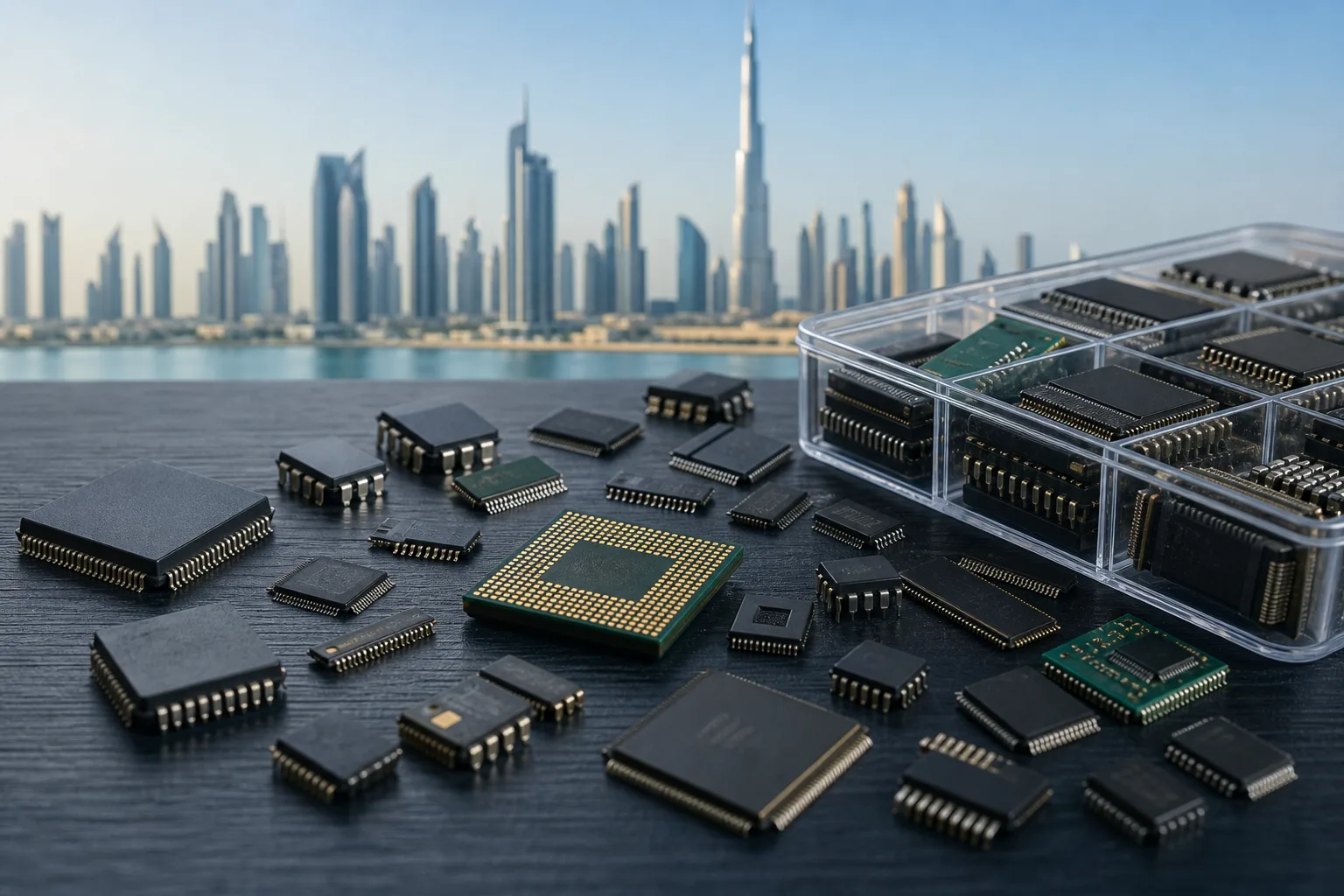
Microchips & Integrated Circuits Wholesale Trading License in Dubai: Cost and Requirements

Topic Summary
Dubai South Free Zone: A Strategic Trade Hub
Dubai South Business Hub Free Zone sits adjacent to Al Maktoum International Airport and near Jebel Ali Port, connecting Asian manufacturers with buyers across Europe, Africa, and the Middle East. This location gives semiconductor traders access to over 2 billion consumers within a four-hour flight.
100% Foreign Ownership With Zero Tax
The microchips and integrated circuits trading license (Activity Code 4652.03) allows full foreign ownership with no personal income tax and 0% corporate tax on qualifying free zone income. These incentives make Dubai a highly competitive base for international semiconductor traders.
Fast Setup: License Ready in 2–4 Weeks
The typical timeline to establish a trading company under this license is just two to four weeks, thanks to Dubai's streamlined free zone registration process. Simplified customs procedures and duty exemptions on re-exports further accelerate time to market.
Broad Product Scope Under Activity Code 4652.03
This Trading License covers wholesale import, export, and re-export of microchips, integrated circuits, microprocessors, memory chips, logic devices, and application-specific integrated circuits. It is designed exclusively for wholesale trade, not retail sales or manufacturing activities.
Surging Global Demand Backs the Business Case
Growth in electric vehicles, AI hardware, 5G telecoms, and industrial automation is driving sustained increases in global semiconductor demand. The World Semiconductor Trade Statistics organisation projects long-term revenue growth, reinforcing Dubai's appeal as a regional distribution base.
Ideal License Holders: Distributors and Regional Importers
The license suits electronics component distributors, wholesale traders serving the GCC, and technology importers targeting high-growth African and South Asian markets. Companies already operating in Asia or Europe often use Dubai South as a strategic regional hub.
Dubai's position at the crossroads of Asia, Europe, and Africa makes it one of the world's most strategic hubs for wholesale trading in microchips and integrated circuits. As global demand for semiconductors accelerates across every major industry, traders are increasingly looking to establish operations in a jurisdiction that combines logistical excellence with a business-friendly regulatory framework.
This guide covers everything you need to know about obtaining Activity Code 4652.03 under a Trading License at Dubai South Business Hub Free Zone, including costs, requirements, and the steps to get started.
Key Stats at a Glance
Activity Code: 4652.03 , Wholesale of Electronic Components
License Type: Trading License
Foreign Ownership: 100% permitted
Corporate Tax on Qualifying Free Zone Income: 0%
Personal Income Tax: 0%
Typical Setup Timeline: 2 to 4 weeks
Market Reach: Over 2 billion consumers within a four-hour flight
Zone: Dubai South Business Hub Free Zone, adjacent to Al Maktoum International Airport
Dubai's Semiconductor Trade Landscape: Market Context

The UAE has firmly established itself as a leading re-export and distribution hub for electronics and semiconductor components. The country's strategic location, world-class infrastructure, and progressive trade policies have attracted global technology firms seeking a gateway to the GCC, Africa, and South Asia. According to the UAE Ministry of Economy, electronics and electrical equipment consistently rank among the UAE's top non-oil export and re-export categories, with billions of dollars in annual trade flows passing through Dubai's ports and airports.
Global demand for integrated circuits continues to surge, driven by growth in electric vehicles, consumer electronics, industrial automation, artificial intelligence hardware, and 5G telecommunications. The World Semiconductor Trade Statistics organisation projects sustained long-term growth in global semiconductor revenues, reinforcing the commercial case for establishing a trading presence in a strategically located free zone.
Dubai South Free Zone plays a central role in this ecosystem. Situated adjacent to Al Maktoum International Airport and within close reach of Jebel Ali Port, it functions as a critical logistics and trade corridor connecting manufacturers in Asia with buyers across Europe, Africa, and the Middle East. Free zones in Dubai offer additional advantages including simplified customs procedures, duty exemptions on re-exports, and a streamlined business registration process that gives semiconductor traders a meaningful competitive edge.
What the Microchips & Integrated Circuits Trading License Covers
Activity Code 4652.03 covers the wholesale trade of electronic components, with a specific focus on microchips, integrated circuits, processors, semiconductors, and related electronic parts. Under this Trading License, registered companies are authorised to import, export, re-export, and engage in wholesale distribution of these components to businesses, distributors, and institutional buyers.
The license permits trade in a broad range of products within the semiconductor and electronic components category, including memory chips, microprocessors, logic devices, and application-specific integrated circuits. It is important to note that this license covers wholesale activities only. Retail sales directly to end consumers, manufacturing or assembly operations, and activities outside the defined scope of electronic component trading would require separate or additional license categories.
Who This License Is Best Suited For
The microchips and integrated circuits trading license is well suited to a range of business profiles, including:
Electronics component distributors and wholesale traders looking to serve the GCC and broader regional markets
Technology importers targeting high-growth markets across Africa and South Asia
International semiconductor firms seeking a tax-efficient UAE base for re-export operations
Entrepreneurs and SMEs entering the electronics supply chain for the first time
Existing trading businesses looking to expand their product portfolio into semiconductor components
License Requirements and Compliance
Dubai South Business Hub Free Zone offers flexible legal structure options for new businesses, including Free Zone Establishments (FZE) for sole shareholders and Free Zone Companies (FZC) for multiple shareholders. Both structures benefit from 100% foreign ownership, which is a fundamental advantage of operating within a UAE free zone as confirmed under current UAE free zone regulations.
To apply for the microchips and integrated circuits trading license, applicants will typically need to provide the following documentation:
Passport copies of all shareholders and directors
Completed application forms as required by Dubai South
A business plan outlining the nature and scope of trading activities
A No Objection Certificate (NOC) from a current UAE employer, if the applicant holds a UAE residence visa under another sponsor
Bank reference letters or proof of financial standing, where requested
Traders dealing in certain categories of electronic components should be aware of dual-use goods regulations. Some advanced semiconductors and integrated circuits are subject to export control frameworks under international agreements. Traders may need to verify that their specific product lines comply with UAE customs regulations and any applicable international export control requirements before commencing operations.
Visa eligibility is linked to the license and office package selected. Flexi-desk packages typically include a smaller visa quota, while larger office or warehouse arrangements allow for a greater number of employment visas.
Setup Costs and Step-by-Step Process
License fees at Dubai South Business Hub Free Zone vary depending on the package selected, the number of visas required, and the type of facility chosen. Indicative all-in setup costs for a trading license with a flexi-desk arrangement and one to two visas typically start from approximately AED 15,000 to AED 25,000 for the first year, though costs can be higher depending on specific requirements. It is advisable to request a tailored quote directly from the free zone authority to get an accurate figure based on your business profile.
Additional costs to factor in include government registration fees, visa application and medical fees, and any warehouse or storage facility charges if physical inventory is to be held within the zone.
The application process generally follows these steps:
Step 1 , Name Reservation: Submit proposed company name for approval
Step 2 , Application Submission: Complete and submit all required documents and forms
Step 3 , Initial Approval: Receive preliminary approval from Dubai South authorities
Step 4 , License Issuance: Pay applicable fees and receive the trading license
Step 5 , Bank Account Opening: Open a corporate bank account with a UAE bank
Step 6 , Visa Processing: Apply for investor and employee visas as required
The typical timeline from application submission to license issuance is two to four weeks, depending on document completeness and approval processing times. Annual license renewal obligations and associated fees apply each year to maintain good standing.
Facility and Office Requirements
Trading license holders at Dubai South can opt for a flexi-desk or shared workspace arrangement, which satisfies the registered address requirement without the cost of a dedicated office. Virtual office options may also be available for businesses that do not require a physical presence within the zone on a daily basis.
For traders handling significant volumes of semiconductor inventory, dedicated warehouse space within Dubai South is available for lease. The zone's direct connectivity to Al Maktoum International Airport makes it particularly efficient for time-sensitive shipments of high-value electronic components, reducing transit times and logistics costs considerably.
Why Dubai South Is Strategically Positioned for Semiconductor Trade
Dubai South's geographic location places over two billion consumers within a four-hour flight radius, encompassing the GCC, South Asia, East Africa, and Central Asia. This extraordinary market reach is one of the primary reasons global semiconductor traders choose Dubai as their regional hub.
The zone benefits from direct connectivity to Al Maktoum International Airport, which is planned to become one of the world's largest airports, and is within close proximity to Jebel Ali Port, the largest port in the Middle East. Together, these assets create a multimodal logistics platform ideally suited to the rapid movement of high-value, time-sensitive electronic components.
From a tax perspective, qualifying free zone businesses benefit from a 0% corporate tax rate on qualifying income and there is no personal income tax in the UAE. The UAE's expanding network of bilateral trade agreements and its favourable customs duty framework for electronics further reduce the cost of doing business for semiconductor traders.
The UAE consistently ranks highly in global ease of doing business assessments, supported by a stable regulatory environment, transparent legal frameworks, and a government committed to economic diversification and technology sector growth.
Related Activities
Printed Circuits Wholesale Trading Trading License
Frequently Asked Questions