Start a Salted, Preserved Fish & Seafood Trading Business in Dubai

Topic Summary
Dubai's Location Unlocks Billions of Customers
Dubai sits at the crossroads of Asia, Africa, and the Middle East, giving traders access to over two billion consumers within a four-hour flight. Jebel Ali Port handles roughly 14 million TEUs annually, making re-export fast and cost-effective.
Activity Code 4721.73 Covers a Wide Product Range
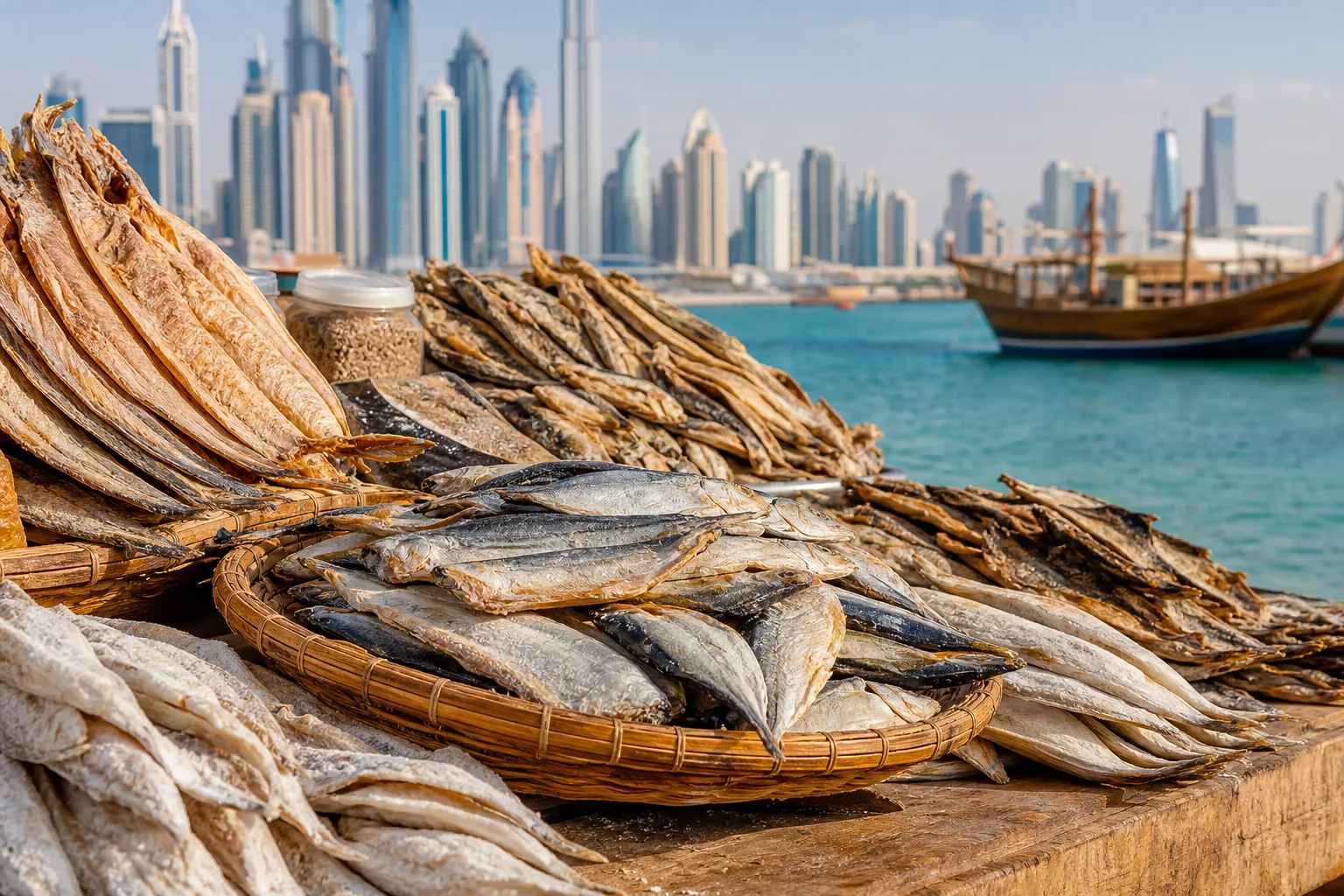
This trading license authorises the import, export, and re-export of salted cod, dried anchovies, smoked salmon, preserved shellfish, fish in brine, and similar products. It does not cover manufacturing, so businesses that only trade are well served by this single license.
100% Foreign Ownership With Zero Income Tax
Registering in the Dubai South Business Hub Free Zone means entrepreneurs retain full ownership of their company without a local sponsor. There is also zero corporate and personal income tax, significantly improving profit margins for commodity traders.
Strong Diaspora Demand Drives Year-Round Sales
Markets such as the Philippines, India, Sri Lanka, Egypt, and East Africa all have large diaspora communities living in the UAE who maintain consistent demand for preserved and dried seafood. This built-in customer base provides a reliable foundation for new trading operations.
Setup Is Straightforward and Relatively Quick
The registration process at Dubai South Business Hub Free Zone can typically be completed within a few weeks by following a clear step-by-step process. Entrepreneurs start by confirming their activity code and then select a company structure, most commonly a Free Zone Limited Liability company.
UAE Trade Agreements Open 190+ Export Markets
The UAE's extensive network of trade agreements provides licensed businesses with preferential access to more than 190 countries. This makes Dubai an ideal transshipment hub for traders who want to distribute preserved seafood across multiple continents from a single base.
Global demand for preserved and salted seafood continues to rise, driven by longer shelf lives, expanding retail networks, and growing populations across Asia, Africa, and the Middle East. Dubai sits at the crossroads of these markets, making it one of the most strategically valuable locations in the world to build a seafood trading operation. Whether you are sourcing dried fish from South Asia or distributing canned shellfish across the GCC, establishing your business at Dubai South Business Hub Free Zone puts you within reach of billions of consumers.
This guide covers everything you need to know about launching a salted, preserved fish and seafood trading business in Dubai under Activity Code 4721.73, including license details, setup costs, compliance requirements, and why the UAE remains a top destination for food commodity traders.
The UAE Seafood Market: Why Now
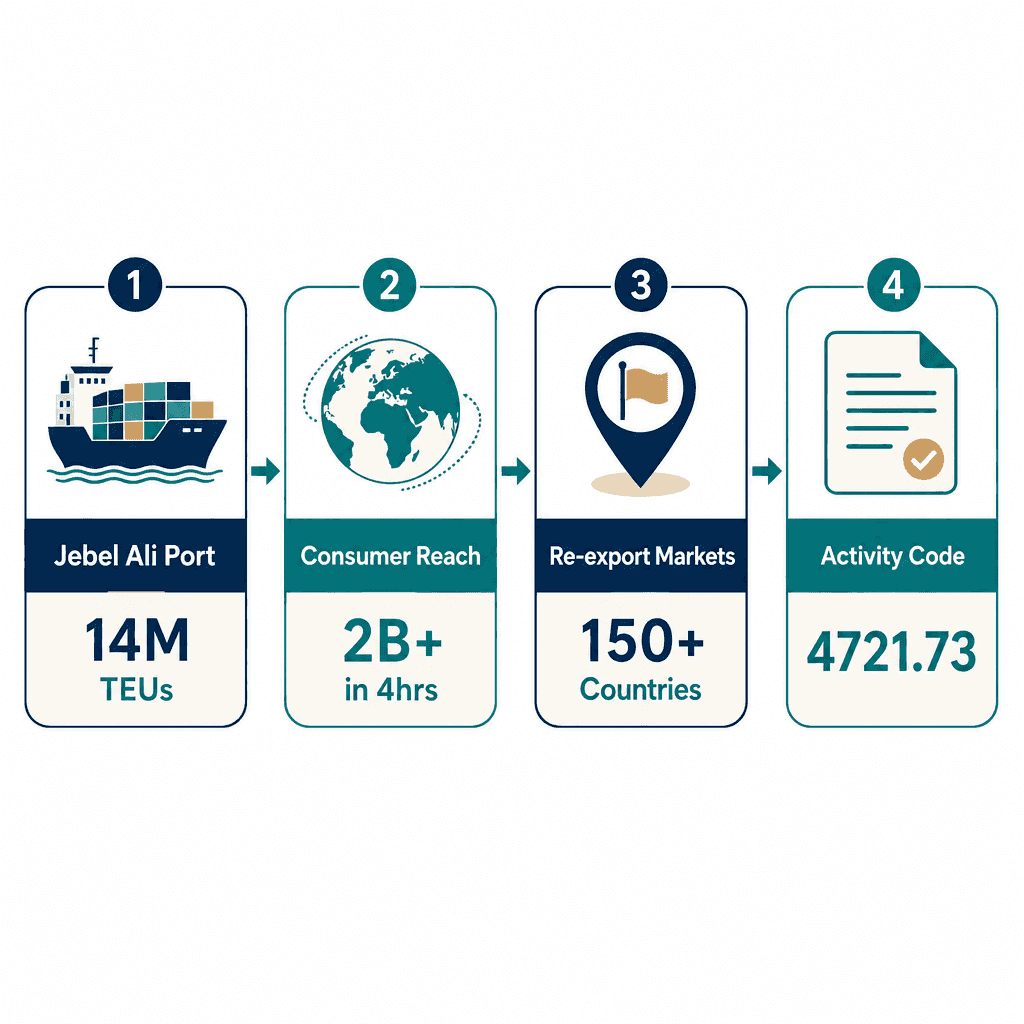
The UAE imports a significant share of its seafood, with the country's food trade consistently ranking among the most active in the region. Dubai's Jebel Ali Port is one of the busiest re-export hubs globally, handling substantial volumes of food commodities including preserved and processed seafood. The UAE's strategic location means goods can reach over two billion consumers within a four-hour flight, and the country's world-class logistics infrastructure supports rapid distribution across the Middle East, Africa, South Asia, and beyond.
The preserved seafood segment, which includes salted fish, dried fish, smoked seafood, and seafood in brine or oil, benefits from year-round demand in markets such as the Philippines, India, Sri Lanka, Egypt, and East Africa, all of which maintain strong diaspora communities in the UAE.
Key Facts at a Glance
Activity Code: 4721.73 - Retail sale of salted, preserved fish and other seafood
License Type:Trading License
Category: Trading
Free Zone: Dubai South Business Hub
100% foreign ownership permitted
0% corporate and personal income tax
Access to over 190 countries via UAE trade agreements
Jebel Ali Port handles approximately 14 million TEUs annually
UAE re-exports food commodities to more than 150 countries
What the Trading License Covers
A trading license under Activity Code 4721.73 authorises your business to buy, sell, import, export, and re-export salted, preserved, dried, smoked, and otherwise processed fish and seafood products. This includes a wide range of goods such as salted cod, dried anchovies, smoked salmon, preserved shellfish, fish in brine, and similar commodities.
The license does not cover the manufacture or processing of these products. If you intend to cure, smoke, or salt fish yourself, you would require a separate industrial or food processing license. For pure trading and distribution activities, the 4721.73 trading license is the appropriate route.
Who This License Is Suited For
This business activity is well suited to a range of entrepreneurs and established operators, including:
Seafood importers looking to distribute across the GCC and wider Middle East
International food commodity traders seeking a UAE base for re-export operations
Retail and wholesale suppliers serving supermarkets, ethnic grocery stores, and food service operators
South and Southeast Asian entrepreneurs supplying preserved seafood to diaspora communities
African market traders using Dubai as a transshipment hub
Online food retailers requiring a licensed entity for UAE e-commerce operations
Step-by-Step Setup Process
The process of establishing your trading company at Dubai South Business Hub Free Zone is straightforward and can typically be completed within a few weeks.
Step 1 - Choose your business activity: Confirm that Activity Code 4721.73 covers your intended trade. You may add complementary activities where permitted.
Step 2 - Select a company structure: Most applicants register as a Free Zone Limited Liability Company (FZ-LLC). A single shareholder is sufficient.
Step 3 - Reserve your trade name: Submit two or three preferred company names for approval. Names must comply with UAE naming conventions.
Step 4 - Submit your application: Provide required documents including passport copies, proof of address, and a basic business plan if requested.
Step 5 - Obtain initial approval: Once the free zone authority reviews and approves your application, you receive initial approval to proceed.
Step 6 - Sign lease agreement: Select a suitable office or flexi-desk package within the free zone.
Step 7 - Pay fees and receive your license: Complete payment of license and registration fees to receive your trading license.
Step 8 - Open a corporate bank account: With your license in hand, approach UAE banks to open a business account.
Estimated Costs
Setup costs at Dubai South Business Hub Free Zone are competitive relative to mainland Dubai options. Typical costs include the license fee, registration fee, and a flexi-desk or office space lease. All-in costs for a basic setup generally start from approximately AED 12,000 to AED 20,000 per year, though this varies depending on the office package selected and any additional approvals required. It is advisable to confirm current fee schedules directly with the free zone authority, as these are subject to periodic revision.
Licensing and Compliance Requirements
Trading in preserved and salted seafood in the UAE involves compliance with food safety and import regulations. Key requirements include:
Dubai Municipality Food Safety Department: Imported food products must meet UAE food safety standards. Labelling requirements, shelf life declarations, and halal certification (where applicable) must be observed.
UAE Food Import Regulations: All food imports require health certificates and certificates of origin from the exporting country. Products must comply with UAE.S GSO standards for food safety.
Customs Registration: You will need to register with UAE Customs to facilitate import and export operations.
Halal Certification: For seafood products intended for Muslim consumers, appropriate certification may be required depending on the product type and market.
Cold Chain and Storage: Certain preserved seafood products may require temperature-controlled storage. Ensure your logistics partners hold the necessary approvals.
Why Dubai Is the Right Base for Seafood Trading
Dubai offers a combination of advantages that few other jurisdictions can match for food commodity traders. The free zone model allows 100% foreign ownership with no requirement for a local sponsor, meaning you retain full control of your business. Corporate and personal income taxes stand at zero for free zone entities operating within permitted activities. The UAE has signed free trade agreements and preferential trade arrangements with numerous countries, reducing tariff burdens on imports and exports.
Dubai South's proximity to Al Maktoum International Airport and Jebel Ali Port creates an unmatched logistics corridor for time-sensitive and bulk food shipments. The free zone also benefits from a business-friendly regulatory environment, with streamlined processes and dedicated support for new investors.
Related Activities
Fresh Fish & Marine Animals Trading Trading License
Canned & Preserved Food Trading Trading License
Frequently Asked Questions