Start a Railway Construction & Fabrication Equipment Trading Business in Dubai

Topic Summary
Dubai's Location Makes It a Natural Hub
Sitting between Europe, Asia, and Africa, Dubai is ideally positioned for re-exporting heavy industrial equipment across the region. Its ports handle over 14 million TEUs annually, with Jebel Ali ranking among the world's top ten busiest container ports.
GCC Rail Investment Exceeds USD 200 Billion
Projects like Etihad Rail, Dubai Metro extensions, and regional freight corridors are generating sustained demand for specialist railway equipment. This pipeline creates a long-term commercial opportunity for equipment traders entering the market now.
Activity Code 4773.75 Covers a Wide Product Range
The trading license permits dealing in track-laying machinery, metal fabrication tools, welding and cutting systems, tunnelling equipment, electrification installation gear, and inspection instruments. It also covers spare parts and servicing equipment for rail contractors and operators.
100% Foreign Ownership Is Permitted
Setting up in a free zone like Dubai South Business Hub eliminates the need for a local sponsor, allowing international investors to retain full control of their business. This is a significant advantage for overseas manufacturers and independent traders entering the GCC market.
Zero Corporate Tax for Qualifying Free Zone Entities
Eligible free zone businesses benefit from a 0% corporate tax rate, making Dubai one of the most tax-efficient bases for regional trading operations. Combined with low setup costs and no mandatory minimum share capital in many packages, the financial barriers to entry are relatively low.
Setup Can Be Completed in Two to Four Weeks
The licensing process at Dubai South Business Hub Free Zone is structured and straightforward, with a typical timeline of just two to four weeks from application to approval. Costs vary based on office package selection, visa allocation, and other preferences.
Multiple Business Profiles Can Benefit From This License
The license suits international equipment manufacturers, independent machinery traders, engineering firms diversifying into supply, and procurement specialists serving large rail contractors. Its flexibility makes it accessible to both new entrants and established trading companies expanding into the GCC.
The Middle East is investing hundreds of billions of dirhams into rail infrastructure, and Dubai sits at the centre of that expansion. From the UAE's national rail network to metro extensions and regional freight corridors, demand for specialist construction and fabrication equipment has never been stronger. For entrepreneurs and established trading companies looking to capitalise on this momentum, securing a Trading License under Activity Code 4773.75 at Dubai South Business Hub Free Zone is one of the most direct routes into this high-value market.
This guide covers everything you need to know about setting up a trains and railways construction and fabrication equipment trading business in Dubai, including what the license covers, who it suits, setup costs, compliance requirements, and why Dubai is exceptionally well-positioned for this trade.
Why Dubai for Railway Equipment Trading?
Dubai's strategic location between Europe, Asia, and Africa makes it a natural re-export hub for heavy industrial equipment. The emirate handles more than 14 million TEUs of cargo annually through its ports, and Jebel Ali remains one of the world's top ten busiest container ports. Combined with world-class logistics infrastructure, a zero-corporate-tax environment for qualifying free zone businesses, and proximity to GCC rail projects valued at over USD 200 billion, Dubai offers traders a compelling commercial platform.
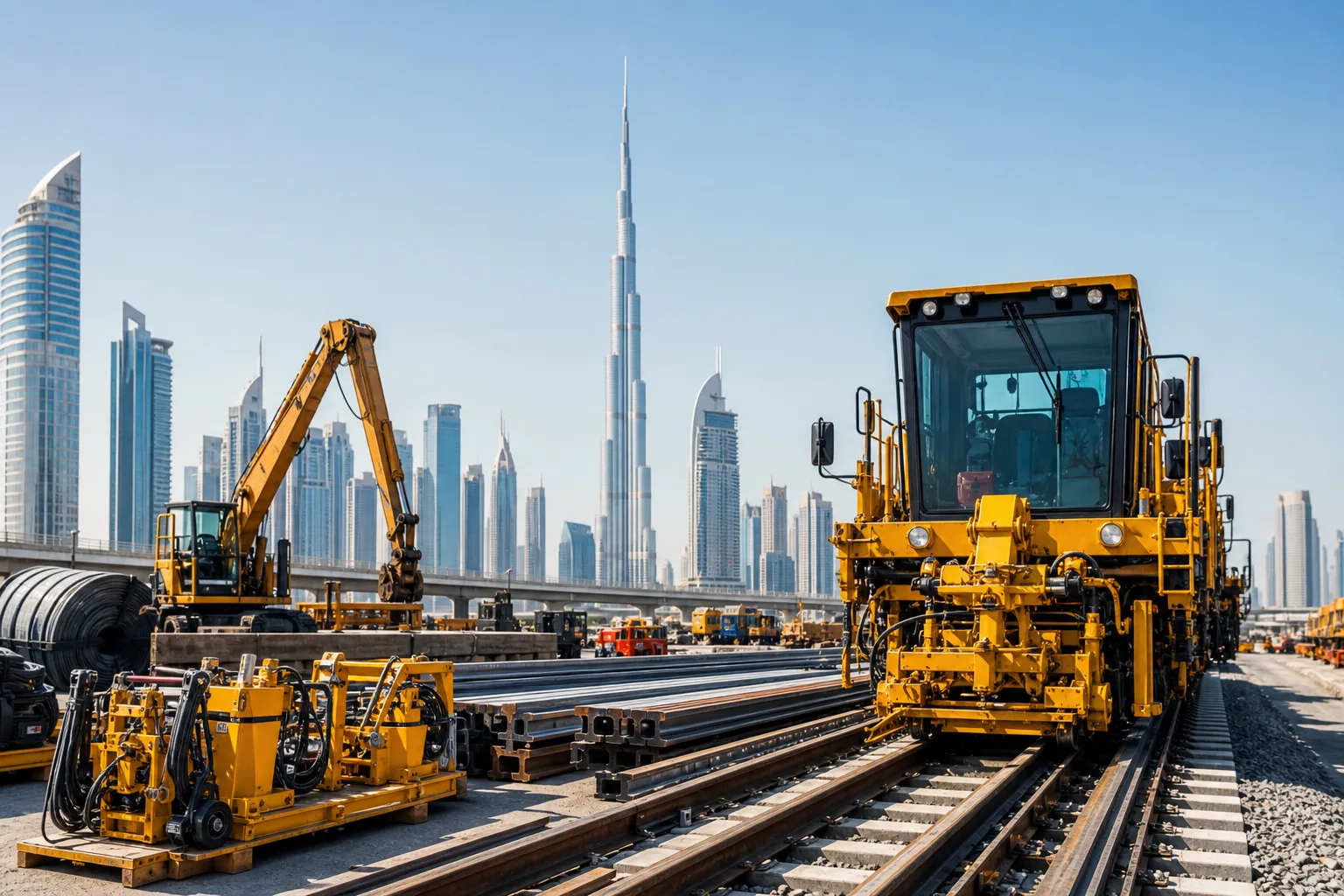
The UAE government's commitment to rail is equally significant. Etihad Rail, the national freight network, is progressing rapidly, while the Dubai Metro continues to expand. These projects generate sustained demand for track-laying machinery, welding and fabrication equipment, tunnel boring components, rail fastening systems, and associated construction tools.
What Activity Code 4773.75 Covers
Activity Code 4773.75 falls under the Trading category and is classified as a Trading License. It permits the holder to trade in equipment specifically used for the construction and fabrication of railways and train infrastructure. This includes, but is not limited to:
Rail track construction machinery and tools
Metal fabrication equipment used in railway manufacturing
Welding, cutting, and joining systems for rail components
Tunnelling and earthworks equipment for rail projects
Overhead line and electrification installation equipment
Maintenance-of-way vehicles and associated tooling
Inspection and testing instruments for railway construction
The license also supports maintenance-related trading activity, allowing license holders to supply spare parts and servicing equipment to contractors and rail operators across the region.
Who This License Suits
This activity is well-suited to a broad range of business profiles, including international equipment manufacturers seeking a regional distribution base, independent traders sourcing machinery from Europe or Asia for GCC resale, engineering firms diversifying into equipment supply, and procurement specialists serving large rail contractors. The free zone structure is particularly attractive to foreign investors who wish to retain full ownership of their business without requiring a local sponsor.
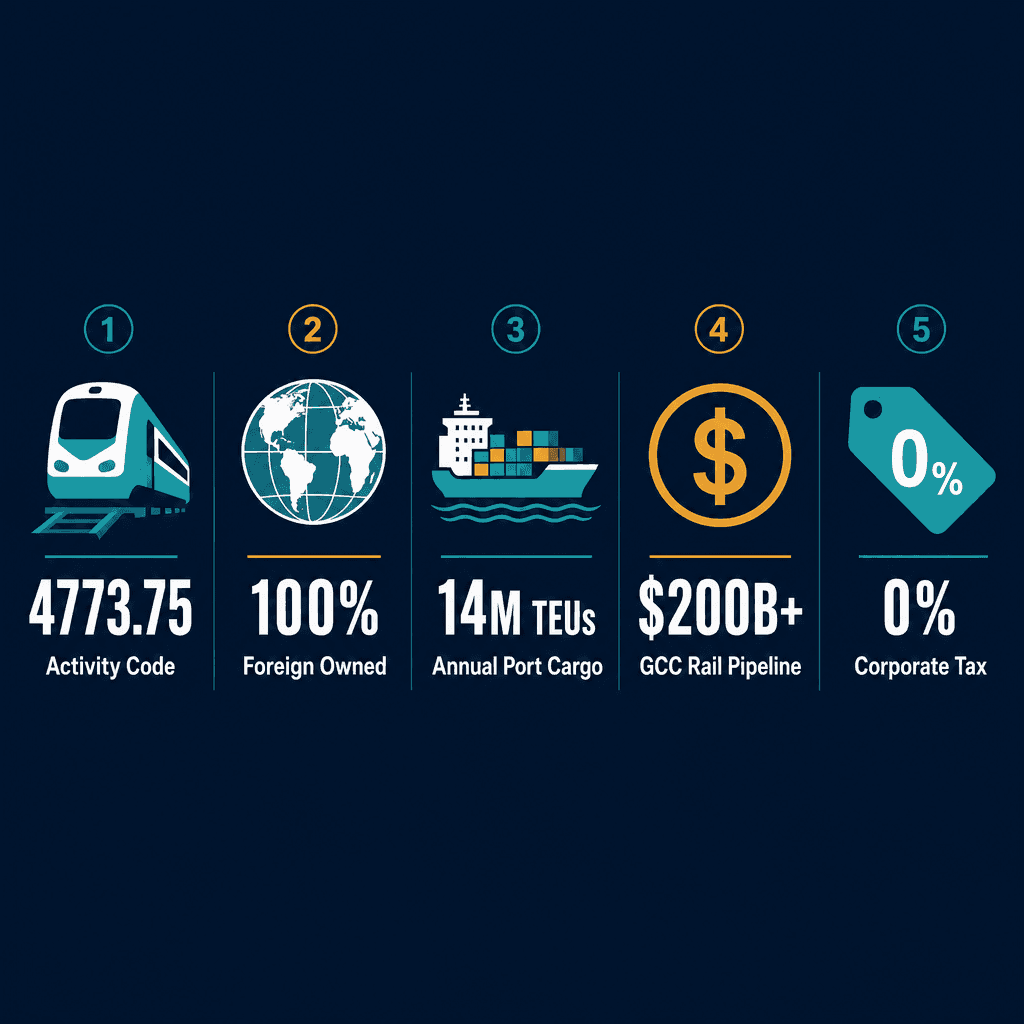
Infographic: Railway Equipment Trading in Dubai South
Activity Code: 4773.75
License Type: Trading License
Foreign Ownership: 100% permitted in free zone
GCC Rail Investment Pipeline: USD 200+ billion
UAE Corporate Tax Rate (qualifying free zone entities): 0%
Dubai Port Cargo Volume: 14+ million TEUs annually
Typical License Setup Timeline: 2 to 4 weeks
Minimum Share Capital: Varies by free zone package; often no mandatory minimum
Setup Costs and Steps
Setting up at Dubai South Business Hub Free Zone involves a clear, structured process. Costs vary depending on office or flexi-desk package selection, visa allocation, and share capital requirements, but the process broadly follows these steps:
Choose your business structure: Free zone limited liability company (FZ-LLC) is the most common structure for trading activities.
Select your activity and prepare documentation: Submit your passport copies, business plan, and application form specifying Activity Code 4773.75.
Register your trade name: Ensure the name complies with UAE naming conventions and is approved by the free zone authority.
Obtain initial approval: The free zone authority reviews your application and issues initial approval, typically within a few working days.
Sign your lease agreement: Select a flexi-desk, shared office, or dedicated unit depending on operational needs.
Pay license fees and receive your license: Once payment is confirmed, your Trading License is issued.
Apply for visas: Residence visas for shareholders and employees can be processed through the free zone.
Estimated annual license fees at Dubai South Business Hub Free Zone typically start from AED 12,000 to AED 20,000, with additional costs for visa applications, establishment cards, and office space. It is advisable to engage a registered business setup consultant to obtain a precise cost breakdown tailored to your specific requirements.
Licensing and Compliance Requirements
Traders operating under Activity Code 4773.75 must comply with several regulatory requirements:
All imported equipment must comply with UAE technical standards and, where applicable, Gulf Standardisation Organisation (GSO) requirements.
Customs declarations must be filed accurately through the UAE Federal Customs Authority for all goods entering or leaving the free zone.
Anti-money laundering (AML) and know-your-customer (KYC) obligations apply to all UAE-registered businesses under Federal Decree-Law No. 20 of 2018.
Annual license renewal is mandatory, along with updated financial records and audited accounts where required.
Re-export activities must be conducted in accordance with UAE Customs Law and any applicable bilateral trade agreements.
Re-Export Opportunities
One of the strongest commercial advantages of operating from a Dubai free zone is the ability to re-export goods to third countries with minimal friction. Railway construction equipment sourced from Europe, North America, or Asia can be warehoused, repackaged, and redistributed across Africa, South Asia, and the broader GCC without attracting import duties within the free zone. This makes the Dubai South location particularly attractive for traders serving multiple markets simultaneously.
Related Activities
Construction Equipment & Machinery Spare Parts Trading Trading License
Construction Equipment & Machinery Trading Trading License
Power Generation, Transmission & Distribution Equipment Trading Trading License
Frequently Asked Questions