Road Freight Transport Business License in Dubai: Cost and Requirements

Topic Summary
Dubai South Offers Unmatched Logistics Location
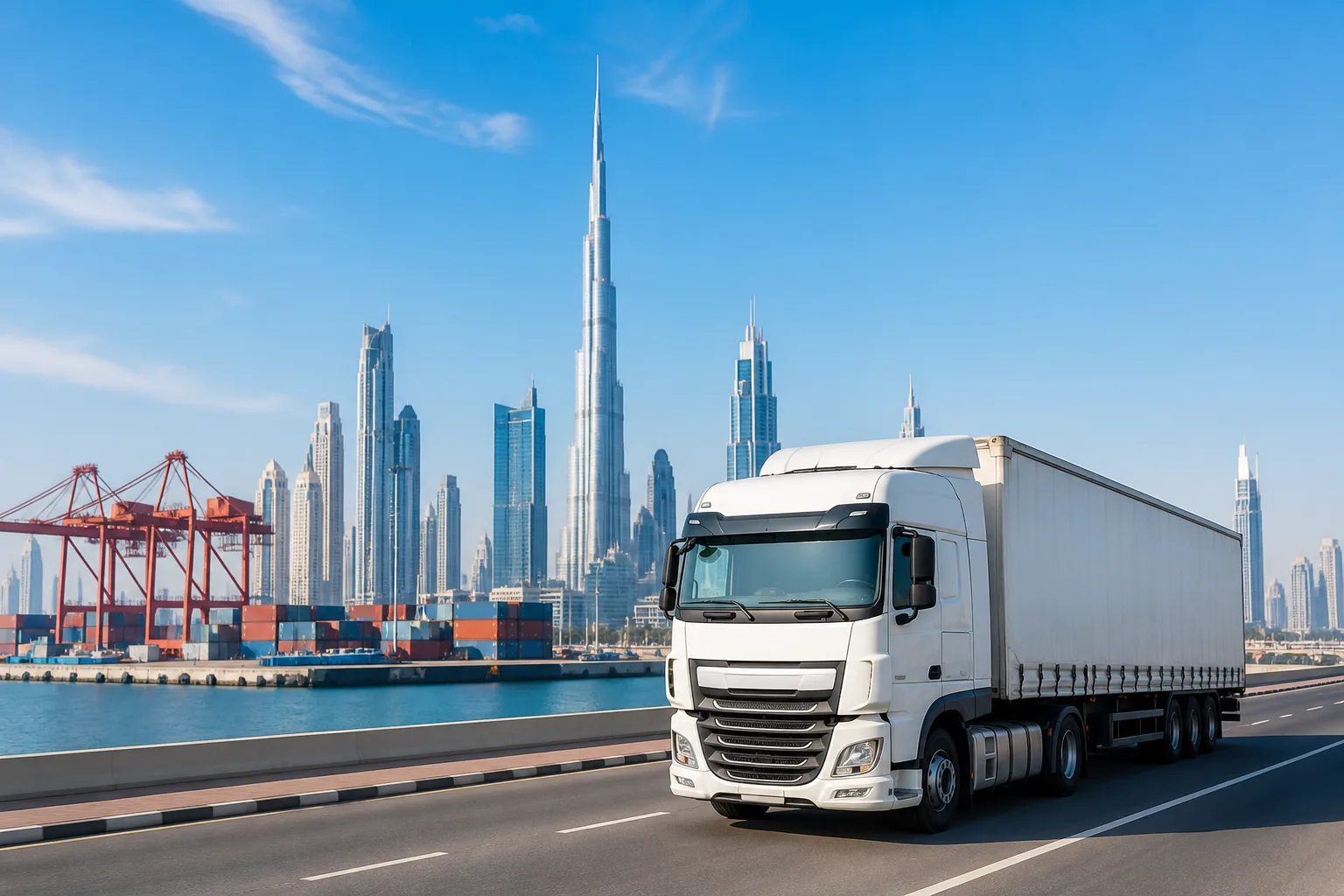
Dubai South sits adjacent to Al Maktoum International Airport and Jebel Ali Port, the world's largest man-made harbour, creating a dual-corridor advantage for road freight operators. Goods arriving by sea or air can transfer directly into road freight operations without leaving the broader logistics ecosystem.
Activity Code 4923 Defines Your Permitted Operations
The Road Freight Transport license under Activity Code 4923 covers overland haulage, cargo consolidation, and last-mile delivery by road. Permitted vehicle types include heavy goods vehicles, flatbed trucks, refrigerated units, and commercial delivery vans, depending on the cargo categories being transported.
100% Foreign Ownership With Zero Corporate Tax
Operators licensed at Dubai South Business Hub Free Zone can retain full foreign ownership with no requirement for a local sponsor. Qualifying free zone income is subject to 0% corporate tax, making this one of the most cost-efficient entry points into the UAE logistics market.
Road Freight Is Not the Same as Freight Forwarding
Activity Code 4923 specifically covers the physical movement of goods by vehicle, which is legally distinct from freight forwarding, which involves coordinating and documenting shipments across multiple carriers. Operators wishing to conduct both activities must obtain separate licenses for each.
A USD 28 Billion Market With Strong Growth Drivers
The UAE logistics sector is valued at over USD 28 billion, with road freight accounting for a significant share of domestic and GCC regional cargo movement. Rising e-commerce volumes and the UAE government's D33 Economic Agenda, which targets doubling the national economy by 2033, are sustaining strong freight demand across all six GCC states.
GCC Cross-Border Haulage Is a Core Opportunity
Dubai serves as the natural gateway for re-export and cross-border road haulage into Saudi Arabia, Oman, and other GCC territories. Demand for reliable overland haulage is currently outpacing supply in several key corridors, creating a favourable environment for new market entrants.
Ideal Candidates Range From Fleets to E-Commerce Firms
The license suits logistics entrepreneurs, international freight firms building a regional distribution hub, and e-commerce fulfilment operators needing bonded road transport between Dubai South and other emirates or GCC territories. The free zone's ownership and tax structure makes it especially attractive for operators seeking a scalable UAE base.
Dubai's strategic position at the crossroads of Europe, Asia, and Africa makes it one of the world's most lucrative hubs for road freight transport, with the UAE logistics sector valued at over USD 28 billion and growing steadily. For operators looking to capitalise on this growth, obtaining a Road Freight Transport Business License (Activity Code 4923) at Dubai South Business Hub Free Zone offers a structured, cost-effective, and tax-efficient entry point into one of the region's most dynamic markets.
This guide covers everything you need to know about obtaining that license, including setup costs, compliance requirements, and why this jurisdiction gives operators a genuine competitive edge.
Key Stats at a Glance
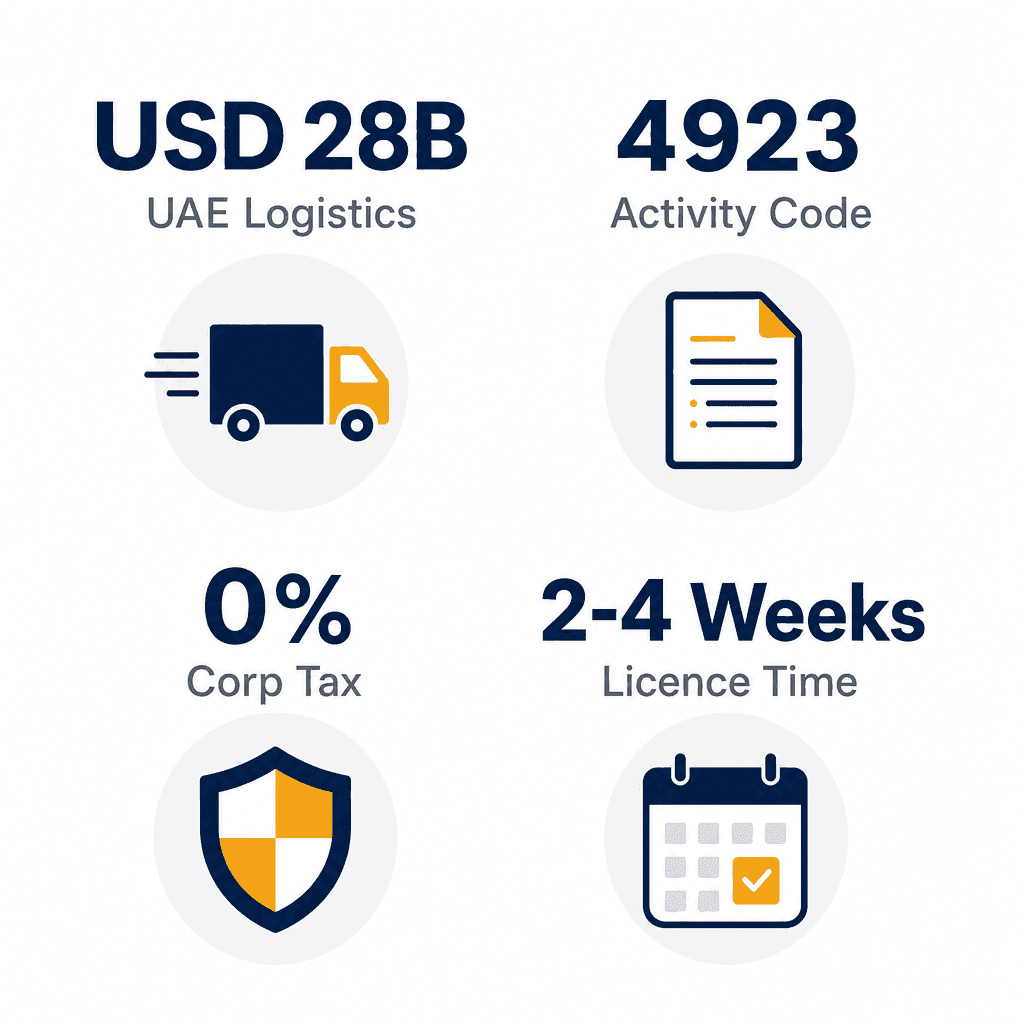
UAE logistics sector value: over USD 28 billion
Activity Code: 4923 (Road Freight Transport)
License type: Business License, Services category
Foreign ownership: 100% permitted, no local sponsor required
Corporate tax on qualifying free zone income: 0%
Typical license issuance timeline: two to four weeks
Dubai South proximity: adjacent to Al Maktoum International Airport and Jebel Ali Port
UAE Road Freight Market: Why Now and Why Dubai South
The UAE logistics sector has maintained a strong growth trajectory over the past decade, with road freight accounting for a substantial share of both domestic distribution and regional cargo movement across the GCC. As e-commerce volumes rise and manufacturing activity expands, demand for reliable overland haulage continues to outpace supply in several corridors.
Dubai South sits at the heart of this opportunity. Its proximity to Al Maktoum International Airport and Jebel Ali Port, the world's largest man-made harbour, creates a dual-corridor advantage that few other free zones can match. Goods arriving by sea or air can be transferred directly to road freight operations without leaving the broader logistics ecosystem.
The UAE government's D33 Economic Agenda, which targets doubling the size of the national economy by 2033, includes significant investment in road infrastructure and multimodal connectivity. This policy commitment translates into sustained freight demand across all six GCC states, with Dubai serving as the natural gateway for re-export and cross-border haulage into Saudi Arabia, Oman, and beyond.
What the Road Freight Transport License Covers
Activity Code 4923 covers the overland haulage of goods by road, including cargo consolidation services and last-mile delivery operations. Under a Business License in the Services category, license holders are permitted to operate road freight vehicles, manage cargo movements, coordinate load consolidation, and provide door-to-door delivery within permitted zones.
It is important to distinguish this activity from freight forwarding. Road freight transport under Activity Code 4923 refers specifically to the physical movement of goods by vehicle, whereas freight forwarding involves the coordination and documentation of shipments across multiple carriers. Operators may hold both activities, but they are licensed separately.
Permitted vehicle types under this activity include heavy goods vehicles, flatbed trucks, refrigerated units, and smaller commercial delivery vans, depending on the cargo categories being transported. Both general cargo and temperature-controlled consignments fall within scope, subject to the appropriate vehicle and driver certifications.
Who This License Is Suited For
This license is particularly well suited to logistics entrepreneurs and fleet operators who want a UAE base from which to serve the broader GCC market. International freight firms seeking to establish a regional distribution hub will find the free zone structure attractive, given the ownership and tax benefits. E-commerce fulfilment operators requiring bonded road transport capabilities between Dubai South and other emirates or GCC territories are also natural candidates for this activity code.
License Requirements and Compliance Obligations
To apply for a Road Freight Transport Business License at Dubai South Business Hub Free Zone, applicants must submit a standard set of documentation. This includes clear passport copies for all shareholders and directors, a concise business plan outlining the intended operations, proof of residential address, and full shareholder details including percentage ownership.
The primary regulatory authority for free zone licensing is the Dubai South Free Zone authority itself, which handles name reservation, application review, and license issuance. Depending on the scale of operations, additional clearances may be required from the Roads and Transport Authority (RTA) for vehicle registration and from the UAE federal transport ministry for certain cargo categories or cross-border permits.
Fleet compliance is a key ongoing obligation. All vehicles must be registered under UAE law, carry valid commercial fleet insurance, and be operated by drivers holding the appropriate UAE or internationally recognised licenses. Regular vehicle inspections and insurance renewals are mandatory.
One of the most commercially significant features of the free zone is that 100% foreign ownership is permitted with no requirement for a UAE national sponsor or local partner. Visa eligibility is linked to the license type and the office package selected, with most packages providing between one and six visa allocations at the initial stage.
Setup Costs and Steps to Get Licensed
License fees at Dubai South Business Hub Free Zone vary depending on the package selected, but operators can typically expect to budget in the range of AED 12,000 to AED 20,000 for the base license, inclusive of the free zone registration fee. Additional costs include the establishment card, e-channel registration for visa processing, and per-visa costs covering medical screening and Emirates ID issuance, which generally run between AED 3,000 and AED 5,000 per person.
Facility options range from a flexi-desk arrangement, which is sufficient for administrative and management activities, through to shared office space and dedicated warehouse or yard units for operators running active fleets from the zone. The appropriate facility level will depend on operational scale and any specific requirements from the free zone authority.
The step-by-step process runs as follows:
Trade name reservation and initial application submission
Document review and approval by the Dubai South Free Zone authority
License issuance and establishment card registration
Visa application processing for shareholders and employees
Corporate bank account opening with a UAE-licensed bank
For straightforward applications with complete documentation, the typical timeline from initial submission to a fully issued license is two to four weeks. Bank account opening may add a further two to three weeks depending on the institution selected.
Why Dubai Remains the Region's Road Freight Capital
Beyond the free zone benefits, Dubai's broader commercial environment makes it the natural choice for road freight operators targeting the GCC. Qualifying free zone income is subject to zero corporate tax, and there is no personal income tax in the UAE, meaning operators retain a significantly higher proportion of earnings compared with most other jurisdictions.
The UAE's road network is among the best maintained in the region, with direct highway connections to all six GCC states and onward routes into Iran and further afield. Access to world-class multimodal infrastructure in the greater Dubai area enables seamless sea-to-road intermodal movements, reducing handling costs and transit times.
The regulatory environment is stable, the licensing process is transparent, and the UAE's legal framework provides strong protections for foreign investors. These factors combine to make Dubai not just a convenient base, but a strategically sound one for any operator serious about building a long-term road freight business in the Middle East.
Related Activities
All freight transport operations by road Business License
Lubricants & Petroleum Wastes Transport Business License
Frequently Asked Questions