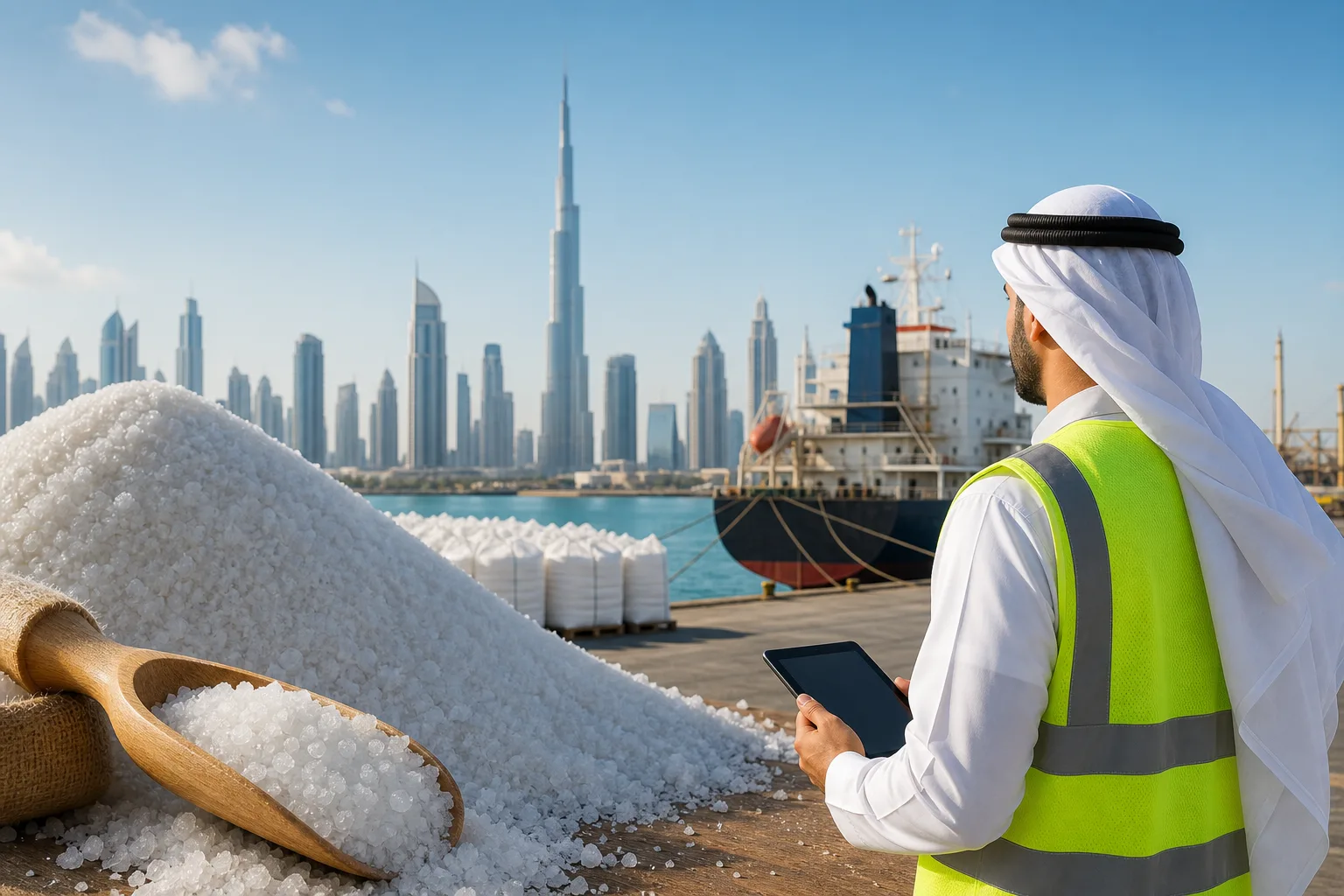
Apply for a Salt Trading License in Dubai

Topic Summary
Dubai's Location Makes Salt Trading Lucrative
Dubai sits at the crossroads of Asia, Africa, and Europe, giving salt traders access to over 200 shipping routes. Jebel Ali Port, the Middle East's largest, ranks among the top ten busiest container ports globally.
100% Foreign Ownership Is Fully Permitted
Salt traders operating through the Dubai South Business Hub Free Zone can retain complete ownership of their business without a local partner. Combined with zero personal income tax, this makes Dubai exceptionally attractive for international entrepreneurs.
One License Covers Multiple Salt Categories
Activity code 4721.97 authorises the import, export, distribution, and re-export of food-grade salt, industrial salt, sea salt, rock salt, and refined salt products. License holders can supply food manufacturers, chemical companies, water treatment facilities, and retail distributors.
Setup Can Be Completed in Under a Week
The typical license setup timeline at Dubai South Business Hub is just three to seven business days. Applicants need passport copies, a business plan summary, and completed application forms to get started.
Startup Costs Are Transparent and Competitive
License registration fees range from AED 5,750 to 15,000, with flexi-desk packages available from around AED 10,000 per year. Dubai South offers packages specifically designed for SMEs and start-ups to keep entry costs manageable.
GCC Demand Creates a Ready-Made Market
The UAE imported over USD 1.4 billion worth of food commodities in 2023, and the GCC region relies heavily on imported industrial and food-grade salt. Much of this volume is re-exported through UAE ports, creating strong ongoing demand for licensed salt traders.
The License Suits a Wide Range of Businesses
From international salt producers seeking a UAE distribution base to logistics companies expanding into commodity trading, the Salt Trading License accommodates diverse business models. Food and beverage companies sourcing salt as a raw material input are also eligible applicants.
Salt is one of the world's oldest traded commodities, and its relevance has not diminished. From food processing and chemical manufacturing to water treatment and de-icing, global demand for salt remains consistently strong. Dubai, with its world-class logistics infrastructure and strategic location between Asia, Africa, and Europe, has positioned itself as a premier hub for commodity trading, including salt. If you are looking to enter this market, securing a Salt Trading License in Dubai is a straightforward process, particularly through the Dubai South Business Hub Free Zone.
This guide covers everything you need to know, including the activity code, license type, setup costs, compliance requirements, and why Dubai is the right base for your salt trading business.
Why Dubai Is Well-Positioned for Salt Trading
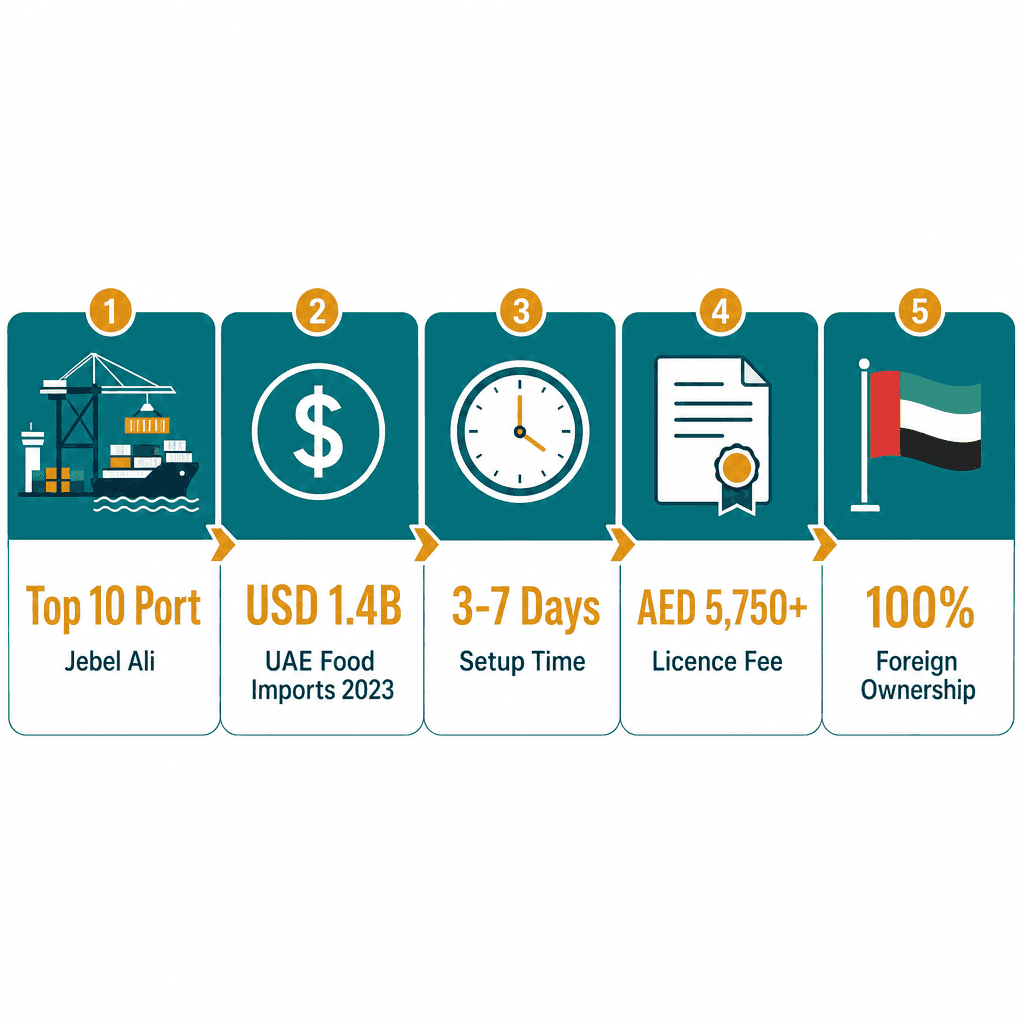
The UAE imported approximately USD 1.4 billion worth of food commodities in 2023, and the broader commodity trading sector continues to grow. Dubai's Jebel Ali Port is the largest port in the Middle East and among the top ten busiest in the world, making it an ideal gateway for bulk commodity trade. The emirate's zero personal income tax regime, 100% foreign ownership in free zones, and access to over 200 shipping routes make it uniquely attractive for salt traders targeting regional and international markets.
The Gulf Cooperation Council (GCC) region imports significant volumes of industrial and food-grade salt, much of it re-exported through UAE ports. Dubai South, in particular, sits adjacent to Al Maktoum International Airport and is integrated with Jebel Ali's logistics corridor, offering unmatched connectivity for import, storage, and re-export operations.
Key Stats at a Glance
Activity Code: 4721.97
License Type: Trading License
Category: Trading
Free Zone: Dubai South Business Hub
Foreign Ownership: 100% permitted
UAE Salt and Food Commodity Import Market: USD 1.4 billion+ (2023)
Jebel Ali Port Ranking: Top 10 globally by container volume
Typical License Setup Timeline: 3 to 7 business days
What the Salt Trading License Covers
Under activity code 4721.97, the Salt Trading License authorises the holder to import, export, distribute, and re-export salt in its various commercial forms. This includes food-grade salt, industrial salt, sea salt, rock salt, and refined salt products. The license falls under the broader Trading category and is issued as a Trading License by the Dubai South Business Hub Free Zone authority.
License holders can operate as wholesalers or distributors, supplying salt to food manufacturers, chemical companies, water treatment facilities, and retail distributors across the UAE and international markets.
Who This License Suits
International salt producers seeking a UAE distribution base
Commodity traders looking to serve GCC and African markets
Food and beverage companies that trade salt as a raw material input
Entrepreneurs entering the bulk commodity import-export sector
Logistics companies adding commodity trading to their service portfolio
Estimated Costs
Cost Component | Estimated Range (AED) |
|---|---|
License Registration Fee | 5,750 to 15,000 |
Visa Allocation (per visa) | 3,000 to 5,000 |
Office or Flexi-Desk Package | 10,000 to 25,000 per year |
Government and Processing Fees | 1,500 to 3,000 |
Costs vary depending on the package selected, the number of visas required, and whether you opt for a physical office or a flexi-desk arrangement. Dubai South Business Hub offers competitive packages designed for SMEs and start-ups.
Step-by-Step Setup Process
Choose your business activity: Confirm activity code 4721.97 and the Trading License category with the free zone authority.
Select a company structure: Most applicants register as a Free Zone Establishment (FZE) or Free Zone Company (FZC).
Submit your application: Provide passport copies, a business plan summary, and completed application forms to Dubai South Business Hub.
Pay the registration fees: Settle the license and registration fees as quoted by the authority.
Receive your license: Upon approval, your Trading License is issued, typically within 3 to 7 business days.
Open a corporate bank account: Several UAE banks support free zone companies with dedicated business accounts.
Arrange your workspace: Select a flexi-desk, serviced office, or warehouse unit depending on your operational needs.
Licensing and Compliance Requirements
Salt trading in the UAE is subject to food safety and import regulations overseen by the UAE Ministry of Economy and the Food Safety Department. Traders dealing in food-grade salt must ensure that shipments comply with UAE.S standards and Gulf Standards Organisation (GSO) requirements. Key compliance points include:
Obtaining import permits for food-grade salt through the relevant UAE authorities
Ensuring product labelling meets UAE and GCC food labelling standards
Maintaining proper documentation for customs clearance, including certificates of origin and quality analysis reports
Adhering to anti-money laundering (AML) regulations applicable to commodity traders in the UAE
Renewing the trading license annually with the Dubai South Business Hub authority
Re-Export Opportunities
One of the most commercially attractive aspects of holding a salt trading license in Dubai South is the ability to re-export goods. The UAE's re-export trade is valued at hundreds of billions of dirhams annually, and commodity traders regularly use Jebel Ali as a transshipment hub. Salt imported from major producing countries such as India, Australia, and Chile can be stored in bonded warehouses and re-exported to markets in East Africa, South Asia, and the broader MENA region without attracting UAE customs duty on the outbound leg.
Get Started
Use the cost calculator for a tailored quote.
Verify your business name with the company name check.
Browse the full business activities directory.
Get in touch to start your application.
Frequently Asked Questions