Start a Slippers & Sandals Trading Business in Dubai

Topic Summary
Why Dubai Is Ideal for Footwear Trading
Dubai sits at the crossroads of major trade routes connecting the Middle East, Africa, and South Asia, making it a powerful re-export hub. Its warm climate drives year-round demand for slippers and sandals across a diverse consumer base.
Key Financial Perks of a Free Zone License
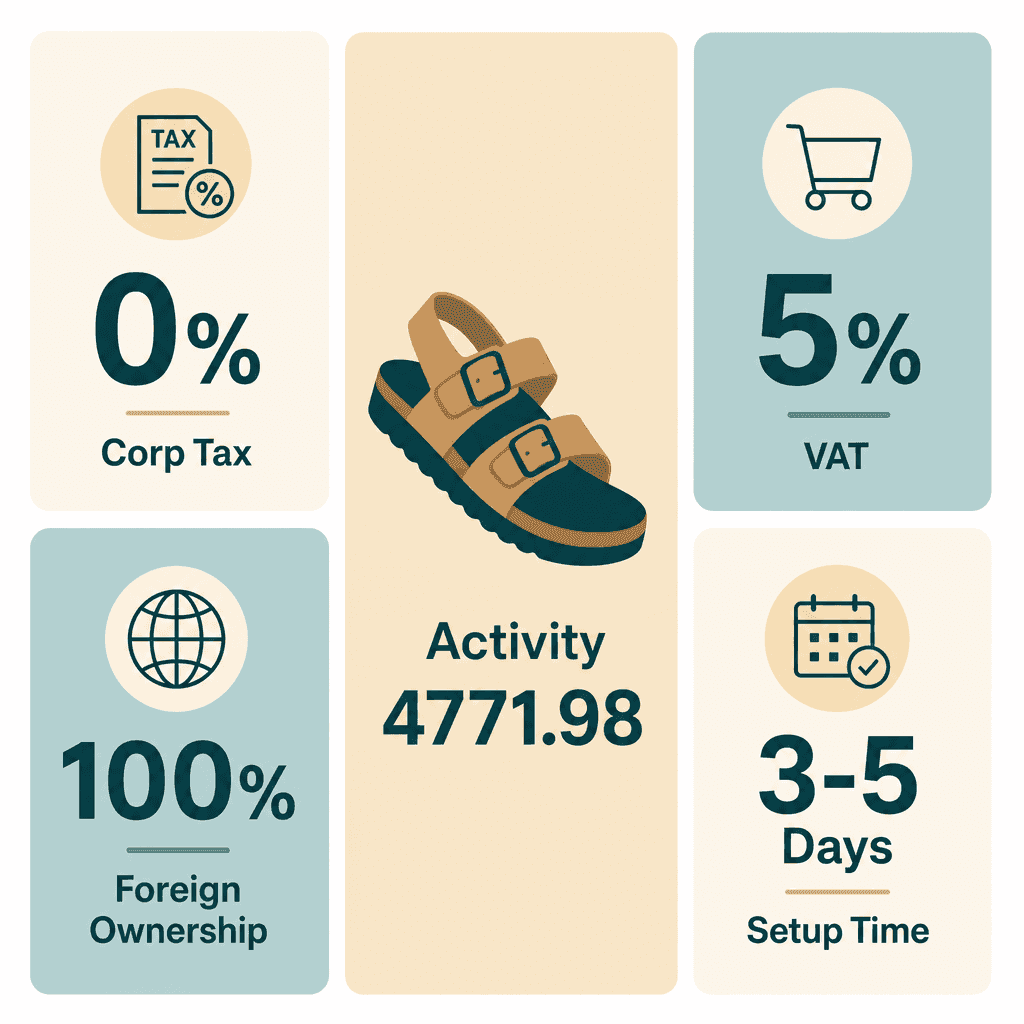
Businesses operating under Dubai South Business Hub Free Zone enjoy 0% corporate tax on qualifying income and 100% foreign ownership. The only tax to account for is the UAE's standard 5% VAT rate.
Exactly What Activity Code 4771.98 Allows
This code covers importing, exporting, distributing, and selling slippers and sandals, including casual, beach, orthopedic, and open-toe styles. It does not cover manufacturing, which requires a separate industrial license.
Types of Entrepreneurs This License Suits
The trading license is a strong fit for international brands seeking a regional distribution base, GCC-focused wholesalers, and e-commerce sellers targeting UAE consumers. Entrepreneurs building private-label footwear brands sourced from Asia are also well-positioned to benefit.
How Fast You Can Get Up and Running
The typical setup timeline at Dubai South Business Hub is just three to five working days, making it one of the faster free zone registration processes available. The streamlined steps include name reservation, document submission, and selecting an FZ-LLC structure.
Global Sourcing Markets Within Easy Reach
Traders based in Dubai can efficiently source slippers and sandals from major manufacturing hubs including China, India, Vietnam, and Turkey. Jebel Ali Port, one of the world's largest container ports, provides direct connectivity to these supply chains.
The global footwear market continues to expand at a remarkable pace, and the UAE sits at the heart of one of the world's most active trade corridors. Dubai, in particular, has become a preferred destination for footwear traders looking to access markets across the Middle East, Africa, South Asia, and beyond. If you are considering entering this sector, establishing a slippers and sandals trading business in Dubai offers a compelling combination of strategic location, favourable tax conditions, and streamlined business setup procedures.
This guide covers everything you need to know about setting up under Activity Code 4771.98 at Dubai South Business Hub Free Zone, including license scope, costs, compliance requirements, and why Dubai remains one of the most attractive places in the world to trade footwear.
The UAE Footwear Market: Why Now
The UAE footwear market is valued at several billion dirhams annually, supported by a population of over 10 million people, a thriving tourism sector, and strong re-export activity. Dubai alone handles a significant share of global footwear transit trade, with goods flowing through Jebel Ali Port, one of the world's largest container ports. Slippers and sandals, in particular, benefit from year-round demand driven by the region's warm climate and a consumer base that spans budget-conscious residents to luxury shoppers.
The UAE's position as a re-export hub means that traders based here are not limited to the domestic market. Goods imported from manufacturing hubs in China, India, Vietnam, and Turkey can be redistributed efficiently across the GCC, East Africa, and South Asia.
Key Facts at a Glance
Activity Code: 4771.98 - Retail Sale of Footwear (Slippers and Sandals)
License Type:Trading License
Free Zone: Dubai South Business Hub
Foreign Ownership: 100% permitted
Corporate Tax Rate: 0% on qualifying free zone income
UAE VAT Rate: 5%
Typical License Setup Timeline: 3 to 5 working days
Minimum Share Capital: Subject to authority requirements at registration
What Activity Code 4771.98 Covers
Activity Code 4771.98 falls under the retail sale of footwear category and specifically covers the trading of slippers and sandals. Under this classification, your business is permitted to import, export, distribute, and sell slippers and sandals, including casual footwear, open-toe designs, beach sandals, orthopedic slippers, and similar products. The license does not extend to the manufacture of footwear, which would require a separate industrial license and facility.
Traders operating under this code can source products internationally, store them in free zone warehouses, and distribute them to wholesalers, retailers, or end consumers both within the UAE and abroad.
Who This License Suits
This trading license is well-suited to a broad range of entrepreneurs and businesses, including:
International footwear brands seeking a regional distribution hub
Importers and wholesalers supplying retailers across the GCC
E-commerce businesses selling footwear to UAE and regional consumers
Entrepreneurs looking to build a private-label footwear brand sourced from Asia
Existing footwear businesses expanding operations into the Middle East
Step-by-Step Setup Process
The process of establishing your slippers and sandals trading company at Dubai South Business Hub is designed to be efficient and straightforward. The typical steps are as follows:
Step 1 - Choose your business activity: Confirm that Activity Code 4771.98 aligns with your intended operations.
Step 2 - Select a company structure: Most traders opt for a Free Zone Limited Liability Company (FZ-LLC), which provides liability protection and full foreign ownership.
Step 3 - Reserve your trade name: Submit your preferred company name for approval, ensuring it complies with UAE naming conventions.
Step 4 - Submit documentation: Provide passport copies, visa details, and any required business plan or shareholder information.
Step 5 - Pay license fees and receive approval: Once documents are verified and fees settled, your trading license is issued, typically within three to five working days.
Step 6 - Open a corporate bank account: Select a UAE-based bank and complete the account opening process, which may take two to four weeks depending on the institution.
Step 7 - Arrange warehouse or office space: Choose a facility within the free zone to satisfy your operational and customs requirements.
Costs to Anticipate
Setup costs for a slippers and sandals trading license at Dubai South Business Hub typically include the license fee, registration fee, and the cost of your chosen facility. Flexi-desk and shared office options are available for businesses that do not require large warehouse space immediately. Physical warehouse units are also available for traders who need to hold stock within the free zone. Total initial costs can range depending on the package selected, and it is advisable to request a detailed quotation directly from the authority to obtain current pricing.
Compliance and Regulatory Requirements
Operating a footwear trading business in Dubai requires adherence to several regulatory standards:
UAE VAT registration: Businesses with taxable supplies exceeding AED 375,000 annually must register for VAT with the Federal Tax Authority and charge 5% VAT on applicable transactions.
Customs compliance: All imported goods must comply with UAE customs procedures, including accurate declaration of goods, payment of applicable duties (where not exempt under free zone rules), and adherence to product labelling requirements.
Emirates Authority for Standardisation and Metrology (ESMA): Footwear products sold in the UAE must meet applicable safety and quality standards. Traders should verify whether their product categories require conformity certification.
License renewal: Trading licenses must be renewed annually. Failure to renew on time may result in penalties or suspension of business activities.
Why Dubai South Business Hub Free Zone
Dubai South is strategically located adjacent to Al Maktoum International Airport, which is projected to become one of the world's largest airports upon full completion. The free zone offers direct access to air freight and is in close proximity to Jebel Ali Port, making it an exceptional location for businesses involved in import and re-export trade. Traders benefit from 100% foreign ownership, no personal income tax, no corporate tax on qualifying income, and the ability to repatriate profits in full.
The free zone infrastructure supports businesses of all sizes, from solo entrepreneurs operating from a flexi-desk to larger operations requiring dedicated warehouse facilities.
Related Activities
Face Masks & Gloves Trading Trading License
Men's Garment Trading Trading License
Frequently Asked Questions