Start a Rubber Trading Business in Dubai
Topic Summary
Why Dubai Is a Top Trading Hub
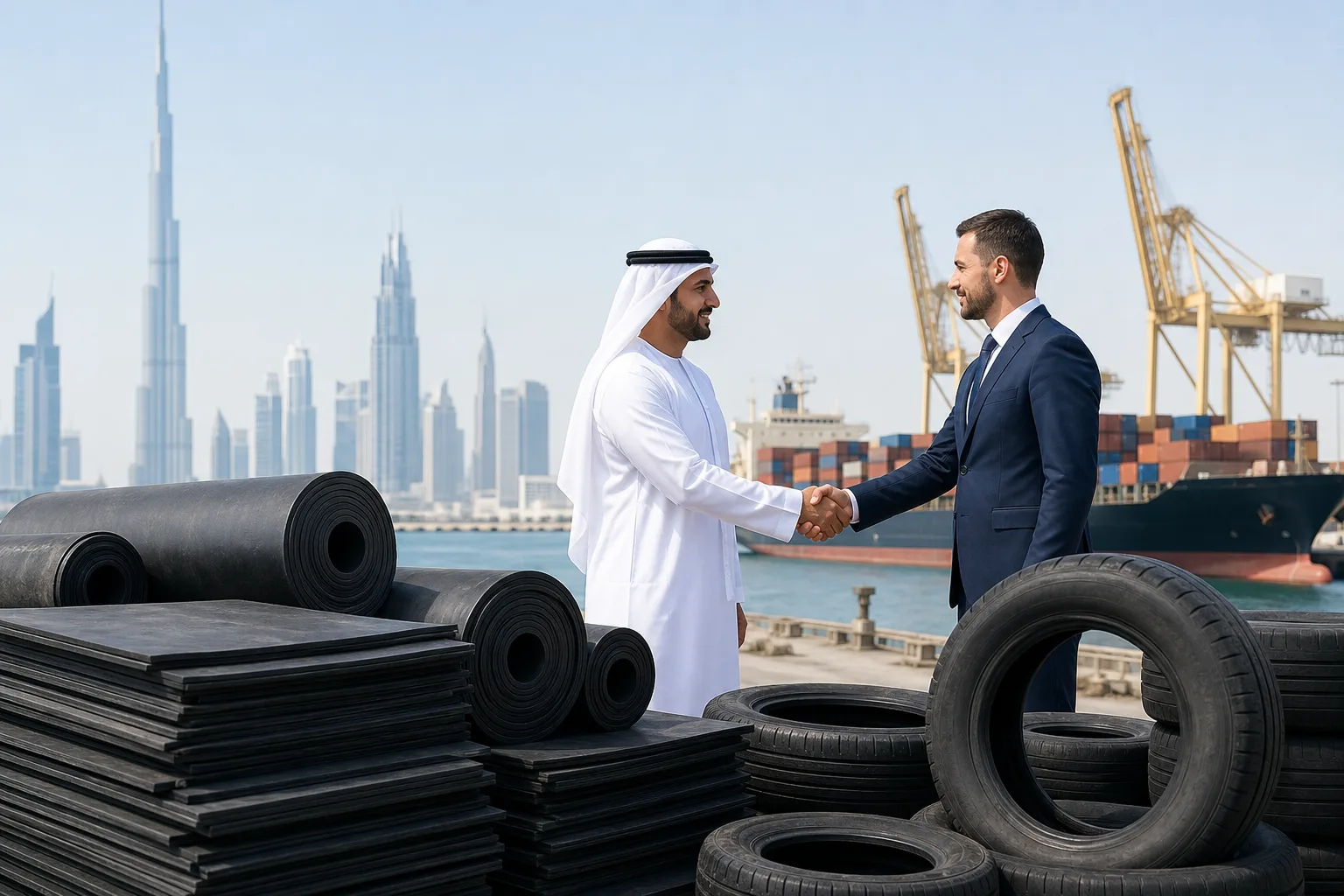
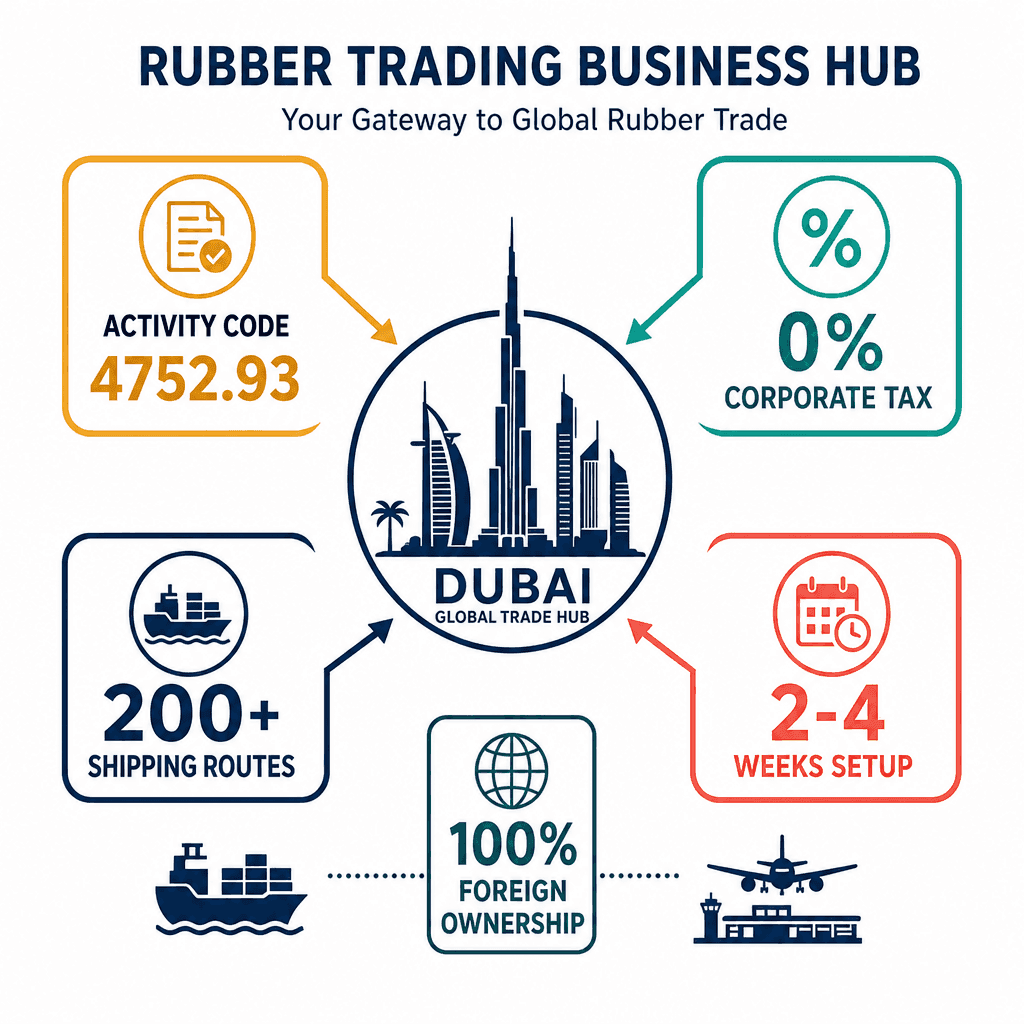
Dubai sits at the crossroads of Asia, Africa, and Europe, giving rubber traders access to over 200 shipping routes through Jebel Ali Port. Its proximity to major rubber-producing nations like Thailand, Indonesia, and Malaysia makes it ideal for high-volume commodity trade.
Zero Tax and Full Foreign Ownership
Free zone entities in Dubai pay 0% corporate and personal income tax, with 100% foreign ownership permitted. Traders also benefit from full repatriation of profits and capital, making the financial structure highly attractive.
Understanding Activity Code 4752.93
The rubber trading license under activity code 4752.93 covers wholesale and retail trade of natural, synthetic, and reclaimed rubber. It permits holders to buy, sell, import, export, and re-export rubber products across the full supply chain.
Dubai South Free Zone's Strategic Advantage
Dubai South Business Hub Free Zone sits adjacent to Al Maktoum International Airport, the world's largest airport by design capacity. Its direct access to air and sea freight networks makes it especially valuable for time-sensitive or high-volume rubber shipments.
Who Should Get This License?
The license suits a wide range of operators, from international commodity traders and raw material sourcing firms to re-exporters using Dubai as a transshipment hub. First-time entrepreneurs entering commodity trading are also well-positioned to benefit.
Fast and Straightforward Setup Process
A rubber trading company at Dubai South can typically be established within two to four weeks. Costs vary based on office package, visa requirements, and any additional approvals needed from the free zone authority.
Global rubber demand continues to rise, driven by the automotive, construction, and manufacturing sectors. Dubai, sitting at the crossroads of Asia, Africa, and Europe, has positioned itself as one of the world's most strategic commodity trading hubs. For entrepreneurs and established businesses looking to enter this market, launching a rubber trading company in Dubai offers access to high-volume trade corridors, a business-friendly regulatory environment, and world-class logistics infrastructure.
This guide covers everything you need to know about setting up a rubber trading business under activity code 4752.93 at Dubai South Business Hub Free Zone, including license details, setup costs, compliance requirements, and why Dubai is uniquely placed to serve this trade.
Why Dubai Is Ideal for Rubber Trading
The UAE imports and re-exports significant volumes of natural and synthetic rubber each year, with the country serving as a critical gateway for goods moving between Southeast Asian producers and markets across the Middle East, Africa, and Europe. Dubai's port infrastructure, particularly at Jebel Ali, ranks among the busiest in the world, enabling efficient handling of bulk commodity shipments.
Key advantages for rubber traders operating from Dubai include:
Zero corporate and personal income tax in free zones
100% foreign ownership permitted
Full repatriation of profits and capital
Access to over 200 shipping routes from Jebel Ali Port
Proximity to major rubber-producing nations including Thailand, Indonesia, and Malaysia
Streamlined customs and re-export procedures
About the Rubber Trading License (Activity Code 4752.93)
The rubber trading license falls under activity code 4752.93, categorised as a Trading License within the Trading category. This activity covers the wholesale and retail trade of rubber and rubber-based products, including natural rubber, synthetic rubber, reclaimed rubber, and related raw materials used across industrial and commercial applications.
A license under this activity permits the holder to buy, sell, import, export, and re-export rubber products, making it suitable for businesses operating across the entire supply chain, from raw material sourcing to finished goods distribution.
Dubai South Business Hub Free Zone
Dubai South Business Hub Free Zone is an integrated economic zone located adjacent to Al Maktoum International Airport, the world's largest airport by design capacity. The free zone is purpose-built for trading, logistics, and light industrial activities, offering businesses a strategic base with direct access to air and sea freight networks.
Companies established here benefit from a simplified licensing process, flexible office and warehouse solutions, and a dedicated business support infrastructure. For rubber traders, the proximity to logistics corridors makes it particularly attractive for businesses managing time-sensitive or high-volume shipments.
Rubber Trading in Dubai: Key Facts
Activity Code: 4752.93
License Type: Trading License
Free Zone: Dubai South Business Hub
Foreign Ownership: 100% permitted
Corporate Tax Rate: 0% (free zone entity)
Typical Setup Timeline: 2 to 4 weeks
Minimum Share Capital: Subject to free zone authority requirements
Re-export Permitted: Yes
Who Is This License Suited For?
The rubber trading license is well-suited to a broad range of operators, including:
International rubber commodity traders seeking a UAE base of operations
Manufacturers sourcing raw rubber for export to regional factories
Distributors supplying rubber products to construction and automotive sectors
Re-exporters using Dubai as a transshipment hub for global trade
Entrepreneurs entering the commodity trading space for the first time
Setup Costs and Steps
Setting up a rubber trading business at Dubai South Business Hub Free Zone involves a straightforward process. Costs vary depending on the office package selected, visa requirements, and any additional approvals needed.
Typical Cost Components
Cost Element | Details |
|---|---|
License Fee | Annual fee payable to the free zone authority |
Registration Fee | One-time company registration charge |
Office/Flexi-desk Package | Varies by space type and term |
Visa Allocation Costs | Per visa, depending on package |
Government Fees | Immigration and establishment card fees |
Setup Steps
Step 1: Choose your business activity and confirm activity code 4752.93 applies
Step 2: Select a company name and check availability with the free zone authority
Step 3: Submit your application along with required documents, including passport copies and a business plan if requested
Step 4: Select your office package and sign a tenancy agreement
Step 5: Pay the applicable fees and receive your trading license
Step 6: Open a corporate bank account and apply for residence visas as needed
Licensing and Compliance Requirements
Rubber trading businesses operating from Dubai South must comply with the free zone authority's regulations as well as broader UAE trade laws. Key compliance considerations include:
Maintaining a valid trading license renewed annually
Adhering to UAE customs regulations for import, export, and re-export of rubber goods
Registering with the Federal Tax Authority for VAT purposes if turnover exceeds the mandatory registration threshold
Ensuring all rubber products comply with UAE product standards where applicable
Keeping accurate financial records in line with UAE commercial law requirements
Get Started
Use the cost calculator for a tailored quote.
Verify your business name with the company name check.
Browse the full business activities directory.
Get in touch to start your application.
Frequently Asked Questions