How to Get a Tea Trading License in Dubai

Topic Summary
Why Dubai Dominates Global Tea Re-Export
Dubai handles over 85,000 tonnes of tea annually and sits at the crossroads of major producing nations and high-demand markets. Jebel Ali Port's global connectivity makes re-exporting to Africa, South Asia, and CIS countries fast and cost-efficient.
The Exact License You Need to Trade Tea
Tea trading in Dubai falls under Activity Code 4721.89, classified as a Trading License. It covers importing, exporting, wholesaling, and re-exporting all tea forms, but does not include retail sales to end consumers or tea manufacturing.
Dubai South Free Zone Offers Key Advantages
Dubai South Business Hub Free Zone sits adjacent to Al Maktoum International Airport and near Jebel Ali Port, giving traders dual-access logistics infrastructure. It also offers 100% foreign ownership and zero corporate tax on qualifying free zone income.
Who Benefits Most From This License
The tea trading license suits international importers, GCC wholesalers, re-exporters targeting African or Central Asian markets, and entrepreneurs building branded tea lines. Existing food and beverage businesses can also use it to add tea as a traded commodity.
Realistic Costs and Setup Timeline
License setup at Dubai South typically costs between AED 12,000 and AED 20,000 depending on visa and facility requirements. Free zone incorporation can be completed in as little as three to seven working days.
Documents Required to Get Started
Applicants generally need a valid passport copy, a recent passport-sized photograph, a business plan or activity description, and proof of residential address. No minimum share capital is required for most free zone trading licenses.
Choose the Right Business Structure First
Most tea traders register as a Free Zone Limited Liability Company, which requires at least one shareholder and one director who can be the same person. This structure provides liability protection while keeping setup straightforward and ownership fully foreign.
Dubai handles more than 85,000 tonnes of tea annually, making it one of the world's most active re-export hubs for the commodity. With direct shipping corridors to South Asia, East Africa, and the CIS countries, and a consumer base that ranks among the highest per-capita tea drinkers in the Arab world, the emirate offers a genuinely compelling environment for tea traders. Whether you are sourcing loose-leaf varieties from Sri Lanka, blended teas from India, or specialty infusions from China, obtaining a tea trading license in Dubai is the formal first step to accessing this market legally and profitably.
Why Dubai Is Well-Positioned for Tea Trading
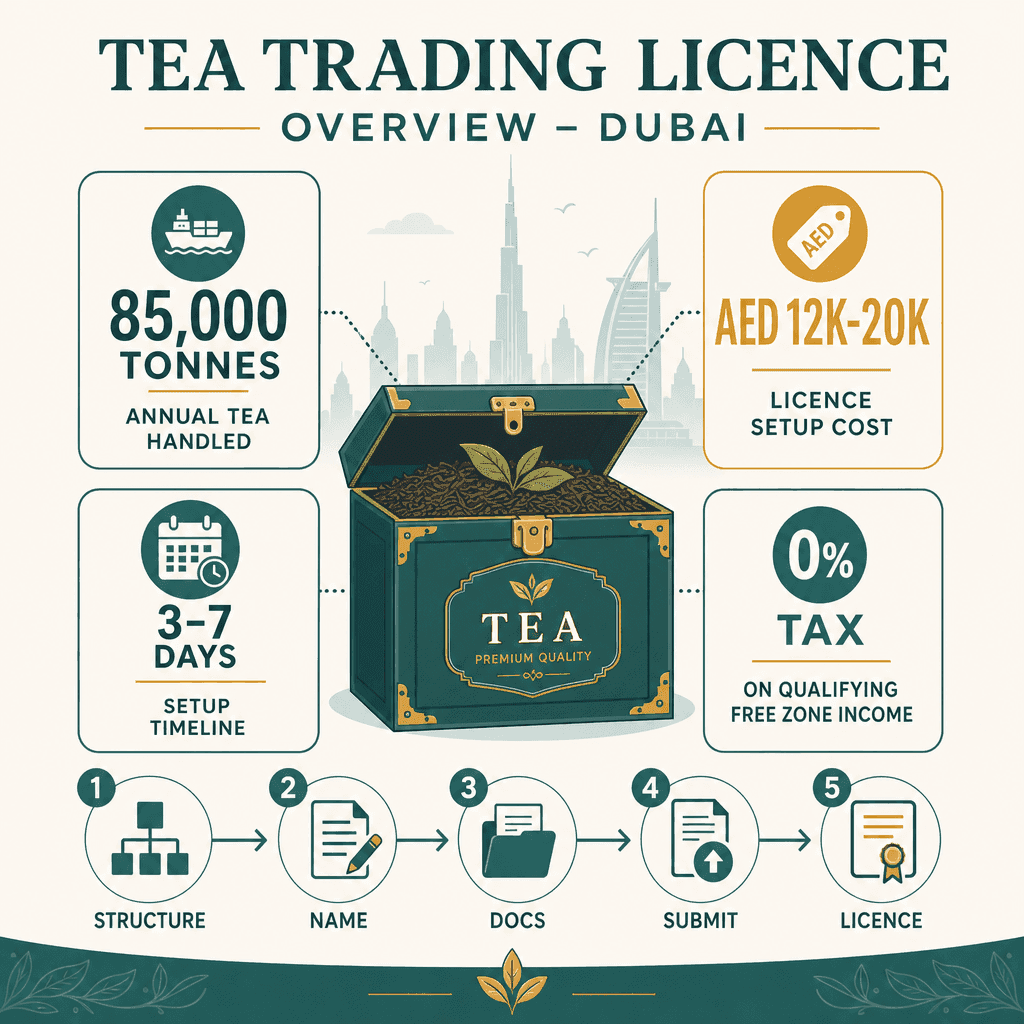
The UAE sits at the crossroads of major tea-producing nations and high-demand consumer markets. Jebel Ali Port, one of the ten busiest container ports in the world, provides seamless connectivity for bulk imports. Dubai's free zones offer 100% foreign ownership, zero corporate tax on qualifying income, and streamlined customs procedures that make re-exporting straightforward and cost-efficient.
Dubai South Business Hub Free Zone, in particular, is strategically located adjacent to Al Maktoum International Airport and within easy reach of Jebel Ali Port. This dual-access infrastructure makes it an ideal base for tea traders who need to move product quickly across multiple channels.
What the Tea Trading License Covers
The tea trading license in Dubai falls under Activity Code 4721.89, categorised as a Trading License within the Trading category. This license permits the holder to:
Import and export tea in all its forms, including loose-leaf, bagged, blended, and flavoured varieties
Wholesale and distribute tea to retailers, hospitality businesses, and other traders
Re-export tea to regional and international markets
Store and handle tea within licensed warehouse or facility premises
Trade under a registered commercial identity in the UAE
The license does not cover retail sale directly to end consumers unless a separate retail activity is added, nor does it cover manufacturing or processing of tea products, which requires a distinct industrial license.
Who This License Suits
This license is well-suited to a broad range of business profiles, including:
International tea importers seeking a UAE distribution hub
Wholesale traders supplying hotels, restaurants, and cafes across the GCC
Re-exporters targeting African, Central Asian, or European markets via Dubai's logistics corridors
Entrepreneurs launching branded tea product lines for regional distribution
Existing food and beverage businesses looking to add tea as a traded commodity
Tea Trading in Dubai: Key Facts
UAE annual tea handling volume: over 85,000 tonnes
Activity Code: 4721.89
License Type: Trading License
Free Zone: Dubai South Business Hub
Foreign ownership permitted: 100%
Estimated license setup cost: from AED 12,000 to AED 20,000 depending on visa and facility requirements
Typical setup timeline: 3 to 7 working days for free zone incorporation
Corporate tax rate on qualifying free zone income: 0%
Setup Costs and Steps
Setting up a tea trading company at Dubai South Business Hub Free Zone involves a clear sequence of steps:
Step 1: Choose Your Business Structure
Most traders opt for a Free Zone Limited Liability Company (FZ-LLC). This structure requires at least one shareholder and one director, who may be the same individual.
Step 2: Reserve Your Trade Name
Submit two to three preferred trade name options to the free zone authority. Names must comply with UAE naming conventions and must not reference regulated activities or government entities.
Step 3: Submit Your Application and Documents
Required documents typically include a valid passport copy, a recent passport-sized photograph, a business plan or activity description, and proof of residential address. No minimum share capital is mandated for most free zone trading licenses.
Step 4: Select a Facility Option
Dubai South offers flexi-desk, shared office, and dedicated warehouse options. Tea traders who intend to store physical stock will need to select an appropriate warehousing package that complies with food storage regulations.
Step 5: Pay Fees and Receive License
Once documents are approved and fees are settled, the license is issued. Total costs typically range from AED 12,000 to AED 20,000 for the first year, inclusive of registration, license, and a basic facility package. Visa costs are additional and depend on the number of employees.
Licensing and Compliance Requirements
Tea is classified as a food commodity in the UAE, which means traders must adhere to food safety regulations set by the Dubai Municipality and the UAE Food Safety Law. Key compliance points include:
All imported tea must meet UAE.S GSO standards for food labelling and safety
Products must carry Arabic labelling if sold within the UAE domestic market
Storage facilities must maintain appropriate temperature and humidity controls
Importers may be required to register products with the relevant food control authority prior to customs clearance
Re-exported goods must comply with the destination country's import regulations
Profit Margins and Market Opportunity
Tea trading margins in the UAE can range from 15% to 40% depending on the product tier. Commodity-grade bulk teas typically operate on thinner margins, while premium, organic, or specialty teas command significantly higher returns. The GCC specialty tea market has shown consistent growth, driven by health-conscious consumer trends and the expansion of boutique cafe culture across Dubai and Abu Dhabi.
Get Started
Use the cost calculator for a tailored quote.
Verify your business name with the company name check.
Browse the full business activities directory.
Get in touch to start your application.
Frequently Asked Questions