How to Get a Textile Fibres Wholesale Trading License in Dubai
Topic Summary
Why Dubai Is Ideal for Textile Trading
Dubai handles over 14 million tonnes of cargo annually and connects traders to more than 240 destinations worldwide. Its position as a re-export hub makes it a natural base for sourcing fibres from Asia and distributing them across Africa, Europe, and the Middle East.
Key Benefits of Dubai South Free Zone
Businesses licensed at Dubai South Business Hub enjoy 100 per cent foreign ownership, zero corporate tax on qualifying income, and full repatriation of profits. There are also no import or export duties within the free zone perimeter, keeping operational costs low.
What the Textile Fibres License Actually Covers
Activity code 4669.05 authorises wholesale buying and selling of natural fibres like cotton, wool, and silk, as well as synthetics such as polyester, nylon, and viscose. Bulk yarn, thread, and raw textile inputs supplied to mills and manufacturers are also included.
Who Should Apply for This License
The license suits import-export traders sourcing fibres from countries like India, China, and Pakistan for redistribution into Gulf, African, or European markets. It is also a strong fit for commodity brokers, regional mill agents, and entrepreneurs seeking a UAE entity for GCC market access.
Choosing the Right Business Structure
Sole traders typically opt for a Free Zone Establishment with a single shareholder, while larger operations can form a Free Zone Company with two or more shareholders. Both structures carry identical ownership rights and tax advantages.
Documents and Timeline to Get Started
Applicants generally need passport copies, a completed application form, a brief business plan, and proof of residential address, with no notarisation required for most nationalities. The typical setup timeline runs just three to seven working days, and there is no mandated minimum capital requirement.
Know the Limits of This License
The Textile Fibres Wholesale Trading License does not permit retail sales, manufacturing, or any processing activities such as cutting, blending, or finishing. Traders wanting to add value to fibres would need to apply for additional activity codes alongside this license.
Global demand for textile fibres continues to grow, and Dubai sits at the crossroads of supply chains connecting Asia, Africa, Europe, and the Americas. For traders looking to capitalise on this position, obtaining a Textile Fibres Wholesale Trading License at Dubai South Business Hub Free Zone is one of the most direct routes to market. This guide explains exactly what the license covers, who it suits, how much it costs, and how to secure it.
Why Dubai for Textile Fibres Wholesale Trade
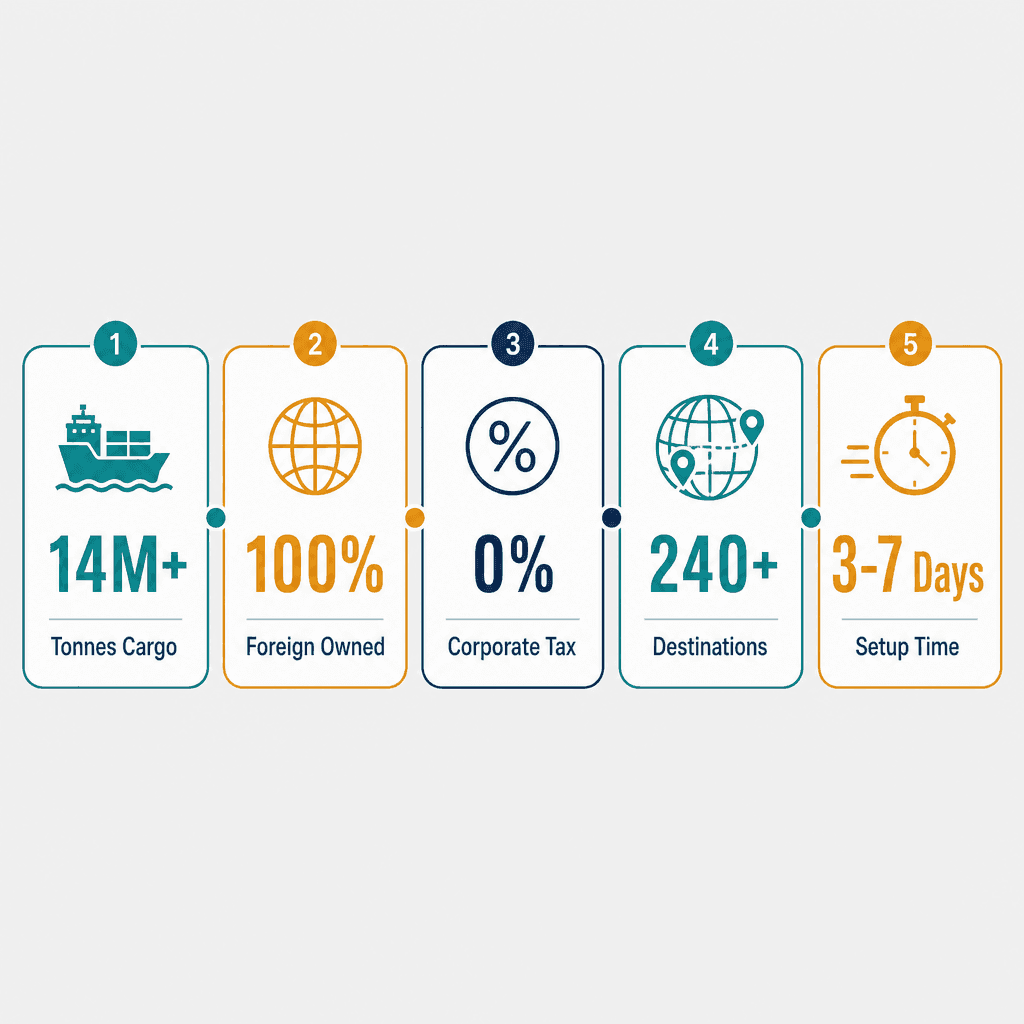
Dubai handles more than 14 million tonnes of cargo annually through its ports and airports, making it one of the world's most active re-export hubs. The UAE textile and apparel sector contributes significantly to non-oil trade, with fabric and fibre imports and re-exports forming a substantial portion of total merchandise trade. Dubai South, home to Al Maktoum International Airport and the Expo City district, provides direct connectivity to over 240 destinations, giving textile traders unrivalled logistical reach.
Free zone status at Dubai South Business Hub means businesses benefit from 100 per cent foreign ownership, zero corporate tax on qualifying income, full repatriation of profits, and no import or export duties within the free zone perimeter. These conditions make it particularly attractive for international traders who need cost-efficient, scalable operations.
Key Facts at a Glance
Activity Code: 4669.05 - Wholesale of Textile Fibres
License Type: Trading License
Category: Trading
Free Zone: Dubai South Business Hub
Foreign Ownership: 100 per cent permitted
Corporate Tax: 0 per cent on qualifying free zone income
Typical Setup Timeline: 3 to 7 working days
Minimum Capital Requirement: None mandated for most free zone structures
What the License Covers
Under activity code 4669.05, the Textile Fibres Wholesale Trading License authorises the holder to buy and sell textile fibres and related raw materials on a wholesale basis. Covered products typically include:
Natural fibres such as cotton, wool, silk, and jute
Synthetic and semi-synthetic fibres including polyester, nylon, acrylic, and viscose
Yarn and thread in bulk quantities
Raw textile inputs supplied to manufacturers, mills, and garment producers
Blended fibre products intended for industrial or commercial use
The license does not cover retail sale, manufacturing, or processing activities. Traders who wish to add value through cutting, blending, or finishing would require additional activity codes.
Who This License Suits
This license is well suited to import-export traders sourcing fibres from producing countries such as India, China, Pakistan, Bangladesh, and Turkey for redistribution into African, European, or Middle Eastern markets. It also suits regional agents acting on behalf of international mills, commodity brokers dealing in fibre futures and physical stock, and entrepreneurs establishing a UAE trading entity to access Gulf Cooperation Council markets under preferential trade arrangements.
Step 1: Choose Your Business Structure
Most sole traders and small partnerships opt for a Free Zone Establishment (FZE) with a single shareholder. Larger operations may prefer a Free Zone Company (FZCO) with two or more shareholders. Both structures enjoy the same ownership and tax benefits.
Step 2: Reserve Your Trade Name
Submit two or three preferred company names to the Dubai South Business Hub registry. Names must not replicate existing registrations or include restricted terms. Approval typically takes one to two working days.
Step 3: Submit the Application and Documents
Required documents generally include passport copies of all shareholders and directors, a completed application form, a business plan or activity description, and proof of residential address. No notarisation is required for most nationalities applying directly.
Step 4: Select a Facility
Dubai South Business Hub offers flexi-desk options, serviced offices, and warehouse units. A flexi-desk or virtual office package satisfies the registered address requirement for a pure trading license. Traders holding physical stock will need a licensed warehouse within the free zone.
Step 5: Pay Fees and Collect the License
License fees vary depending on the package selected. Indicative annual costs for a standard trading license with a flexi-desk start from approximately AED 12,000 to AED 20,000, inclusive of registration and administration fees. Warehouse space is priced separately per square metre. The license is typically issued within three to seven working days of fee payment and document approval.
Compliance and Regulatory Requirements
Textile fibre traders operating from Dubai South Business Hub must comply with UAE customs regulations when moving goods between the free zone and the mainland. Imports into the UAE mainland attract a standard customs duty of five per cent of the CIF value. Traders must also register for VAT if annual taxable turnover exceeds AED 375,000, maintain audited financial records, and renew their license annually. Certain fibre types may require conformity certificates or origin documentation depending on the destination market's import rules.
Related Activities
Specialised Products Wholesale Trading Trading License
Plastic Materials Wholesale Trading Trading License
Rubber Products Wholesale Trading Trading License
Frequently Asked Questions