Used Electrical & Electronic Appliances Trading License in Dubai: Cost and Requirements

Topic Summary
100% Foreign Ownership With No Local Sponsor
Businesses setting up under this license at Dubai South Free Zone can retain full ownership without needing a UAE national sponsor. This makes it especially attractive for international entrepreneurs and SMEs looking for straightforward market entry.
Strategic Location Near Major Freight Corridors
Dubai South Free Zone sits adjacent to Al Maktoum International Airport and close to Jebel Ali Port, giving traders direct access to air and sea freight routes. This positions license holders to efficiently serve re-export markets across Africa, South Asia, and the Middle East.
Broad Range of Tradeable Goods Covered
The license permits trading in used household appliances, consumer electronics, audio-visual equipment, and computing hardware under Activity Code 4774.95. It supports import, export, re-export, and local distribution, making it highly versatile for multi-market operations.
Zero Tax Environment Boosts Profit Margins
License holders benefit from 0% personal income tax and 0% corporate tax on qualifying free zone income. This tax-friendly structure allows traders to reinvest more capital into sourcing, logistics, and market expansion.
Growing Global E-Waste Market Creates Real Opportunity
The United Nations projects global e-waste volumes will reach 82 million metric tonnes by 2030, with a growing share being redirected into certified used appliance trading channels. Dubai's re-commerce economy is well-positioned to capture a significant portion of this redirected supply.
Ideal for Refurbished Electronics Resellers and Re-Exporters
The license suits entrepreneurs targeting the refurbished electronics resale market, where demand consistently outpaces formal supply in many emerging regions. It is equally relevant for businesses using the UAE as a central hub to manage distribution across multiple international markets.
Dubai's thriving re-commerce economy and world-class logistics infrastructure make it one of the most strategically positioned markets in the world for trading used electrical and electronic appliances. Whether you are sourcing refurbished goods for resale across emerging markets or establishing a UAE-based distribution hub, the opportunity is significant and growing.
This guide covers everything you need to know about obtaining a Used Electrical and Electronic Appliances Trading License (Activity Code 4774.95) at Dubai South Business Hub Free Zone, including setup costs, compliance requirements, and why this trade is gaining momentum in the UAE.
Dubai's Market for Used Electrical and Electronic Appliances
The UAE's circular economy is expanding rapidly, driven by rising consumer demand for affordable refurbished electronics and a growing awareness of sustainable consumption. In a market where premium electronics carry high retail price points, second-hand and certified refurbished appliances offer an accessible alternative for a broad segment of the population, including expatriates, SMEs, and budget-conscious households.
Dubai's geographic position amplifies this commercial opportunity considerably. The emirate serves as a critical re-export hub connecting Africa, South Asia, the Gulf Cooperation Council, and the broader Middle East. Global e-waste volumes are projected to reach 82 million metric tonnes by 2030 according to the United Nations, and a growing share of this volume is being redirected into certified used appliance trading channels rather than disposal streams.
Dubai South Free Zone sits at the heart of this logistics advantage. Located adjacent to Al Maktoum International Airport, which is being expanded into one of the world's largest aviation hubs, and within close proximity to Jebel Ali Port, the free zone provides direct access to air and sea freight corridors that are essential for high-volume used goods trading and re-export operations.
Key Stats at a Glance
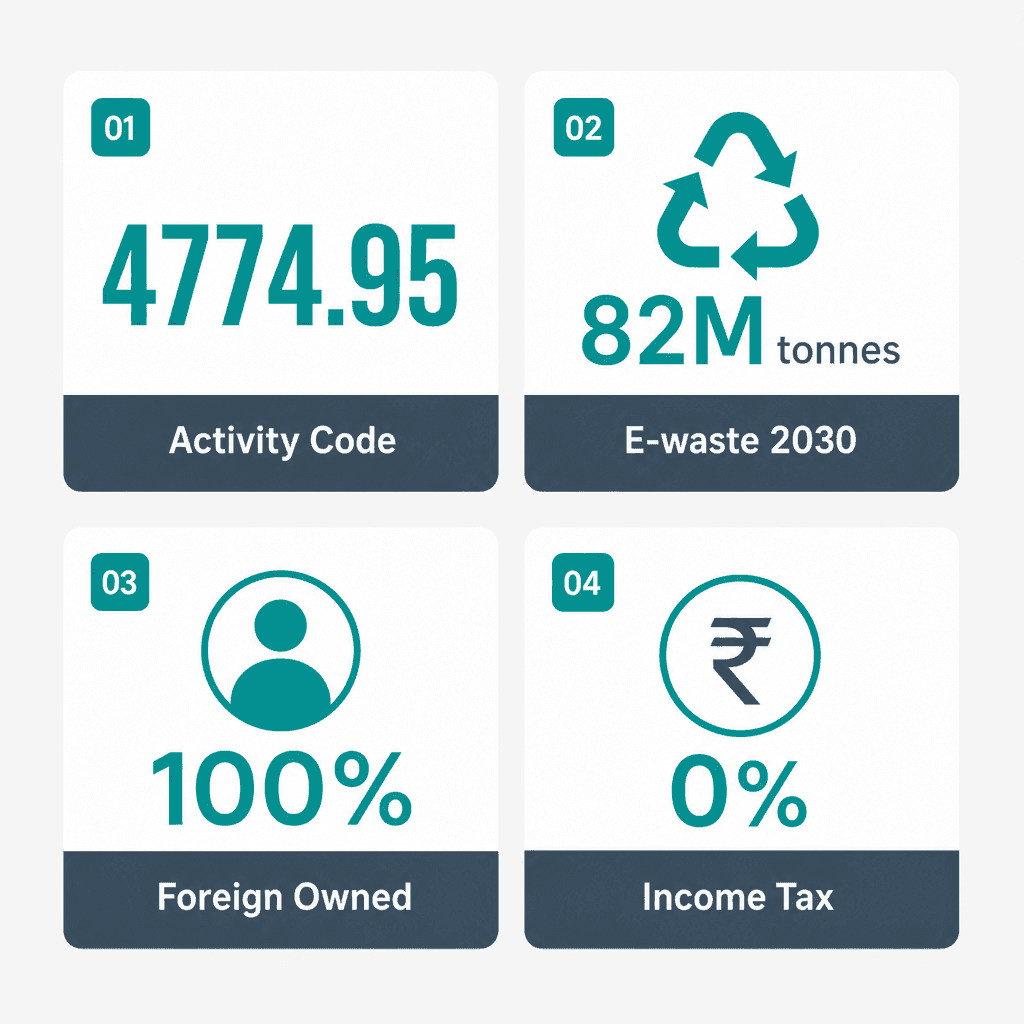
Activity Code: 4774.95 (Retail Sale of Second-Hand Electrical Goods)
License Type: Trading License
Category: Trading
Foreign Ownership: 100% permitted
Personal Income Tax: 0%
Corporate Tax: 0% on qualifying free zone income
Global e-waste projected at 82 million metric tonnes by 2030 (UN)
Location: Dubai South Business Hub Free Zone, near Al Maktoum International Airport
What the Used Electrical and Electronic Appliances Trading License Covers
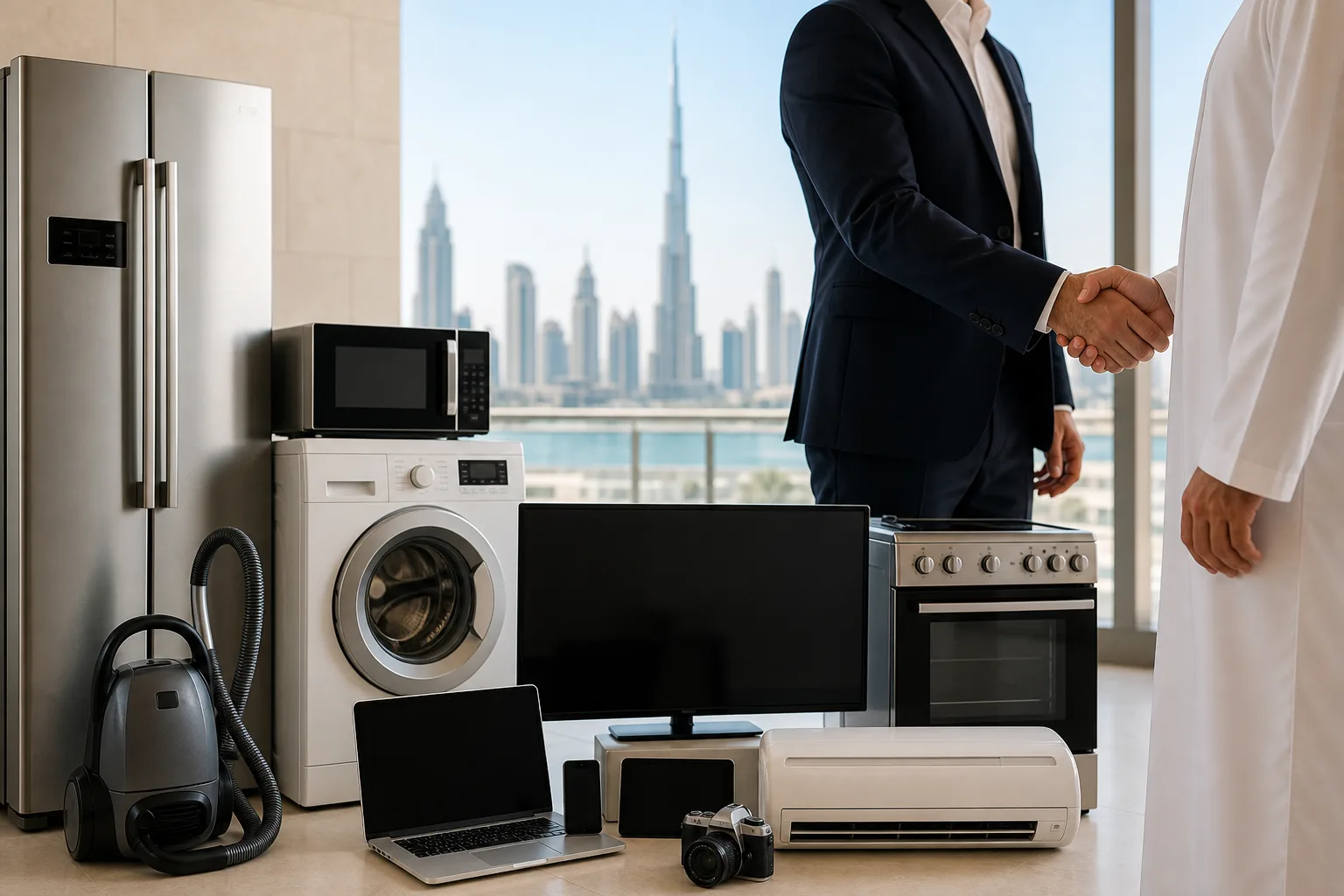
Under this license, traders are permitted to deal in a broad range of goods, including used household appliances such as washing machines, refrigerators, and air conditioning units, as well as consumer electronics, audio-visual equipment, computing hardware, and related items. The license supports import, export, re-export, and local distribution activities within permitted channels, making it highly versatile for businesses operating across multiple markets.
It is worth noting that this is a Trading License under the Trading category, which means it is structured for commercial buying and selling activity rather than manufacturing or professional services. This distinction shapes both the regulatory requirements and the operational model available to license holders.
Who This License Is Suited For
This license is particularly well-suited to entrepreneurs targeting the refurbished electronics resale market, where demand for quality used goods continues to outpace formal supply in many regions. It is equally relevant for international traders who want a UAE base from which to manage re-export operations to emerging markets across Africa, South Asia, and the Middle East. SMEs and startups will find the free zone structure attractive given the combination of 100% foreign ownership, no requirement for a local sponsor, and relatively straightforward setup procedures.
License Requirements and Compliance
The documentation required to apply for this license is straightforward by international standards. Core requirements include valid passport copies for all shareholders and directors, confirmation of visa status, a completed application form submitted to the Dubai South Business Hub Free Zone authority, and a basic business plan outlining the nature and scope of trading activities.
Under the free zone trading activity structure, there is no requirement to operate a physical retail outlet. This significantly reduces overhead costs for businesses whose primary focus is wholesale trading, import and re-export, or online-facilitated sales. However, businesses handling physical stock will need to consider appropriate warehousing arrangements within or near the free zone.
Compliance obligations include adherence to UAE customs regulations governing the import and re-export of used goods, observance of any applicable product-safety standards for electrical equipment, and compliance with the rules and directives of the Dubai South Free Zone authority. Traders should also be aware of destination country import regulations when planning re-export shipments.
Step-by-Step Setup Process
Confirm your intended business activity and verify that Activity Code 4774.95 applies to your operations
Submit a formal application to the Dubai South Business Hub Free Zone authority along with all required documentation
Receive initial approval and complete the document verification and due diligence process
Pay the applicable license fees upon approval
Receive your Trading License and proceed with investor or employee visa applications and corporate bank account setup
Setup Costs and Ongoing Fees
License fees at Dubai South Business Hub Free Zone for a Trading License are competitive relative to other UAE free zones, particularly given the strategic location and logistics infrastructure on offer. Indicative costs for a standard trading license package typically begin from approximately AED 12,000 to AED 20,000 per year, though the final figure will depend on the number of activities included, visa allocations, and any optional facilities selected.
Visa costs are an additional consideration. Investor visa fees generally range from AED 3,000 to AED 5,000 per visa, while employee visa costs follow a similar structure. The number of visas available to a company is typically linked to the size of the office or facility arrangement selected.
For businesses that do not require a dedicated office, a flexi-desk arrangement is available at a lower cost and still satisfies the free zone's physical presence requirements for license issuance. Businesses requiring warehouse space for storing used appliances should budget separately for facility rental, with rates varying based on square footage and lease duration.
Annual license renewal fees are broadly comparable to initial setup costs and should be factored into medium-term financial planning. There are no personal income taxes and no withholding taxes on dividends or profit repatriation for free zone entities operating within permitted activities.
Why Dubai South Free Zone Is Ideal for This Trade
Dubai South Free Zone offers a combination of structural and geographic advantages that are difficult to replicate elsewhere in the region. The free zone allows 100% foreign ownership without any requirement for a UAE national sponsor, and there is no restriction on the repatriation of profits or capital. Combined with the absence of personal income tax and zero corporate tax on qualifying free zone income, the financial structure is highly favourable for international traders.
The proximity to Al Maktoum International Airport is a significant operational advantage. The airport is designed to handle enormous cargo volumes and will ultimately serve as a primary logistics node for the entire region. Jebel Ali Port, one of the world's largest container ports, is also accessible within a short distance, providing sea freight connectivity to over 150 ports globally.
Customs procedures at Dubai South are streamlined to support high-volume re-export operations, with dedicated customs channels and bonded warehousing options available. The free zone authority operates an efficient license issuance process, and the broader UAE regulatory environment is consistently ranked among the most business-friendly in the world, with the UAE regularly featuring in the top tier of global ease-of-doing-business indices.
Related Activities
Used Furniture Trading Trading License
Used Jewellery Trading Business
Frequently Asked Questions