Wires & Cables Trading License in Dubai: Cost and Requirements
Topic Summary
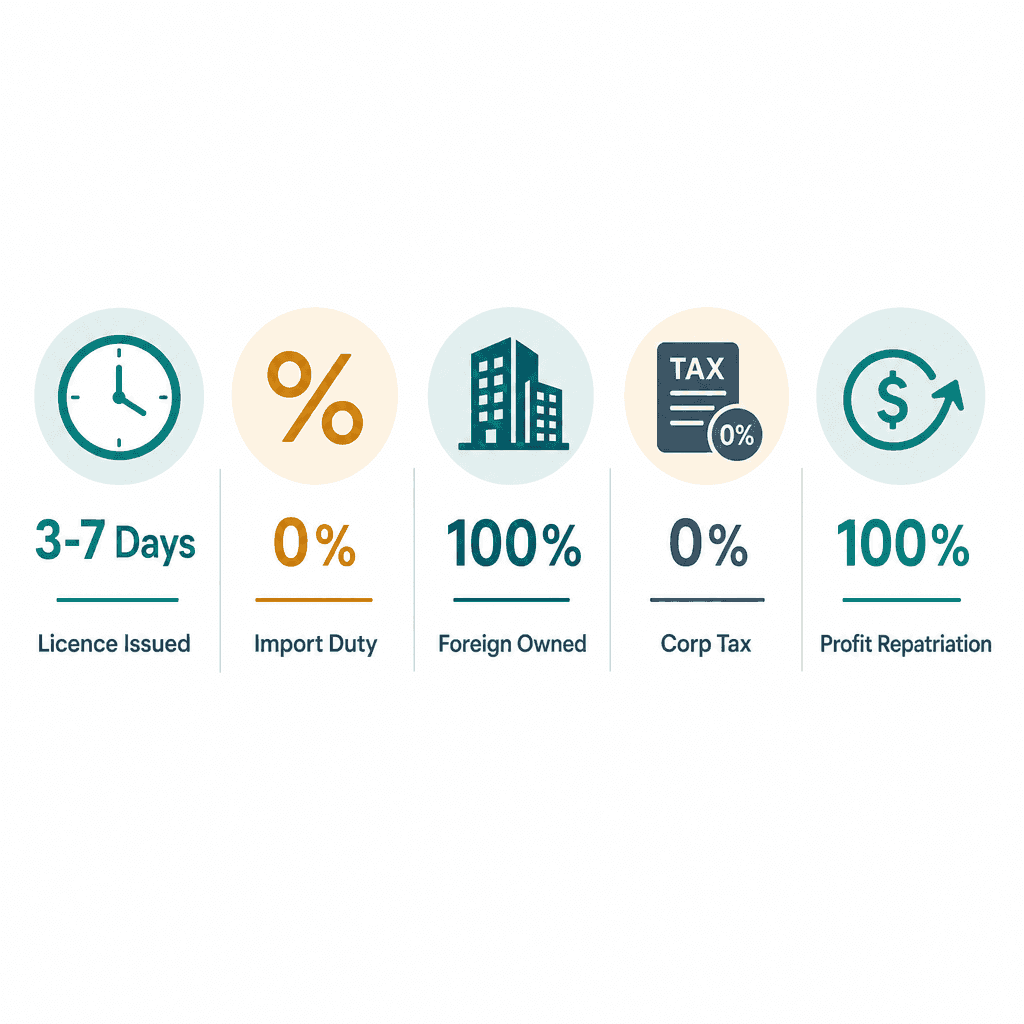
100% Foreign Ownership With No Local Sponsor
Businesses setting up under Activity Code 4752.48 at Dubai South Business Hub Free Zone can retain full ownership without needing a UAE national partner. This removes a significant barrier that historically deterred foreign entrepreneurs from entering the Dubai market.
Zero Taxes and Duties on Free Zone Income
Qualifying free zone businesses pay no corporate tax on eligible income and face no import duties within the zone. This cost advantage makes Dubai-based traders highly competitive when sourcing from Asia and distributing regionally.
Fast License Issuance in 3 to 7 Working Days
The trading license under Activity Code 4752.48 can typically be issued within three to seven working days, allowing businesses to begin operations quickly. This streamlined process is a practical advantage for traders responding to time-sensitive market opportunities.
Strategic Location Near Port and Airport
Dubai South sits adjacent to Al Maktoum International Airport and Jebel Ali Port, two of the region's most important logistics hubs. This positioning gives wires and cables traders fast, cost-effective access to both inbound shipments and outbound distribution routes.
Broad Product Scope Across Cable Categories
The license permits trading in electrical wires, power cables, data cables, coaxial cables, fibre optic cables, and related connectivity products. This wide scope lets operators serve multiple end markets, from construction projects to renewable energy installations.
Dubai as a Re-Export Hub for Regional Markets
Traders can source competitively from manufacturing bases in China, India, and South Korea, then re-export efficiently to Africa, the Middle East, and Europe. The free zone framework supports this model by allowing duty-free storage and straightforward re-export procedures.
Growing Demand Driven by Infrastructure and Clean Energy
The UAE's ongoing construction boom, combined with investments in solar farms, EV charging networks, and smart buildings, is expanding demand for specialised cable products. Traders entering the market now are well-positioned to benefit from these long-term infrastructure trends.
Dubai's position at the crossroads of global supply chains makes it one of the most strategically valuable locations in the world for wires and cables trading. Whether you are sourcing from Asia, supplying construction projects across the Gulf, or distributing to African markets, Dubai offers infrastructure, regulation, and reach that few jurisdictions can match. This guide covers everything you need to know about obtaining a wires and cables trading license (Activity Code 4752.48) at Dubai South Business Hub Free Zone, including setup costs, compliance requirements, and why this market presents a compelling opportunity.
Key Stats at a Glance
Activity Code: 4752.48 (Wires and Cables Trading)
License Type: Trading License, Trading Category
Foreign Ownership: 100% permitted, no local sponsor required
Typical License Issuance Timeline: 3 to 7 working days
Corporate Tax: Zero on qualifying free zone income
Import Duties: Zero within the free zone
Profit Repatriation: 100% permitted
Location Advantage: Adjacent to Al Maktoum International Airport and Jebel Ali Port
The UAE Wires and Cables Market: Why Now
The UAE is in the midst of a sustained construction and infrastructure expansion, with large-scale projects spanning residential developments, commercial real estate, transport networks, and public utilities. Each of these sectors requires significant volumes of electrical wiring and cabling, creating consistent and growing demand for traders operating in this space.
Beyond domestic consumption, Dubai functions as a major re-export hub connecting manufacturing bases in Asia with end markets across Africa, the Middle East, and Europe. Traders based in Dubai can source competitively from China, India, and South Korea, then distribute regionally with speed and efficiency that mainland competitors struggle to match.
The UAE's commitment to renewable energy targets and smart city development is adding further momentum. Projects such as solar farms, electric vehicle charging networks, and intelligent building systems all require specialised cable products, broadening the product categories that traders can profitably stock.
From a classification standpoint, Activity Code 4752.48 sits within ISIC Category 4752, which covers the retail sale of hardware, paints, and glass in specialised stores. The sub-code 4752.48 specifically designates wires and cables trading, giving license holders a clearly defined and recognised scope of permitted activity.
What the Wires and Cables Trading License Covers
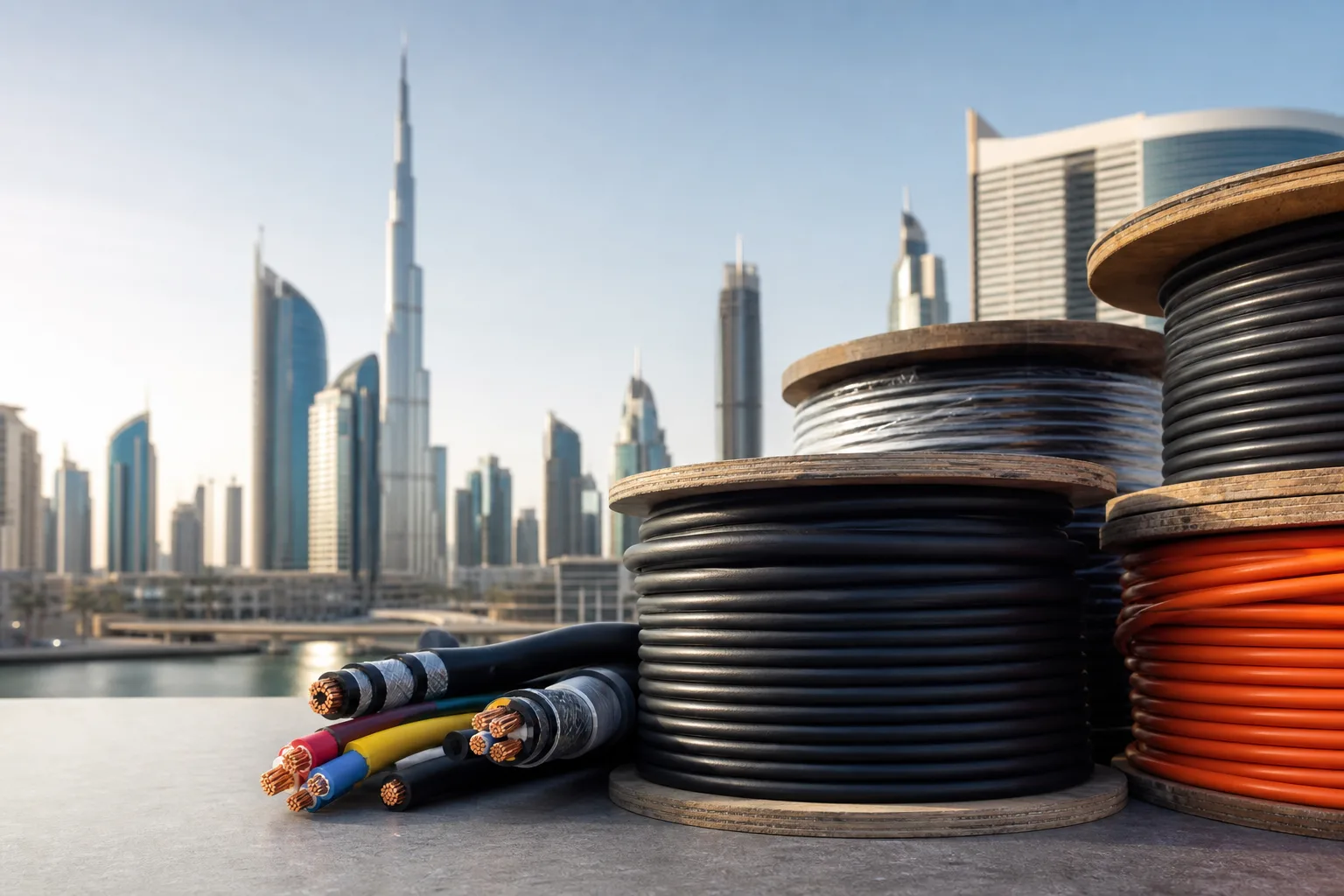
A trading license issued under Activity Code 4752.48 at Dubai South Business Hub Free Zone permits the holder to engage in the importation, stocking, distribution, and re-export of a broad range of wires and cables. This includes electrical wires, power cables, data cables, coaxial cables, fibre optic cables, and associated connectivity products.
The license falls under the Trading License category, which is designed for businesses whose primary activity involves buying and selling goods rather than manufacturing or providing services. Within the free zone framework, license holders are authorised to conduct both wholesale and retail trading activities, giving operators flexibility in how they structure their customer relationships.
Crucially, the free zone license enables traders to import goods into the Dubai South zone without paying UAE customs duties, store them in licensed facilities, and then either sell locally to UAE-based buyers or re-export to international markets. This makes the license particularly well-suited to businesses operating regional distribution models.
The permitted scope does not extend to manufacturing or physical transformation of cable products. Businesses wishing to cut, assemble, or otherwise process cables would require an additional or alternative license category.
Setup Costs and Steps at Dubai South Business Hub Free Zone
Setting up a wires and cables trading company at Dubai South Business Hub Free Zone involves several straightforward stages. License registration fees, establishment card costs, and visa allocation charges form the core of the initial outlay. Depending on the office package selected and the number of visas required, first-year setup costs typically range from AED 15,000 to AED 30,000 or more, inclusive of government fees and basic facility charges. Prospective applicants should request a detailed cost breakdown from the free zone authority or a registered business setup adviser, as fee structures are updated periodically.
Facility options include flexi-desk arrangements for trading businesses that do not require on-site stock storage, shared office spaces for small teams, and dedicated warehouse units for operators who intend to hold physical inventory at the free zone. Warehouse rental costs vary based on size and specification, with smaller units starting at competitive rates within the Dubai South ecosystem.
The typical setup process follows these steps:
Trade name reservation and initial approval from the free zone authority
Submission of the completed license application form and supporting documents
Document attestation where required for foreign-issued certificates
Payment of applicable fees and selection of office or facility package
License issuance, followed by establishment card and visa processing
Documents Required
The standard document set for a wires and cables trading license application at Dubai South Business Hub Free Zone includes:
Passport copies of all shareholders and directors
Completed application form and a brief business plan summary
No-objection letter if the applicant is a UAE resident currently employed under another sponsor
Memorandum of Association and specimen signatures
Recent passport-sized photographs of all principals
Additional documents may be requested depending on the corporate structure chosen, such as parent company incorporation certificates for subsidiary setups.
Licensing and Compliance Requirements
One of the most significant advantages of establishing a wires and cables trading business within a UAE free zone is the right to 100% foreign ownership. There is no requirement to appoint a local sponsor or Emirati partner, giving international entrepreneurs and corporations full control over their entity.
License holders must comply with the ongoing regulations of the Dubai South Business Hub Free Zone authority, which include maintaining a valid registered address, renewing the license annually, and adhering to UAE customs and trade rules when moving goods across free zone boundaries into the mainland UAE market.
On the product compliance side, electrical cables and wires sold or imported into the UAE may be subject to conformity requirements set by the Emirates Authority for Standardisation and Metrology (ESMA). ESMA administers the Emirates Conformity Assessment Scheme (ECAS), which mandates that certain electrical products meet defined safety and quality standards before they can be placed on the UAE market. Traders should verify which specific cable categories fall under mandatory ESMA certification and factor this into their procurement and compliance planning.
Annual license renewal is obligatory, and businesses are advised to maintain accurate financial records to support any audit requirements that may arise under UAE regulatory frameworks.
Why Dubai South is Well-Positioned for Wires and Cables Trade
Dubai South's geographic and logistical advantages are substantial. The free zone sits adjacent to Al Maktoum International Airport, one of the world's largest airports by design capacity, and is within close proximity to Jebel Ali Port, the largest port in the Middle East and among the busiest container ports globally. This dual-mode connectivity enables traders to move goods by air or sea with minimal transit times.
The broader Dubai South ecosystem has been purpose-built to support trading and logistics businesses, with integrated customs facilities, bonded warehousing options, and a regulatory environment that streamlines cross-border trade. Access to a network of over 200 shipping lines operating through Jebel Ali, combined with extensive air freight connections at Al Maktoum, gives wires and cables traders reach into virtually every major global market.
From a financial perspective, the free zone offers zero corporate tax on qualifying income under the UAE's current tax framework, zero import duties on goods entering the free zone, and the ability to repatriate 100% of profits without restriction. These conditions significantly improve the economics of trading operations compared with many competing jurisdictions.
Related Activities
Metal Wires Trading Business
Timber Trading Business
Cement & Gypsum Trading Trading License
Frequently Asked Questions