Topic Summary
What the 180 Day Rule UAE Actually Means for Residents
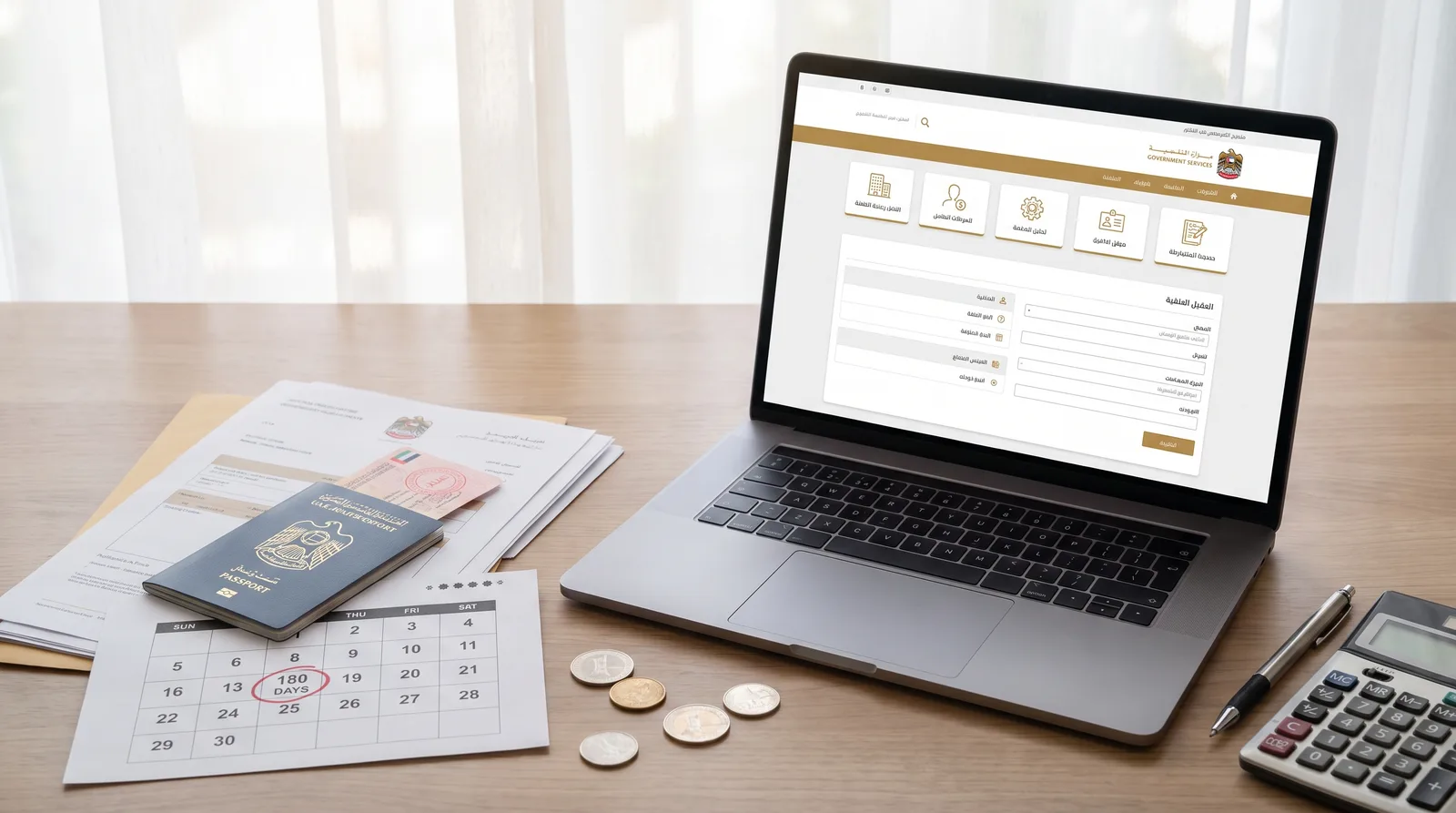
The 180 day rule UAE states that a residency visa holder who remains outside the UAE for more than 180 consecutive days automatically loses their residency status. The visa cancels on day 181 of continuous absence. This applies to investor visas, partner visas, and most employmen
How the 180 Day Rule UAE Affects Your Company and Banking
When a UAE residency visa cancels under the 180 day rule UAE , the knock-on effects extend beyond the visa itself. The establishment card linked to a free zone license, Emirates ID, and corporate bank accounts tied to that residency can all be frozen or invalidated, creating oper
Renewal Costs and What the 180 Day UAE Cost Covers
The 180 day UAE cost of restoring a lapsed residency visa covers the re-entry permit, medical fitness test, Emirates ID application, and visa stamping. These fees are separate from the free zone license package cost and are paid to government entities. Budget AED 3,070 to AED 5,5
How to Restore Your UAE Residency After a Lapse: Step-by-Step
Restoring UAE residency after the 180 day rule UAE triggers cancellation requires six steps: confirm visa status with ICP, obtain a new entry permit, enter the UAE on that permit, complete the medical fitness test, apply for Emirates ID, and collect the stamped visa. Processing t
Practical Ways to Stay Compliant Without Living in Dubai Full-Time
Founders who split time across multiple countries can stay compliant with the 180 day UAE guide by scheduling a UAE visit before day 180 of any absence, using travel records to track departure and return dates, and structuring business trips to reset the absence clock. The Golden
Common Mistakes Founders Make With the 180 Day Rule UAE
The most common mistakes with the 180 day rule UAE include assuming the clock runs on a calendar year rather than consecutively, believing a short transit through Dubai resets residency, failing to track
Miss the 180-day threshold by a single day and your UAE residency visa cancels automatically, no warning letter, no grace period, no negotiation with the ICP (ICP, 2026). That one absence resets everything: your Emirates ID, your company's establishment card, and your ability to operate a bank account tied to that residency all become invalid on the same date. Restoring a lapsed investor visa costs between AED 3,070 and AED 5,500 per person in government fees alone, paid separately from any free zone license package. The 180 day rule UAE is one of the most consequential compliance thresholds a founder faces, yet it's also one of the most misunderstood.
This 180 day UAE guide covers exactly how the absence rule works, which visa categories it applies to, what it costs to renew or restore your status, and the practical steps founders use to stay compliant without anchoring themselves to the UAE full-time.
What the 180 Day Rule UAE Actually Means for Residents
The 180 day rule UAE states that a residency visa holder who remains outside the UAE for more than 180 consecutive days automatically loses their residency status. The visa cancels on day 181 of continuous absence. This applies to investor visas, partner visas, and most employment-based residency categories (u.ae, 2026).
The Exact Threshold and How It Is Counted
The rule triggers on 180 consecutive calendar days outside the UAE, not 180 days accumulated across a rolling year. That distinction matters. The clock resets to zero each time you re-enter the UAE, even for a single overnight stay. ICP systems typically count both the day of departure and the day of return as UAE presence days.
There's no administrative notice before cancellation. The system is automatic. Consider this scenario: a founder who leaves Dubai on 1 January and returns on 29 June has been absent 179 days and retains full residency. A return on 30 June means day 180, residency still valid. A return on 1 July or later? The visa has already cancelled.
Which Visa Categories the Rule Applies To
Not every UAE residency document carries the same absence threshold. Here's how the main categories break down:
Investor and partner visas (free zone company license): subject to the 180 day rule UAE
Employment visas sponsored by a UAE company: same 180-day threshold applies
Golden Visa holders: operate under a different framework, absence of up to five years is permitted in most cases (u.ae, 2026)
Tourist and visit visas: not residency visas; fall entirely outside this rule
Dependent family visas (spouse, children): equally subject to the 180-day limit, with their own independent countdown
A founder holding a free zone investor visa who splits time between Dubai and London must track absence carefully. Their spouse on a dependent visa faces the same countdown independently, even if the primary holder is fully compliant, the dependent's clock keeps running. You can explore UAE residency visa options through Dubai South Business Hub's residency services.
How the 180 Day Rule UAE Affects Your Company and Banking
When a UAE residency visa cancels under the 180 day rule UAE, the knock-on effects extend beyond the visa itself. The establishment card linked to a free zone license, Emirates ID, and corporate bank accounts tied to that residency can all be frozen or invalidated, creating operational disruption for the business.
Impact on Your Free Zone License and Establishment Card
A free zone company's establishment card is linked to the visa holder listed as investor or partner. If that visa cancels, the establishment card falls into an irregular status. Free zone authorities conduct periodic compliance checks, and a cancelled investor visa can trigger a license suspension notice.
Renewing the license at the next annual cycle typically requires a valid residency visa for the named investor or partner. Founders who let the visa lapse must restore residency before the next renewal window or risk license cancellation. A founder on the 2 Visa Package who travels for seven months without returning will find both the investor visa and any dependent visa cancelled, and the establishment card flagged, before the next license renewal is due.
Corporate Bank Account Consequences
UAE banks are required to verify that account signatories hold valid residency. A cancelled visa can trigger a KYC compliance review, and banks may freeze corporate accounts pending updated documentation once a visa expiry or cancellation is flagged (Central Bank of the UAE, 2026).
Re-activating a frozen account after residency is restored typically requires presenting a new Emirates ID and an updated visa copy. If you're planning an extended absence, notify your relationship manager in advance and ensure another authorised signatory holds valid UAE residency. You can open a Dubai bank account online once your residency is in order, but maintaining that account requires keeping your visa current.
UAE Residency Visa Restoration: One-Off vs Recurring Costs
Fee Item | One-Off Fees (First Issue or Restoration) | Recurring Fees (Each Renewal Cycle) |
|---|---|---|
Entry permit | ~AED 1,100 | Not applicable at renewal |
Status change | ~AED 640 | Not applicable at renewal |
Medical fitness test | ~AED 320 | ~AED 320 |
Emirates ID application | ~AED 370 | ~AED 370 (renewal) |
Visa stamping | ~AED 640 | ~AED 640 |
Not included | Travel costs, document translation, typing centre fees, overstay fines | Travel costs, typing centre fees |
Renewal Costs and What the 180 Day UAE Cost Covers
The 180 day UAE cost of restoring a lapsed residency visa covers the re-entry permit, medical fitness test, Emirates ID application, and visa stamping. These fees are separate from the free zone license package cost and are paid to government entities. Budget AED 3,070 to AED 5,500 per person depending on visa type and processing speed (ICP, 2026).
Cost Breakdown: One-Off Versus Recurring Fees
One-off fees apply when you first obtain or restore a visa after a lapse: entry permit (~AED 1,100), status change (~AED 640), medical fitness (~AED 320), Emirates ID (~AED 370), and stamping (~AED 640). That totals roughly AED 3,070 at the lower end, rising to AED 5,500 for priority processing or certain visa categories.
Recurring fees at each renewal cycle (typically every two or three years) are lower: medical (~AED 320), Emirates ID renewal (~AED 370), and stamping (~AED 640). Government fee schedules are set by ICP and the free zone authority. What's not included: travel costs, document translation, typing centre fees, and any fines for overstay on a prior visa. Those sit entirely outside the figures above.
DSBH Visa Package Pricing and What Each Includes
The license package and visa processing costs are always separate at Dubai South Business Hub. Here's what each package covers:
0 Visa Package: AED 12,500, includes the license, Articles of Association, share register, flexi-desk space, and lease agreement; no visa allocation
1 Visa Package: AED 16,350, adds one visa allocation (investor or partner visa) and the establishment card
2 Visa Package: AED 18,200, provides two visa allocations (the maximum per company) and the establishment card
Visa processing fees, entry permit, status change, medical, Emirates ID, stamping, are always quoted separately from the package price. The license is issued in 1 day; visa processing timelines depend on ICP and medical centre scheduling. A two-founder team choosing the 2 Visa Package at AED 18,200 gets the license, both visa allocations, and the establishment card. They then pay visa processing costs separately, roughly AED 3,070 to AED 5,500 per person. You can review the full business setup cost in Dubai using the DSBH cost calculator.
How to Restore Your UAE Residency After a Lapse: Step-by-Step
Restoring UAE residency after the 180 day rule UAE triggers cancellation requires six steps: confirm visa status with ICP, obtain a new entry permit, enter the UAE on that permit, complete the medical fitness test, apply for Emirates ID, and collect the stamped visa. Processing typically takes 10 to 20 working days (GDRFA Dubai, 2026).
Step 1: Confirm Cancellation and Check for Any Outstanding Fines
Before booking any travel, check your visa status via the ICP smart services portal. This confirms whether the visa has cancelled and whether any overstay fines apply. Overstay fines on a prior visa are separate from the 180-day absence cancellation, and they must be cleared before a new entry permit is issued. Your free zone authority or a PRO services Dubai provider can run a status check on your behalf if you're unsure how to read the result.
Step 2: Obtain a New Entry Permit and Re-Enter the UAE
Once the previous visa is formally cancelled, Dubai South Business Hub issues a new entry permit. That permit is typically valid for 60 days and allows you to enter the UAE to complete the residency process. You must physically enter the UAE on the entry permit, the status change from visitor to resident cannot be done remotely. There's no workaround for this step.
Step 3: Complete Medical, Emirates ID, and Visa Stamping
Book the medical fitness test at a DHA-approved centre. Results typically return within 24 to 48 hours.
Submit the Emirates ID application through an ICP-approved typing centre. Biometrics are captured at the same appointment.
Visa stamping is the final step. The stamped visa page is added to your passport and the Emirates ID is dispatched by post or collected in person.
The full cycle from entry permit to stamped visa typically runs 10 to 20 working days. A founder who enters the UAE on Monday, completes the medical on Tuesday, and submits the Emirates ID application on Wednesday can reasonably expect a stamped visa within two weeks if there are no complications.
Practical Ways to Stay Compliant Without Living in Dubai Full-Time
Founders who split time across multiple countries can stay compliant with the 180 day UAE guide by scheduling a UAE visit before day 180 of any absence, using travel records to track departure and return dates, and structuring business trips to reset the absence clock. The Golden Visa offers a longer absence window for qualifying founders.
Tracking Your Absence: Tools and Simple Methods
Keep a spreadsheet or calendar log of every UAE departure and return date. Passport stamps are the legal record, but a personal log catches issues early. The ICP smart services app lets you view your own travel movement history, check it quarterly if you travel frequently.
The most practical tip: set a recurring calendar alert at day 150 of any unbroken absence. That gives you a 30-day buffer before the 180-day threshold fires. A founder based primarily in Germany who sets this alert tied to each UAE departure date will, when the alert fires, simply book the next Dubai trip. A single overnight stay resets the clock to zero.
When Upgrading to a Golden Visa Makes Commercial Sense
The UAE Golden Visa grants a 10-year renewable residency with an absence threshold of up to five years, fundamentally different from the standard investor visa's 180-day limit (u.ae, 2026). Qualifying criteria include minimum real estate investment, business ownership above a set revenue threshold, or exceptional talent recognition.
For founders whose business is genuinely global and who can't guarantee UAE presence every six months, the Golden Visa removes the compliance burden entirely. The cost and eligibility requirements differ from the standard free zone visa path, so assess eligibility before applying. If you're considering whether to set up a company in Dubai with a view to eventually qualifying for the Golden Visa, the free zone investor visa is the logical starting point.
Is the Golden Visa worth it for first-time founders?
For founders who travel extensively and can't guarantee a UAE visit every six months, the Golden Visa's five-year absence allowance is worth the additional qualification effort. Standard investor visa holders who miss the 180-day threshold face AED 3,070 to AED 5,500 in restoration costs each time, making the Golden Visa commercially attractive over a five-year horizon.
Common Mistakes Founders Make With the 180 Day Rule UAE
The most common mistakes with the 180 day rule UAE include assuming the clock runs on a calendar year rather than consecutively, believing a short transit through Dubai resets residency, failing to track
References
Frequently Asked Questions