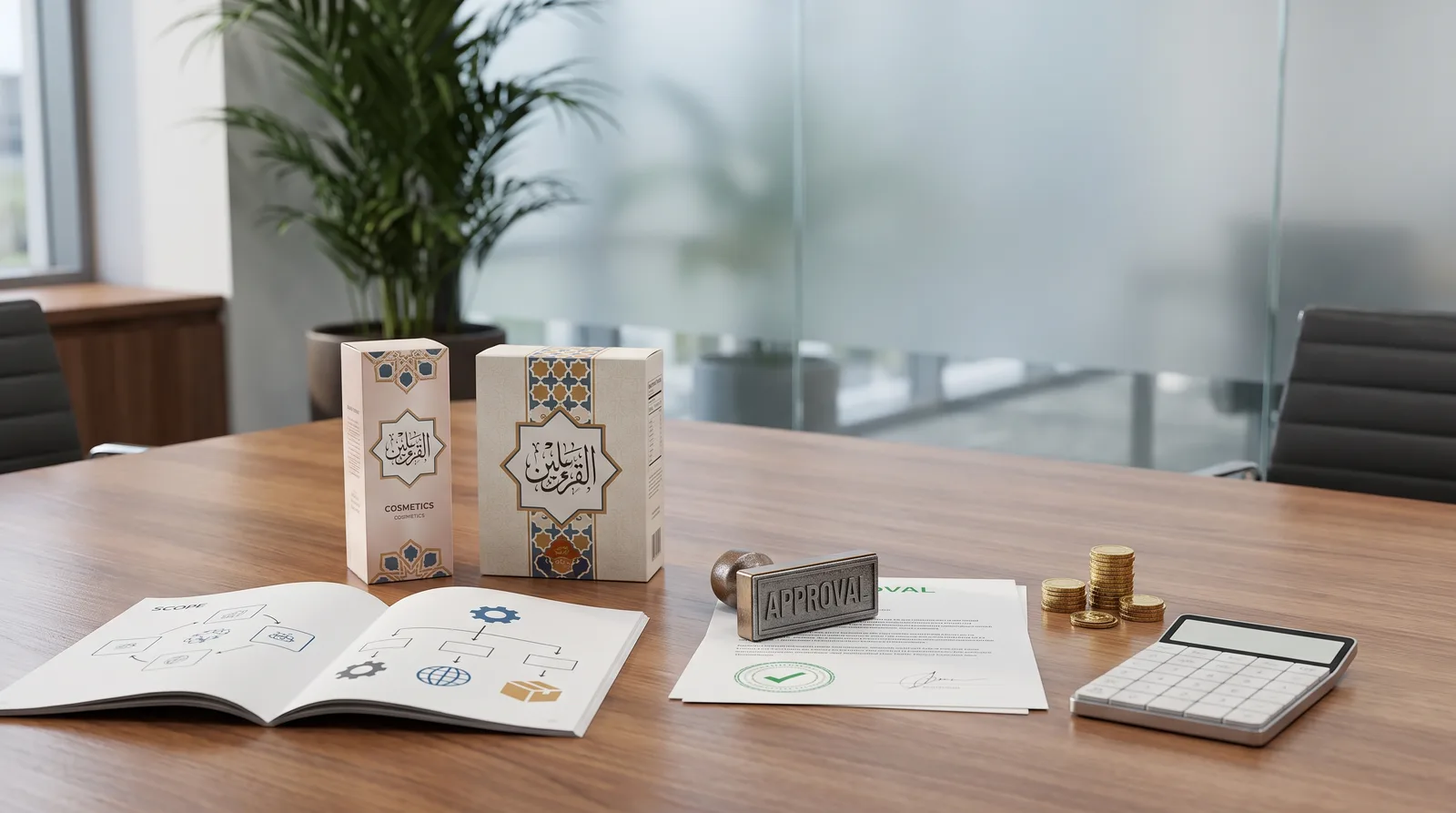
Topic Summary
Why Arabic Labels Are Mandatory
UAE law requires imported consumer goods to carry Arabic details on ingredients, dates, origin, and safety warnings alongside the original language. This protects consumers and lets customs verify compliance before goods reach the market.
Who Falls Under the Rule
Importers, distributors, and manufacturers of food, cosmetics, medical devices, and electronics must comply regardless of where products are made. E-commerce sellers using UAE fulfilment centres are inspected the same as retail shipments.
Costs Vary by Product Category
Food label review typically costs a few hundred dirhams per SKU through Dubai Municipality, while cosmetics and health products face higher fees plus lab testing under MOHAP. Approval timelines range from one to two weeks for food to several weeks for regulated health items.
Paperwork You'll Need Ready
Food importers should prepare a trade license, ingredient list, and origin certificate, while cosmetics and health product sellers need a formula sheet and lab test report in addition to their license. Having these ready upfront speeds up registration significantly.
Getting Your Trading License Right
A licensed trading entity is generally needed to register products, though free zone companies can still import via mainland distribution partners. Choosing the correct activity code at setup determines which authority reviews your labels, saving time down the line.
Avoid Covering Original Text
A common and costly mistake is placing Arabic stickers directly over the manufacturer's original language or expiry date, making batches unreadable to inspectors. Labels must sit alongside existing text, not obscure it, or shipments risk being held at port.
In 2026, containers get held at Jebel Ali the moment an inspector spots missing Arabic text, not weeks later. Arabic labelling requirements uae apply at clearance, before goods ever touch a shelf. This guide walks through the rule, who it catches, what arabic label approval dubai costs, and the checklist you need before shipping.
What Is Arabic Labelling Requirements UAE and Why It Matters
Arabic labelling requirements uae mandate that imported consumer goods carry Arabic-language details covering ingredients, production and expiry dates, country of origin, and safety warnings alongside any other language. The rule protects consumers and gives customs officers a fast way to verify compliance before goods enter the local market.
The Core Rule On Arabic Labelling
Arabic must sit next to the original language, not cover it up. That distinction matters more than most traders realise.
Enforcement happens at customs clearance, not at the retail counter. A food importer at Jebel Ali port had an entire container held because the Arabic sticker had been placed straight over the manufacturer's original expiry date, making the batch unreadable to inspectors.
Font size and placement rules shift depending on the product category. Arabic labelling requirements uae apply across food, cosmetics, and healthcare items, and each category has its own review authority checking the pack before release.
Why Regulators Enforce This Standard
Consumer protection is the stated aim behind arabic labelling requirements uae. Shoppers need to read what they're buying, in the language they use daily.
The rule also aligns the UAE with wider GCC standardisation efforts on packaged goods, which reduces friction when products move between member states. And it cuts down disputes over mislabelled batches, since a clear paper trail exists from the moment of registration (Ministry of Economy, 2025).
Who Must Comply With Product Labelling Rules UAE
Product labelling rules uae apply to importers, distributors, and manufacturers placing food, cosmetics, medical devices, and consumer electronics in the local market. If your goods reach UAE consumers, whether through retail or online channels, Arabic labelling applies regardless of where the product was made.
Categories Under MOHAP Oversight
Food, supplements, and cosmetics fall under Ministry of Health and Prevention (MOHAP) review.
Medical devices need separate registration before import.
Non-compliant batches get held at the port, not destroyed outright.
E-commerce Sellers Are Not Exempt
Online sales face the same rule as shelf products.
Fulfilment centres in the UAE trigger inspection at intake.
Classification follows the product type, not the sales channel.
An online cosmetics seller shipping via a Dubai fulfilment centre still needed Arabic labels applied before listing locally, well before the first order shipped.
Traders Setting Up Locally
A licensed trading entity is usually required to register products.
Free zone companies can still import through mainland distribution arrangements.
Your activity code affects which authority reviews the label, so getting it right at the trading license stage saves time later.
Arabic Label Approval Costs and Timelines by Category
Feature | Food and Beverage | Cosmetics and Health Products |
|---|---|---|
Review authority | Dubai Municipality food control department | MOHAP registration and drug control department |
Typical fee range | A few hundred dirhams per SKU | Higher per-SKU fee plus lab testing charges |
Lab testing requirement | Sometimes, for imported perishables | Usually required before registration |
Approval timeline | One to two weeks typically | Several weeks under MOHAP review |
Documents needed | Trade license, ingredient list, origin certificate | Trade license, formula sheet, lab test report |
What Arabic Label Approval Dubai Costs Traders
Arabic label approval dubai costs vary by category: food label review can run a few hundred dirhams per SKU, while lab testing for cosmetics or supplements adds more. Traders should also budget for company setup costs, since a licensed entity is usually needed to submit registration applications.
Per-SKU Review And Testing Fees
Fees differ between food, cosmetics, and health products.
Lab testing can extend the approval window by several weeks for MOHAP-regulated items.
Budgeting per SKU avoids surprise costs once you scale beyond a handful of products.
Company Setup Costs Behind The Scenes
Before you can even submit a label application, you need a trading license. At Dubai South Business Hub Free Zone, a 0 Visa Package runs AED 12,500, a 1 Visa Package costs AED 16,350, and a 2 Visa Package costs AED 18,200. You can check exact figures against your product volume using the cost calculator.
How long does arabic label approval dubai actually take?
Food SKUs often clear review in one to two weeks. Cosmetics and supplements can take several weeks under MOHAP, especially if lab testing is required first.
Documents Needed for Arabic Label Approval Dubai
Arabic label approval dubai requires a set checklist: trade license copy, product ingredient list, original label artwork, country-of-origin certificate, and lab test reports where applicable. Missing even one document typically delays submission rather than causing outright rejection.
The Core Checklist
Valid trade license copy.
Full ingredient or formula list.
Original label artwork, both languages.
Country-of-origin certificate, attested where required.
Lab test report, for cosmetics and supplements.
Common Submission Mistakes
Submitting artwork before ingredients are finalised.
Missing origin certificates on re-exported goods.
Inconsistent SKU names across documents and packaging.
Setting Up a Company to Handle Labelling Compliance
Setting up a company gives traders standing to register products and submit Arabic labelling applications. A Dubai South Business Hub Free Zone license lets importers structure trading activity, hold goods in a duty-suspended arrangement, and pair the license with a residency visa package.
Choosing The Right Trading Activity
Your activity code must match the goods you're importing.
Free zone trading licenses support both import and re-export.
Mainland distribution may need a separate step through the Dubai Department of Economy and Tourism (DET).
Getting the activity right early matters, and it's worth reviewing the full list of business activities before you file.
Duty-Suspended Storage, Not Duty-Exempt
Goods held in the free zone are duty-suspended, not duty-free.
5% VAT and 9% corporate tax above AED 375,000 still apply once goods enter the mainland market.
Plan tax filing alongside label registration, not after. Your banking and tax setup should be in place before your first shipment lands.
Step-by-Step Guide to Arabic Labelling Requirements UAE
Meeting arabic labelling requirements uae follows five steps: confirm your product category, gather required documents, submit for label review, complete lab testing if required, and reprint packaging before shipping. Following this order avoids repeat submissions and port delays.
Step 1: Confirm Product Category And Authority
Identify if MOHAP or municipality review applies.
Check if the product needs prior registration.
Confirm the activity matches your trading license scope.
Step 2: Prepare And Submit Documents
Compile the checklist from the section above.
Submit through the relevant government portal.
Keep copies of every submission reference number.
Step 3: Complete Testing And Reprint Packaging
Run lab testing where the category demands it.
Reprint or apply Arabic stickers before shipping.
Confirm approval before the goods leave the factory.
Common Pitfalls in Arabic Label Approval Dubai
The most common arabic label approval dubai pitfalls include covering original manufacturer text, mismatched SKU codes between documents, and submitting artwork before ingredient lists are finalised. Each mistake typically adds weeks to clearance rather than causing an outright ban.
Label Design Errors
Covering expiry dates or barcodes with the Arabic sticker.
Font size too small to read at retail.
Mismatched batch numbers between original and Arabic text.
Timing And Sequencing Errors
Printing packaging before approval is finalised.
Shipping before lab results come back.
Skipping a dry run with customs on the first batch.
Arabic labelling requirements uae aren't paperwork you file after the fact, they're the gate between your container and the shelf. Knowing the rule, the documents, and the real cost keeps shipments moving rather than sitting at port. Set up your trading license correctly from the start, and register products before you ship, not after your goods arrive.
References
Frequently Asked Questions