Topic Summary
What Is a General Trading License Dubai and What It Covers
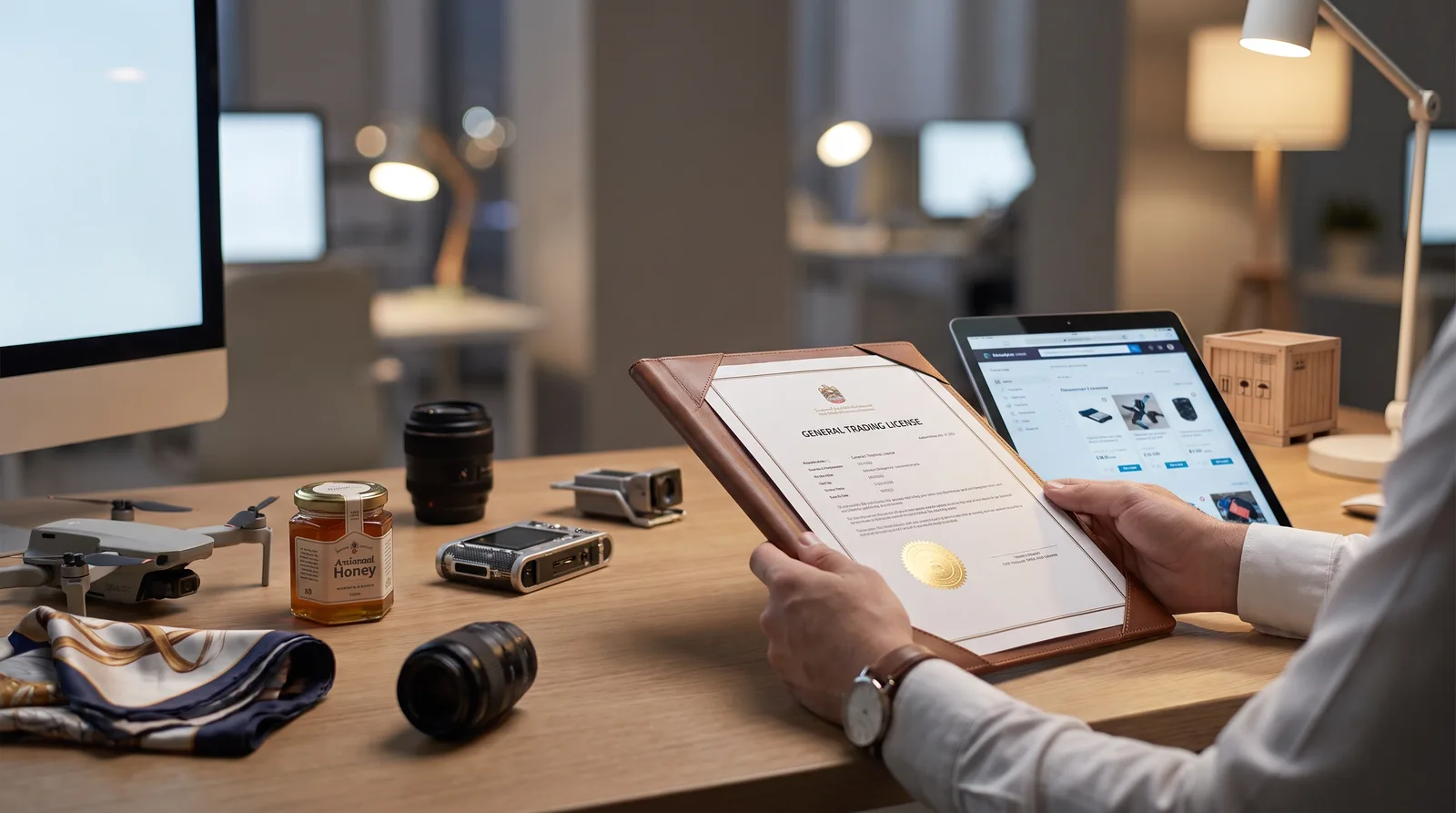
A general trading license Dubai is a commercial license that permits the holder to buy, sell, import, and export a broad range of goods across multiple product categories under one approval. It removes the need for separate licenses per product line, making it the preferred choice for traders and importers handling diverse inventory.
General Trading License Activities: What You Can and Cannot Trade
A general trading license in Dubai covers most fast-moving consumer goods, electronics, garments, foodstuffs (non-regulated), building materials, machinery, and household items. It does not automatically cover pharmaceuticals, chemicals, weapons, alcohol, or any product governed by a UAE regulatory authority, those require a separate permit on top of the trading license.
Which Products Require a Separate Approval or Permit
Certain product categories are regulated by UAE federal authorities and cannot be traded on a general trading license alone. Pharmaceuticals, medical devices , chemicals, food products requiring health certification, and controlled substances each require a permit from the relevant authority, MOHAP, Dubai Municipality, or another regulator, before any import or sale.
How to Get a General Trading License Dubai: Steps in Order
Getting a general trading license in Dubai takes five main steps: choose your jurisdiction (free zone or mainland), reserve your trade name, submit incorporation documents, pay the license fee, and activate your visa quota . At Dubai South Business Hub Free Zone the process typically completes within a few business days for straightforward applications.
General Trading License Cost Dubai: What the Numbers Look Like
General trading license cost in Dubai varies by jurisdiction and visa quota. At Dubai South Business Hub Free Zone, packages start at AED 12,500 for a zero-visa setup, AED 16,350 for one visa, and AED 18,200 for two visas. Mainland DET costs differ and typically include additional approval and local service fees.
Free Zone vs. Mainland: Which Setup Suits Your Trading Business
A free zone general trading license suits traders focused on import, re-export, and international distribution, offering 100% foreign ownership and duty-suspended storage. A mainland DET license suits traders who need to sell directly to UAE-based retail or wholesale buyers without routing through a local distributor. Both allow full foreign ownership under current UAE law.
In 2026, Dubai records over 40,000 new company registrations annually (Dubai Chamber, 2024). Among the most popular choices for traders and importers is the general trading license Dubai, a single license designed to let you move multiple product categories without applying for a new approval each time. The license starts from AED 12,500 at Dubai South Business Hub Free Zone. UAE VAT is 5% on most goods. Corporate tax is 9% on taxable income above AED 375,000 (Federal Tax Authority, 2026). Standard import duty is 5% of CIF value. The UAE Ministry of Economy publishes a controlled goods list that determines which products need extra permits before you trade them.
This article explains exactly what a general trading license in Dubai covers, which activities fall inside it, which products need a separate approval, what setup costs to expect, and the steps to get licensed and operational.
What Is a General Trading License Dubai and What It Covers
The Core Definition and Scope
A general trading license is a commercial license, not a professional or industrial one, issued by either DET (mainland) or a free zone authority. It covers trading, importing, exporting, re-exporting, and distributing a wide range of physical goods under a single license number. Unlike a specific trading license restricted to one commodity (food trading only, for instance), the general variant bundles dozens of categories into one approval.
One Dubai South Business Hub Free Zone licensee imports consumer electronics from China, re-exports garments to East Africa, and distributes household goods locally, all under one general trading license. That's the practical power of this structure. The license does not cover service provision, manufacturing, or professional consultancy, those require separate license types.
General Trading vs. Specific Trading: Key Differences
A specific trading license Dubai restricts the holder to one product category, building materials, foodstuffs, or electronics, for example.
A general trading license bundles multiple categories, ideal for importers and traders who stock mixed inventory.
General trading licenses typically carry a slightly higher issuance cost than single-activity trading licenses.
Both free zone and mainland licenses allow 100% foreign ownership. The 2021 UAE Companies Law amendment extended full foreign ownership to most mainland commercial activities, so ownership structure is no longer the deciding factor between the two routes.
General Trading License Activities: What You Can and Cannot Trade
Product Categories Typically Covered
Under the general trading license activities scope, you can trade across a wide range of physical goods. A trader at Dubai South Business Hub Free Zone holds a single general trading license and simultaneously imports Korean skincare products, UAE-market electronics accessories, and packaging materials, all cleared under the same license number. Typical covered categories include:
Consumer electronics and electrical appliances
Garments, textiles, and fashion accessories
General foodstuffs not subject to MOHAP or municipality health permits (packaged dry goods, for example)
Building materials, hardware, and tools
Furniture, household goods, and décor items
Machinery, spare parts, and industrial equipment
You can review the full list of business activities in Dubai at Dubai South Business Hub Free Zone to confirm your specific product lines are covered before you apply.
Activities That Sit Outside the General Trading License
Internationally, general trading maps to ISIC Rev.4 Section G (Wholesale and Retail Trade, (UN Statistics Division, 2008, still accurate as of 2026)). Activities in other ISIC sections require their own license type:
Manufacturing or physical transformation of goods, requires an industrial license (ISIC Section C)
Provision of services such as consulting, IT, or logistics management, requires a professional or service license (ISIC Section M)
Real estate brokerage or property trading, requires a specific DET or RERA approval
Financial products, insurance, or investment instruments, regulated by the Central Bank of the UAE
Food and beverage production or restaurant operation, classified under ISIC Section I, requiring additional food safety permits
Which Products Require a Separate Approval or Permit
Regulated Categories and the Authority Behind Each
Pharmaceuticals and medical devices: MOHAP registration required before import or sale. Holding a general trading license does not grant clearance, MOHAP registration is a federal requirement independent of your license authority (MOHAP, 2026).
Food products with health certification requirements: A Dubai Municipality food import permit is needed alongside the trading license.
Chemicals and hazardous materials: Ministry of Climate Change and Environment permit required; MSDS documentation is mandatory at customs.
Tobacco and tobacco products: Federal permit from the UAE Ministry of Economy, plus excise tax registration with the Federal Tax Authority.
Precious metals and gemstones: hallmarking and a trading permit required from the relevant UAE authority, this is a product-specific permit, not a free zone license.
A trader who holds a Dubai South Business Hub Free Zone general trading license and wants to add dietary supplements to their product range must first register those products with MOHAP before the first shipment clears UAE customs. The trading license alone is insufficient. That's a detail many importers miss, and it can cause shipments to be held at port.
How to Check Whether Your Product Needs an Extra Permit
Cross-reference your product's HS code against the UAE restricted and controlled goods list published at economy.gov.ae. Check whether the product falls under a federal regulator's scope, MOHAP, the Central Bank, or the Telecommunications and Digital Government Regulatory Authority, depending on the category.
Consult your free zone authority's activity list before applying. Dubai South Business Hub Free Zone's business activities page lists all approved general trading license activities. When in doubt, obtain a pre-approval letter from the relevant authority before submitting your license application. This step avoids post-license surprises and delayed shipments.
Is a general trading license enough to import food products into the UAE?
Not always. Packaged dry goods with no health certification requirement can typically be imported on a general trading license alone. But food products requiring a health certificate, fresh produce, dairy, or items with specific labeling standards, need a Dubai Municipality food import permit on top of the trading license before customs clearance.
How to Get a General Trading License Dubai: Steps in Order
Step 1: Choose Your Jurisdiction and Structure
Decide between a free zone license, 100% foreign ownership, duty-suspended storage, but restricted direct local market access without a local distributor, and a mainland DET license, which gives full local market access under the same foreign ownership rights post-2021 reform. For traders focused on import, re-export, and e-commerce fulfillment, a free zone setup at Dubai South Business Hub Free Zone is a natural fit. It sits adjacent to Al Maktoum International Airport, giving importers direct airside access for air freight consolidation.
Confirm that "general trading" is listed as an approved activity in your chosen jurisdiction before you proceed. Not all free zones carry this activity classification.
Free Zone vs. Mainland General Trading License: Key Differences
Feature | Free Zone (Dubai South Business Hub) | Mainland (DET) |
|---|---|---|
Foreign Ownership | 100% foreign ownership permitted | 100% foreign ownership permitted (post-2021 Companies Law) |
Direct UAE Mainland Sales | Requires a licensed local distributor arrangement | Full direct access to UAE retail, wholesale, and government buyers |
Duty on Goods | Duty-suspended within the free zone; 5% CIF duty applies on mainland entry | Standard 5% CIF import duty applies on all goods |
Setup Speed | Typically a few business days for straightforward applications | Varies depending on activity approvals and DET processing |
Starting Cost | AED 12,500 (0 Visa Package, 2026) | Fees vary, confirm current schedule directly with DET |
VAT Treatment | Not a VAT designated zone, standard UAE VAT rules apply | Standard UAE VAT rules apply |
Step 2: Reserve Your Trade Name and Submit Documents
Check trade name availability, names must not duplicate existing registrations or include restricted words ("Emirates", "Royal", or "International" without prior approval).
Prepare passport copies for all shareholders and directors, a completed application form, and a proposed business activity description.
Submit your Memorandum of Association (MOA) or equivalent free zone incorporation document.
Pay the initial name reservation fee, typically AED 620–750 for free zone name reservations. You can check company name availability online before formal submission.
Step 3: Pay License Fees and Collect Your License
Pay the license issuance fee, establishment card fee, and any visa package fee in one transaction.
At Dubai South Business Hub Free Zone: 0 Visa Package AED 12,500; 1 Visa Package AED 16,350; 2 Visa Package AED 18,200.
Once payment clears, the license certificate and establishment card are issued, typically within a few business days.
With your license in hand, proceed to open a corporate bank account. UAE banks require the license, MOA, and shareholder KYC documents as a minimum.
General Trading License Cost Dubai: What the Numbers Look Like
Dubai South Business Hub Free Zone Package Pricing
0 Visa Package: AED 12,500, license only, no employee visa quota included. Suited to sole traders operating remotely or those not yet needing UAE residency.
1 Visa Package: AED 16,350, license plus one residency visa slot. The most common choice for solo founders relocating to Dubai.
2 Visa Package: AED 18,200, license plus two residency visa slots. Practical for a founder-plus-partner setup.
Packages cover the license certificate, establishment card, and visa quota allocation, no hidden setup fees on the core package.
Additional visas beyond the package quota are available at a per-visa rate, confirm the current rate directly with Dubai South Business Hub Free Zone.
You can use the company setup cost in Dubai calculator to model your total first-year outlay before committing.
Tax Obligations to Factor Into Your Cost Planning
UAE VAT is 5% on most goods and services. Trading businesses must register for VAT once taxable supplies exceed AED 375,000 annually (Federal Tax Authority, 2026). That threshold arrives faster than many new traders expect once inventory starts moving.
UAE corporate tax is 9% on taxable income above AED 375,000. For free zone entities, this applies to income sourced from mainland UAE or from non-qualifying activities. Goods stored within Dubai South Business Hub Free Zone are duty-suspended, not duty-exempt. Customs duty at 5% of CIF value applies the moment goods cross into the UAE mainland market. Some categories, including alcohol and tobacco, attract higher duty rates.
Free Zone vs. Mainland: Which Setup Suits Your Trading Business
When a Free Zone License Is the Right Choice
Your primary model is import and re-export, goods move in, are stored or consolidated, then shipped onward to GCC or international markets.
You want to minimise customs duty exposure on goods that will not enter the UAE mainland.
You are selling to international buyers via e-commerce platforms or B2B export contracts.
You want a fast, document-light setup with a clear all-in-one package price.
An importer of consumer electronics from Southeast Asia who fulfils orders across GCC markets via air freight from Al Maktoum International Airport is a textbook candidate for a Dubai South Business Hub Free Zone general trading license. The proximity to the airport is a genuine operational advantage, not just a marketing point.
When a Mainland DET License Makes More Sense
You intend to supply directly to UAE supermarkets, retailers, or government entities without a local distributor arrangement.
Your supply chain requires physical retail outlets or warehouses on the UAE mainland.
Your buyers require a mainland-licensed vendor on their approved supplier lists.
References
Frequently Asked Questions