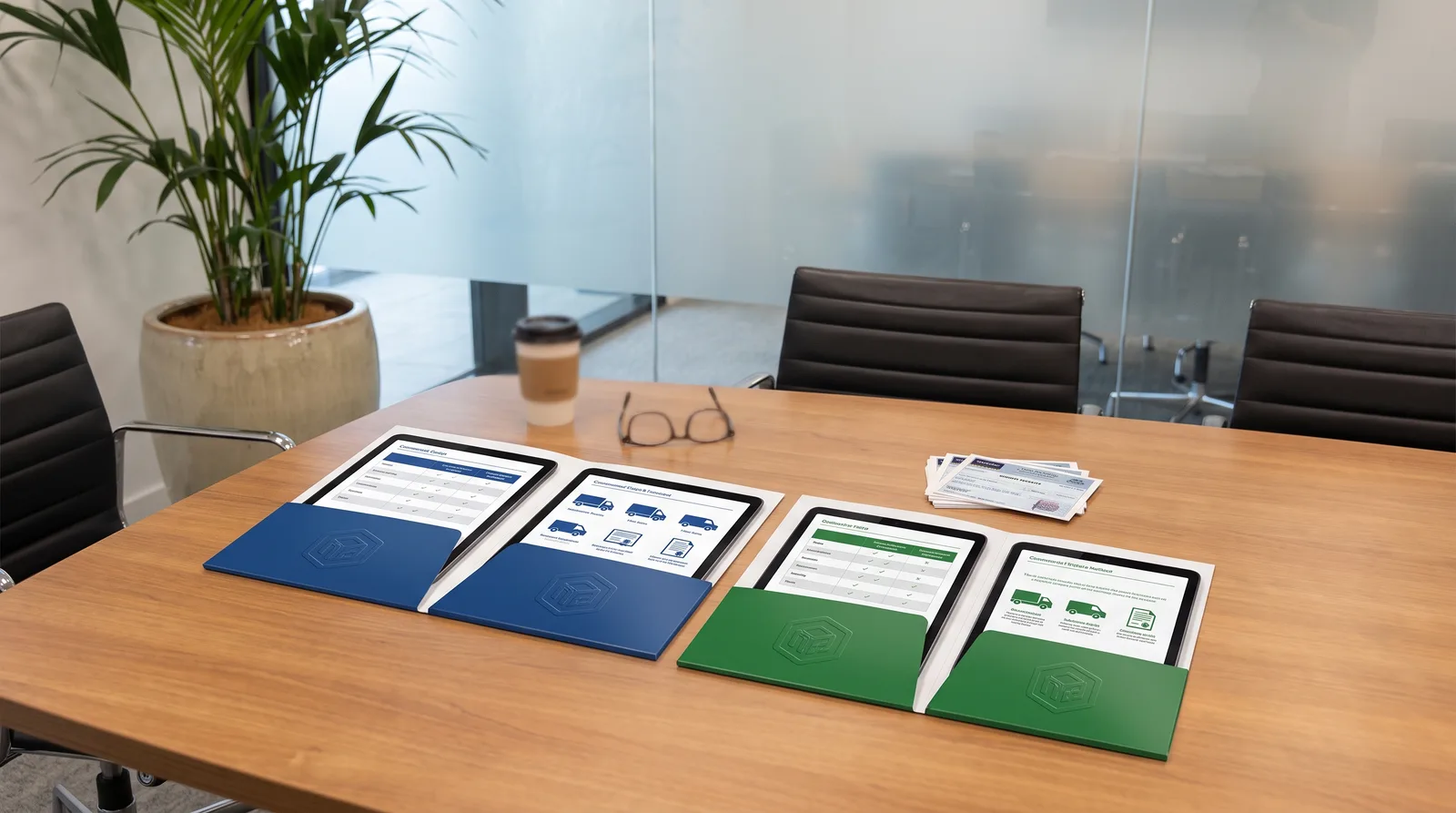
Topic Summary
Trade License Alone Is Never Enough
A valid trade license is only the baseline requirement before any commercial vehicle permit application is accepted in Dubai. The permit sits on a completely separate approval track from the license, and operating without it can result in AED 1,000 spot-check fines and vehicle impoundment.
Three Government Bodies Control the Process
The RTA issues vehicle and route permits, MOHRE governs driver employment and Emiratisation thresholds, and GDRFA handles residency for non-UAE-national drivers. None of these bodies waits for the others, so getting the sequence wrong is the most common cause of delayed launches.
Sequence MOHRE Before Applying to RTA
One logistics startup applied for an RTA goods-vehicle permit before completing MOHRE driver registration, causing a three-week delay while the employment file was retrospectively processed. Initiating the MOHRE step first is the single easiest way to avoid this bottleneck.
A Mulkiya Does Not Authorise Commercial Use
The standard vehicle registration card confirms ownership but says nothing about load limits, permitted zones, or operating hours. Only the correct RTA permit category defines those commercial conditions, and driving without it risks fines and impoundment under UAE traffic law.
Free Zone Licenses Do Not Cover Public Roads
Free zone companies must obtain the same RTA permits as mainland entities the moment a vehicle exits onto a public road. The free zone license alone provides no protection once the vehicle leaves the zone.
Budget AED 8,000–12,000 Above License Costs
Founders consistently underestimate the first-year permit and insurance budget, which typically runs AED 8,000 to AED 12,000 above the trade license cost. Planning for this figure upfront prevents cash-flow surprises that can delay a commercial launch.
Match Your Permit Type to Your Activity
Dubai offers distinct permit categories including light goods, heavy goods, public transport, and special vehicles such as cranes and tankers, each tied to a specific license activity and load scope. Choosing the wrong category can invalidate the permit entirely, so match the permit to your actual business operation before applying.
Most founders who set up a company in Dubai focus entirely on the trade license, and then discover, sometimes only when a vehicle is stopped at a checkpoint, that commercial vehicle permits in Dubai sit on a completely separate approval track. Dubai registered more than 43,000 new business licenses in a single recent year (Dubai Chamber, 2024), and a significant share of those founders were caught off guard by the permit requirement. The RTA spot-check fine alone is AED 1,000 per incident. The total first-year permit and insurance budget that founders typically underestimate runs AED 8,000 to AED 12,000 above the license cost. And the sequencing error that delays most permit approvals adds three to eight weeks to the launch timeline.
This guide lays every category of commercial vehicle permits Dubai businesses can apply for side by side in a single comparison table, walks through the six application steps, and closes with a clear scenario-matched recommendation, so you know exactly which permit to apply for before you buy or lease a single vehicle.
What Are Commercial Vehicle Permits in Dubai and Which Bodies Issue Them
Commercial vehicle permits in Dubai are government-issued approvals that authorise a business to operate a vehicle for commercial purposes. The Roads and Transport Authority (RTA) issues the route and vehicle permits, while MOHRE governs driver employment conditions. A valid trade license is the baseline requirement before any permit application is accepted (u.ae, 2024).
The Three-Body Approval Chain Every Founder Must Know
Three separate government bodies control different parts of the commercial vehicle permit process, and none of them waits for the others. Getting the sequence wrong is the single most common cause of delayed launches.
The RTA owns the physical vehicle permit and the route or area authorisation. Nothing moves commercially on Dubai's public roads without RTA sign-off. MOHRE (Ministry of Human Resources and Emiratisation) governs the employment terms and Emiratisation thresholds for any driver on the company payroll. GDRFA (General Directorate of Residency and Foreigners Affairs) handles residency status for any non-UAE-national driver you sponsor.
A logistics startup in Dubai South applied for an RTA goods-vehicle permit before completing MOHRE driver registration. The permit issuance was delayed by three weeks while the employment file was retrospectively processed, a completely avoidable outcome had the MOHRE step been initiated first. If sequenced incorrectly, the total approval timeline across all three bodies can stretch to eight weeks.
How Commercial Permits Differ from a Standard Vehicle Registration
A standard Mulkiya (registration card) confirms ownership. It does not authorise commercial use. The permit category is what determines load limits, permitted zones and operating hours, the Mulkiya says nothing about any of those conditions. Operating commercially without the correct RTA permit can result in fines and vehicle impoundment under UAE traffic law (u.ae, 2024).
A delivery van registered in a company's name but lacking an RTA light goods vehicle permit was fined AED 1,000 and grounded during a spot check on Sheikh Zayed Road. Worth flagging: free zone companies operating vehicles on public roads must obtain the same RTA permits as mainland entities. The free zone license alone is not sufficient once the vehicle exits onto a public road.
Dubai Commercial Vehicle Permits: Side by Side Comparison
Feature | Light Goods | Heavy Goods | Public Transport | Special Vehicle |
|---|---|---|---|---|
Load / Scope | Up to 3.5 tonnes | Above 3.5 tonnes | Passenger-carrying vehicles (taxis, buses) | Cranes, tankers, abnormal loads |
Approx. Annual RTA Fee | UNVERIFIED: <AED X>. Confirm before publishing. | UNVERIFIED: <AED X>. Confirm before publishing. | Set by RTA franchise agreement | Issued per trip or per period; fee varies |
License Activity Required | Transport or logistics activity | Dedicated transport license category | Contractor or industrial license | |
Regulated Sector Approval Needed | No (RTA permit only) | Yes, for regulated freight activities | Yes, RTA franchise approval required | Yes, route and time approval required |
Typical Use Case | E-commerce delivery, retail distribution | Construction supply, bulk freight | Staff shuttles, school buses, taxis | On-site cranes moving between project sites |
Renewal Cycle | Annual | Annual | Annual (per franchise terms) | Per trip or per period; not annual |
The Four Main Commercial Vehicle Permit Categories Compared
Dubai issues four primary commercial vehicle permit categories: light goods vehicle permits for loads under 3.5 tonnes, heavy goods vehicle permits for loads above 3.5 tonnes, public transport permits for passenger-carrying vehicles, and special vehicle permits for cranes, tankers and abnormal loads. Each carries distinct fees, eligibility conditions and renewal cycles. This commercial vehicle Dubai comparison is the fastest way to identify which category your operation falls into.
What Each Permit Does and Does Not Cover
Knowing what your permit covers is as important as getting it. Each category carries restrictions that catch founders off guard at the worst possible moment.
Light goods permit: Does not authorise cross-emirate freight on certain restricted roads without an additional NOC from the relevant authority. It covers Dubai public roads within the permitted load class only.
Heavy goods permit: A permit issued in Dubai is not automatically valid in Abu Dhabi or Sharjah. A Dubai-licensed freight company that moved heavy goods into Abu Dhabi without a separate Abu Dhabi transport authority approval received a stop-and-seize order at the emirate border checkpoint. Inter-emirate movement requires coordination with each emirate's transport authority.
Public transport permit: Carries passenger-liability insurance minimums that exceed standard commercial vehicle insurance thresholds. The cover requirement is higher than most founders expect when they first price their insurance.
Special vehicle permit: Route-specific and time-specific. Operating outside the approved route or time window voids the permit entirely, not just for that trip.
A construction firm holding a contractor license can apply for both a heavy goods permit for material delivery trucks and a special vehicle permit for its on-site crane when it moves between project sites. The key is that the license activity must explicitly cover both uses. Free zone entities with a trading license Dubai can qualify for light goods and heavy goods permits, provided the vehicle activity aligns with the licensed business activities on the trade license (Statista, 2024).
How Trade License Type Affects Your Commercial Vehicle Permit Eligibility
The activity listed on your trade license directly determines which commercial vehicle permit categories you can apply for. This is the commercial vehicle Dubai guide point that most founders miss until it's too late. A general trading license typically covers light and heavy goods permits. A transport or logistics activity is required for public transport permits. Contractor and industrial licenses are required for special vehicle and abnormal-load permits.
Free Zone vs. Mainland License: What Changes for Permit Access
Both free zone and mainland license holders can apply for RTA commercial vehicle permits for public-road operations. The distinction matters, but it's narrower than most people assume.
Free zone goods move within the zone under duty-suspended status. Once the vehicle exits onto a public road, RTA permit rules apply in full, no exceptions. Mainland companies with a DET-registered transport activity have a broader scope of eligible permit categories than free zone companies restricted to their core licensed activity. A Dubai South Business Hub Free Zone e-commerce company with a trading license can obtain an RTA light goods permit to run its own last-mile delivery van, provided delivery is listed among its business activities. The license is issued in one day; the RTA permit application is a separate subsequent step.
Regulated Transport Activities Require a Dual Approval
Here's the thing most transport founders don't discover until after launch: if your business activity is classified as road freight transport or passenger transport, the free zone licenses the activity and the RTA approves it separately as the named sector regulator. Both approvals are required before a single vehicle can operate commercially.
A passenger transport startup licensing through a free zone had its trade license issued within one day but waited an additional four weeks for the RTA public transport franchise approval before its first vehicle could legally carry paying passengers. MOHRE registration for any employed driver must be completed before the driver operates the vehicle commercially (MOHRE, 2024). Factor that window into your operational launch plan, especially if vehicle deployment is your core revenue activity from day one.
Step-by-Step Guide to Applying for Commercial Vehicle Permits in Dubai
Applying for commercial vehicle permits in Dubai follows six sequential steps: confirm your license activity covers the vehicle use, insure the vehicle to UAE commercial standards, pass the RTA vehicle inspection, submit the permit application through the RTA portal, register the driver with MOHRE, and collect the permit card. Total processing time is typically two to four weeks.
Step 1: Confirm License Activity and Vehicle Classification
Cross-reference your trade license activity list against the RTA's permit category requirements before purchasing or leasing a vehicle.
If the required activity is missing, amend the license before submitting any permit application, the RTA will not accept it otherwise.
Vehicle classification (light, heavy, special) must match the manufacturer's specification and the load you intend to carry.
Misclassification at this stage is the most common cause of application rejection.
A founder who purchased a 4.5-tonne van before checking the license discovered the trading activity did not cover freight haulage. The license amendment added two weeks and UNVERIFIED: <AED X amendment fee>. Confirm before publishing. to the pre-launch budget. Check first, buy second.
Step 2: Insure, Inspect and Submit
Obtain UAE-standard commercial vehicle insurance; third-party-only cover is the legal minimum but most permit categories require comprehensive cover.
Book an RTA-approved vehicle inspection; the inspection certificate is a mandatory attachment to the permit application.
Submit the application via the RTA's online portal or a registered typing centre, attaching the trade license, insurance certificate, vehicle inspection report and Emirates ID of the responsible manager.
Pay the permit fee at submission; fees vary by vehicle category and permit duration (annual or multi-year).
An RTA-approved inspection centre in Al Quoz typically processes a light goods vehicle inspection in under two hours. Book in advance during Q4, that's when demand peaks and a one-week wait is common.
Step 3: Register the Driver and Collect the Permit
Complete the MOHRE employment registration for any driver on the company payroll before the vehicle is put into commercial service. For non-UAE-national drivers, confirm GDRFA residency status and employment visa are current before the vehicle moves (MOHRE, 2024).
The RTA issues the permit card within three to five working days of a complete, accepted application. Founders who pre-register their drivers with MOHRE during the RTA application period run both processes in parallel, cutting total launch time by up to two weeks. Display the permit in the vehicle at all times, enforcement officers check it during roadside inspections. Dubai South Business Hub Free Zone's business support services can assist with document preparation and government liaison for both the RTA and MOHRE stages.
Commercial Vehicle Permit Costs: What to Budget Before You Launch
Commercial vehicle permit costs in Dubai include the RTA permit fee, vehicle inspection fee, commercial insurance premium and any MOHRE-related driver registration costs. The RTA permit fee varies by vehicle category and is paid annually. Insurance premiums for commercial vehicles are typically higher than private-use premiums and must meet minimum cover requirements (u.ae, 2024).
One-Off vs. Recurring Costs You Must Separate in Your Budget
Split your budget into two distinct columns before you commit to any vehicle purchase or lease.
One-off costs include the vehicle purchase or lease deposit, first-year insurance premium, initial inspection fee and permit application processing fee. Annual recurring costs include the permit renewal fee, insurance renewal, mandatory annual re-inspection and any MOHRE compliance fees tied to driver headcount. Late renewal penalties apply if the permit lapses; operating on an expired permit carries the same fine structure as operating without one.
A founder who calculated only the trade license cost when budgeting a small delivery operation underestimated first-year outlay by approximately AED 8,000 to AED 12,000 once permit, insurance and inspection costs were added. Use the business setup cost in Dubai calculator to model your full first-year outlay, formation package and permit costs together.
How Company Formation Package Choice Affects Your Permit Budget
Dubai South Business Hub Free Zone formation packages cover the license and establishment infrastructure. Commercial vehicle permit costs are government fees paid directly to the RTA and
References
Frequently Asked Questions