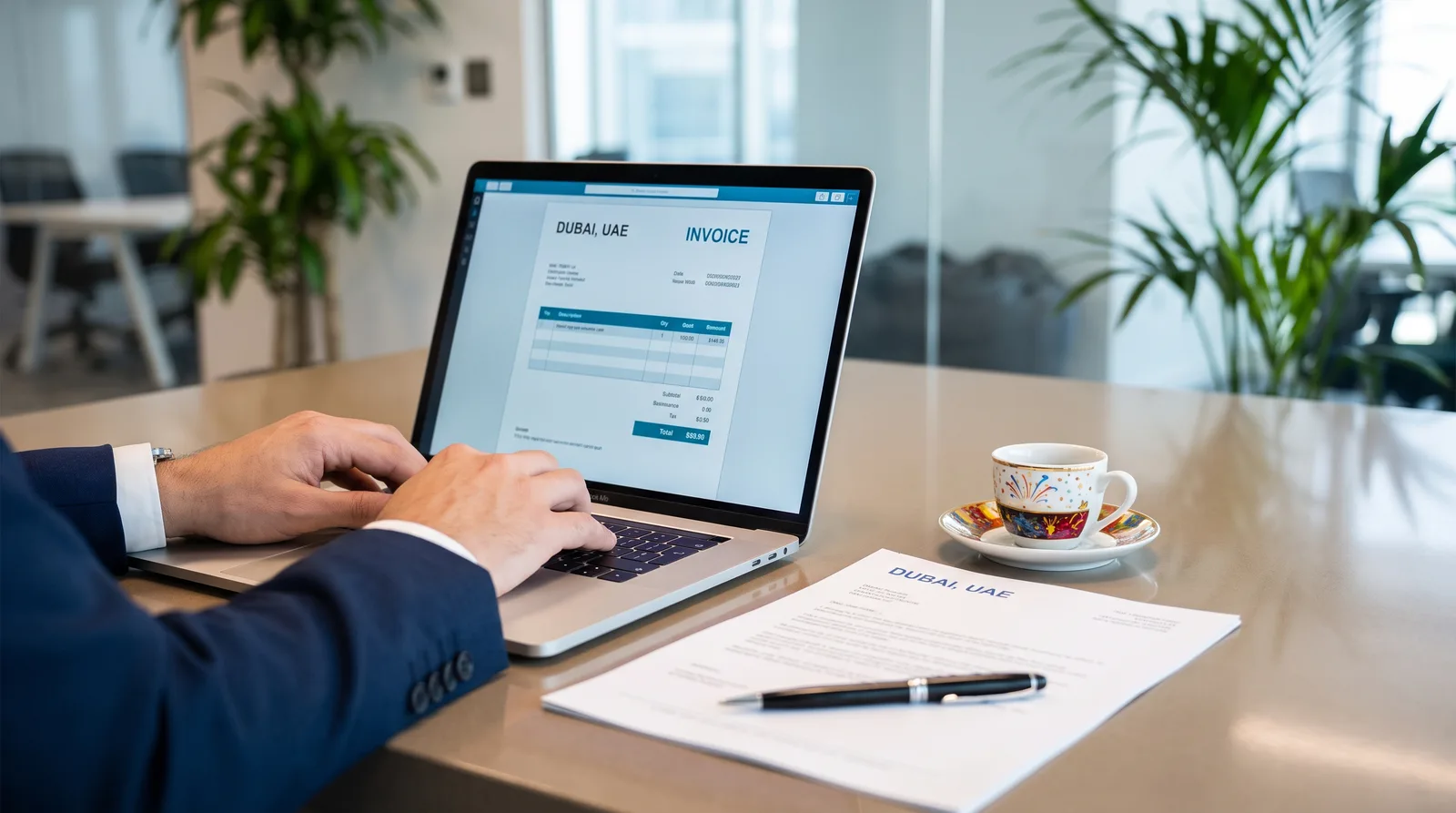
Topic Summary
One License Covers Multiple Business Activities
A Dubai Unified License bundles two or more approved activity types into a single registration document. This removes the need to hold separate licenses for, say, trading and professional services.
Cut Costs With a Single Annual Fee
Instead of paying renewal fees for two or more separate licenses, businesses pay one consolidated fee. DSBH packages for a unified license start from AED 12,500.
One Corporate Tax File, Less Admin
A unified license means one corporate tax registration with the FTA rather than separate filings per license. Registration must be completed within 30 days of setup to stay compliant.
Know the VAT Threshold Before You Launch
VAT registration becomes mandatory once annual turnover exceeds AED 375,000. Missing the registration deadline carries a penalty of AED 10,000, so tracking revenue from day one matters.
Ideal for Tech, E-Commerce, and Creative Firms
Businesses that trade goods and provide related services gain the most from a unified license. E-commerce firms, tech hardware traders, and creative agencies selling both services and products are among the top beneficiaries.
Up to 10 Activities Allowed on One Mainland License
Dubai's Department of Economy and Tourism permits up to 10 related activities on a single mainland unified license in most categories. Free zones like Dubai South also offer bundled activity sets under one license package.
A Standard License Still Works for Single-Activity Businesses
Freelancers, solo consultants, and pure retailers with no advisory element rarely need the unified route. Many activity pairs that appear different actually share one ISIC group code and qualify under a standard license.
In 2026, over 40% of new Dubai trade license applications cover more than one business activity (Dubai Chamber, 2025). Yet most founders still hold two separate licenses, paying twice and tracking two renewal dates. A Dubai Unified License fixes that. It bundles two or more approved activities into one registration, one annual fee, and one corporate tax file. DSBH packages start from AED 12,500. Corporate tax registration with the FTA must happen within 30 days of setup. VAT kicks in once turnover passes AED 375,000. Missing the VAT deadline costs AED 10,000. This guide tells you what the Dubai Unified License is, who needs it, what it costs, and how to get one through Dubai South Business Hub Free Zone.
What Is the Dubai Unified License and Why It Matters
A Dubai Unified License is a single trade license that lets a business run more than one type of activity, such as trading and professional services, under one registration. It cuts paperwork, lowers costs, and removes the need to hold and renew two or more separate licenses.
Definition: One License, Multiple Activities
A unified license bundles two or more approved business activities into one document. It is issued by the Dubai Department of Economy and Tourism (DET) for mainland companies, or by a free zone authority such as DSBH.
Before this option existed, a company running trading and consultancy had to hold a separate license for each. That meant double the admin and double the renewal fees. DET allows up to 10 related activities on one mainland unified license in most categories. Free zones including Dubai South allow bundled activity sets under one license package.
How It Differs from a Standard Trade License
A standard license covers one activity group. A unified license spans two or more approved groups. Here is what that means in practice:
One renewal date, not two separate cycles
One set of government fees across all activities
One corporate tax registration with the FTA
The certificate reads "Unified", not "Commercial" or "Professional" alone
Not all activity pairs are approved; DET and free zone authorities publish permitted pairings
A marketing agency that also sells branded merchandise needs both a professional and a commercial activity. A unified license covers both. A standard professional license does not. Check the full list of DSBH business activities to confirm which codes apply to your setup before you apply.
Who Needs a Dubai Unified License
Any Dubai business that wants to run two or more activity types, for example trading goods and offering professional advice, under one registration needs a unified license. It suits startups, SMEs, and growing companies that have outgrown a single-activity license and want to expand without a second registration.
Business Types That Benefit Most
These are the businesses that gain the most from a Dubai Unified License:
Tech hardware traders who also provide after-sales support
Creative agencies selling services and physical products
E-commerce firms importing, storing, and retailing goods
Logistics companies handling freight and customs advice
Medical equipment suppliers who also offer training services
A Dubai-based solar equipment firm imports panels (a trading activity) and installs them on client sites (a technical services activity). One unified license covers both, instead of forcing the firm to hold two. E-commerce and tech hardware saw the largest growth in multi-activity registrations in 2024 (u.ae, 2025).
When a Standard License Is Enough
If all your work falls inside one activity group, a standard license is simpler and cheaper. Pure retail trading with no advisory element is a good example.
Freelancers and solo consultants with one discipline rarely need the unified route. A single professional license in Dubai covers a single-discipline activity. Worth flagging: many activity pairs that seem different share one ISIC group code and need only a standard license. Check the activity code list first. Applying for a unified license when you only need a standard one adds cost with no benefit.
Is a unified license the same as a dual-activity license?
Yes, in practice they are the same thing. A Dubai Unified License is the official term for a single registration that covers two or more approved activity groups. Some authorities call it a dual-activity or multi-activity license. The certificate always reads "Unified" and carries one renewal date and one government fee across all listed activities.
Key Benefits of a Dubai Unified License for Your Business
A Dubai Unified License cuts costs by replacing two or more separate licenses with one. It means one renewal date, one set of government fees, and one corporate tax file. It also lets your company pitch for a wider range of contracts without needing a second registration.
Lower Costs and Less Admin
The savings add up fast. Here is what you get with one unified license:
One renewal fee instead of two or more
One bank account opening process
One corporate tax registration with the FTA
One visa allocation set across all activities
One license number on every contract and invoice
Unified license renewal is typically 15 to 25% cheaper than renewing two standard licenses separately. A Dubai trading and consultancy firm that previously paid two renewal fees of AED 12,000 each cut its annual license cost to AED 15,000 by switching to a unified license. That is a saving of AED 9,000 per year for the same activities.
Greater Market Reach
A unified license lets you bid for contracts that need both a trading and a service capability, without a second license on file. Government tenders in Dubai increasingly require proof of both supply and service capability from a single entity.
Adding an activity to an existing unified license takes 3 to 5 working days at most free zones. A DSBH-licensed IT firm with ICT activities and a trading license on one unified license can supply hardware and provide implementation consulting on the same government tender, with no second license needed.
How to Get a Dubai Unified License: 6 Steps
To get a Dubai Unified License, choose your activity pair, confirm they are an approved combination, pick mainland via DET or a free zone such as DSBH, reserve your trade name, submit your application and papers, and pay the license fee. The process takes 3 to 10 working days in most cases.
Steps 1 to 3: Decide and Prepare
Step 1, list your activities: Write down every activity you want to run and check each against DET or DSBH approved codes.
Step 2, confirm the pairing is approved: Not all activity combinations are permitted; check before you pay anything.
Step 3, choose your jurisdiction: Free zone suits international clients and 100% foreign ownership; mainland suits direct UAE market sales.
DSBH packages bundle the most common activity pairs, which cuts the research step for most applicants. Use the business setup cost calculator to compare total setup cost before you commit.
Free Zone Unified License vs Mainland Unified License
Feature | Free Zone (DSBH) | Mainland (DET) |
|---|---|---|
Starting cost | From AED 12,500 per package | Base DET fee plus activity surcharges; varies by type |
Foreign ownership | 100% foreign ownership permitted | 100% foreign ownership permitted since 2021 reforms |
Office requirement | Flexi-desk included in most packages | Physical office needed for most DET categories |
Market access | Best for international and cross-border clients | Direct access to the UAE domestic market |
Visa quota | 1 investor visa on base package; upgradeable | Quota tied to office size and activity type |
Corporate tax | 0% on qualifying income if FTA conditions are met | 9% on taxable profit above AED 375,000 threshold |
Steps 4 to 6: Apply and Receive
Step 4, reserve your trade name: Use the DSBH name check tool to confirm availability before you submit.
Step 5, submit your papers: You need passport copies, a business plan summary, and the completed activity form.
Step 6, pay and collect: Pay the license fee and receive your unified license certificate; the digital copy comes first.
Most DSBH unified license applications move from name reservation to license issue in 5 to 7 working days when all papers are in order on day one. DSBH issues the certificate digitally; a physical copy follows by courier.
Corporate tax duty: You must register with the Federal Tax Authority (FTA) within 30 days of company setup. This applies whatever your turnover. Missing the deadline triggers a penalty, so set a reminder the day your license is issued.
Costs, Fees, and Renewal for a Unified License
A Dubai Unified License at DSBH starts from AED 12,500 for the base package. Mainland unified licenses via DET vary by activity type and office requirement. Renewal is annual. Corporate tax registration with the FTA is a separate step and carries no fee for most SMEs.
Free Zone vs Mainland License Costs
DSBH free zone unified license packages start from AED 12,500. The exact figure depends on which activity bundle you pick. That package price covers the license, one visa allocation, and a flexi-desk in most cases.
Mainland unified licenses under DET carry a base government fee plus an activity-specific charge for each extra activity added. Mainland costs can rise further with office rental; a physical office is needed for most DET categories. Use the cost calculator at DSBH to get a figure for your specific activity pair before you commit.
Annual Renewal and Ongoing Duties
Renewal: Unified licenses renew every 12 months. One payment covers all activities on the license. Set a calendar alert 60 days before the due date. Missing it triggers a fine from DET or the free zone authority.
Corporate tax: Filing with the FTA is annual. A free zone company can pay 0% corporate tax on qualifying income. You only get that rate if you meet the Qualifying Free Zone Person conditions the FTA sets.
VAT: You must register for VAT once your taxable turnover passes AED 375,000 in any 12-month period. Missing the VAT registration deadline carries a penalty of AED 10,000 (FTA, current schedule). You can manage banking and taxation duties through DSBH's beyond-hub services.
Obligation | Deadline | Penalty for missing it |
|---|---|---|
Corporate tax registration | Within 30 days of setup | FTA administrative penalty |
VAT registration | Once turnover passes AED 375,000 | AED 10,000 |
License renewal | Every 12 months | Fine from DET or free zone authority |
Annual corporate tax return | As set by FTA each tax period | FTA administrative penalty |
Visas and Residency Under a Dubai Unified License
A Dubai Unified License gives you access to UAE residency visas for yourself and your staff, just like any other trade license. The number of visas depends on your office size or package tier. Free zone unified license holders at DSBH can sponsor investor and employee visas from day one.
Visa Quota and Investor Visa
Each DSBH unified license package comes with a set visa quota. Base packages include one investor visa. Extra visas can be added by upgrading your office or flexi-desk tier.
The investor visa ties to the license. If the license lapses, the visa status is at risk for everyone it covers. Visa processing goes through the ICP and GDRFA Dubai. DSBH handles the paperwork on your behalf. Processing takes 5 to 10 working days in most cases (ICP, 2025). See the full range of UAE residency services at DSBH for current package options.
Family Sponsorship and Long-Term Options
A unified license holder with an investor visa can sponsor family members for UAE residency. The salary threshold for family sponsorship is set by the ICP. Confirm the current figure at icp.gov.ae before you apply, as it changes periodically.
Long-term visa options such as the 10-year Golden Visa are open to business owners who meet the net worth or investment thresholds set by the ICP. A unified license holder at DSBH who holds an investor visa can sponsor a spouse and up to three children for UAE residency, subject to the ICP salary threshold in force at the time of application.
Common Mistakes When Applying for a Unified License
The most common mistakes are picking activity combinations that are not approved, submitting incomplete papers, missing the corporate tax registration deadline after setup, and choosing the wrong jurisdiction for your client base. Each mistake adds cost and delay. Checking the approved activity list before you apply removes most of the risk.
Activity Pairing and Jurisdiction Errors
These are the four errors that cause most rejected applications:
Applying for a non-approved activity pair; rejection loses the filing fee
Picking free zone when most clients are UAE mainland companies
Picking mainland when all clients are foreign; adds cost for no gain
Not confirming activity codes with DET or DSBH before paying
A founder applying for a unified license combining financial advisory and retail trading found the pairing was not approved by DET. The application was rejected. Checking the approved list first would have saved the fee and two weeks of delay. DET publishes the approved activity combination list on its portal at dubaidet.gov.ae.
Post-Setup Compliance Gaps
Corporate tax: Failing to register with the FTA within 30 days of license issue is the most common post-setup error. The duty applies whatever your turnover.
VAT: Not registering once you pass AED 375,000 in taxable turnover carries a AED 10,000 penalty.
License renewal: Missing the renewal date puts visa status at risk for all sponsored employees. Set alerts 60 days out.
Activity scope: Running an activity not listed on your unified license is a compliance breach. DET and free zone authorities can fine and suspend. The DSBH business support team sends compliance reminders for renewal and FTA registration deadlines, which cuts the risk of these errors for free zone holders.
What happens if I add a new activity after setup?
You apply to add the activity to your existing unified license. At DSBH, this takes 3 to 5 working days for approved activity pairs. You pay an activity amendment fee rather than a new license fee. The new activity cannot be traded until the amendment is confirmed in writing by the free zone authority. Do not start the new work before you get that confirmation.
Start Your Business with a Dubai Unified License at DSBH
Dubai South Business Hub Free Zone lets you set up a unified license from AED 12,500, covering multiple activities under one registration with 100% foreign ownership, one investor visa, and same-day digital license issuance. It is a practical starting
Frequently Asked Questions