Topic Summary
Technology and ICT Services Lead Growth
Over 11,000 active tech startups operate in the UAE, making ICT one of Dubai's fastest-growing license categories. Companies in this space register under ISIC Section J and obtain an ICT license, not a general trading license.
E-Commerce Remains a Top Trading Activity
E-commerce and general trading fall under ISIC Section G and require a trading license with no additional regulatory approval. This makes it one of the more straightforward setups for international founders entering the Dubai market.
Professional Consulting Offers Low-Cost Entry
Consulting businesses operate under a professional license tied to ISIC Section M, with license fees at Dubai South Business Hub starting from AED 12,500 per year. Choosing the wrong activity code, such as advertising instead of management consultancy, can trigger banking complications.
Logistics Sector Backed by Strong Infrastructure
Logistics and freight activities require a trading or logistics license under ISIC Section H, with some activities needing Dubai Customs sign-off. Dubai's position as a global trade hub and its double-taxation agreements with over 130 countries make this sector especially attractive.
Healthcare Licensing Requires DHA Approval
Healthcare and wellness businesses must secure Dubai Health Authority approval before a license is issued, adding a regulated second step to the setup process. This extra layer of oversight applies on top of the standard ISIC Section Q classification.
Education Startups Need KHDA Sign-Off
Education and training ventures fall under ISIC Section P and require approval from the Knowledge and Human Development Authority before the license is granted. Founders should factor this regulated approval into their setup timeline and budget.
Activity Code Directly Controls Visas and Banking
The activity listed on your license determines your visa quota, which ranges from 1 to 6 per flexi-desk package at Dubai South depending on the activity. It also influences how closely banks scrutinize your account application during onboarding.
In 2026, Dubai hosts over 750,000 registered businesses across more than 40 free zones, and the emirate's GDP is forecast to grow by 4.5% (u.ae, 2026). License fees at Dubai South Business Hub start from AED 12,500 per year. The UAE corporate tax rate is 9% on income above AED 375,000 (Federal Tax Authority, 2023). Over 11,000 active tech startups operate in the UAE (Magnitt, 2025). The UAE has double-taxation agreements with over 130 countries (Ministry of Finance, 2026). Investors from the United States, the UK, and across Asia are moving fast to claim their share.
This guide breaks down the high-demand business activities in Dubai for 2026: which sectors are growing, how each activity is classified, what setup costs look like, and how to pick the right license for your goals.
What Are High-Demand Business Activities in Dubai for 2026 and Why They Matter
High-demand business activities in Dubai for 2026 are the licensed trade, service, and technology sectors showing the strongest growth in the emirate. Each activity maps to an ISIC code and a DET or free zone license. Picking the right one determines your visa quota, your tax position, and who you can legally sell to.
How Dubai Classifies Business Activities
Dubai uses the UN International Standard Industrial Classification (ISIC Rev. 4) as the base for all activity codes on trade licenses. ISIC Rev. 4 covers 21 top-level sections, A through U, spanning all economic activity (UN Statistics Division, 2008).
Each activity sits in a four-level hierarchy:
Section, a letter code (e.g. J for Information and Communication)
Division, a 2-digit code
Group, a 3-digit code
Class, a 4-digit code that appears on your trade license
The DET issues mainland licenses. Free zone authorities like Dubai South issue their own but align to the same code set. Your chosen activity code controls what you can sell, who you can invoice, and which body oversees you.
Section J (Information and Communication) was a new addition in ISIC Rev. 4, reflecting the rise of the digital economy. A company selling software online falls under Section J, Division 62, and gets an ICT license, not a general trading license. A US-based founder setting up a SaaS company in Dubai registers under ISIC 6201 (Computer programming) and gets an ICT license at DSBH, not a trading license, a common and costly mix-up.
High-Demand Dubai Business Activities: License Type, ISIC Section, and Approval Body
Activity Sector | License Type | ISIC Section | Approving Body |
|---|---|---|---|
Technology and ICT services | ICT license | Section J | No extra approval |
E-commerce and general trading | Trading license | Section G | No extra approval |
Professional consulting | Professional license | Section M | No extra approval |
Logistics and freight | Trading or logistics license | Section H | Dubai Customs (some activities) |
Healthcare and wellness | Healthcare license | Section Q | DHA approval required |
Education and training | Education license | Section P | KHDA approval required |
Media and content creation | Media license | Section J or R | No extra approval (most activities) |
Why Your Activity Choice Shapes Your Whole Setup
The activity on your license sets your visa quota. Visa quotas at DSBH range from 1 to 6 per flexi-desk package depending on the activity. Some activities require a physical office before any visas are issued.
Your activity choice has three key effects downstream:
Visas: The activity code sets how many staff visas you can hold on a flexi-desk
Approvals: Regulated activities (healthcare, financial services, education) need a second body's sign-off before the license is issued
Banking: A broader activity code gives flexibility but can attract more scrutiny during account opening
Mainland licenses (DET) give open access to the UAE market. Free zone licenses are best for international trade and remote service delivery. A Dubai-based marketing consultant who lists "advertising services" instead of "management consultancy" on their license may find banks flag the mismatch during account opening. Get the code right before you apply, amending it later costs time and money.
The 7 High-Demand Business Activities in Dubai for 2026
The seven highest-demand business activities in Dubai for 2026 are technology and ICT services, e-commerce and general trading, professional consulting, logistics and freight, healthcare and wellness, education and training, and media and content creation. Each sector is growing fast and is open to 100% foreign ownership inside a free zone.
Technology, ICT, and Digital Services
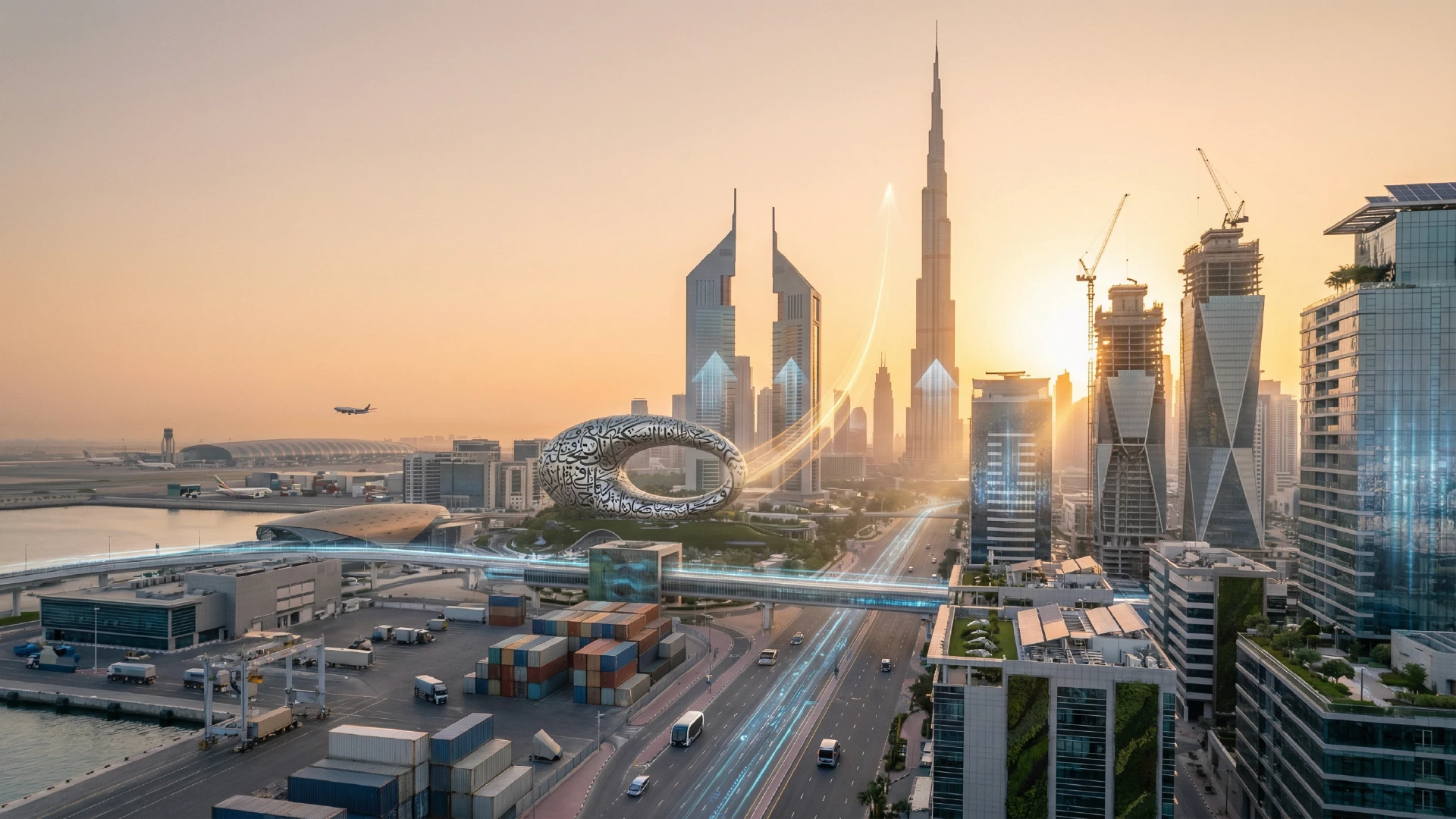
Dubai's D33 Agenda targets doubling GDP to AED 32 trillion by 2033 (u.ae, 2026), with technology as the primary driver. ICT is the single busiest license category at most free zones in 2026.
Covered ICT sub-activities include:
Software development and app building
Cybersecurity consulting
Cloud services and managed IT
AI solutions and data analytics
IT support and systems integration
ISIC Section J maps to ICT licenses. No physical lab or server room is required for a service-based ICT company. Over 11,000 active tech startups operate in the UAE, with Dubai accounting for the majority (Magnitt, 2025).
A US software team opens an ICT company at DSBH to serve Gulf clients. Visa allocations vary by free zone and package.
E-Commerce and General Trading
UAE e-commerce revenue is forecast to exceed USD 9 billion in 2026, driven by a young, mobile-first population and strong logistics links. Under ISIC rules, e-commerce is not a separate class, the activity is classified by what you sell, not the channel.
A company selling electronics online holds a trading license for electronics, not a digital commerce license. General trading licenses allow a broad product range under one license, making them popular with importers and resellers.
Dubai South sits next to Al Maktoum International Airport, which is undergoing a USD 35 billion expansion (Dubai South, 2026), and next to Jebel Ali Port. An American brand selling skincare products to GCC consumers can set up a general trading company at DSBH, warehouse stock near Al Maktoum Airport, and ship regionally within 24 hours.
Professional Consulting and Advisory Services
Management consulting, financial advisory, legal consulting, HR consulting, and PR services all fall under professional licenses (ISIC Section M). Professional license applications at DSBH are processed in 2 to 5 working days.
Covered consulting sub-activities include:
Management and strategy consulting
HR and recruitment advisory
Legal consulting (non-litigation)
PR and communications
Financial planning and advisory
Regulated activities note: Financial advisory involving client funds or securities requires approval from the SCA or the Central Bank of the UAE, on top of the trade license.
A US-based HR consultant opens a professional license at DSBH to serve UAE and Saudi clients. She works remotely, holds a UAE residency visa, and invoices in USD or AED. The UAE corporate tax rate is 9% on taxable income above AED 375,000, but qualifying free zone income may attract 0%.
Logistics, Freight, and Supply Chain
Dubai handles roughly 14% of global air freight volume, making logistics one of the most commercially active sectors in the emirate. Jebel Ali Port is the largest container port in the Middle East (DP World, 2026).
Covered logistics sub-activities include:
Freight forwarding
Customs brokerage
Warehousing and storage
Last-mile delivery
Supply chain management
ISIC Section H (Transportation and Storage) covers this cluster. Logistics companies often need a Dubai Customs approval alongside their trade license. Dubai South is a dedicated logistics district, companies setting up there sit inside an active freight corridor, not just near one.
A US freight forwarder opens a logistics company at Dubai South to manage GCC-bound cargo from Asia. Proximity to Jebel Ali Port and Al Maktoum Airport cuts transit handling by one full day.
Top 6 Steps to License a High-Demand Business Activity in Dubai for 2026
To license a high-demand business activity in Dubai for 2026, choose your activity and ISIC code, decide between a free zone and mainland setup, reserve your trade name, submit your application and documents, pay your license fee, and collect your license and visa package. The full process takes 2 to 10 working days at most free zones.
Step 1 Through Step 3: Choose, Decide, and Reserve
Step 1, pick your activity: Confirm its ISIC code using the DET or DSBH activity list before you go further.
Step 2, choose your setup type: Free zones suit international service and trading businesses; mainland suits direct UAE consumer sales.
Step 3, reserve your trade name: The name must not duplicate an existing business and must match your activity type.
At DSBH, name reservation and activity approval happen inside the same online portal. You can check your business name availability before filing any paperwork, this saves a common early delay.
A US founder wants to set up a digital marketing consultancy. She checks the DSBH activity list, confirms "advertising and marketing consultancy" is approved, searches her preferred trade name, and finds it free, all in under 20 minutes.
Step 4 Through Step 6: Apply, Pay, and Launch
Step 4, submit your application: Standard papers are a passport copy, a recent passport photo, and a completed form.
Step 5, pay your license fee: Fees at DSBH start from AED 12,500 per year, depending on your activity and visa package.
Step 6, collect your license: Once issued, you can open a UAE bank account, sponsor staff visas, and begin trading.
Standard DSBH licenses are issued in 2 to 5 working days. Regulated activities, healthcare, education, financial services, add a second approval stage. That extends the timeline to 10 to 15 working days. Plan for this before you set a launch date.
A logistics startup submits its DSBH application on Monday. By Thursday, the license is issued. The founder activates a 3-visa package, opens a UAE bank account the following week, and is operational within 10 days of starting.
Key Benefits of High-Demand Business Activities in Dubai for 2026 for Entrepreneurs
Entrepreneurs licensing high-demand business activities in Dubai for 2026 benefit from 100% foreign ownership in free zones, a 0% corporate tax rate for qualifying free zone companies, fast license approval in 2 to 5 days, access to GCC markets, and a UAE residency visa tied to the company license.
Ownership, Tax, and Banking Advantages
Free zone companies allow 100% foreign ownership, no local partner or sponsor is needed. Key ownership and tax benefits include:
100% foreign ownership with no local partner required
0% corporate tax on qualifying income for Qualifying Free Zone Persons
9% corporate tax on non-qualifying income above AED 375,000
Access to UAE corporate bank accounts, recognised by major global banks
Tax note: The 0% rate is available to Qualifying Free Zone Persons subject to FTA conditions. You must meet those conditions, it is not automatic.
A US-based SaaS founder sets up at DSBH, meets the Qualifying Free Zone Person conditions, and pays 0% tax on income from international clients. On income from UAE mainland clients, the 9% rate applies. DSBH's banking and taxation support helps new companies open accounts faster.
Is a free zone license the right choice for US founders?
Yes, for most US founders targeting international or GCC clients, a free zone license is the faster and cheaper route. You get 100% ownership, no local partner, and a UAE residency visa tied to the company. If you need to sell directly to UAE consumers without a distributor, you'd add a mainland branch later.
Visa, Market Access, and Location Perks
Every DSBH trade license comes with a visa package. The number of visas ranges from 1 to 6 per flexi-desk, depending on the activity and the package chosen. Location and access advantages include:
UAE residency visa tied to the company, live in Dubai and sponsor family members
Over 2.5 billion people within a 4-hour flight of Dubai
Direct freight access via Al Maktoum International Airport and Jebel Ali Port
Double-taxation agreements with over 130 countries (Ministry of Finance, 2026)
A US entrepreneur running a consulting firm from Dubai sponsors her own UAE residency visa through her DSBH company. She travels freely across the GCC, closes deals in Saudi Arabia and Qatar, and returns to Dubai as her base.
Costs, Tax, and Compliance for Your Dubai Business Activity
Setting up a high-demand business activity in Dubai costs from AED 12,500 per year at Dubai South Business Hub, covering the trade license and a visa package. Corporate tax is 9% on taxable income above AED 375,000. VAT registration is required once annual turnover exceeds AED 375,000.
License Fees and Setup Costs
License fees at DSBH start from AED 12,500 per year. The exact cost depends on the activity type and the visa package selected. Use the DSBH cost calculator to get a precise figure for your chosen activity before you commit.
Activity type | Approx. first-year fee | Extra approval body |
|---|---|---|
ICT / technology | From AED 12,500 | None |
Frequently Asked Questions