Topic Summary
Run Two Legal Entities Simultaneously
Expanding to DSBH means setting up a separate free zone company while keeping your existing mainland license active. The two entities have distinct bank accounts, visa quotas, and compliance calendars, so they operate independently without interfering with each other.
Access a 0% Corporate Tax Rate
Qualifying free zone income at DSBH can attract a 0% corporate tax rate under Federal Tax Authority conditions. This is assessed separately from your mainland entity, where taxable income above AED 375,000 is subject to the standard 9% rate.
Keep UAE Market Access Through Your Mainland License
Your mainland DET license continues to serve UAE clients, bid for government contracts, and handle local revenue. The DSBH entity takes on foreign clients and foreign-currency contracts, so neither structure cannibalizes the other.
Set Up in as Little as Three Days
DSBH licenses start from AED 12,500 per year and registration takes just 3 to 5 business days. That speed makes it one of the fastest free zone setups available for mainland owners looking to expand quickly.
Benefit from Prime Airport Proximity
DSBH covers 145 sq km directly adjacent to Al Maktoum International Airport, making it a natural fit for logistics, freight, and internationally focused businesses. The location gives free zone companies direct access to one of the region's key aviation and cargo hubs.
Own Your Free Zone Entity Outright
DSBH free zone companies allow 100% foreign ownership with no requirement for a local sponsor. This gives founders full control over the entity that holds their foreign contracts, intellectual property, or overseas revenue streams.
Ring-Fence Foreign Income from Mainland Accounts
Profits earned through the DSBH entity stay in its own separate bank account and are assessed under free zone tax rules. This clean separation protects foreign income from being commingled with mainland revenues and simplifies compliance for both entities.
In 2026, over 60% of UAE mainland business owners who set up a second entity chose a free zone structure to access foreign markets and improve their tax position (UAE Ministry of Economy and Tourism, 2026). DSBH licenses start from AED 12,500 per year. Setup takes 3 to 5 business days. The zone covers 145 sq km next to Al Maktoum International Airport. And qualifying free zone income can attract a 0% corporate tax rate under Federal Tax Authority conditions. For mainland owners whose client base is growing outside the UAE, expanding your mainland business to Dubai South Business Hub is one of the most practical moves available right now.
This guide covers what expanding your mainland business to Dubai South Business Hub involves, the key steps to do it right, what it costs, how the two entities work together, and what you must comply with once you are set up.
What This Move Means and Why It Matters
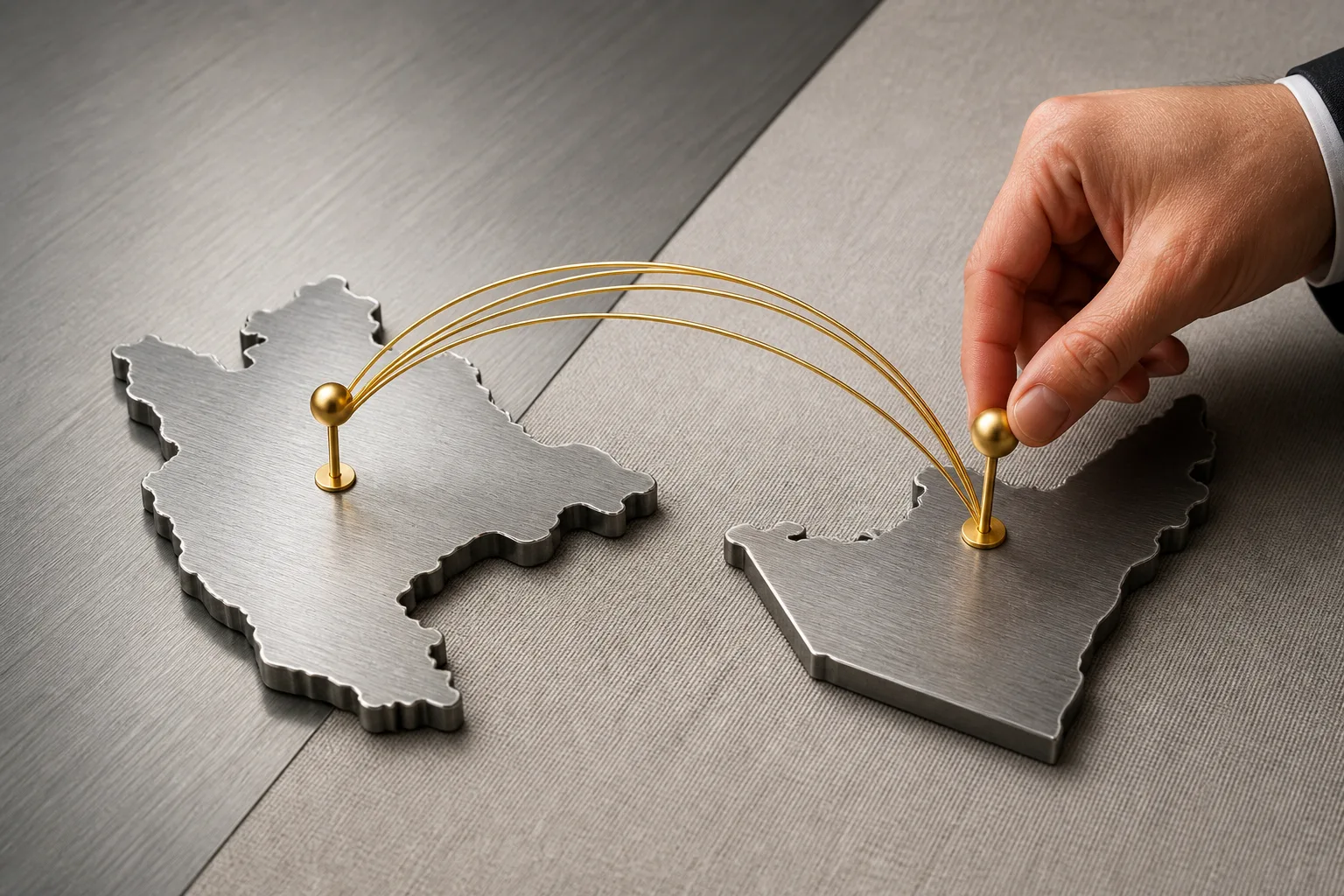
Expanding your mainland business to Dubai South Business Hub means setting up a second, separate free zone company at DSBH while keeping your existing mainland entity. The free zone company can access foreign markets, hold qualifying income at 0% corporate tax, and operate under a different license structure from your mainland firm. The two entities are legally distinct. They have separate bank accounts, separate visa quotas, and separate compliance calendars.
The Dual-Entity Model Explained
Your mainland company, licensed by Dubai's Department of Economy and Tourism (DET), keeps its UAE market access and local client contracts. Your DSBH free zone company operates as a separate legal entity with its own trade license and bank account. The two serve different client bases: one domestic, one foreign. Profits stay separate, so qualifying free zone income is assessed under its own tax rules.
Mainland entity: holds DET license, serves UAE clients, bids for government work
DSBH entity: invoices foreign clients, holds foreign-currency contracts, assessed for qualifying income at 0% corporate tax
Both entities run independently with their own visa quotas
Qualifying free zone income conditions set by the Federal Tax Authority (FTA) apply
A Dubai-based events firm, for example, holds its mainland DET license for UAE government contracts and opens a DSBH free zone company to invoice European clients in euros. Those revenues sit in the free zone entity and are assessed separately.
Who Should Consider This Move
DSBH sits on 145 sq km adjacent to Al Maktoum International Airport. Registration takes 3 to 5 business days. That speed and location make it a strong fit for a specific type of mainland owner. You should consider this if you are:
A mainland owner whose client base is growing outside the UAE
A founder who wants to hold intellectual property or foreign contracts in a separate entity
A business owner looking to add investor or employee visas under a second license
A company that wants to ring-fence foreign income from its mainland accounts
A logistics consultancy with UAE government clients keeps its mainland license for local work and uses its DSBH entity to sign contracts with freight operators in Europe and South Asia. The two structures complement each other. You can explore DSBH business activities to confirm your activity is on the approved list before you apply.
Key Benefits of Expanding Your Mainland Business to Dubai South Business Hub
The main benefits include 100% foreign ownership of the free zone entity, access to a 0% corporate tax rate on qualifying income, a fast 3-to-5-day setup, proximity to Al Maktoum International Airport, and the ability to keep your mainland license active for UAE market work while the free zone entity handles foreign revenue.
Tax and Ownership Advantages
Free zone companies at DSBH allow 100% foreign ownership. No local sponsor is needed.
0% corporate tax on qualifying free zone income, subject to FTA Qualifying Free Zone Person conditions
9% corporate tax on mainland taxable income above AED 375,000
100% foreign ownership in the free zone, no sponsor required
VAT treatment differs between mainland and free zone; get advice before moving goods or services between the two entities
A Dubai mainland marketing agency with AED 2 million in annual UAE revenue sets up a DSBH entity to invoice its UK and US clients. The foreign income sits in the free zone company and is assessed under FTA qualifying conditions. The mainland entity continues to pay 9% on its taxable UAE income above AED 375,000 (Federal Tax Authority, 2026).
Location and Speed of Setup
Dubai South spans 145 sq km next to Al Maktoum International Airport, the planned world's largest airport. Jebel Ali Port is close by. That combination gives trading and logistics businesses direct access to air and sea freight within the same zone.
Al Maktoum International Airport: on-site, ideal for air freight and international client visits
Jebel Ali Port: nearby, giving sea freight options for trading businesses
DSBH licenses issued in one working day for eligible activities
Flexi-desk and virtual office options available from day one
Visa and Workforce Benefits
A DSBH license gives you a separate visa quota. You can sponsor more employees without touching your mainland structure. Investor and partner visas are issued under the free zone entity. Dependant visas for family members follow once the investor visa is in place.
Residence visas cost AED 5,000 to AED 7,000 per person on top of the license fee
Investor visa issued under the free zone entity, separate from mainland quota
Dependant visas available after investor visa is issued
A mainland consultancy with its visa quota full adds a DSBH entity and sponsors 3 new hires under the free zone license. Its mainland headcount stays unchanged. For full details, see UAE residency services at Dubai South Business Hub.
5 Steps to Expanding Your Mainland Business to Dubai South Business Hub
To expand your mainland business to Dubai South Business Hub: first, confirm your activity code is approved at DSBH; second, check your trade name; third, choose your license package and office option; fourth, submit your documents; fifth, collect your license and open a UAE bank account. Setup takes 3 to 5 business days.
Step 1: Confirm Your Activity and Name
Check that your business activity appears on the DSBH approved list before you go further. Then run a trade name availability search to confirm your preferred name is free. The name must not duplicate an existing registered company in the UAE. Keeping it consistent with your mainland entity makes branding simpler.
Step 2: Choose Your Package and Office Type
DSBH offers flexi-desk, shared office, and dedicated office packages. Flexi-desk is the lowest-cost entry point and suits solo founders or small teams. Your visa quota often depends on the office type you pick. Use the business setup cost calculator to build your budget before you commit.
License from AED 12,500 per year (single-activity package)
Investor visa: AED 5,000 to AED 7,000 per person
First-year solo founder total: AED 30,000 to AED 45,000 including registration fees
Step 3: Submit Documents and Collect Your License
Pull together your core papers before you submit. Missing one document adds days to your timeline.
Passport copy, valid for at least 6 months
Recent passport photo on a white background
Emirates ID, if you already hold one
Proof of UAE address
Your existing DET trade license copy, if you are a mainland company director
DSBH reviews and issues the license in 3 to 5 business days. Once the license is issued, open a UAE corporate bank account in the free zone company name. See banking and taxation services at DSBH for guidance on account opening.
Mainland vs DSBH Free Zone: Key Differences
Feature | Mainland (DET License) | Free Zone (DSBH License) |
|---|---|---|
UAE market access | Full access to UAE market, including government clients | Mainly foreign clients; mainland sales need a distributor |
Foreign ownership | 100% foreign ownership permitted for most activities since 2021 | 100% foreign ownership, no local sponsor required |
Corporate tax treatment | 9% on taxable income above AED 375,000 | 0% on qualifying free zone income (FTA conditions apply); 9% on non-qualifying income |
Office requirement | Physical office or commercial space required | Flexi-desk option available from day one |
Government contract eligibility | Eligible to bid for UAE government contracts | Not eligible to bid directly for UAE government contracts |
Visa quota | Quota set by DET based on office size | Separate quota under DSBH license, independent of mainland |
Mainland vs Free Zone: How the Two Entities Work Together
Your mainland entity, licensed by DET, can trade anywhere in the UAE, including with government bodies. Your DSBH free zone entity is best for foreign clients and qualifying income. The two companies are separate legal entities. They can transact with each other, but those transactions are subject to UAE transfer pricing rules.
What Each Entity Can Do
The split is straightforward in practice. Your mainland company sells to UAE-based clients, bids for government contracts, and rents commercial space anywhere in Dubai. Your DSBH free zone company invoices foreign clients, holds foreign-currency contracts, and benefits from qualifying free zone tax treatment.
Worth flagging: the free zone entity cannot sell directly into the UAE mainland market without using a mainland distributor or agent. Both entities can hold UAE bank accounts and sponsor visas independently.
Transfer Pricing and Inter-Company Transactions
Arm's length pricing applies whenever your mainland and free zone companies trade with each other. The FTA's transfer pricing rules cover related-party transactions under UAE corporate tax law. Keep records of all inter-company invoices and agreements. A UAE tax adviser can help you set up an inter-company agreement that meets FTA rules.
Record keeping is not optional. Records must be kept for 7 years. The FTA can ask to see them at any point (Federal Tax Authority, 2026).
Is a dual-entity structure right for every mainland business?
Not always. If all your revenue comes from UAE clients and you have no foreign contracts, the added compliance cost of a second entity may not be worth it. The dual structure works best when you have genuine foreign income to ring-fence, or when your mainland visa quota is full and you need to hire more staff quickly.
What You Must Comply With After You Expand
Once your DSBH free zone company is active, you must register for corporate tax with the FTA, keep financial records for 7 years, file annual returns, and meet any VAT obligations. Your mainland company keeps its own DET renewal and Emiratisation duties. The two entities have separate compliance calendars.
Corporate Tax and FTA Registration
Corporate tax: Every DSBH company must register with the FTA once it is set up, whatever its turnover. Qualifying free zone income can attract 0% corporate tax. You only get that rate if you meet the FTA's Qualifying Free Zone Person conditions. Non-qualifying income is taxed at 9%.
VAT: If your DSBH entity's taxable supplies exceed AED 375,000 in a 12-month period, VAT registration is required. The VAT treatment of transactions between your mainland and free zone entities depends on the nature of the supply; get specific advice before you start invoicing between the two.
Records: Keep financial records for 7 years. File your corporate tax return by the FTA deadline each year; late filing carries fines.
License Renewal and MoHRE Duties
Renew your DSBH license each year before it lapses. A lapsed license suspends your visa quota. Your mainland DET license has its own renewal date. Both renewals run on separate calendars, so set reminders for each.
Renew DSBH license annually before the expiry date
Renew mainland DET license on its own separate date
Renew employee visas every 2 to 3 years depending on visa type
Check MoHRE Emiratisation quota applies to mainland entities with 50 or more employees
Miss your Emiratisation quota and MoHRE charges you every month
For PRO services and government transaction support, see business support services at DSBH (MoHRE, 2026).
Why Dubai South Is the Right Location for Your Second Entity
Dubai South sits adjacent to Al Maktoum International Airport and close to Jebel Ali Port. The zone covers 145 sq km and is purpose-built for aviation, logistics, e-commerce, and international trade. For mainland businesses with cross-border revenue, this location cuts transport time and opens direct airport and port access.
Airport and Port Access
Al Maktoum International Airport is on the doorstep. That is ideal for air freight, aviation services, and international client visits. Jebel Ali Port is within close reach, giving sea freight options for trading businesses. Together, the two infrastructure points make Dubai South one of the most connected zones in the UAE.
Sectors That Fit DSBH Best
Aviation and aerospace: Airport co-location gives direct access to airside services
Logistics, freight, and supply chain: Port and airport access used together cuts transit time
E-commerce: Use DSBH to hold stock and fulfil foreign orders from within the zone
ICT and professional services: Choose DSBH for the 0% qualifying income rate and 100% foreign ownership
DSBH covers aviation, logistics, trading, ICT, and professional services activities across its approved list (Dubai South, 2026).
Costs of Expanding Your Mainland Business to Dubai South Business Hub
DSBH free zone licenses start from AED 12,500 per year. Add AED 5,000 to AED 7,000 per residency visa. A solo founder with one visa typically spends AED 30,000 to AED 45,000 in the first year, including registration fees. Your mainland license costs stay separate and continue as normal.
License and Registration Fees
DSBH trade licenses start from AED 12,500 per year for a single-activity package. Multi-activity packages and larger office options carry higher fees. A one-time registration fee applies on top of the annual license cost. Before you commit, use the business setup cost in Dubai calculator to get a figure for your specific activity and visa needs.
Cost Item | Indicative Amount (AED) |
|---|---|
Annual trade license (single activity) | From 12,500 |
Investor visa (per person) | 5,000 – 7,000 |
Registration fee (one-time) | Approx. 3,000 |
Flexi-desk office (annual) | Included in some packages; varies by package |
First-year total (solo founder, 1 visa) | 30,000 – 45,000 |
Ongoing Annual Costs
After year one, costs drop significantly. The license renews at the same base rate each year. Visa renewals run every 2 to 3 years depending on visa type. Your mainland DET license renewal cost is separate and unchanged by the DSBH expansion.
Annual license renewal: from AED 12,500
Investor visa renewal: AED 5,000 to AED 7,000 every 2 to 3 years
Flexi-desk
Frequently Asked Questions