Topic Summary
Know What Your Business Actually Sells
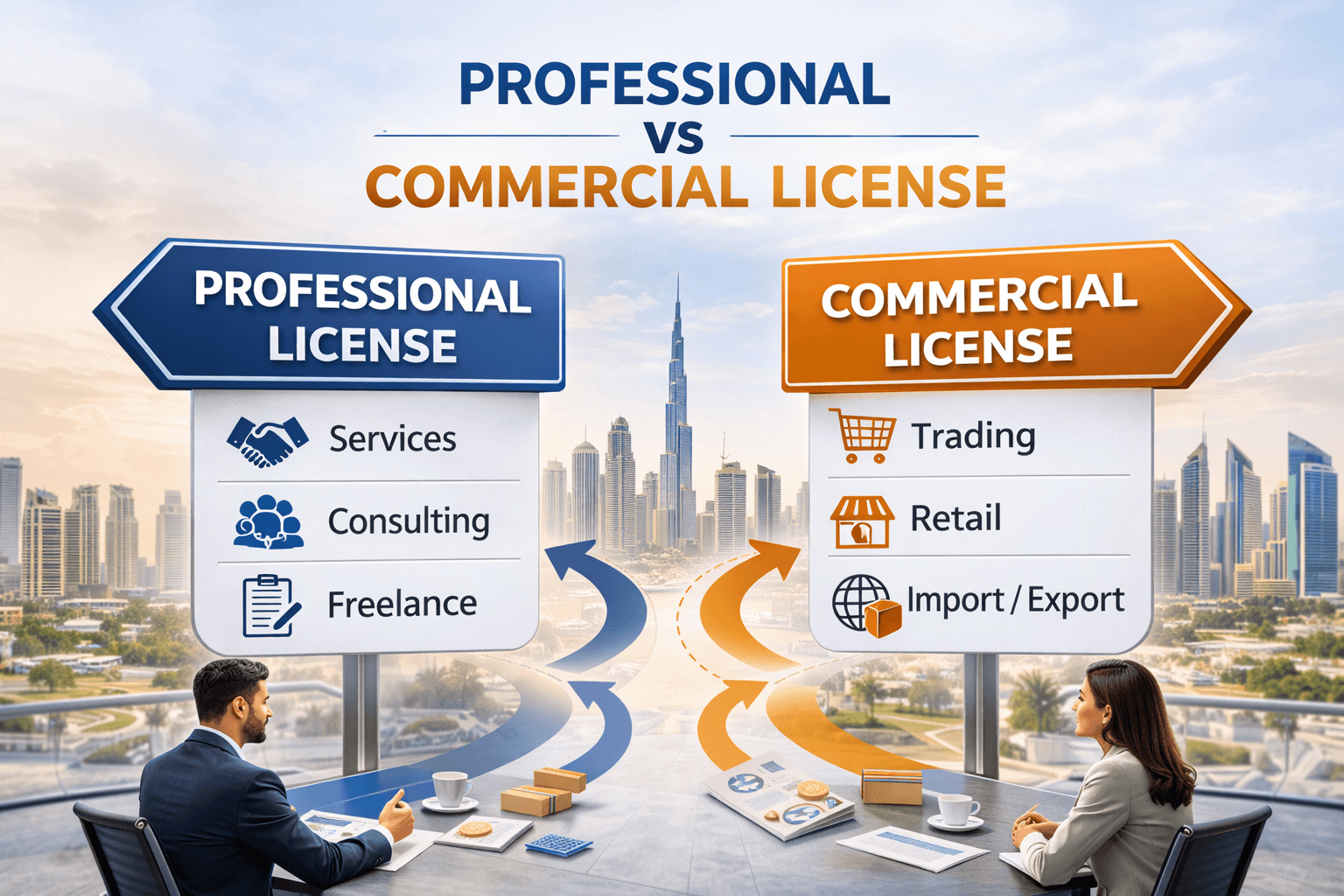
A professional license covers skill-based services like consulting, design, or IT work, while a commercial license covers buying and selling physical goods. Choosing the wrong type can delay your setup or restrict your permitted activities from day one.
Professional Licenses Tie to Personal Qualifications
On the Dubai mainland, a professional license is held in the owner's name and linked to their expertise or credentials. This means all partners in a company must share the listed profession for the license to be valid.
Commercial Licenses Unlock Trading and Import Rights
A commercial license lets you import, stock, distribute, and re-export physical goods across UAE and global markets. A general trading license is the broadest version, covering multiple product categories under a single document.
Free Zones Offer Both License Types at Lower Cost
Dubai's 40-plus free zones issue both professional and commercial licenses, with some packages starting under AED 20,000 for year one including workspace and visa slots. Free zone companies also pay 0% corporate tax on qualifying income under Federal Decree-Law No. 47 of 2022.
Mainland Licenses Can Be Issued in Three Days
When all documents are complete, Dubai's Department of Economy and Tourism can issue a mainland professional license in as few as three working days. Speed of setup is one reason service-based businesses often choose the mainland route.
Selling Into the UAE Mainland Requires Extra Steps
Free zone commercial license holders cannot sell directly into the UAE mainland market without a local distributor or a separate mainland company. This is a critical planning point for any business targeting UAE-based retail or wholesale customers.
Match Your ISIC Code to Your License Type
Professional activities fall under ISIC Section M, covering professional, scientific, and technical services, while commercial activities fall under ISIC Section G for wholesale and retail trade. Getting the activity code right ensures your license legally covers everything you plan to do.
In 2026, Dubai hosts over 40 active free zones and a mainland market open to 100% foreign ownership across most sectors (UAE Government Portal, 2024). Free zone companies pay 0% corporate tax on qualifying income under Federal Decree-Law No. 47 of 2022 (Federal Tax Authority, 2023). A mainland professional license can be issued in as few as 3 working days when documents are complete. And a free zone commercial license package at Dubai South Business Hub can come in under AED 20,000 for year one, covering the license, workspace, and visa slots.
This guide breaks down the professional vs commercial license in Dubai: what each one covers, who each one suits, what each one costs, and how to pick the right one before you apply.
What Is a Professional vs Commercial License in Dubai and Why It Matters
A professional license in Dubai covers skill-based services such as consulting, design, and legal advice. A commercial license covers the buying and selling of goods or products. The type of work you do, not where you set up, decides which one you need.
What a Professional License Covers
A professional license in Dubai is issued for skill-based or knowledge-based work. The license ties to the owner's personal qualification or expertise, not to stock or physical goods.
Activities that fall under this license include:
Management and business consulting
Engineering and technical services
Accounting and audit services
IT services and software development
Legal advice and document drafting
Graphic design and media production
On the mainland, a sole practitioner holds the license in their own name. A company can also hold one if all partners share the listed profession. Professional licenses are issued by Dubai's Department of Economy and Tourism (DET) on the mainland, or by the relevant free zone authority. Most consulting and service activities fall under ISIC Section M: Professional, Scientific and Technical Activities.
Real example: a management consultant from the US sets up a Dubai advisory firm and applies for a professional license, not a commercial one, because the product is expertise rather than goods. They bill UAE clients directly for advisory work from day one.
What a Commercial License Covers
A trading business license in Dubai is issued for trading, retail, import, export, distribution, and general commerce. It lets you buy goods, stock them, and sell them to customers or other businesses.
Permitted activities include:
Import and export of physical goods
Wholesale and retail trade
Distribution to retailers or end consumers
Re-export of goods through UAE free zones
General trading across multiple product categories
A general trading license is a broad commercial license that covers multiple product categories under one document, sometimes dozens of product lines. Commercial licenses cover activities listed under ISIC Section G: Wholesale and Retail Trade. A buyer importing consumer electronics from Asia and distributing them across UAE retail stores needs a commercial license, not a professional one.
Both license types are available at Dubai South Business Hub (DSBH). Free zone professional licenses let you serve international clients. Free zone commercial licenses let you import, re-export, and trade globally. To sell directly into the UAE mainland market from a free zone, you need a local distributor or a separate mainland presence (UAE Government Portal, 2024).
Key Differences Between a Professional and Commercial License in Dubai
The main difference is what you sell. A professional license is for services tied to personal skill or qualifications. A commercial license is for trading physical goods. The two licenses carry different activity codes, ownership rules on the mainland, and in some cases different fee structures.
Professional vs Commercial License: Side-by-Side Comparison
Feature | Professional License | Commercial License |
|---|---|---|
What you sell | A skill, service, or expertise | Physical goods bought and sold at a margin |
Office requirement | Flexi-desk accepted in most free zones | Warehouse or storage space often required |
Mainland ownership | 100% foreign ownership in most sectors after 2021 reforms | 100% foreign ownership in most sectors after 2021 reforms |
Free zone ownership | 100% foreign ownership, no local partner needed | 100% foreign ownership, no local partner needed |
Activity codes | ISIC Section M: Professional, Scientific and Technical Activities | ISIC Section G: Wholesale and Retail Trade |
Import and customs | Not required; no physical goods involved | Customs import code and Dubai Customs compliance needed |
Typical first-year cost at DSBH | Lower; flexi-desk package, no warehouse cost | Varies; add warehouse or storage space to the package cost |
Ownership Rules and Local Agent Requirements
UAE Federal Decree-Law No. 26 of 2020 opened most mainland activities to full foreign ownership. Both professional and commercial license holders can now own 100% of a mainland company in most sectors. A small set of strategic sectors still need a UAE national as a local service agent. Check the DET restricted activity list at dubaidet.gov.ae before you apply.
Ownership scenarios to know:
Free zone (DSBH): 100% foreign ownership for both license types, no local partner
Mainland, most sectors: 100% foreign ownership now permitted
Mainland, restricted sectors: UAE national local service agent still required
Activity Codes and What They Lock In
Your license lists specific activity codes. You can only do what those codes permit. Adding an activity later costs time and money, so pick your codes carefully at the start.
Key points on codes:
A professional license holder cannot trade physical goods under that same license
A commercial license holder cannot charge for professional advice without a service activity code
Some free zones allow a mix of service and trading activities on one license; confirm this before you apply
ISIC Rev.4 four-digit class codes form the basis for UAE activity classification
An IT consultant who also wants to sell hardware must either add a commercial activity code or hold two separate licenses. Check the full list of business activities in Dubai on the DSBH portal before you commit to a code set.
Costs and Timelines for Each License Type in Dubai
Professional and commercial license fees in Dubai depend on your setup location, the number of activity codes, office type, and visa quota. Mainland licenses are issued by DET. Free zone licenses are issued by the relevant authority. Both can be active within days when documents are complete.
Mainland License Fees and What Drives Them
DET charges a base trade name fee, a license issuance fee, and an activity fee. Each is listed on the DET fee schedule at dubaidet.gov.ae. A physical office lease is mandatory on the mainland. The Ejari-registered lease adds to your first-year cost and is a common budget surprise.
Cost components to plan for:
DET trade name reservation fee
License issuance fee, varies by activity type
Activity code fees, more codes mean higher total
Ejari-registered office lease for the full year
Annual renewal fee, due before expiry date
Missing the renewal date triggers fines from DET from day one after expiry, so set a reminder 60 days out.
Free Zone License Fees and Packages
Free zone licenses are bundled into packages. A package typically covers the license fee, flexi-desk or office space, and a set number of visa allocations in one annual payment. No Ejari lease is needed. The free zone authority is your landlord.
What a DSBH package includes:
License fee for your chosen activity type
Flexi-desk or office workspace for the year
Visa allocation slots for you and your team
No separate Ejari cost or hidden office lease
Use the business setup cost calculator at DSBH to get an exact figure based on your activity type and visa needs before you commit.
Cost factor | Mainland (DET) | Free zone (DSBH) |
|---|---|---|
Office requirement | Ejari lease mandatory | Included in package |
Visa allocation | Separate application and fee | Bundled into package |
License renewal | Annual, fines from day one if late | Annual, managed via DSBH portal |
First-year predictability | Multiple separate cost lines | One bundled annual fee |
How to Choose Between a Professional vs Commercial License in Dubai: 5 Questions to Ask First
Ask five questions before you choose: What do you sell, a skill or a product? Do you need to trade on the UAE mainland or serve global clients? Do you need a warehouse? How many visas do you need? And what is your first-year budget? Your answers point directly to the right license type.
Question 1: What Do You Actually Sell?
This is the one question that cuts through everything else. If your revenue comes from your knowledge, skill, or advice, you need a professional license. If it comes from buying goods and selling them at a margin, you need a commercial license.
Custom code or creative work: professional license
Third-party software resold to clients: commercial license
Advisory reports billed by the hour: professional license
Branded merchandise sold online: commercial license
Both services and goods: combined activity list or two licenses
Be specific about what you plan to invoice for in the first 12 months. If your model is likely to change, pick a broader activity list at the start.
Question 2: Where Are Your Customers Based?
If most of your clients are outside the UAE or in other free zones, a free zone license covers you well. A professional free zone license lets you invoice international clients with no restriction on where the client is based. If you need to sign contracts directly with UAE mainland companies as a supplier, a mainland license or a local distributor arrangement is the cleaner path.
International clients only: free zone license works
UAE mainland direct sales: mainland license or local distributor
Re-export to GCC markets: free zone commercial license, no UAE import duty
Question 3: Do You Need Storage or a Warehouse?
A commercial license for physical goods usually needs storage space or a warehouse, especially for import and distribution. A professional license holder rarely needs warehouse space. A flexi-desk or shared office is enough.
DSBH sits next to Al Maktoum International Airport and Jebel Ali Port, which cuts logistics time and cost for traders. If you need both office and storage, check what DSBH offers for your specific activity before you apply.
Is a free zone commercial license right for re-export businesses?
Yes. A free zone commercial license lets you import goods, store them inside the free zone, and re-export to regional markets without paying UAE import duty. This makes it a practical choice for traders supplying GCC countries from a Dubai base. You do not need a mainland presence to operate this model.
Step-by-Step Guide to Getting Your License at Dubai South Business Hub
Getting a license at DSBH takes five main steps: choose your license type and activity codes, reserve your trade name, submit your documents, pay your fees, and collect your license. The process can be done online and completed in a few working days when all papers are ready.
Steps 1 to 3: Choose, Name, and Submit
Step 1, pick your license type and activity codes: Decide between professional and commercial based on what you sell, then confirm your activity codes are on the DSBH approved list at dubaisouthbh.com/business-activities.
Step 2, reserve your trade name: Use the DSBH business name availability check tool to see which names are free. Names must follow UAE naming rules and cannot use offensive or religious terms.
Step 3, prepare and submit your documents: You will need your passport copy, a passport photo, and a completed application form. Extra papers may apply for regulated activities.
DSBH handles the submission to the relevant UAE authorities on your behalf, which cuts the time between application and license issuance.
Steps 4 and 5: Pay and Collect
Step 4, pay your fees: DSBH issues a proforma with your license fee, visa quota cost, and workspace charge. Pay online through the portal.
Step 5, collect your license and start operations: Once payment clears, DSBH issues your license. You can then open a UAE bank account, apply for staff visas, and sign client contracts.
After your license is issued, register with the Federal Tax Authority for corporate tax at tax.gov.ae. This is mandatory for all UAE companies whatever their size or turnover. Visa applications for yourself and staff follow directly after the license is in hand. DSBH's UAE residency visa services cover the full application process.
What You Must Comply With After You Get Your License
After getting your Dubai business license, you must register for corporate tax with the FTA, keep your license renewed annually, and maintain proper financial records. Commercial license holders who import goods must comply with Dubai Customs rules. Both license types must follow UAE labour law when hiring staff.
Corporate Tax and FTA Registration
Registration is mandatory. Every UAE company must register for corporate tax with the FTA, whatever its size or turnover. Do this in the first weeks after your license is issued. Failing to register on time triggers FTA penalties.
Free zone tax rate. A free zone company can pay 0% corporate tax on qualifying income. You only get that rate if you meet the Qualifying Free Zone Person conditions the FTA sets. Register through the EmaraTax portal at tax.gov.ae. Registration is free and done online. The conditions are set out on the FTA website and are worth reading before you assume the rate applies to you.
Annual Renewal and Record Keeping
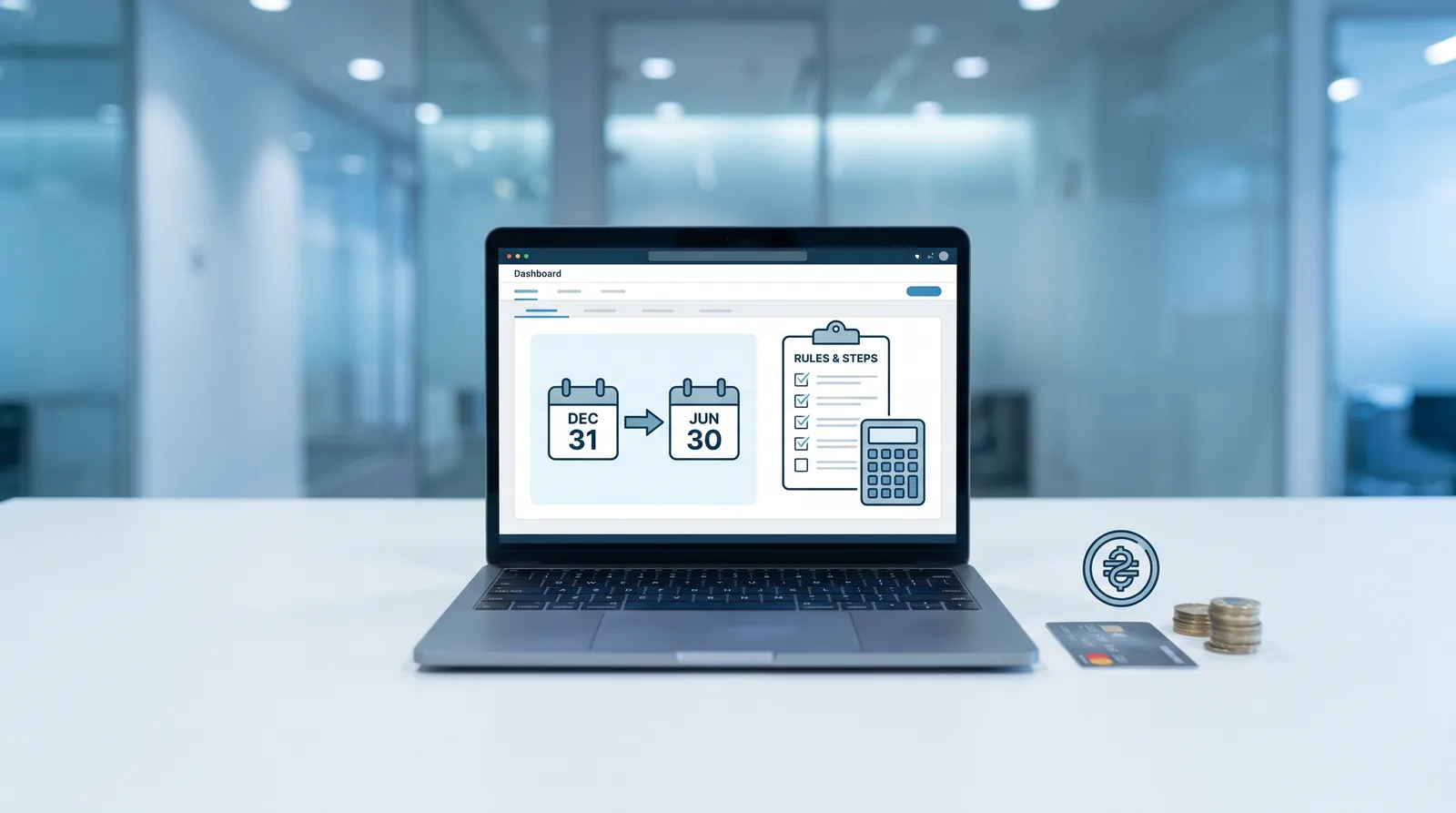
Both professional and commercial licenses must be renewed every year. Renewal is due before the expiry date shown on your license. Let it lapse and your linked staff visas are at risk too.
Renewal checklist:
Set a reminder 60 days before the expiry date
Gather financial statements and customs records
Renew online through the DSBH portal
Confirm staff visa renewals are aligned with the license date
UAE law requires financial records to be kept for at least 7 years. The FTA can ask to see them at any time. Commercial license holders must also keep customs records for all import and export shipments (Dubai Customs, 2024). DSBH's business support services can handle renewal steps and government transactions on your behalf.
Can a free zone company avoid corporate tax entirely?
No. Every UAE company must register for corporate tax with the FTA
Frequently Asked Questions