Topic Summary
What Is Setting Up a Fashion Trading Business in Dubai South?
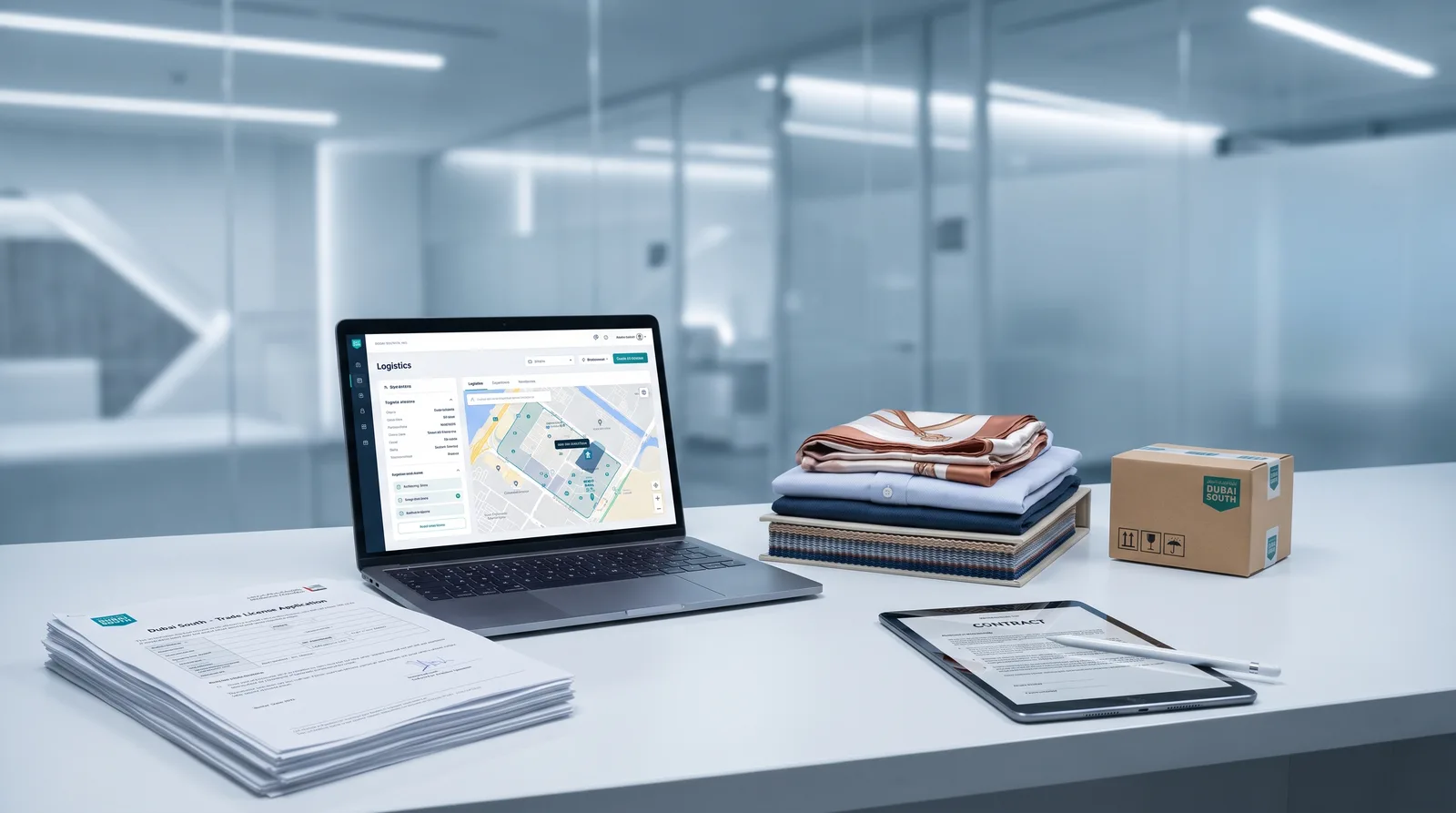
Setting up a fashion and clothing trading business in Dubai South means forming a company in Dubai South Business Hub Free Zone, choosing garment trading activities, and obtaining a free zone trade license. You can then import, store, re-export and sell apparel to buyers across the GCC, Africa and South Asia.
Why Dubai South Works for Fashion Import and Export
Why Dubai South Works for Fashion Import and Export
Permitted Fashion and Clothing Trading Activities Under Your License
A clothing trading license in Dubai South covers readymade garments, men's and ladies' garments, accessories, sportswear, uniforms and textiles. Each activity is listed on your license, so match them to your product range before applying.
Step-by-Step Guide to How to Set Up Fashion Clothing Trading Business Dubai South
To set up a fashion trading business in Dubai South, define your range, choose activities, submit your application, receive your license, arrange visas and office space, then register your brand and customs account before shipping stock.
Costs, Visas, and Timeline for Your Fashion Trading Company
Costs depend on activities, office package and visa count. Visas are tied to your clothing trading license in Dubai South, and timelines are short once documents are complete.
Brand Registration and Customs Essentials for Fashion Importers
Register your brand as a trademark with the Ministry of Economy and open a customs account. Prepare invoices, packing lists, origin certificates and HS codes for every fashion import export Dubai shipment.
Your Next Move
Knowing how to set up fashion clothing trading business Dubai South style comes down to three moves: choose the right activities, secure your free zone license, and sort brand and customs paperwork early. Contact Dubai South Business Hub to confirm your activities, get a tailored quotation and start your company formation today.
The UAE apparel and textile market is projected to pass USD 4 billion in 2026 (Statista, 2026). This guide shows how to set up fashion clothing trading business Dubai South operations, from activities and licensing to trademarks and customs. It's written for fashion entrepreneurs who want a clear path to action.
What Is Setting Up a Fashion Trading Business in Dubai South?
Setting up a fashion and clothing trading business in Dubai South means forming a company in Dubai South Business Hub Free Zone, choosing garment trading activities, and obtaining a free zone trade license. You can then import, store, re-export and sell apparel to buyers across the GCC, Africa and South Asia.
Core Components of a Fashion Trading Setup
You need three things: a company registered in the free zone, a trade license listing your garment activities, and optionally a residency visa package tied to that license. Dubai's non-oil trade exceeds AED 2.2 trillion (Dubai Chamber), so the demand side is there.
Picture a Lagos-based buyer sourcing denim from Istanbul. She re-exports it through a Dubai South entity to Nigerian retailers. That's the model in miniature. For a wider view, see this guide on textile and fashion trading business in Dubai.
Why Fashion Traders Choose Free Zone Structures
Full foreign ownership.
No local sponsor required.
Strong re-export positioning.
Simple licensing for importers.
Free zones suit import, export and re-export. Selling directly to UAE retail customers may need extra arrangements, so plan your sales channels first.
Why Dubai South Works for Fashion Import and Export
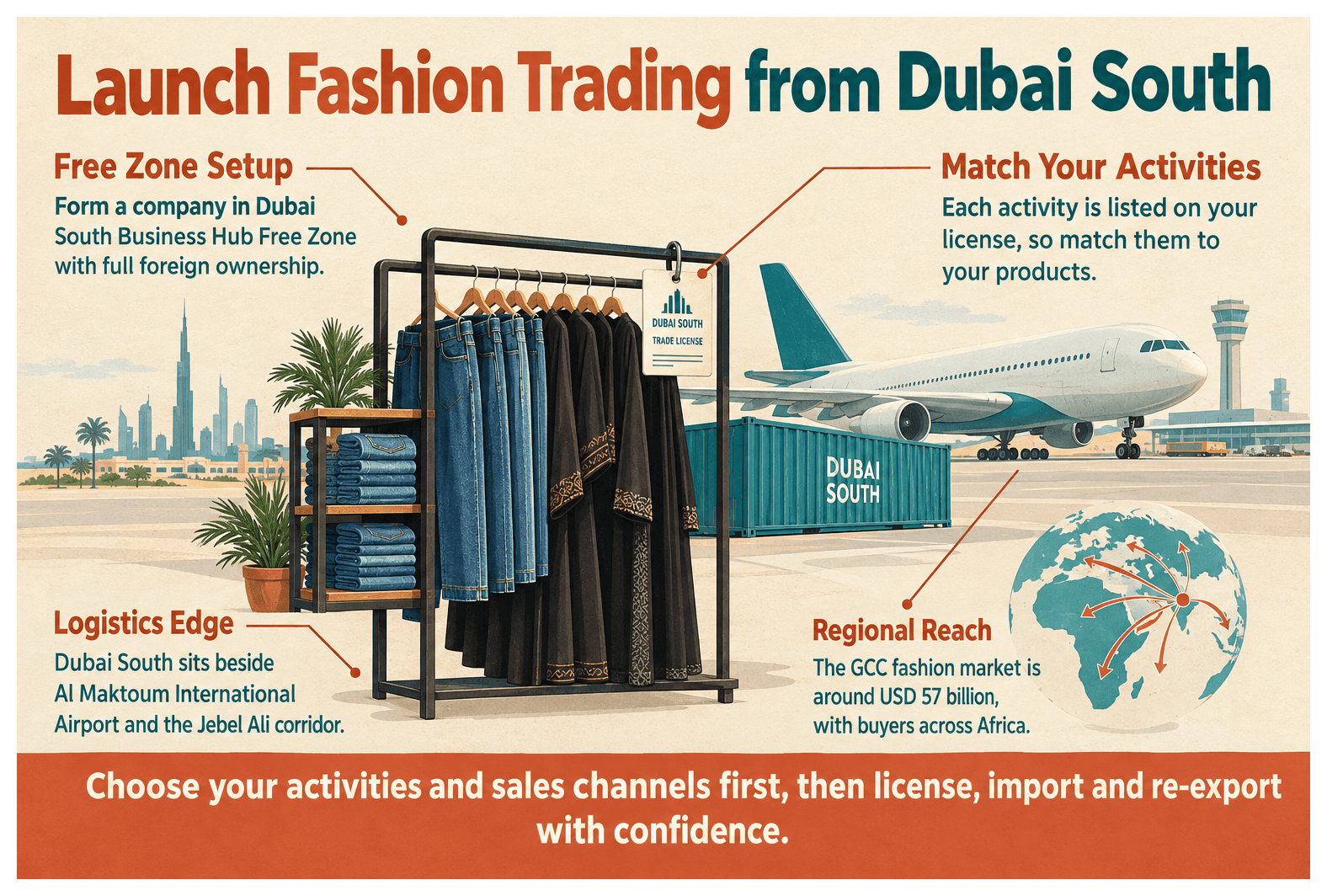
Dubai South sits beside Al Maktoum International Airport and the Jebel Ali port corridor, with flexible warehouse and office options. That shortens transit times for fashion import export Dubai operations and suits both sample orders and bulk consignments.
Logistics and Location Advantages
Air cargo handles fast-fashion and samples, while road links serve container freight. A boutique wholesaler air-freighting spring collections from Guangzhou can land stock quickly, then store seasonal inventory nearby.
Market Reach Across Regions
The GCC fashion market is around USD 57 billion. Buyers sit in the GCC, East Africa, South Asia and CIS markets. Specialising helps: one trader we'd point to is a ladies garments supplier serving Gulf boutiques, with a ladies garment trading license in Dubai.
Permitted Fashion and Clothing Trading Activities
Feature | Activity | What You Can Trade |
|---|---|---|
Readymade garments trading | Finished apparel, mixed ranges | Shirts, dresses, denim, knitwear |
Men's garments trading | Menswear focus | Suits, thobes, casualwear |
Ladies' garments trading | Womenswear focus | Abayas, dresses, modest wear |
Garments accessories trading | Add-on products | Belts, ties, scarves, buttons |
Sportswear and uniforms trading | Institutional and athletic lines | Team kits, work uniforms |
Permitted Fashion and Clothing Trading Activities Under Your License
A clothing trading license in Dubai South covers readymade garments, men's and ladies' garments, accessories, sportswear, uniforms and textiles. Each activity is listed on your license, so match them to your product range before applying.
Matching Activities to Your Product Range
List every product category first.
Add activities now, not through later amendments.
Check the readymade garments trading license in Dubai rules.
A menswear trader, for example, might add a garments accessories trading license in Dubai activity to cover belts and ties. Related activities can often be combined on one license.
Step-by-Step Guide to How to Set Up Fashion Clothing Trading Business Dubai South
To set up a fashion trading business in Dubai South, define your range, choose activities, submit your application, receive your license, arrange visas and office space, then register your brand and customs account before shipping stock.
Step 1: Define Your Products and Choose Activities
Pick men's, ladies', kids' or mixed apparel.
Select matching activities.
Estimate shipment volumes.
Step 2: Submit Your Application and Documents
Passport copies and name options.
Shareholder details and a short business plan.
An office or flexi-desk package.
Step 3: Receive Your License and Activate Operations
Collect your license and registration certificate.
Process visas and open a corporate bank account.
Register brand and customs account before the first container.
Many free zone setups finish in days to a few weeks, depending on documents. Official guidance is on the UAE government portal.
Costs, Visas, and Timeline for Your Fashion Trading Company
Costs depend on activities, office package and visa count. Visas are tied to your clothing trading license in Dubai South, and timelines are short once documents are complete.
What Drives Your Setup Cost
License type and activity count.
Office or flexi-desk choice.
Visa quota, medical and Emirates ID fees.
Ask for a written quotation covering license, registration and visa fees. A solo founder with one visa pays differently from a team needing three.
Residency Visa Packages for Founders and Staff
Your visa quota depends on your office package. Plan around hiring: a founder adding a sales manager in year one should size the package for two visas from the start.
Brand Registration and Customs Essentials for Fashion Importers
Register your brand as a trademark with the Ministry of Economy and open a customs account. Prepare invoices, packing lists, origin certificates and HS codes for every fashion import export Dubai shipment.
How to Register Your Fashion Brand in the UAE
File with the Ministry of Economy under the correct clothing class. A private-label abayas brand should file before launch. If you distribute third-party brands, get authorization letters.
Customs Documents and Clearance Basics
Register your customs code with Dubai Customs.
Commercial invoice, packing list, origin certificate, HS code.
Fabric composition and origin labels.
Re-export procedures, such as a knitwear pallet bound for Kenya.
Document accuracy is the most common cause of clearance delays. See Dubai Trade for procedures.
Your Next Move
Knowing how to set up fashion clothing trading business Dubai South style comes down to three moves: choose the right activities, secure your free zone license, and sort brand and customs paperwork early. Contact Dubai South Business Hub to confirm your activities, get a tailored quotation and start your company formation today.
References
Frequently Asked Questions