Topic Summary
What Is a Food Trading Setup in Dubai South
To set up a food trading business in Dubai South, you form a company in Dubai South Business Hub Free Zone, choose a food trading activity, and obtain a free zone trade license. Then you secure food safety approvals, register for customs, and arrange residency visas for your team.
Food Import Export License Dubai: Activities and Costs
Food Import Export License Dubai: Activities and Costs
Step-by-Step Guide to How to Set Up Food Trading Business Dubai South
Set up in six stages: define products, apply for formation, receive the license, register with customs, obtain food approvals, and secure visas and storage. The license stage moves fast. Approvals take longest.
Required Approvals From MOCCAE and Dubai Municipality for a Food Import Export License Dubai
Food traders typically need approvals from the Ministry of Climate Change and Environment (MOCCAE) for animal and plant-origin goods, and from Dubai Municipality for food safety, product registration and storage premises. Requirements vary by category, so confirm them before you ship.
Storage and Cold Chain Planning to Set Up Food Company Dubai South
Perishables need temperature-controlled storage matched to the product: ambient for dry goods, chilled for dairy and produce, frozen for meat and poultry. Pick monitored cold rooms, keep temperature logs, and plan fast clearance.
Your Next Move
Knowing how to set up a food trading business in Dubai South comes down to the right activity, a clean license, and approvals secured before the first shipment. Confirm your product categories, then contact Dubai South Business Hub to start company formation and the license application.
The UAE food and beverage market is worth over USD 30 billion and grows roughly 6% a year (Statista, 2025). Dubai's non-oil trade has passed AED 2.2 trillion (Dubai Chamber, 2024). This guide shows food entrepreneurs how to set up a food trading business in Dubai South, from license to cold storage.
What Is a Food Trading Setup in Dubai South
To set up a food trading business in Dubai South, you form a company in Dubai South Business Hub Free Zone, choose a food trading activity, and obtain a free zone trade license. Then you secure food safety approvals, register for customs, and arrange residency visas for your team.
What a Food Trading Company Does
It buys, imports, re-exports and distributes foodstuff without processing it. Picture a founder importing canned goods from Southeast Asia for re-export to East Africa. Activity is classified by the goods traded, not the sales channel, so online and offline sales fall under the same activity. Our guide to a foodstuff trading business in Dubai covers the wider market.
Why Dubai South Suits Food Traders
Close to the airport and port-linked logistics corridors.
Foreign entrepreneurs can own the company.
License and residency visa packages come tied to the company.
Think of a Europe-to-GCC chilled dairy distributor using the zone as its regional base.
Food Import Export License Dubai: Activities and Costs
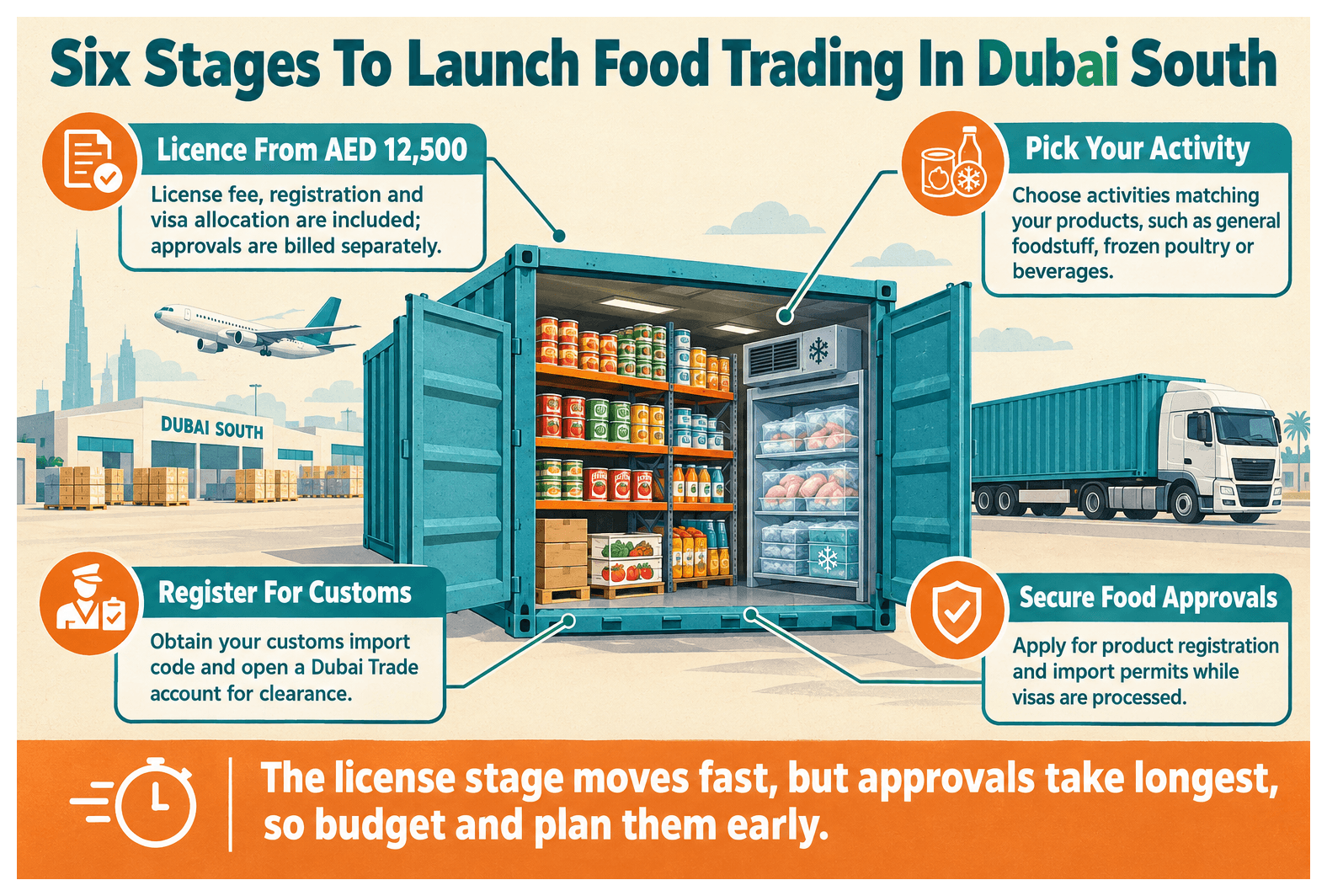
A food import export license in Dubai South covers buying and selling foodstuff across borders. Licenses start from AED 12,500 per year. Choose activities matching your products, such as general foodstuff, frozen poultry or beverages, because each category triggers different approvals.
Choosing the Right Food Trading Activity
Match activity codes to real product lines. A trader might start with snacks and add juices later under one license. Compare the scope in our foodstuff import export business in Dubai page, and check general food trading license cost in Dubai before choosing.
What the License Cost Covers
License fee, registration and visa allocation.
Billed separately: lab testing, warehouse lease, customs deposits.
Budget approvals as seriously as the license itself.
Step-by-Step Guide to How to Set Up Food Trading Business Dubai South
Set up in six stages: define products, apply for formation, receive the license, register with customs, obtain food approvals, and secure visas and storage. The license stage moves fast. Approvals take longest.
Step 1: Define Your Product Range and Activity
List products, origin countries and target markets.
Pick your license activity.
Flag perishables early. A frozen poultry importer needs a dedicated activity.
Step 2: Form the Company and Obtain the Trade License
Submit documents and shareholder details.
Select an office or flexi-desk, plus warehouse.
Receive your license from AED 12,500 per year.
Step 3: Register for Customs and Dubai Trade
Obtain your customs import code.
Open a Dubai Trade account for clearance.
Appoint a clearing agent before your first container.
Step 4: Secure Approvals, Visas and Storage
Apply for product registration and import permits.
Process visas while approvals are pending.
Lease storage suited to your goods.
More detail sits in starting a food import business in Dubai.
Food Trading Approvals: MOCCAE and Dubai Municipality
Feature | Authority | Approval and Purpose |
|---|---|---|
MOCCAE: import permits for animal and plant-origin products | MOCCAE | Import permit controlling entry of meat, dairy and plant goods |
MOCCAE: health and origin certificates review | MOCCAE | Confirms exporter health certificates and product origin |
Dubai Municipality: food product registration and labeling | Dubai Municipality | Registers each product and checks label compliance |
Dubai Municipality: storage premises inspection | Dubai Municipality | Inspects warehouse hygiene and temperature control |
Dubai Municipality: shipment inspection at entry | Dubai Municipality | Samples and releases consignments at the point of entry |
Required Approvals From MOCCAE and Dubai Municipality for a Food Import Export License Dubai
Food traders typically need approvals from the Ministry of Climate Change and Environment (MOCCAE) for animal and plant-origin goods, and from Dubai Municipality for food safety, product registration and storage premises. Requirements vary by category, so confirm them before you ship.
MOCCAE Requirements for Imported Foodstuff
Animal, plant and agricultural products need permits. A frozen meat shipment, for instance, needs a health certificate from the exporting country. Product category determines scope.
Dubai Municipality Food Safety Approvals
Expect label checks, warehouse inspection and shipment sampling. One snack consignment I'd flag as typical was held for a labeling correction, which cost days, not weeks. Cross-check requirements with the Dubai Chamber of Commerce.
Storage and Cold Chain Planning to Set Up Food Company Dubai South
Perishables need temperature-controlled storage matched to the product: ambient for dry goods, chilled for dairy and produce, frozen for meat and poultry. Pick monitored cold rooms, keep temperature logs, and plan fast clearance.
Matching Storage Type to Product
Match ambient, chilled or frozen range to each product.
Rotate stock first in, first out (FIFO).
Keep dry goods separate from perishables.
Managing Clearance and Delivery Timelines
Pre-book your clearing agent and inspection slots, so chilled dairy clears in hours. Log temperatures in transit and use reefer vehicles for delivery. Larger volumes may suit a food beverages wholesale trading license in Dubai.
Your Next Move
Knowing how to set up a food trading business in Dubai South comes down to the right activity, a clean license, and approvals secured before the first shipment. Confirm your product categories, then contact Dubai South Business Hub to start company formation and the license application.
References
Frequently Asked Questions