
Topic Summary
Secure the Right Business License First
Choosing between mainland and free zone setup is a foundational compliance decision for Dubai SMEs. Free zones like Dubai South Business Hub Free Zone offer 100% foreign ownership and streamlined digital approvals, making them popular with international founders.
Stay Current With Employment and Visa Rules
SMEs must issue proper employment contracts, pay salaries through the Wage Protection System, and manage visa lifecycles carefully. The UAE's 2026 visa reforms introduced multi-year permits and expanded long-term options, creating both new opportunities and new obligations.
Register for VAT and Corporate Tax on Time
Businesses with annual turnover exceeding AED 375,000 must register for VAT and corporate tax, file quarterly VAT returns, and submit annual corporate tax returns. Maintaining audited financial statements is also required to satisfy banks, investors, and regulators.
Meet Emiratisation Quotas Where Applicable
Depending on their size and sector, SMEs may be required to hire a minimum percentage of UAE nationals under Emiratisation rules. Failing to meet these quotas can result in financial penalties that disrupt operations and growth plans.
Maintain Strong Operational Governance Practices
Annual license renewals, shareholder resolutions, and board minutes are not optional formalities — they are legal requirements that protect the business and its owners. Consistent governance documentation also builds credibility with financial institutions and potential investors.
Prioritise Data Protection and Cybersecurity Compliance
As Dubai's regulatory environment evolves, SMEs are increasingly expected to safeguard customer and business data in line with UAE data protection standards. Proactive cybersecurity measures reduce legal exposure and strengthen trust with clients and partners.
Use a Compliance Calendar to Stay Ahead
Tracking deadlines for tax filings, license renewals, visa cancellations, and governance submissions is essential to avoiding fines. A structured compliance calendar helps SMEs manage obligations systematically rather than reactively.
Dubai has become one of the most attractive destinations for small and medium enterprises (SMEs). With its tax-friendly environment, advanced infrastructure, and access to global markets, the city offers founders a fertile ground to build and scale. Yet, success in Dubai is not just about innovation or market fit; it is about compliance.
From licensing and visas to taxation and governance, SMEs must navigate a structured legal framework. This guide provides a comprehensive compliance checklist, ensuring that your business setup compliance in Dubai is smooth, efficient, and future-proof. For more detail, see our guide on company records you must keep in the UAE.
Why Compliance Matters for SMEs
Compliance is a growth enabler. A compliant business gains credibility with banks, suppliers, and investors. It avoids costly fines and ensures smooth operations. In Dubai, where regulations evolve quickly to support innovation and protect consumers, SMEs that stay ahead of compliance requirements position themselves for long-term success. For more detail, see our guide on consumer protection compliance. For more detail, see our guide on UAE UBO registration requirements. For more detail, see our guide on UAE UBO compliance for businesses. For more detail, see our guide on UAE business liability insurance guide. For more detail, see our guide on UAE ESG reporting compliance guide. For more detail, see our guide on UAE small business cybersecurity guide. For more detail, see our guide on compliance calendar for UAE companies. For more detail, see our guide on ISO certification for UAE businesses. For more detail, see our guide on UAE will and estate planning for expats. For more detail, see our guide on annual compliance guide for Dubai businesses. For more detail, see our guide on waste compliance requirements for Dubai businesses.
Core Legal Requirements
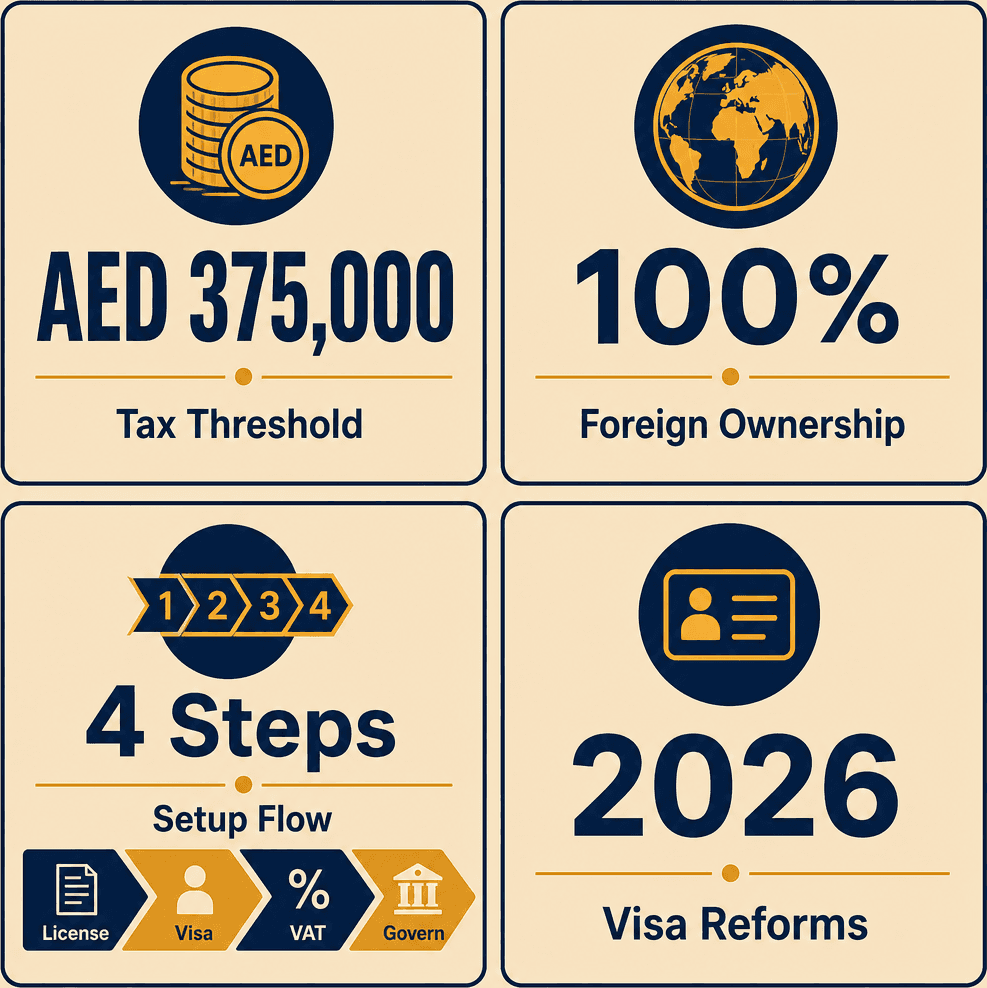
The first step in compliance is securing the right business license. Founders must decide whether to operate in the mainland or in a free zone such as Dubai South Business Hub Free Zone. Free zones are often preferred by international founders because they allow 100% foreign ownership and offer simplified setup processes.
Choosing the right business activity is equally important. Dubai South Business Hub Free Zone provides a detailed list of approved business activities to help founders align their license with their operations. Trade names must comply with UAE naming rules, avoiding restricted words and ensuring uniqueness.
Documentation is critical. Passport copies, Emirates ID, shareholder agreements, and board resolutions must be submitted accurately. Free zones like Dubai South Business Hub Free Zone simplify this process with digital-first platforms and same-day approvals.
Employment & Visa Compliance
SMEs must comply with the UAE labour law when hiring employees. This includes issuing proper employment contracts, paying salaries through the Wage Protection System (WPS), and ensuring workplace safety.
Visa compliance is equally important. Founders must apply for investor visas, cancel visas when employees leave, and meet Emiratisation quotas where applicable. Visa allocations vary by free zone and package. SMEs that manage visas correctly not only avoid penalties but also attract top talent. For more detail, see our guide on UAE Emiratisation obligations.
Taxation & Financial Reporting
Since the introduction of VAT and corporate tax, SMEs must register for the same. They are required to pay taxes if their annual turnover exceeds AED 375,000. Compliance requires:
VAT registration and quarterly filings.
Corporate tax registration and annual returns.
Maintaining audited financial statements.
Transparent reporting is no longer optional. Banks, investors, and regulators demand clarity. SMEs that embrace compliance in taxation gain access to financing and partnerships that fuel growth.
Operational Governance
Beyond licensing and taxation, SMEs must maintain strong governance practices. This includes:
Renewing licenses annually.
Maintaining shareholder resolutions and board minutes.
Ensuring data protection and cybersecurity compliance.
Following sector-specific regulations (e.g., food safety, healthcare standards, and financial services).
Operational governance ensures that SMEs remain resilient and adaptable in a competitive market.
Best Practices for Staying Compliant
Instead of focusing on pitfalls, startups should adopt proactive strategies to stay compliant:
By adopting these best practices, SMEs transform compliance from a reactive task into a strategic advantage.
How Dubai South Business Hub Free Zone Supports SMEs
the free zone is designed to simplify compliance for SMEs. With business licenses starting from AED 12,500, founders can launch small and expand as they grow. The Free Zone offers:
Multi-activity licensing for hybrid business models.
Same-day registration through a fully digital platform.
Multiple visa eligibility with scalable workspace options.
Beyond Hub services for banking, VAT, and corporate tax registration.
Strategic location near Al Maktoum International Airport and Jebel Ali Port.
Access to properties from top developers like Emaar and Azizi.
Online tools to check business name availability and estimate setup costs.
For founders who want clarity and support, Dubai South Business Hub Free Zone provides a complete ecosystem. If you are ready to set up or streamline compliance, reach out to us now!
Compliance is the backbone of sustainable business in Dubai. For SMEs, it ensures credibility, protects against penalties, and unlocks opportunities with banks, investors, and partners. By following a structured checklist and adopting best practices, founders can navigate the complexities of business setup compliance in Dubai with confidence.
Dubai South Business Hub Free Zone offers the infrastructure, digital tools, and expert support to make compliance seamless. From licensing to taxation and governance, it is built for founders who want to move fast, stay compliant, and grow smart. Get a free consultation today!
Citations
Ministry of Human Resources and Emiratisation.. mohre.gov.ae. MOHRE UAE, 2024.
Federal Tax Authority.. tax.gov.ae. FTA UAE, 2023.
General Directorate of Residency and Foreigners Affairs Dubai.. gdrfad.gov.ae. GDRFA Dubai, 2024.
Federal Authority for Identity, Citizenship, Customs and Port Security.. icp.gov.ae. ICP UAE, 2024.
UAE Ministry of Economy and Tourism.. moet.gov.ae. MOET UAE, 2024.
Frequently Asked Questions