Visa Processing During Peak Periods in the UAE: Steps, Cost and Common Delays

Topic Summary
Five Mandatory Stages Every Investor Visa Requires
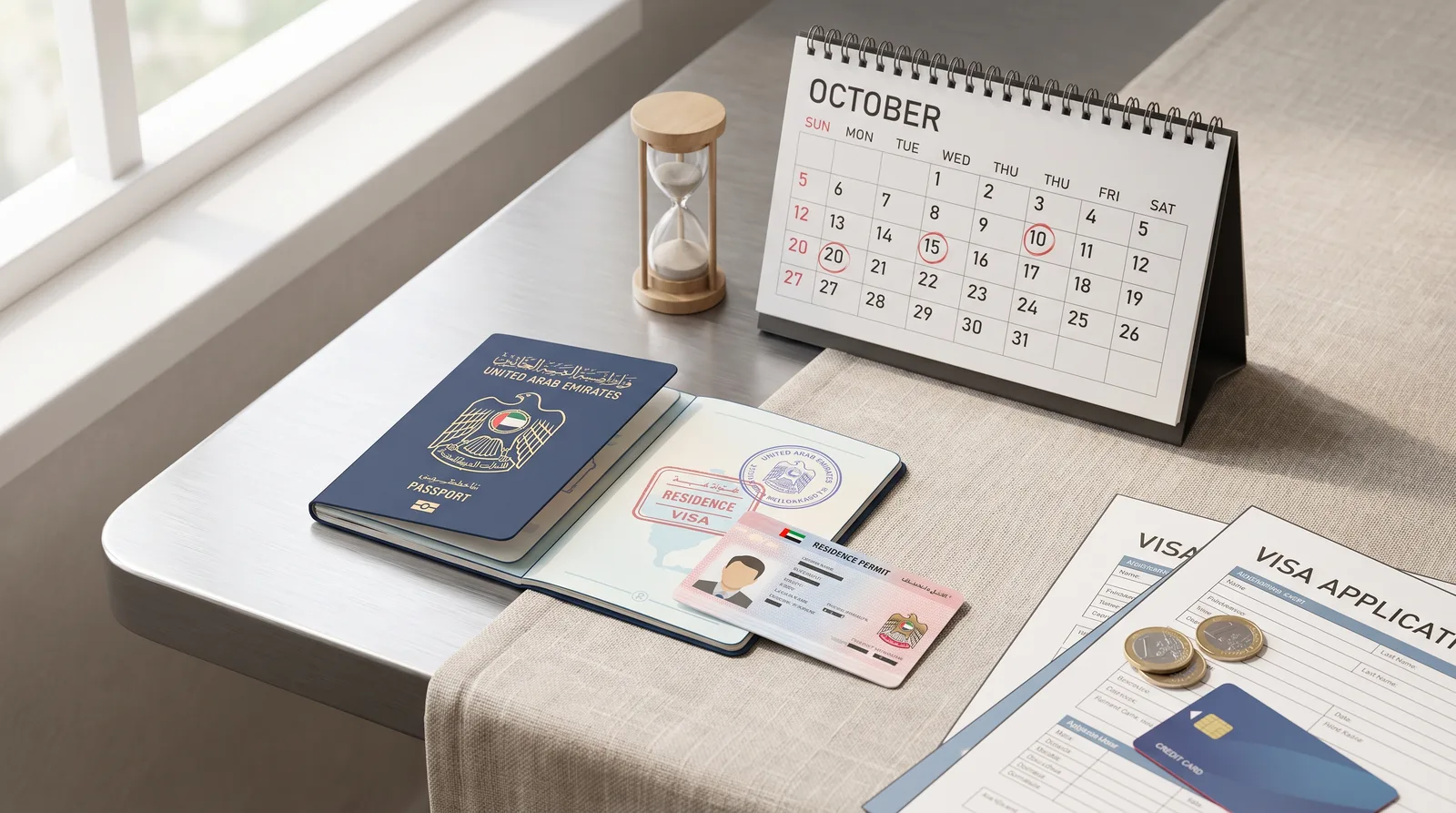
Every UAE investor visa must clear five sequential steps: entry permit, status change, medical fitness test, Emirates ID biometrics, and visa stamping. Legal residency is only active once the final stamping is complete, so a delay at any stage holds up all the ones that follow.
Peak Periods Double Your Standard Processing Time
Outside peak windows, each visa stage typically takes 5-7 working days, but during October to December and March to May, the entry permit alone can stretch to 10-15 working days. Queue times at every subsequent stage also extend by five to eight additional working days on average.
GITEX Triggers the Year's Longest Tech Visa Queues
GITEX draws over 180,000 visitors from 170 countries each October, and many attendees begin ICT company formations immediately after the event. Founders who register in late October consequently face the most congested processing queues of the entire year.
Medical Appointment Slots Fill Faster During Peak Season
DHA-approved medical fitness centres see appointment wait times extend by 3-5 additional working days during both peak windows. School-year dependent visa renewals add further pressure to both DHA medical centres and ICP biometric queues simultaneously.
Budget AED 4,000 to AED 5,500 in Government Fees
The total one-off government cost for a single investor visa, covering all five stages, runs approximately AED 4,000 to AED 5,500 depending on the visa duration selected. These fees are paid directly to the relevant authorities and are separate from any company formation package costs.
A 30-Day Arrival Visa Creates a Tight Deadline Risk
A founder entering Dubai on a 30-day visa on arrival must complete all five residency stages within that window or exit and re-enter the country. Re-entry resets the status-change step entirely and adds airline costs on top of the processing delays already caused by peak season volume.
One Missing Document Can Cost Weeks, Not Days
During peak periods, the longer queues mean a single missing document pushes timelines back by weeks rather than the days it would cost during quieter months. This directly delays dependent milestones like Emirates ID activation and corporate bank account opening.
Entry permit processing through the General Directorate of Residency and Foreigners Affairs (GDRFAD) stretches to 10-15 working days during the UAE's two peak windows, October to December and March to May, compared with the standard 5-7 working days during quieter months (GDRFAD, 2025). For a founder who has paid for company formation and is counting on a visa to activate their Emirates ID and open a corporate bank account, that gap is a direct hit to revenue. Visa processing during UAE peak periods follows the same legal sequence year-round, but the queue is longer, medical appointment slots fill faster, and a single missing document can push your timeline back by weeks rather than days.
This visa processing UAE guide sets out every stage of the investor visa sequence, the fees you'll pay in 2025-2026, and the most common delays founders encounter, along with what you can do to avoid them.
What Visa Processing During the UAE Peak Season Actually Involves
Visa processing during UAE peak periods is the sequence of government-regulated steps, entry permit, status change, medical fitness test, Emirates ID registration, and visa stamping, required to activate an investor residency visa. During high-volume windows, queue times at each stage extend by five to eight additional working days on average.
The Five Stages Every Investor Visa Must Clear
Every investor visa follows the same mandatory sequence, regardless of which free zone issues the license. Here are the five stages in order:
Entry permit (GDRFAD): The trigger document. Nothing else starts until this is approved.
Status change: Converts your visit or tourist entry to residency applicant status, completed inside the UAE.
Medical fitness test: Mandatory at a DHA-approved centre before stamping can proceed.
Emirates ID biometrics: Registered through the Identity and Citizenship Authority (ICP), the card must be issued or confirmed dispatched before stamping.
Visa stamping: GDRFAD physically prints the residency visa into your passport. Legal residency is active from this point.
Outside peak periods, each stage runs at 5-7 working days. During peak windows, the entry permit alone can take 10-15 working days (GDRFAD, 2025). Consider a founder who flies into Dubai on a 30-day visa on arrival and begins company formation in October. They must clear all five stages within that 30-day window or exit and re-enter, adding airline costs and resetting the status-change step entirely.
Why October to December and March to May Are the Busiest Windows
The October-to-December window compresses a post-summer business formation rush, major trade shows, and year-end corporate restructuring into 12 weeks. GITEX alone draws over 180,000 visitors from 170 countries each October (Dubai Chamber, 2024), and many of those visitors begin ICT company formations immediately after the event, meaning technology founders who register in late October face the longest queues of the year.
The March-to-May window is driven by Q1 company registration peaks, with December's National Day application backlog still clearing through the system. School-year visa renewals for dependants add volume to DHA medical centres and ICP biometric queues in both windows. Medical appointment wait times extend by 3-5 additional working days at DHA-approved centres during these periods. Government departments operate at full staff, but application volumes consistently outpace capacity.
Visa Processing UAE Cost: One-Off Fees and What Is Not Included
Visa processing UAE cost covers entry permit, status change, medical fitness test, Emirates ID, and visa stamping fees, totalling approximately AED 4,000 to AED 5,500 per investor depending on visa duration selected. These fees are charged separately from any company formation package and are paid directly to the relevant government authority.
Government Fee Breakdown for One Investor Visa
Visa Processing UAE Cost: One-Off Government Fees vs Recurring Obligations
Fee Item | Frequency | Approximate AED Amount |
|---|---|---|
Entry permit (GDRFAD) | One-off per visa | AED 1,190 |
Status change fee | One-off per visa | AED 640 |
Medical fitness test (DHA-approved centre) | One-off, repeated at renewal (every 2 years) | AED 320 |
Emirates ID registration (ICP, 2-year card) | Recurring every 2 years | AED 370 |
Visa stamping | One-off, renewed with visa | AED 500 |
Health insurance (mandatory, not included in any package) | Recurring annually | Varies by provider |
Visa renewal (all stages repeated) | Recurring every 2 years | AED 3,000 to AED 4,500 approx. |
A founder taking the 2 Visa Package at AED 18,200, which includes the license, Articles of Association, share register, flexi-desk space, lease agreement, visa allocation, and establishment card, should budget an additional AED 6,000 to AED 8,000 to cover government visa processing fees for two investors. The three Dubai South Business Hub Free Zone packages are: 0 Visa Package at AED 12,500 (no visa allocation), 1 Visa Package at AED 16,350 (one investor visa allocation), and 2 Visa Package at AED 18,200 (two investor visa allocations, the maximum offered).
What the Package Price Does Not Cover
This is where many first-time founders get caught out. The package price never includes:
Government visa processing fees, entry permit, status change, medical, Emirates ID, and stamping are always quoted separately
Health insurance, a legal requirement for all UAE visa holders, not bundled into any formation package
Dependent visa costs, separate from the investor visa allocation entirely
Bank account opening in the UAE, charges and minimum balance requirements are set by the bank, not the free zone
VAT registration, if your turnover crosses the mandatory registration threshold, late registration carries an AED 10,000 penalty (Federal Tax Authority)
A founder who budgets only for the AED 16,350 package without reserving for visa processing fees often stalls at the entry permit stage. It's the most common cash-flow surprise in UAE company formation, and it's entirely avoidable if you model the full cost before submitting your first application. Use the business setup cost calculator to separate package fees from government obligations before you commit.
Step-by-Step Guide to Visa Processing During UAE Peak Periods
Visa processing during UAE peak periods runs through five mandatory government stages: entry permit, status change, medical fitness test, Emirates ID biometrics, and visa stamping. Submitting a complete document set at each stage and booking medical appointments before the entry permit arrives can reduce total processing time by three to five working days.
Step 1: Secure Your Entry Permit Before Travelling
The entry permit is applied for through your free zone authority or a licensed PRO service and must be approved by GDRFAD before the status-change stage can begin. During peak periods, submit at least three weeks before your intended arrival date. At Dubai South Business Hub Free Zone, the license is issued in one working day, so a founder who receives their license on a Monday can submit the entry permit application the same afternoon, shaving a full day off the queue when every working day counts.
Required documents at this stage:
Passport copy valid for at least six months from the intended visa start date
Passport-sized photographs on a white background
Free zone authority approval letter (issued with your license)
Peak-period entry permit processing runs 10-15 working days (GDRFAD, 2025), so submitting immediately after license issuance is the single most effective timing move available to you.
Step 2: Status Change, Medical, and Emirates ID
Status change converts your entry permit into a residency application and must be completed inside the UAE. The critical timing move here: book your DHA-approved medical appointment the moment your entry permit is confirmed, not after you arrive. Appointment slots fill 3-5 days in advance during peak windows.
Founders who pre-book their medical appointment via the DHA portal on the same day their entry permit is approved consistently report two to three fewer waiting days compared with those who book on arrival. Emirates ID biometrics are booked through the ICP smart app; carry the medical fitness certificate to that appointment. The ICP processes Emirates ID cards within 5-7 working days under normal conditions, allow up to ten days during peak periods (ICP, 2025).
Step 3: Visa Stamping and Residency Activation
Visa stamping is processed by GDRFAD and physically prints the residency visa into your passport. Your Emirates ID must be collected or confirmed as issued before stamping can proceed at most processing centres. A founder who collects their Emirates ID and presents it alongside the medical certificate at the stamping appointment in a single visit avoids the most common cause of a second-queue delay during peak months.
Stamping runs 2-4 working days standard, up to seven during peak. Once stamped, residency is legally active, you can open a corporate bank account and sponsor dependants from this point. Retain the entry permit approval, medical certificate, Emirates ID, and stamped passport: most UAE banks require all four as primary KYC documents.
Common Delays in Visa Processing and How to Avoid Them
The most frequent delays in UAE visa processing during peak periods are incomplete document submissions, mismatched passport data, expired medical results, and missed Emirates ID biometric windows. Each delay resets the relevant stage, adding five to ten working days to the overall timeline and, in some cases, requiring the applicant to exit and re-enter the UAE.
Document Errors That Reset the Queue
This visa processing UAE guide identifies document mismatches as the primary rejection trigger cited by GDRFAD. Here's what catches founders out most often:
A single character mismatch between the passport number on the entry permit application and the physical passport triggers an amendment request, adding 5-7 working days during peak (GDRFAD, 2025)
Photographs that don't meet the white-background and 35mm x 45mm size specification are rejected at the medical stage, not at entry permit, meaning you lose time at the wrong point in the sequence
Expired medical results: fitness certificates are valid for 30 days from issuance; if stamping is delayed beyond that window, the test must be repeated at full cost
Tip: cross-check every document against the ICP checklist before submission, not after. One founder whose passport listed a middle name abbreviated differently on their company registration documents faced a two-week amendment delay during the November peak window, a correction that would have taken 20 minutes to catch at the document-preparation stage.
Timing Risks Unique to Peak Periods
Entry permits are valid for 60 days from issuance (GDRFAD). If medical and Emirates ID queues consume more than 50 of those days, stamping can't be completed in time and a new entry permit must be applied for, resetting the clock and the cost.
Public holidays during peak windows pause government processing without extending your permit validity. National Day in December typically removes 2-3 government working days from the calendar. A founder who submits an entry permit application in late November may not receive stamping until mid-January, a six-week gap that pushes corporate bank account opening into Q1. Check the UAE public holiday calendar before scheduling any submission.
The most avoidable timing mistake: booking medical, Emirates ID, and stamping appointments sequentially rather than in parallel. Use a licensed PRO services provider to manage parallel bookings across DHA, ICP, and GDRFAD simultaneously.
How a Free Zone License Affects Visa Processing During UAE Setup
A free zone license determines how many investor visa allocations a company can hold. At Dubai South Business Hub Free Zone, packages support up to two investor visa allocations. The license is issued in one working day, which means entry permit applications can be submitted the same day, a timing advantage that matters significantly during peak periods.
What Each Package Includes and What It Does Not
All three DSBH packages include the license, Articles of Association, share register, flexi-desk space, and lease agreement, the documents needed to apply for an entry permit. The 1 Visa Package (AED 16,350) and 2 Visa Package (AED 18,200) add the visa allocation and establishment card. The 0 Visa Package (AED 12,500) does not include a visa allocation.
The visa allocation is the investor or partner visa, one visa per allocation, not a bundle
Maximum visa allocations
References
Frequently Asked Questions