Topic Summary
What Is What Nigerian Founders Need to Know Before Setting Up in Dubai and Why It Matters
What Nigerian founders need to know before setting up in Dubai is the set of ownership, licensing, documentation, banking, visa and tax rules that apply to Nigerian nationals forming a UAE company. A free zone allows full foreign ownership, so learning the process first prevents delays, rejected applications and wasted fees.
Why Free Zone Ownership Suits Nigerian Founders
Why Free Zone Ownership Suits Nigerian Founders
Numbered Process for What Nigerian Founders Need to Know Before Setting Up in Dubai
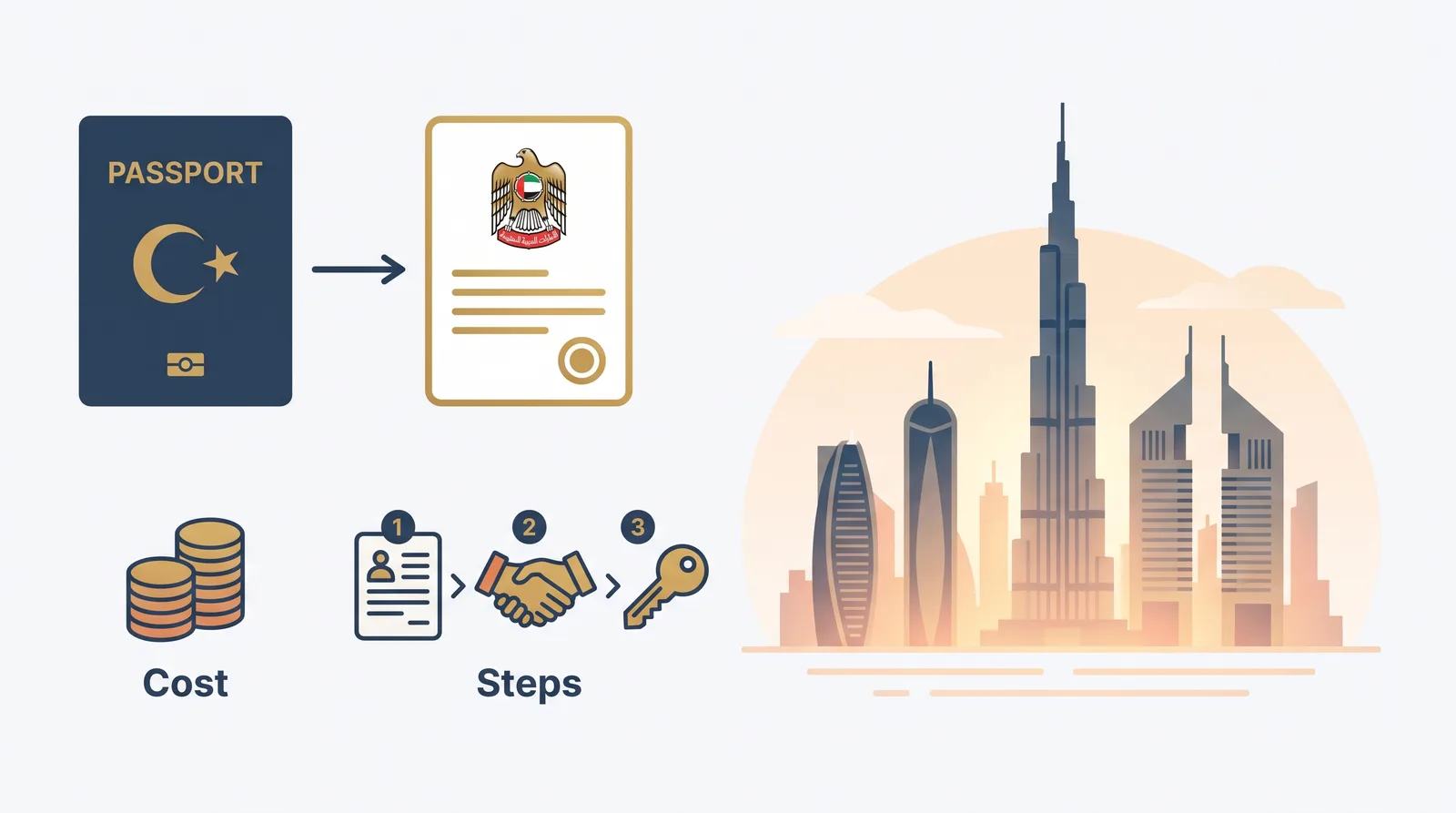
The process runs in six stages: choose your activity, select the license and structure, submit shareholder documents, receive the trade license, apply for visas through GDRFAD and ICP, then open a bank account and register for tax where required.
Documents, Compliance, and Banking Requirements
Nigerian founders typically need a valid passport, photographs, proof of address and a clear activity description. Banks also request source-of-funds evidence, so prepare statements, contracts and a business plan first.
Costs, Tax, and Residency Visa Considerations
Budget for the license fee, visa and Emirates ID costs, medical testing and workspace. The Federal Tax Authority administers corporate tax, and free zone companies must assess registration and qualifying-income rules.
Common Mistakes Nigerian Founders Make and How to Avoid Them
Common mistakes: wrong activity, underestimating banking due diligence, ignoring tax registration, and trusting informal advice. Confirm your activity code, prepare financial evidence early and work with a licensed free zone team.
Your Next Move
Knowing What Nigerian Founders Need to Know Before Setting Up in Dubai turns a complex process into a predictable one. Use the Dubai South Business Hub free cost calculator or speak with an advisor to start your company formation today.
Dubai issues over 30,000 new business licenses a year (Dubai Chamber, 2024), yet many applicants lose weeks to avoidable paperwork errors. Here's What Nigerian Founders Need to Know Before Setting Up in Dubai: ownership, licensing, documents, banking, visas and tax. After reading, you'll be able to plan a clean application.
What Is What Nigerian Founders Need to Know Before Setting Up in Dubai and Why It Matters
What Nigerian founders need to know before setting up in Dubai is the set of ownership, licensing, documentation, banking, visa and tax rules that apply to Nigerian nationals forming a UAE company. A free zone allows full foreign ownership, so learning the process first prevents delays, rejected applications and wasted fees.
Defining the Scope for Nigerian Nationals
The scope covers company type, license activity, visa quota, bank account and tax registration. Before you travel, confirm current entry rules for Nigerian passport holders with ICP and GDRFAD. The UAE has more than 40 active free zones, so the starting point is a clear plan. Our foreigner startup guide gives wider context.
Why Preparation Saves Time and Money
Most delays come from document attestation and activity mismatches. Picture a Lagos consultancy owner who fixes the activity, shareholder papers and visa count first: no resubmissions. Compare a founder who picks the wrong activity code and must amend the license before visa processing starts.
Why Free Zone Ownership Suits Nigerian Founders
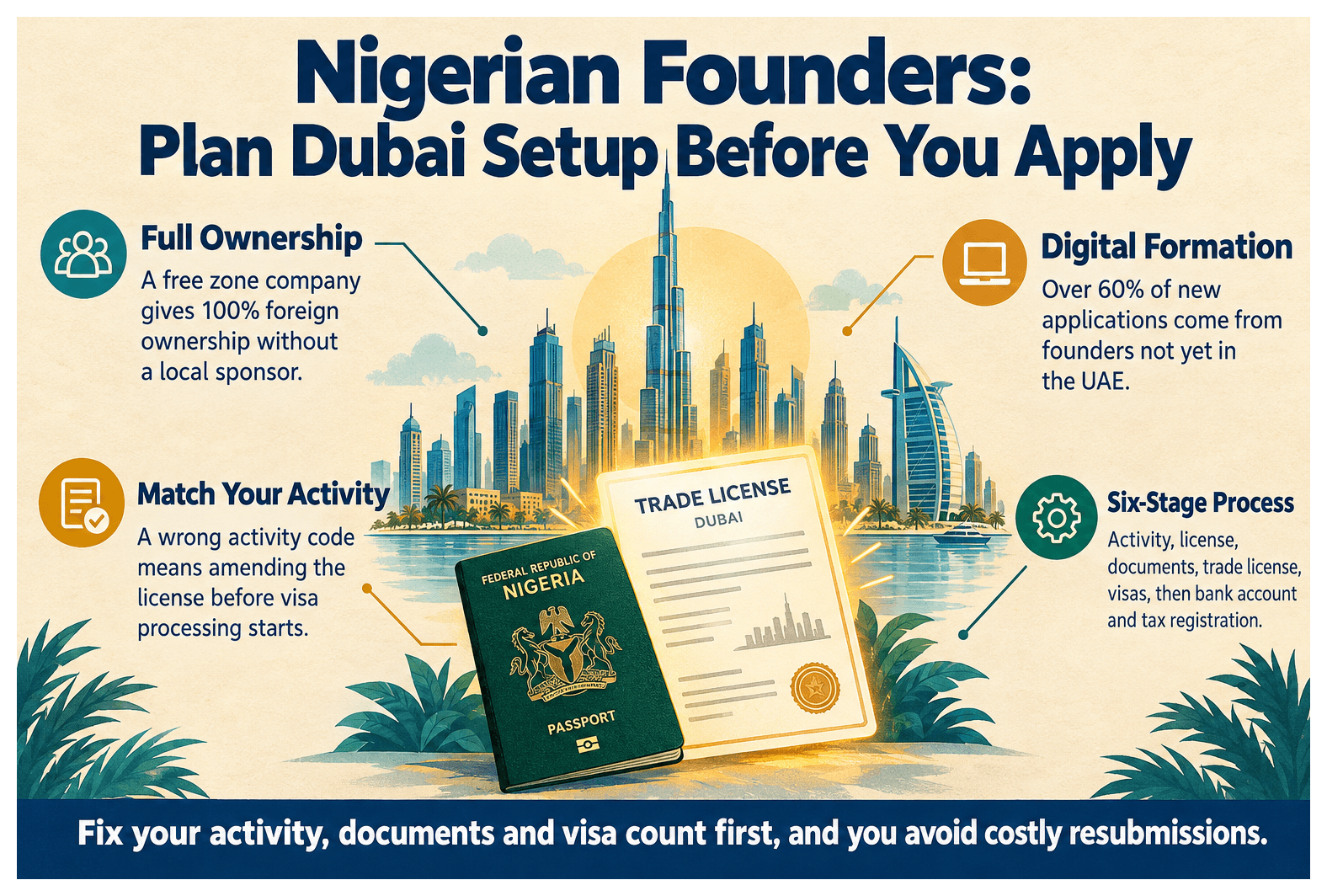
A Dubai South Business Hub free zone company lets Nigerian founders hold 100% ownership without a local sponsor. You receive a trade license for your chosen activity, can sponsor residency visas tied to it, and can complete most formation digitally, often before travelling.
Full Ownership and a Digital Process
100% foreign ownership, no local sponsor.
Online application, e-license by email.
Over 60% of new applications come from founders not yet in the UAE.
A Nigerian fintech consultant can form a company remotely this way. See setting up a Dubai company without flying in.
Key Setup Stages for Nigerian Founders and Responsible Authorities
Feature | Stage | Authority or Provider |
|---|---|---|
Trade license issuance | Digital license for your activity | Dubai South Business Hub Free Zone |
Residency visa and entry permit | Visa tied to the license | GDRFAD |
Emirates ID and identity records | Biometrics after visa approval | ICP |
Corporate tax and VAT registration | Registration once rules apply | Federal Tax Authority |
Corporate bank account | Due diligence and account opening | UAE banks regulated by the Central Bank |
Matching License Type to Your Activity
Licenses fall into trading, service and general categories, and the activity must match what you actually sell. A Nigerian logistics founder importing goods would choose a trading license. Flexible workspace keeps overheads down.
Numbered Process for What Nigerian Founders Need to Know Before Setting Up in Dubai
The process runs in six stages: choose your activity, select the license and structure, submit shareholder documents, receive the trade license, apply for visas through GDRFAD and ICP, then open a bank account and register for tax where required.
Step 1: Choose Your Activity and Structure
Define the activity precisely, such as e-commerce trading.
Pick an FZ-LLC (free zone limited liability company) or a branch.
Decide visa quota and workspace.
Step 2: Submit Documents and Receive the License
Upload passport copies, photographs and proof of address, plus a business plan if requested. Name approval follows, then the license arrives electronically.
Step 3: Apply for Residency and Open a Bank Account
Entry permit, medical test and Emirates ID run through GDRFAD and ICP. Banks answer to the Central Bank of the UAE, so expect source-of-funds questions. Our foreign entrepreneur documents guide expands on this.
Documents, Compliance, and Banking Requirements
Nigerian founders typically need a valid passport, photographs, proof of address and a clear activity description. Banks also request source-of-funds evidence, so prepare statements, contracts and a business plan first.
Core Documents to Prepare
Passport, photos, proof of address.
Attestation only where specifically required.
Identical name spelling everywhere.
A name mismatch between passport and utility bill is a classic cause of resubmission.
Banking and Source-of-Funds Checks
Banks apply enhanced due diligence to certain nationalities and sectors, so allow extra time. Submit invoices and a funding trail upfront, and you'll avoid most compliance follow-ups.
Costs, Tax, and Residency Visa Considerations
Budget for the license fee, visa and Emirates ID costs, medical testing and workspace. The Federal Tax Authority administers corporate tax, and free zone companies must assess registration and qualifying-income rules.
Budgeting for Setup and Annual Renewal
Use the Dubai South free cost calculator for current figures, then map first-year and renewal costs before committing. Non-residents can read the non-resident formation rules.
Tax Registration and Visa Rules
Register for corporate tax; it isn't a tax-free setup.
Register for VAT once thresholds are met.
Visa quota links to license and workspace.
Common Mistakes Nigerian Founders Make and How to Avoid Them
Common mistakes: wrong activity, underestimating banking due diligence, ignoring tax registration, and trusting informal advice. Confirm your activity code, prepare financial evidence early and work with a licensed free zone team.
Setup and Compliance Errors to Watch
Mismatched activity codes and documents.
Missed renewal dates, which bring penalties and visa delays.
Unverified agents quoting hidden fees.
Practical Next Moves
Review the top challenges of opening a business, run the cost calculator, then book an advisor call with your checklist.
Your Next Move
Knowing What Nigerian Founders Need to Know Before Setting Up in Dubai turns a complex process into a predictable one. Use the Dubai South Business Hub free cost calculator or speak with an advisor to start your company formation today.
References
Frequently Asked Questions