Start a Aviation Trading Brokerage Business in Dubai

Topic Summary
Dubai South Offers Unmatched Strategic Location
Dubai South is home to Al Maktoum International Airport, planned to become the world's largest airport with capacity for over 260 million passengers annually. This positions aviation brokers at the center of global trade routes connecting Asia, Africa, Europe, and the Americas.
Activity Code 5229.98 Defines Your Legal Scope
The aviation trading brokerage license operates under activity code 5229.98, issued as a Business License in the Services category by Dubai South Business Hub Free Zone. It covers brokering aircraft parts, equipment, and components between buyers and sellers without requiring the broker to hold physical stock.
Low Startup Costs and Fast Setup Timeline
License fees typically range from AED 15,000 to AED 25,000, with the full setup process taking just two to four weeks from application to issuance. Flexi-desk options are available and generally support one to two visa allocations, keeping overhead minimal.
Full Foreign Ownership With No Local Sponsor
Entrepreneurs setting up in this free zone benefit from 100% foreign ownership, eliminating the need for a local Emirati sponsor or partner. This makes it straightforward for international aviation consultants and procurement specialists to enter the Middle East market independently.
Strong Regional Demand Drives Brokerage Opportunities
Growing airline fleets and ageing aircraft across the MENA region are fueling consistent demand for parts, MRO services, and aviation components. The UAE's re-export hub status and bilateral trade agreements give brokers access to a wide international buyer and seller network from a single base.
Brokers Can Facilitate Deals Without Holding Stock
The license is structured for intermediaries who connect buyers and sellers rather than physically handling or retailing goods themselves. This low-asset model suits independent agents, freight intermediaries, OEM representatives, and surplus parts dealers looking for a capital-efficient market entry.
Dubai sits at the crossroads of global aviation routes, handling over 88 million passengers annually and positioning itself as one of the world's most active hubs for aircraft parts, components, and aviation logistics. The emirate's infrastructure, regulatory framework, and geographic reach make it an exceptional base for businesses operating in the aviation supply chain.
Setting up an aviation trading brokerage under activity code 5229.98 at Dubai South Business Hub Free Zone gives entrepreneurs a compliant, strategically located base to broker aviation goods across international markets. Whether you are an independent aviation consultant or an established procurement specialist looking to expand into the Middle East, this license offers a clear and efficient pathway to market.
Key Stats at a Glance
Activity Code: 5229.98 | License Type: Business License | Category: Services
Dubai handles over 88 million passengers annually at its airports
Al Maktoum International Airport is planned to become the world's largest airport
100% foreign ownership permitted with no local sponsor required
Typical license fees range from AED 15,000 to AED 25,000
Average setup timeline: two to four weeks from application to license issuance
Flexi-desk options available, typically supporting one to two visa allocations
Why Dubai Is a Prime Location for Aviation Trading Brokerage
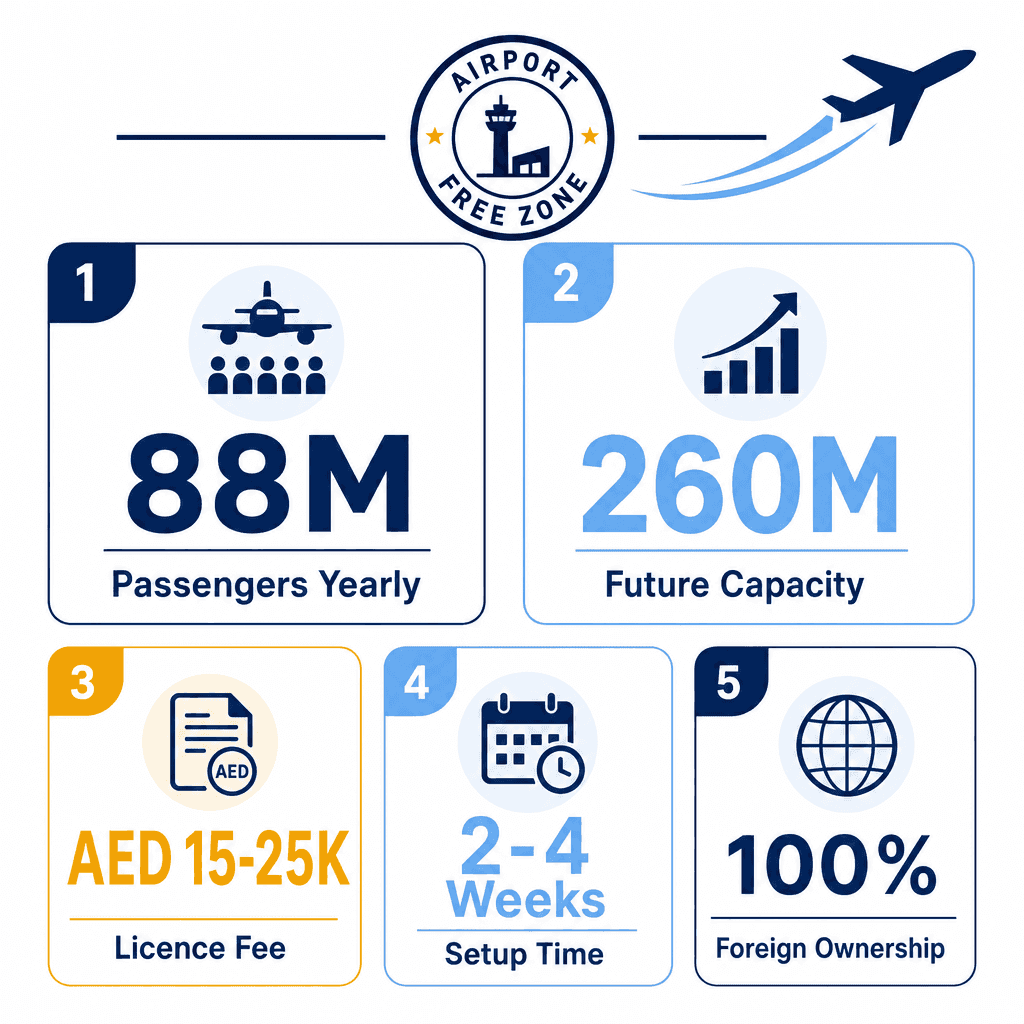
Dubai South is home to Al Maktoum International Airport, a facility designed to become the world's largest airport upon full completion, with an eventual capacity of over 260 million passengers per year. This proximity alone makes Dubai South one of the most strategically valuable addresses for any business operating in aviation trade or logistics.
The UAE functions as a major re-export hub, connecting Asia, Africa, Europe, and the Americas through a network of bilateral trade agreements and world-class logistics infrastructure. For aviation brokers, this means unparalleled access to buyers and sellers across multiple continents from a single operating base.
Demand for aircraft parts, maintenance, repair and overhaul (MRO) services, and aviation components across the MENA region continues to grow steadily, driven by expanding airline fleets and ageing aircraft requiring replacement parts. The UAE government's aviation growth strategy, which includes significant investment in airport capacity and air connectivity, provides a supportive regulatory and commercial environment for free zone businesses operating in this sector.
What the Aviation Trading Brokerage License Covers and Who It Suits
Activity code 5229.98 covers brokerage and intermediary services in aviation-related trade, including aircraft parts, equipment, and components. The license type is a Business License issued under the Services category by the Dubai South Business Hub Free Zone authority. It is specifically designed for businesses that facilitate transactions between buyers and sellers of aviation goods, rather than manufacturing or directly retailing those goods themselves.
This license is well suited to aviation consultants, freight intermediaries, parts traders, international aviation procurement specialists, and independent agents who represent OEMs or surplus parts dealers. Crucially, the activity allows the facilitation of deals between third parties without necessarily requiring the broker to hold physical stock, making it a low-overhead entry point into the aviation supply chain.
Scope of Permitted Activities
Brokering sales and purchases of aviation goods between third parties
Acting as an intermediary for aviation equipment procurement on behalf of airlines, MRO providers, or leasing companies
Supporting re-export transactions within permitted regulatory frameworks, including UAE customs and civil aviation compliance
Facilitating negotiations and contracts between international buyers and suppliers of aircraft components
Licensing Requirements and Compliance Obligations
The Business License for aviation trading brokerage is issued by the Dubai South Business Hub Free Zone authority. One of the most significant advantages of operating within a UAE free zone is that 100% foreign ownership is permitted, meaning there is no requirement for a local sponsor or Emirati partner. This gives international entrepreneurs full control over their business from day one.
Standard documentation required for the application typically includes valid passport copies for all shareholders and directors, a completed application form, and a basic business plan outlining the nature of brokerage activities. Depending on the specific goods being brokered, compliance with regulations set by the UAE General Civil Aviation Authority (GCAA) may also apply, particularly where the transaction involves certified aircraft parts or components subject to airworthiness standards.
All businesses operating in the UAE are subject to federal anti-money laundering obligations and trade compliance requirements. Aviation brokers handling high-value transactions should ensure they maintain proper due diligence records, know-your-customer (KYC) documentation, and transaction trails in line with UAE federal law. Engaging a local legal adviser familiar with UAE aviation and trade compliance is strongly recommended during the setup phase.
Setup Costs, Steps, and Timeline
License and registration fees at Dubai South Business Hub Free Zone typically range from AED 15,000 to AED 25,000, depending on the package selected and the type of office arrangement required. For brokerage operations that do not require a physical warehouse or dedicated office, flexi-desk and virtual office options are available, significantly reducing overhead costs during the early stages of the business.
Visa quotas are tied to the office package selected. A flexi-desk arrangement typically allows for one to two residency visas, which is sufficient for a sole trader or small partnership. Businesses requiring more visas should consider upgrading to a dedicated office space within the free zone.
Following license issuance, a corporate bank account will need to be opened with a UAE-registered bank. This process typically takes an additional two to four weeks and requires the submission of the license documents, shareholder identification, and a description of anticipated business activities.
Key Setup Steps at a Glance
Step | Action | Estimated Timeframe |
|---|---|---|
1 | Select activity code 5229.98 and confirm license category with the free zone authority | Day 1 to 2 |
2 | Prepare and submit incorporation documents including passport copies and business plan | Day 3 to 7 |
3 | Pay registration and license fees | Day 7 to 10 |
4 | Receive license, then proceed with visa and bank account applications | Week 2 to 4 |
Operating as an Aviation Trading Broker: Practical Considerations
Aviation trading brokers typically earn a commission or margin on each facilitated transaction rather than purchasing and reselling inventory directly. This model keeps capital requirements low and allows brokers to scale their activity in line with their network and deal flow.
Re-export of aviation parts through Dubai is permitted, subject to UAE customs clearance procedures and GCAA compliance where applicable. Dubai's customs infrastructure and the UAE's extensive network of free trade agreements make it a highly efficient transit and re-export point for aviation components destined for markets across Africa, South Asia, and the wider Middle East.
No physical warehouse is required for pure brokerage activity, though establishing partnerships with licensed logistics and freight forwarding companies operating within or near Dubai South is advisable. These partnerships can add value to clients who require end-to-end supply chain support beyond simple transaction facilitation.
Professional indemnity insurance is strongly recommended for brokerage operations, particularly where the broker is acting as an agent in high-value aviation parts transactions. Building a strong supplier and buyer network across OEMs, MRO providers, and airlines is central to long-term revenue generation and business credibility in this sector.
Related Activities
Car Guarantee Extension Services Business License
Frequently Asked Questions