Canned & Preserved Food Trading License in Dubai
Topic Summary
Dubai Sits at a Global Trade Crossroads
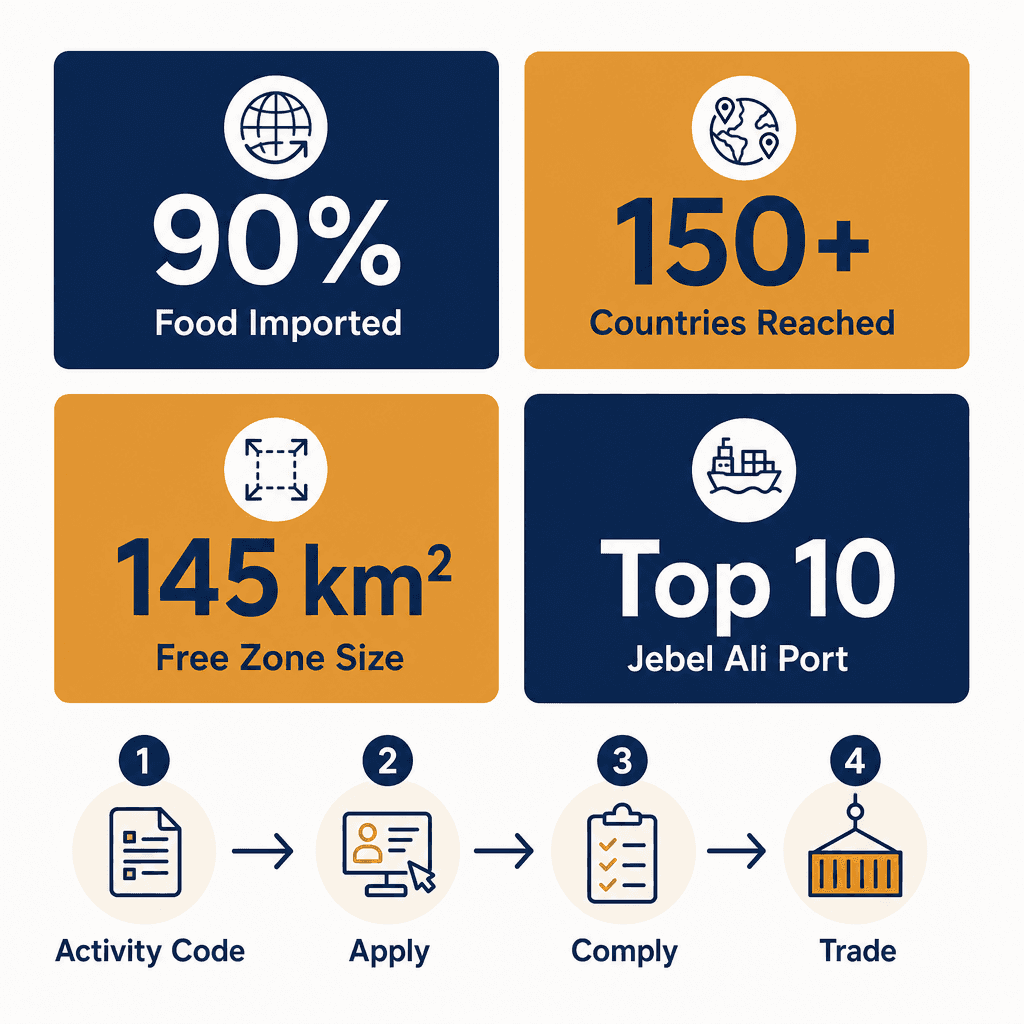
Dubai South Free Zone positions food traders between Asia, Africa, and Europe, enabling access to over 150 countries. Jebel Ali Port, one of the world's ten busiest, makes importing and re-exporting canned goods highly efficient.
The UAE Imports Nearly All Its Food
Approximately 90% of the UAE's total food consumption is imported, creating consistent demand for canned and preserved products. This heavy import reliance means licensed traders face a ready, stable market across retail, hospitality, and foodservice sectors.
One License Covers a Wide Product Range
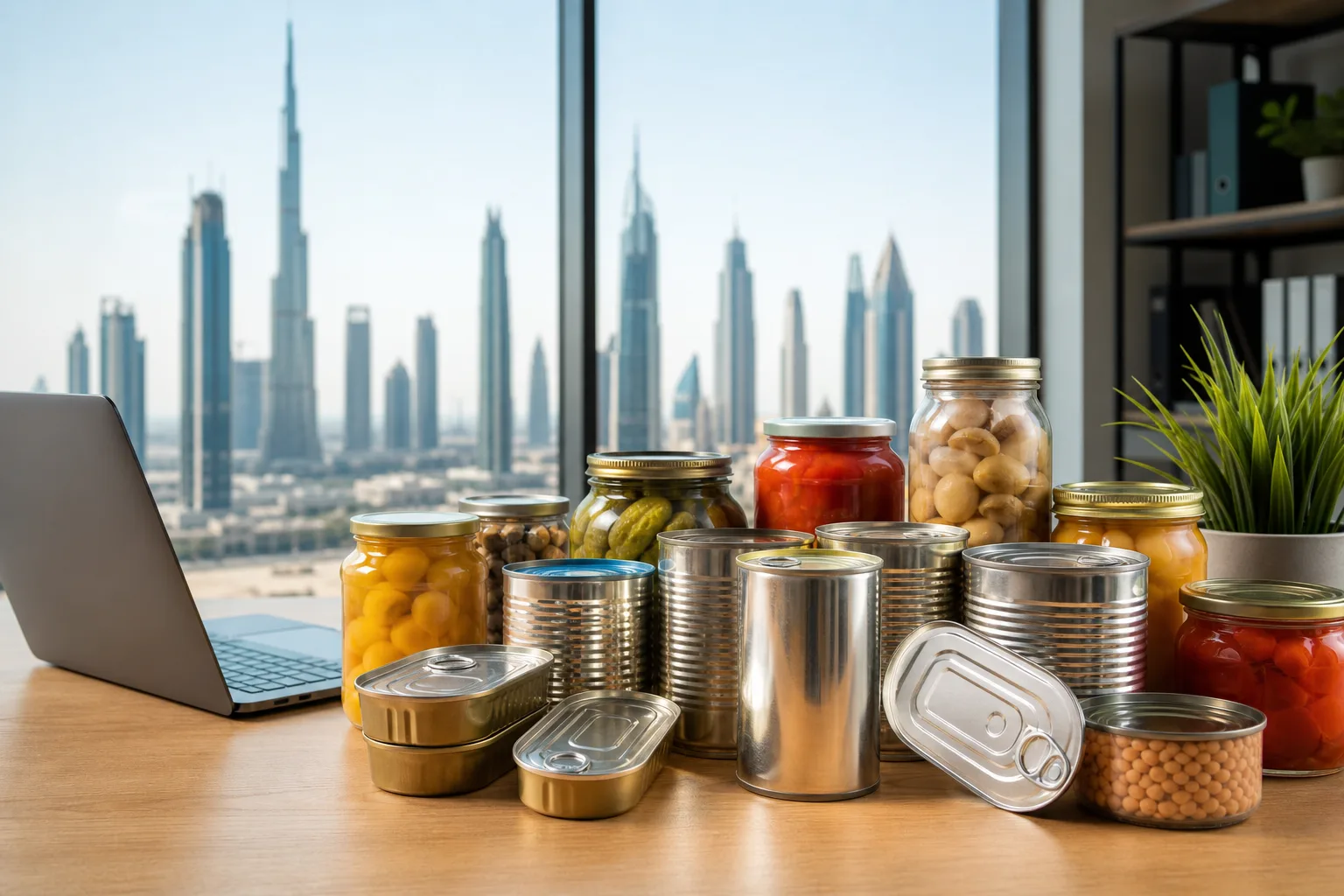
Activity Code 4721.87 authorises trading in canned vegetables, fruits, fish, meat, dairy-based preserves, pickled items, and ready-to-eat meals. Businesses can import, export, and distribute all these categories under a single trading license.
Foreign Entrepreneurs Own 100% of Their Business
Unlike mainland Dubai setups, free zone companies at Dubai South permit full foreign ownership with no local sponsor required. This makes the license particularly attractive to international food importers and first-time entrepreneurs entering the GCC market.
The Setup Process Is Straightforward and Structured
Establishing a canned food trading company involves confirming your activity code, choosing a company structure such as FZE or FZC, submitting documents, and paying license fees. The process follows a clear step-by-step path managed through Dubai South authorities.
Manufacturing Requires a Separate License
The trading license covers import, export, and distribution but does not extend to producing or processing canned goods within the UAE. Businesses intending to manufacture would need to apply for a distinct industrial or manufacturing license.
GCC Canned Food Demand Is Set to Keep Growing
The GCC canned food market is projected to grow steadily through 2028, driven by longer shelf lives, supply chain resilience, and evolving consumer habits. Securing a license now positions businesses to capitalise on this upward regional trend.
Global demand for canned and preserved food continues to rise, driven by longer shelf lives, supply chain resilience, and shifting consumer habits. For entrepreneurs and established businesses looking to tap into this growing market, Dubai offers one of the most strategically advantageous environments in the world. Securing a Canned and Preserved Food Trading License at Dubai South Business Hub Free Zone positions your business at the crossroads of Asia, Africa, and Europe, with direct access to some of the world's busiest trade corridors.
This guide covers everything you need to know about Activity Code 4721.87, the Trading License category that governs canned and preserved food commerce in Dubai, including setup steps, costs, compliance requirements, and why this free zone makes commercial sense.
The UAE Market Opportunity
The UAE food and beverage market is one of the fastest-growing in the Middle East. The country imports approximately 90% of its food requirements, making it heavily reliant on international suppliers of processed and preserved goods. Canned vegetables, fruits, fish, meat, dairy-based preserves, and ready-to-eat meals are consistently in demand across retail, hospitality, and foodservice sectors.
Dubai's port infrastructure, particularly Jebel Ali Port, handles millions of containers annually, reinforcing the emirate's role as a re-export hub for the wider Gulf Cooperation Council (GCC) region and beyond. Businesses licensed in Dubai South can leverage this infrastructure to import, store, and re-export canned goods efficiently across more than 150 countries.
Key Market Stats at a Glance
UAE food import dependency: approximately 90% of total food consumption
GCC canned food market projected to grow steadily through 2028
Jebel Ali Port: one of the top ten busiest ports globally
Dubai South Free Zone: 145 square kilometres of integrated logistics and business space
Activity Code: 4721.87 | License Type: Trading | Category: Trading
100% foreign ownership permitted within the free zone
What the License Covers
A Canned and Preserved Food Trading License under Activity Code 4721.87 authorises the holder to import, export, distribute, and trade a broad range of canned and preserved food products. This includes, but is not limited to:
Canned vegetables, legumes, and pulses
Preserved and canned fruits
Canned fish, seafood, and meat products
Pickled and fermented food items
Canned dairy-based products
Ready-to-eat preserved meals and soups
Dried and vacuum-packed preserved foods
The license does not typically cover manufacturing or processing activities. Businesses wishing to produce canned goods within the UAE would require a separate industrial or manufacturing license.
Who This License Suits
This license is well-suited to a wide range of business profiles, including:
International food importers seeking a GCC distribution base
Wholesale traders supplying supermarkets, hotels, and restaurants
E-commerce food retailers targeting the UAE and wider GCC market
Re-export businesses using Dubai as a logistics hub for Africa and South Asia
Entrepreneurs entering the food trading sector for the first time
Setup Steps and Costs
Establishing a canned food trading company at Dubai South Business Hub Free Zone involves a straightforward process. Below is a general outline of the steps involved:
Step-by-Step Process
Choose your business activity: Confirm that Activity Code 4721.87 aligns with your intended operations.
Select a company structure: Free zone companies typically operate as Free Zone Establishments (FZE) or Free Zone Companies (FZC).
Submit your application: Provide passport copies, business plan, and any required supporting documents to Dubai South authorities.
Obtain initial approval: Await confirmation from the free zone authority before proceeding.
Pay license fees and register: Complete payment and receive your trading license.
Open a corporate bank account: Set up banking facilities with a UAE-based financial institution.
Arrange your workspace or facility: Choose from flexi-desk, office, or warehouse options depending on your operational needs.
Indicative Costs
Cost Component | Estimated Range (AED) |
|---|---|
Trading License Fee | 10,000 to 15,000 |
Registration and Admin Fees | 2,000 to 5,000 |
Flexi-Desk or Office Space | 5,000 to 20,000 per annum |
Visa Allocation (per visa) | 3,000 to 5,000 |
Costs vary depending on company size, number of visas required, and chosen facility type. It is advisable to consult a business setup specialist for a precise quotation tailored to your requirements.
Licensing and Compliance Requirements
Beyond the core trading license, businesses dealing in canned and preserved food must adhere to UAE food safety and import regulations. Key compliance considerations include:
Dubai Municipality Food Safety Department: All food products imported into Dubai must comply with UAE food safety standards, including labelling requirements in Arabic and English.
Emirates Authority for Standardisation and Metrology (ESMA): Certain food categories require conformity with UAE.S standards.
Halal Certification: Meat and poultry-based canned products must carry valid halal certification recognised by the UAE government.
Customs Registration: Businesses must register with UAE Customs and comply with import duty frameworks, though free zone companies benefit from customs duty exemptions on goods remaining within the zone.
Product Registration: Certain preserved food items may require registration with the Ministry of Climate Change and Environment.
Why Dubai South Free Zone
Dubai South Business Hub Free Zone is purpose-built around Al Maktoum International Airport, the world's largest airport by design capacity. Its proximity to Jebel Ali Port and the Expo City district makes it a uniquely connected logistics and commercial environment. Key advantages include:
100% foreign business ownership with no local sponsor required
Zero corporate and personal income tax within the free zone
Full repatriation of profits and capital
Streamlined customs procedures for import and re-export
Access to a large skilled workforce and modern warehousing infrastructure
Proximity to two major global transport hubs within a single district
Related Activities
Food Supplements Trading Business
Baby Food Trading Trading License
Frequently Asked Questions