How to Get a Digital Content Management Business License in Dubai

Topic Summary
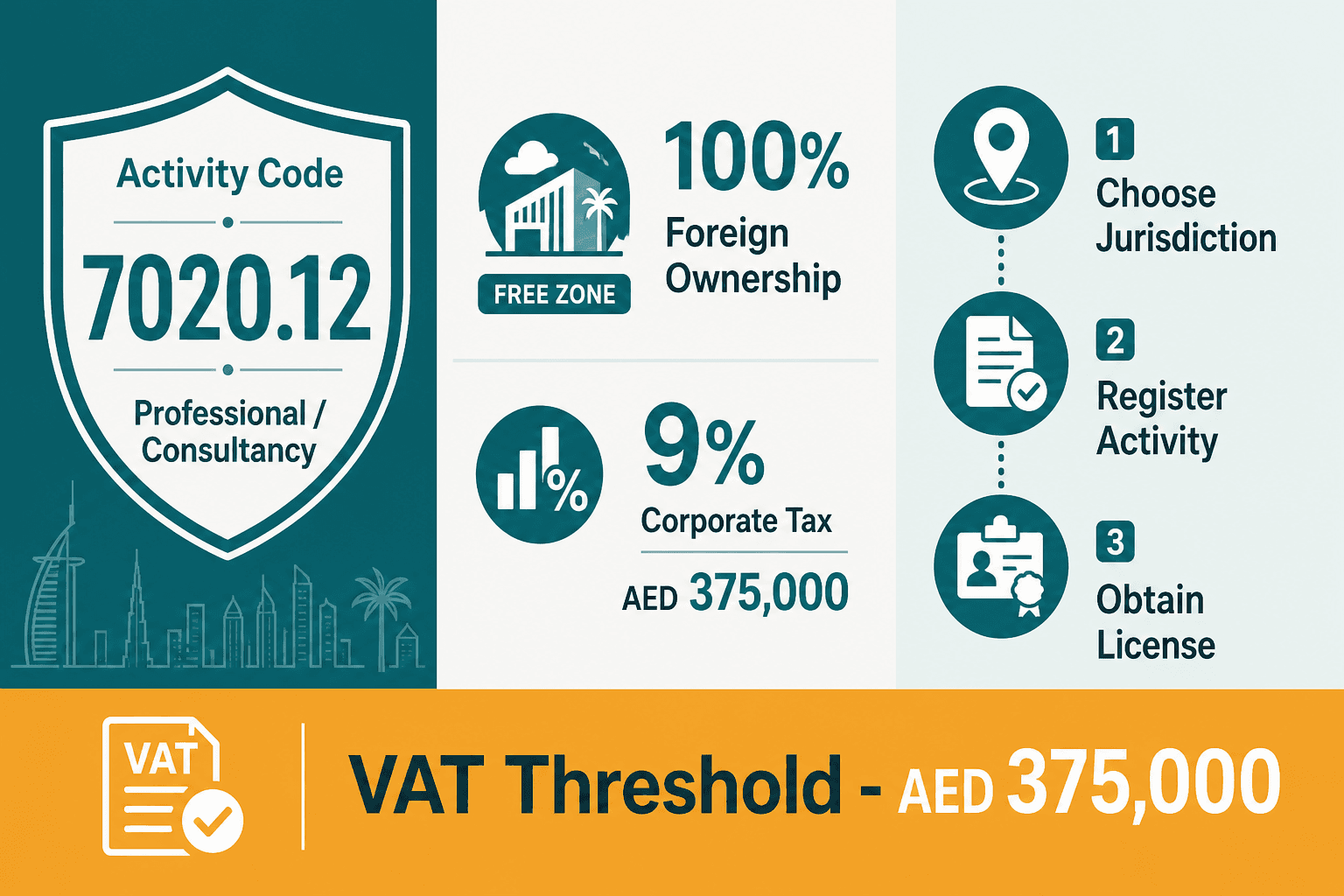
Understand Activity Code 7020.12
This code falls under professional and consultancy services, covering content strategy, CMS management, and digital distribution advice. Knowing its scope helps you determine if your business model fits this licensing category.
Check Your Eligibility to Apply
Entrepreneurs, SMEs, and corporations with a background in content, communications, or digital strategy can apply. No special government pre-approval is required unlike in regulated industries.
Consider Foreign Ownership Rules
Free zones allow 100% foreign ownership, while many mainland categories have also permitted full foreign ownership since the UAE's 2021 legal reforms. This removes the need for a local Emirati partner in most cases.
Choose Mainland or Free Zone Setup
A mainland license via Dubai Economy and Tourism allows unrestricted UAE-wide trading, ideal for local clients. A free zone license offers streamlined setup and tax perks but may require a local agent for mainland business.
Factor in Tax and VAT Rules
Corporate tax of 9% applies to profits above AED 375,000, effective since June 2023. VAT registration becomes mandatory once annual taxable supplies exceed AED 375,000.
Explore Dubai South Business Hub
This free zone is highlighted as a key jurisdiction option for digital content management businesses. It offers a supportive environment for companies targeting regional and international clients.
Budget for Setup Costs Early
Licensing costs vary significantly between mainland and free zone jurisdictions. Understanding these expenses upfront helps entrepreneurs plan their business setup more effectively.
Dubai's thriving digital economy makes it one of the most strategic locations in the region to establish a digital content management business. Whether you are an entrepreneur, a growing SME, or a corporate entity looking to expand into the Middle East, understanding the licensing landscape is essential. This guide explains what activity code 7020.12 covers, who qualifies to operate under it, and the key steps and considerations for obtaining a digital content management license in Dubai.
📊 Key Facts at a Glance
Activity Code: 7020.12 — Digital Content Management
License Category:Professional / Consultancy Services
Foreign Ownership: Up to 100% in free zones; eligible in many mainland categories since 2021
Corporate Tax: 9% on taxable profits above AED 375,000 (effective June 2023)
VAT Registration Threshold: AED 375,000 in annual taxable supplies
Key Jurisdiction Option:Dubai South Business Hub Free Zone
What Is Digital Content Management (Activity Code 7020.12)?
Digital content management refers to the creation, organisation, storage, distribution, and governance of digital content on behalf of businesses and organisations. Under Dubai's licensing framework, activity code 7020.12 sits within the professional and consultancy services category, reflecting the specialised, knowledge-based nature of the work.
The scope of this activity is broad and commercially relevant across multiple industries. It typically includes:
Developing and implementing content strategies aligned with business objectives
Managing digital asset libraries and content management system (CMS) platforms
Designing content workflow solutions and editorial governance frameworks
Advising on content distribution across digital channels including websites, apps, and social media
Industries that commonly require these services include media and publishing, marketing and advertising, e-commerce, corporate communications, and technology. If you are exploring the wider landscape of business activities in Dubai, digital content management sits comfortably alongside other professional and ICT-adjacent services.
Who Can Conduct This Activity?
Eligible applicants include individual entrepreneurs, small and medium enterprises, and larger corporate entities with a relevant professional background in content, communications, or digital strategy. Unlike regulated sectors such as healthcare or financial services, digital content management does not typically require a mandatory pre-approval from a specialist government body before licensing.
Foreign nationals can hold 100% ownership of a digital content management company in a free zone. Following the UAE's 2021 commercial law reforms, 100% foreign ownership is also permitted in many mainland business categories, making this activity accessible to international investors without the need for a local Emirati partner in most cases.
Business Setup Options: Mainland vs. Free Zone
When setting up a digital content management business in Dubai, you will primarily choose between a mainland license and a free zone license. Each structure has distinct advantages depending on your target market and operational model.
A mainland license is issued through Dubai Economy and Tourism (DET) and allows your company to trade directly across the UAE market without restrictions. This is advantageous if your primary clients are UAE-based businesses across multiple emirates.
A free zone license offers 100% foreign ownership, a streamlined setup process, and a business-friendly environment with potential tax efficiencies. However, free zone entities that wish to conduct business directly on the UAE mainland typically need to work through a local agent or establish a mainland branch. For digital content businesses serving regional and international clients, this distinction is often less relevant, as much of the work is delivered remotely.
Understanding the business setup cost in Dubai for each jurisdiction is an important early step, as license fees, office requirements, and visa quotas vary between mainland and free zone authorities.
Why Consider Dubai South Business Hub Free Zone?
Dubai South Business Hub Free Zone is a practical option for digital content management businesses seeking a cost-effective and well-connected free zone environment. Key advantages include:
Strategic location near Al Maktoum International Airport and Expo City Dubai, offering strong connectivity for regional client engagement
Professional service license support covering digital and content-related activities under the relevant activity codes
Flexible office and flexi-desk options well-suited to lean digital businesses that do not require large physical premises
Proximity to logistics and trade infrastructure, which adds operational value for content businesses serving clients across the Gulf region
Typical Requirements and Licensing Steps
The process for obtaining a digital content management license follows a structured sequence regardless of whether you choose a mainland or free zone jurisdiction. The key steps typically include:
Choose your legal structure — options include a sole establishment, a limited liability company (LLC), or a free zone entity (FZE for single shareholders or FZCO for multiple shareholders)
Reserve a trade name compliant with UAE naming conventions — you can check your business name availability before submitting your application
Submit your application with the required supporting documents to DET or your chosen free zone authority
Secure a registered office address or flexi-desk arrangement that meets the authority's minimum requirements
Obtain initial approval, then complete final license issuance and confirm your visa quota allocation
Key Documents Typically Required
Valid passport copies of all shareholders and directors
Completed application form from the relevant licensing authority
Proof of residential address and, where applicable, professional qualification certificates
Memorandum of Association (MOA) for multi-shareholder structures
A business plan summary may be requested by some authorities
Regulatory and Compliance Considerations
Operating a digital content management business in Dubai comes with several ongoing compliance obligations that you should factor into your planning from the outset.
Corporate tax: The UAE introduced a 9% corporate tax on taxable profits above AED 375,000, effective June 2023. Most businesses, including free zone entities that conduct business with mainland UAE parties, should assess their tax position carefully. Verify your specific applicability with a qualified tax advisor or refer to the Federal Tax Authority for official guidance.
VAT: If your annual taxable supplies exceed AED 375,000, VAT registration is mandatory. Digital content services delivered to UAE clients are generally subject to standard VAT rules.
Data and cybersecurity: Digital content activities often involve handling client data, which may intersect with the UAE's data protection and cybersecurity regulations. Ensure your operational practices align with applicable frameworks.
Employment compliance: If you plan to hire staff, all employment arrangements must comply with UAE labour regulations administered by the Ministry of Human Resources and Emiratisation (MOHRE).
Visa processing: Investor and employee visas are processed through the Federal Authority for Identity, Citizenship, Customs and Port Security (ICP). Your visa quota will be determined by your license type and the size of your registered office space.
Key Considerations Before You Apply
Before submitting your license application, it is worth taking time to address several strategic and practical questions:
Define your target market: Whether you primarily serve mainland UAE clients or regional and international clients will significantly influence the most suitable jurisdiction for your setup
Budget comprehensively: Account for license fees, visa costs, office space, professional service fees, and annual renewal costs from the outset to avoid surprises
Verify your activity scope: Confirm that your specific services align with activity code 7020.12 to prevent an activity mismatch on your license, which can cause complications during renewal or client contracting
Seek professional guidance: Engage a registered business setup consultant or the free zone's own advisory team for accurate, current fee structures and documentation requirements
Time your entry strategically: Dubai's digital economy continues to grow rapidly, with the emirate positioning itself as a regional hub for technology and digital services, according to Dubai Chamber of Commerce — early market entry can provide a meaningful competitive advantage
Conclusion
Obtaining a digital content management license in Dubai under activity code 7020.12 is a straightforward process when you choose the right jurisdiction, prepare the correct documentation, and understand your compliance obligations from day one. The combination of a business-friendly regulatory environment, strong digital infrastructure, and strategic regional connectivity makes Dubai an excellent base for content management businesses targeting the Middle East and beyond.
Explore your setup options with Dubai South Business Hub Free Zone to find a licensing package tailored to your digital content management business and take the first step towards establishing your presence in one of the world's most dynamic digital economies.
References
Federal Tax Authority (tax.gov.ae)
Ministry of Human Resources and Emiratisation (MOHRE) (mohre.gov.ae)
Federal Authority for Identity, Citizenship, Customs and Port Security (ICP) (icp.gov.ae)
Dubai Chamber of Commerce (dubaichamber.com)
Frequently Asked Questions