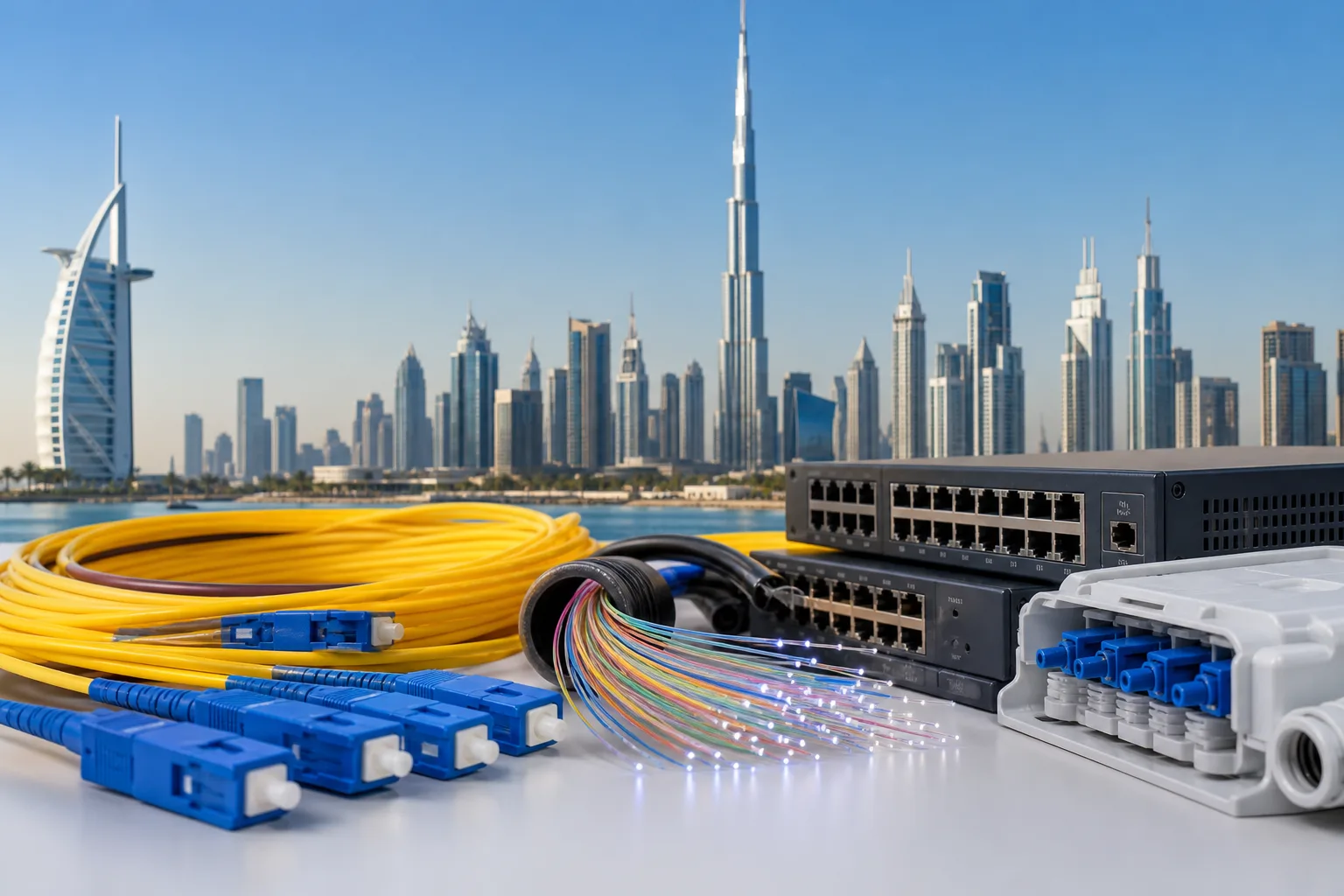
Fibre Optic Products & Requisites Trading License in Dubai

Topic Summary
Dubai's Fibre Optic Market Is Booming Now
The UAE's Vision 2031 agenda is driving massive investment in digital infrastructure, including hyperscale data centres, FTTH rollouts, and 5G networks. This makes right now an ideal window for entrepreneurs to enter the fibre optic trading space.
Know Exactly What Products You Can Trade
Activity code 4773.85 covers a broad range of goods, from single-mode and multi-mode cables to optical splitters, transceivers, splice closures, and testing equipment. Understanding the permitted product list upfront helps you plan your supply chain and avoid compliance issues.
100% Foreign Ownership Is a Major Advantage
Setting up at Dubai South Business Hub Free Zone allows full foreign ownership with no local sponsor required. This gives international entrepreneurs and manufacturers complete control over their business operations and profits.
Re-Export Rights Unlock Multiple Regional Markets
A Dubai free zone trading license lets you import, consolidate, and redistribute fibre optic products across the GCC, Africa, and South Asia from a single base. Dubai's position as a global re-export hub significantly reduces logistical friction for multi-market distributors.
Setup Can Be Completed in Days, Not Months
The minimum setup timeline at Dubai South Business Hub Free Zone is approximately three to five working days. This fast-track process makes it practical for businesses to move quickly and start trading without lengthy bureaucratic delays.
Choose the Right Business Structure Before Applying
Applicants typically choose between a Free Zone Establishment for single shareholders or a Free Zone Company for multiple shareholders. Selecting the correct structure from the outset avoids costly restructuring later and aligns your entity with your ownership and growth plans.
Trading License Does Not Cover Installation Services
The fibre optic trading license authorises buying, selling, importing, and re-exporting products only — not installation or maintenance work. Businesses that also want to offer technical services will need to obtain a separate service activity license.
Global demand for high-speed connectivity infrastructure is accelerating at a remarkable pace, and the United Arab Emirates sits at the very centre of that growth story. As data centres multiply, smart city projects expand, and 5G networks roll out across the region, the need for fibre optic cables, connectors, splitters, and associated requisites has never been greater. For entrepreneurs and established businesses looking to capitalise on this opportunity, obtaining a Fibre Optic Products & Requisites Trading License in Dubai represents a strategically sound and commercially attractive move.
This article explores everything you need to know about setting up under activity code 4773.85 at Dubai South Business Hub Free Zone, from what the license covers and who it suits, through to costs, setup steps, and compliance requirements.
The UAE Fibre Optic Market: Why Now?
The UAE has consistently ranked among the world's top nations for telecommunications infrastructure investment. The country's Vision 2031 agenda prioritises digital transformation across government, healthcare, education, and logistics. The UAE fibre optic market is projected to grow steadily through the latter half of this decade, driven by hyperscale data centre construction, fibre-to-the-home (FTTH) rollouts, and expanding industrial automation networks.
Dubai, in particular, benefits from its position as a re-export hub. Goods sourced from manufacturers in Asia, Europe, and North America can be consolidated, stored, and redistributed across the GCC, Africa, and South Asia with minimal friction. This makes a trading license in a Dubai free zone especially powerful for fibre optic product distributors targeting multiple markets simultaneously.
What the Fibre Optic Products & Requisites Trading License Covers
Under activity code 4773.85, the trading license authorises the holder to buy, sell, import, export, and re-export a wide range of fibre optic products and associated requisites. Permitted goods typically include:
Single-mode and multi-mode fibre optic cables
Fibre optic connectors, adaptors, and patch cords
Optical splitters, couplers, and transceivers
Fibre distribution frames and enclosures
Splice closures, termination boxes, and cable management accessories
Testing and measurement equipment for fibre optic networks
Associated installation tools and consumables
The license is classified under the Trading category and is issued as a Trading License, meaning it does not cover installation or maintenance services, which would require a separate service activity.
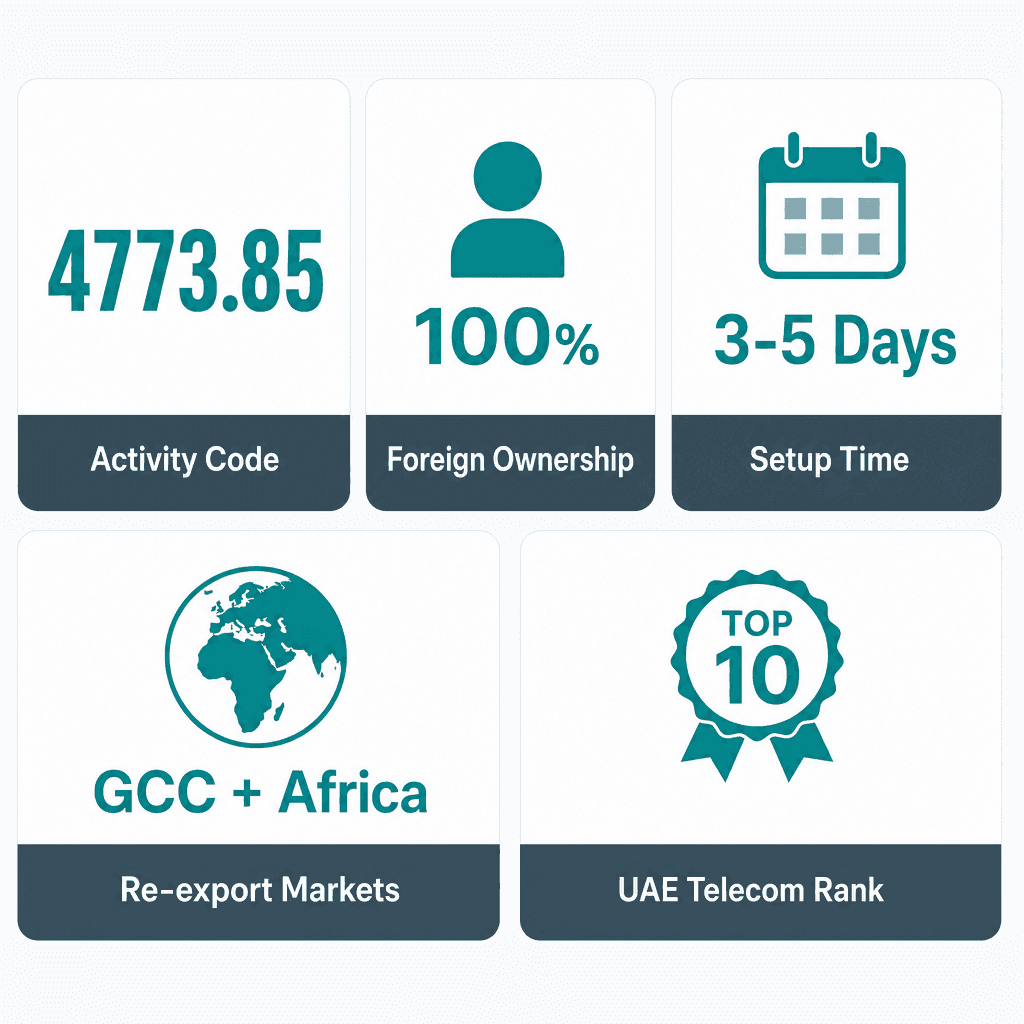
Infographic: Fibre Optic Trading License Snapshot
Activity Code: 4773.85
License Type: Trading License
Category: Trading
Free Zone: Dubai South Business Hub
Foreign Ownership: 100% permitted
Minimum Setup Timeline: Approximately 3 to 5 working days
Re-export Permitted: Yes, across GCC, Africa, and beyond
UAE Telecom Infrastructure Rank: Consistently top 10 globally (ITU)
Who Should Consider This License?
This license is well suited to a broad range of operators, including regional distributors of networking hardware, international manufacturers seeking a Middle East distribution base, procurement companies supplying telecoms contractors, and entrepreneurs entering the connectivity infrastructure supply chain. It is equally relevant for companies already holding licenses in other categories who wish to add fibre optic trading as a complementary activity.
Setup Costs and Steps
Setting up at Dubai South Business Hub Free Zone is designed to be straightforward. While exact fees vary depending on the package selected, visa allocation, and office or flexi-desk requirements, the typical process involves the following steps:
Choose your business structure: Most applicants opt for a Free Zone Establishment (FZE) for single shareholders or a Free Zone Company (FZCO) for multiple shareholders.
Submit your application: Provide passport copies, a completed application form, and a brief business plan or activity description.
Select a facility: Options range from flexi-desk arrangements to dedicated offices and warehousing, depending on your operational needs.
Pay license and registration fees: Costs typically start from AED 12,500 for a basic trading license package, with warehouse or storage facilities priced separately.
Receive your license: Approval and issuance generally take between three and five working days once documentation is complete.
Licensing and Compliance Requirements
Fibre optic products traded in or through Dubai must comply with the Emirates Authority for Standardisation and Metrology (ESMA) standards where applicable. Importers should also be aware of customs documentation requirements administered by Dubai Customs, including accurate HS code classification for each product category. Free zone operators benefit from streamlined customs procedures, though goods entering the UAE mainland from the free zone are subject to standard import duties.
No special sector-specific approvals from the Telecommunications and Digital Government Regulatory Authority (TDRA) are required purely for trading activity, though businesses engaged in installation or network services would need to seek additional regulatory clearance.
Why Dubai South Business Hub Free Zone?
Dubai South is strategically located adjacent to Al Maktoum International Airport and the Jebel Ali Port corridor, giving license holders direct access to two of the world's busiest freight gateways. The free zone offers 100% foreign ownership, zero personal income tax, zero corporate tax on qualifying income, and full repatriation of profits and capital. These conditions, combined with world-class logistics infrastructure, make it one of the most competitive locations globally for product trading businesses.
Related Activities
Animals & Birds Requisites Trading Trading License
Biodegradable & Compostable Products Trading Trading License
Crystal Products Trading Trading License
Frequently Asked Questions