Start a Fire Fighting & Safety Equipment Trading Business in Dubai
Topic Summary
Dubai's Market Demand Drives Consistent Sales
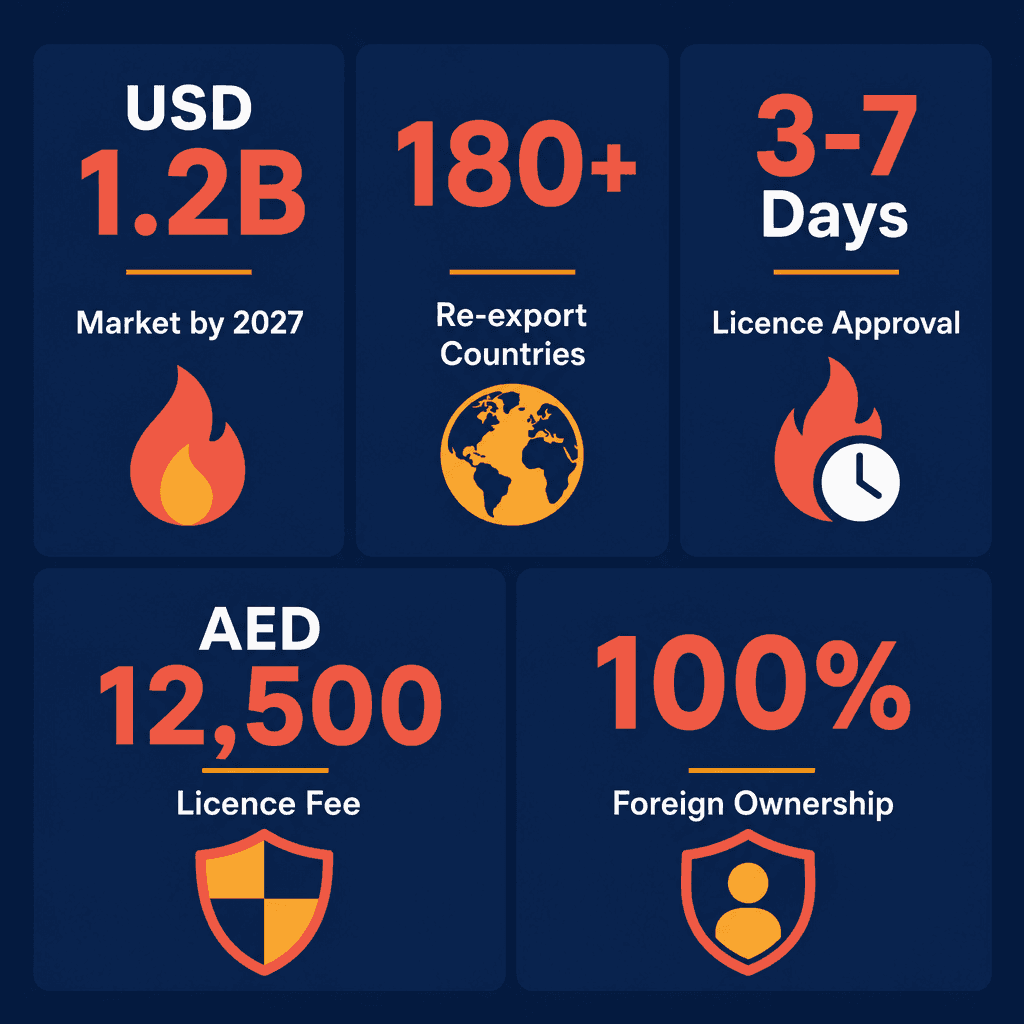
Mandatory civil defence compliance and rapid infrastructure growth keep demand for fire safety equipment legally obligatory across many product categories. The UAE fire safety market is projected to exceed USD 1.2 billion by 2027.
100% Foreign Ownership With No Capital Minimum
Dubai South Free Zone allows full foreign ownership of a trading entity with no mandatory minimum share capital for most structures. This lowers the barrier to entry for international entrepreneurs and manufacturers alike.
Fast License Approval in 3 to 7 Days
Registering under activity code 4773.89 at Dubai South Business Hub typically takes just three to seven working days. The streamlined process makes it one of the quickest routes to legally trading fire and safety equipment in the region.
Unrivalled Logistics Access for Re-Export
Dubai South sits adjacent to Al Maktoum International Airport and Jebel Ali Port, giving traders direct connectivity to over 180 countries. The emirate handles more than 14 million tonnes of cargo annually, making regional and global distribution highly efficient.
Wide Range of Tradeable Product Categories
The license covers importing, exporting, storing, and distributing products from fire extinguishers and sprinkler systems to PPE, breathing apparatus, and passive fire protection materials. Traders wanting installation or maintenance services must add a separate technical or contracting license.
Affordable Setup Costs With Flexible Workspace Options
License registration starts from AED 12,500, and a flexi-desk package from AED 7,500 per year is sufficient for businesses using third-party logistics facilities. Warehouse space is available from AED 35,000 annually for traders needing on-site storage.
Ideal for Diverse Business Models and Sectors
The license suits international manufacturers, GCC-focused wholesale traders, e-commerce operators, and existing UAE businesses adding a re-export entity. Target customers include construction firms, oil and gas operators, facility managers, and government entities.
Dubai's construction boom, expanding industrial zones, and increasingly stringent safety regulations have created a thriving market for fire fighting and safety equipment. Whether you are an established international supplier or an entrepreneur entering the sector for the first time, the emirate offers a clear, cost-effective pathway to trade these products across the Gulf and beyond. This guide covers everything you need to know about setting up a fire fighting and safety equipment trading business under activity code 4773.89 at the Dubai South Business Hub Free Zone.
Why Dubai Is Well-Positioned for This Trade
The UAE fire safety market is driven by mandatory compliance with civil defence regulations, rapid infrastructure development, and the country's role as a re-export hub for the wider Middle East, Africa, and South Asia. Dubai alone handles more than 14 million tonnes of cargo annually through its ports, giving traders direct access to high-growth regional markets. The UAE government's National Fire Safety Strategy and regular updates to the Civil Defence Code mean demand for compliant equipment remains consistent and, in many product categories, legally obligatory.
Dubai South Free Zone, located adjacent to Al Maktoum International Airport and Jebel Ali Port, amplifies these advantages. Its strategic position within the Dubai South master development gives traders unrivalled logistics connectivity and access to one of the world's largest air-cargo hubs.
Key Facts at a Glance
Activity Code: 4773.89 - Fire Fighting & Safety Equipment Trading
License Type:Trading License
Free Zone: Dubai South Business Hub
Minimum Share Capital: No mandatory minimum for most free zone structures
Typical License Approval Timeline: 3 to 7 working days
UAE Fire Safety Market: Projected to exceed USD 1.2 billion by 2027
Re-export Access: Over 180 countries via Jebel Ali and Al Maktoum Airport
What the License Covers
A Trading License under activity code 4773.89 authorises the holder to import, export, store, distribute, and re-export fire fighting and safety equipment. Covered product categories typically include:
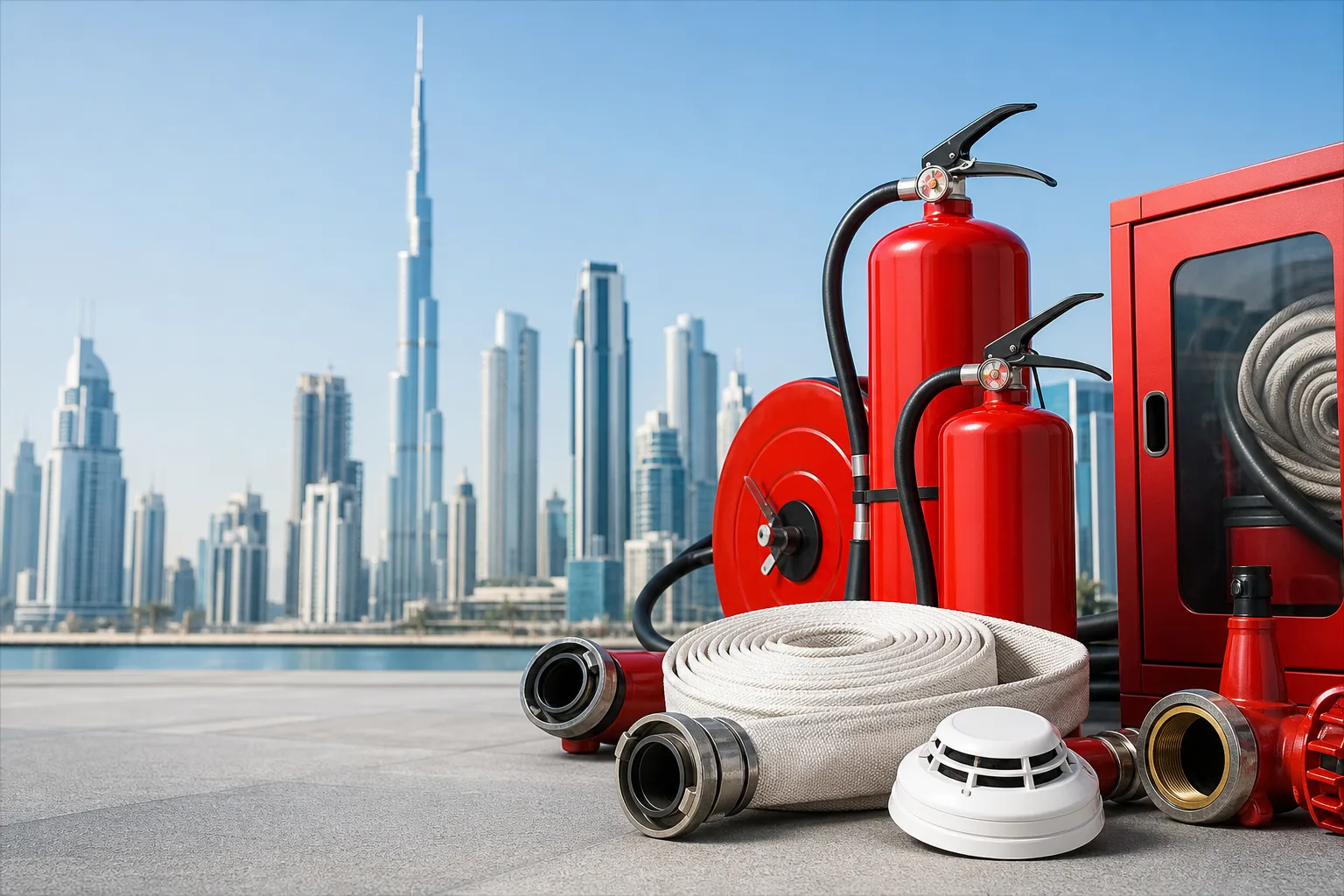
Fire extinguishers and suppression systems
Fire alarms, detectors, and control panels
Sprinkler systems and hose reels
Personal protective equipment (PPE) for fire hazards
Emergency lighting and evacuation signage
Breathing apparatus and rescue equipment
Fire-rated doors, coatings, and passive fire protection materials
The license does not cover installation or maintenance services; those activities require separate technical or contracting licenses. Traders who wish to offer after-sales support should explore a dual-activity license structure.
Who the License Suits
This license is well suited to international manufacturers seeking a regional distribution base, wholesale traders sourcing products from Asia or Europe for onward sale in the GCC, and entrepreneurs building an e-commerce or B2B supply business targeting construction firms, facility management companies, oil and gas operators, and government entities. It is equally attractive to existing UAE-based businesses looking to add a compliant free zone entity for re-export purposes.
Estimated Costs
Cost Item | Approximate Amount (AED) |
|---|---|
License registration fee | From 12,500 |
Annual license renewal | From 12,500 |
Flexi-desk or shared workspace | From 7,500 per year |
Warehouse (if required) | From 35,000 per year |
Visa allocation (per visa) | From 3,500 |
Costs vary depending on office or warehouse size, number of visa allocations, and any additional regulatory approvals required. A flexi-desk package is sufficient for a trading entity that stores goods in a third-party logistics facility.
Step-by-Step Setup Process
Step 1 - Choose your business structure: Most applicants opt for a Free Zone Limited Liability Company (FZ-LLC) with one or more shareholders.
Step 2 - Reserve your trade name: Submit two or three preferred names for approval. Names must comply with UAE naming conventions.
Step 3 - Submit the application: Provide passport copies, a business plan summary, and a completed application form to Dubai South Business Hub.
Step 4 - Receive initial approval: Typically issued within three to seven working days.
Step 5 - Sign the lease agreement: Select a flexi-desk, office, or warehouse unit and execute the tenancy contract.
Step 6 - Pay fees and collect the license: Settle all applicable fees and collect your trading license and incorporation certificate.
Step 7 - Open a corporate bank account: Approach a UAE bank with your license documents, Emirates ID, and shareholder information.
Step 8 - Obtain regulatory approvals: Apply for any product-specific approvals from the UAE Civil Defence and relevant standards bodies.
Licensing and Compliance Requirements
Beyond the free zone trading license, fire fighting and safety equipment traders must navigate several regulatory layers. The Dubai Civil Defence and the General Directorate of Civil Defence require that certain products, including fire extinguishers, detection systems, and suppression agents, carry Emirates Authority for Standardisation and Metrology (ESMA) certification or equivalent conformity marks before they can be sold within the UAE market. Products intended solely for re-export are generally exempt from local conformity requirements but must comply with the destination country's standards.
Importers should also register with UAE Customs and ensure all shipments are accompanied by correct certificates of origin, safety data sheets, and, where applicable, UN transport classification documents for hazardous materials such as certain suppression agents.
Profit Margins and Market Opportunity
Gross margins in the fire safety equipment trading sector typically range from 20% to 45%, depending on product category, brand positioning, and whether the trader adds value through kitting, labelling, or local certification support. Passive fire protection products and specialist suppression systems command higher margins than commodity items such as portable extinguishers. The GCC market's reliance on imports for the majority of its fire safety products means well-connected traders with reliable supply chains are consistently in demand.
Related Activities
Power Generation, Transmission & Distribution Equipment Trading Trading License
Refrigeration & Cold Storage Equipment Trading Trading License
Lighting Equipment & Requisites Trading Trading License
Frequently Asked Questions