How to Get a Hazardous Materials Air Transport Business License in Dubai
Topic Summary
Choose Dubai South Free Zone for Maximum Advantage
Dubai South Business Hub Free Zone sits directly alongside Al Maktoum International Airport, one of the world's most connected cargo networks. Businesses here benefit from 100% foreign ownership and zero corporate or personal income tax.
Understand Exactly What Activity Code 5120.99 Covers
This Services category Business License authorises the air transport of radioactive, chemical, and biological materials under IATA Dangerous Goods Regulations. It also covers freight forwarding coordination and the re-export of hazardous cargo transiting through Dubai.
Confirm Your Business Fits the Target Operator Profile
The license suits international freight forwarders, pharmaceutical logistics firms, medical isotope distributors, chemical manufacturers, and third-party logistics providers building dangerous goods divisions. It is designed for companies coordinating compliant movement of dangerous goods, not manufacturing them.
Ensure All Staff Hold Valid IATA DGR Certification
Every employee involved in classifying, packing, labelling, or documenting hazardous shipments must hold current IATA Dangerous Goods Regulations certification. This is a non-negotiable compliance requirement for any operator in this sector.
Register With the UAE General Civil Aviation Authority
The GCAA oversees all dangerous goods moving through UAE airspace and airports, and operators must formally register and comply with its acceptance procedures. Securing GCAA approval is a mandatory regulatory layer beyond the standard free zone license.
Plan for a Fast but Structured Setup Timeline
Standard applications at Dubai South Free Zone typically complete within three to five working days, making market entry relatively swift. However, factoring in GCAA registration and facility compliance checks means operators should build additional lead time into their launch planning.
Tap Into a High-Growth Regional Market
Dubai processes over three million tonnes of air cargo annually and ranks among the top five global air freight hubs. The UAE dangerous goods logistics market is forecast to grow at a compound annual rate of approximately 5.8% through 2028, signalling strong long-term demand.
Global supply chains depend on the safe, compliant movement of dangerous goods, and few cities are better placed to handle that responsibility than Dubai. As one of the world's busiest air cargo hubs, Dubai processes millions of tonnes of freight every year, including radioactive, chemical, and biological materials that require specialist handling and strict regulatory oversight. If you are looking to enter this high-value sector, obtaining a Hazardous Materials Air Transport Business License at Dubai South Business Hub Free Zone is the structured, cost-effective route to market.
This guide covers everything you need to know about Activity Code 5120.99, a Services category Business License that authorises the air transport of hazardous materials, including what the license covers, who it suits, the setup process, costs, and compliance obligations.
What the License Covers
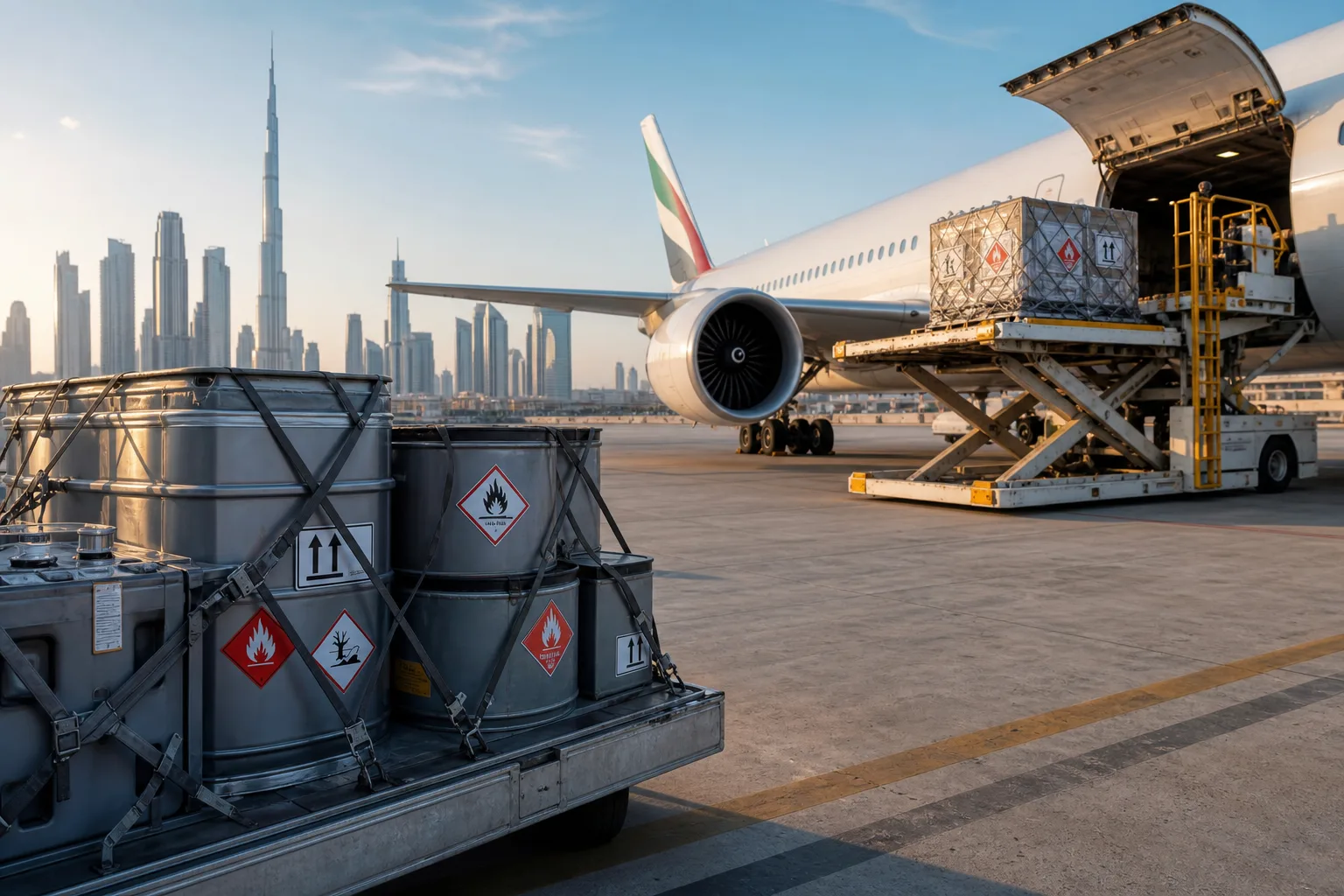
The Hazardous Materials Air Transport Business License (Activity Code 5120.99) permits companies to operate in the air transport of dangerous goods. Specifically, it covers:
Air transport of radioactive materials in accordance with international safety standards
Air transport of chemical substances classified as hazardous under IATA Dangerous Goods Regulations
Air transport of biological materials, including infectious substances and diagnostic specimens
Freight forwarding and logistics coordination for regulated dangerous goods shipments
Re-export of hazardous cargo transiting through Dubai to international destinations
The license falls under the Services category and is issued as a Business License, making it suitable for companies whose primary function is coordinating, managing, and facilitating the compliant movement of dangerous goods by air rather than manufacturing them.
Why Dubai South Business Hub Free Zone
Dubai South is the emirate's dedicated aviation and logistics district, built around Al Maktoum International Airport, which is projected to become the world's largest airport upon completion. Situating a hazardous materials air transport business here places you at the heart of one of the most connected cargo networks on the planet.
Key Market Stats at a Glance
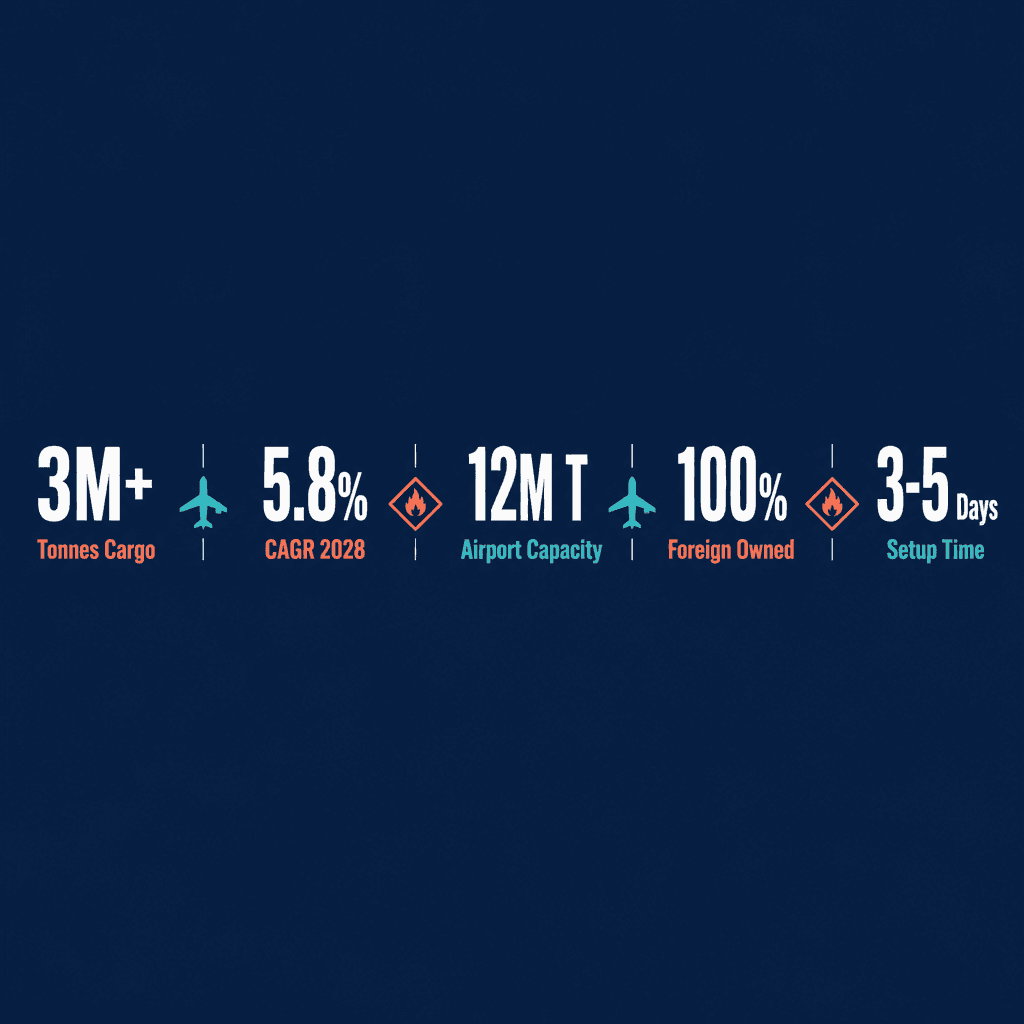
Dubai handles over 3 million tonnes of air cargo annually, ranking among the top five global air freight hubs
The UAE dangerous goods logistics market is forecast to grow at a CAGR of approximately 5.8% through 2028
Al Maktoum International Airport is designed to handle 12 million tonnes of cargo per year at full capacity
Dubai South Free Zone offers 100% foreign ownership with zero corporate and personal income tax
Typical license setup timeline:3 to 5 working days for standard applications
Who This License Suits
This activity is well suited to a broad range of operators, including:
International freight forwarders expanding into regulated dangerous goods
Pharmaceutical and biotech logistics companies handling temperature-sensitive or infectious materials
Nuclear energy and medical isotope distributors requiring compliant radioactive material transport
Chemical manufacturers seeking a compliant UAE hub for regional distribution
Third-party logistics providers building specialist dangerous goods divisions
Licensing and Compliance Requirements
Because hazardous materials present significant public safety and environmental risks, operators must satisfy several regulatory layers beyond the standard free zone license:
IATA Dangerous Goods Regulations (DGR)
All staff involved in classifying, packing, labelling, and documenting dangerous goods shipments must hold valid IATA DGR certification. This is a non-negotiable requirement for any operator handling hazardous air cargo.
UAE Civil Aviation Authority (GCAA) Approval
The General Civil Aviation Authority oversees the movement of dangerous goods through UAE airspace and airports. Operators must register with the GCAA and comply with its dangerous goods acceptance procedures.
Facility and Storage Standards
Depending on the materials handled, operators may require dedicated storage facilities that meet IATA, ICAO, and UAE fire and safety codes. Radioactive materials require additional approvals from the Federal Authority for Nuclear Regulation (FANR).
Customs and Trade Compliance
All dangerous goods shipments must comply with UAE Federal Customs Authority requirements, including accurate declaration of UN numbers, proper shipping names, and hazard classifications.
Setup Steps and Costs
Setting up under Activity Code 5120.99 at Dubai South Business Hub Free Zone follows a clear process:
Step 1 - Choose your business structure: Free zone companies can be incorporated as a Free Zone Establishment (FZE) or Free Zone Company (FZCO), both offering 100% foreign ownership.
Step 2 - Submit your application: Provide passport copies, a business plan, and details of your intended activities to the free zone authority.
Step 3 - Obtain initial approval: The free zone issues an initial approval, after which you can proceed with lease agreements and bank account opening.
Step 4 - Secure external approvals: Engage the GCAA, FANR (if applicable), and any other relevant regulatory bodies depending on the specific materials you intend to transport.
Step 5 - Receive your Business License: Once all approvals are in place, the Business License is issued, typically within three to five working days for standard applications.
License fees at Dubai South vary depending on office package and visa requirements. Entry-level packages typically start from approximately AED 12,500 per year, with flexi-desk and warehouse options available at higher tiers. External regulatory fees, such as GCAA registration, are charged separately.
Profit Margins and Re-Export Potential
Operators in the hazardous materials air transport sector typically command premium margins due to the specialist knowledge, certification, and liability management involved. Gross margins in regulated dangerous goods logistics frequently range between 18% and 35%, depending on the commodity type and route. Dubai's strategic location between Europe, Asia, and Africa makes it an ideal re-export hub, with operators able to consolidate dangerous goods shipments from multiple origins and redistribute them across the wider Middle East, Africa, and South Asia region without incurring UAE corporate tax.
Related Activities
Air Freight Transport Business License
Passenger Air Transport Business License
Plumbing, heat and air conditioning installation Business License
Frequently Asked Questions