Stained Glass Forming Business License in Dubai: Cost and Requirements

Topic Summary
Understand Activity Code 2310.95
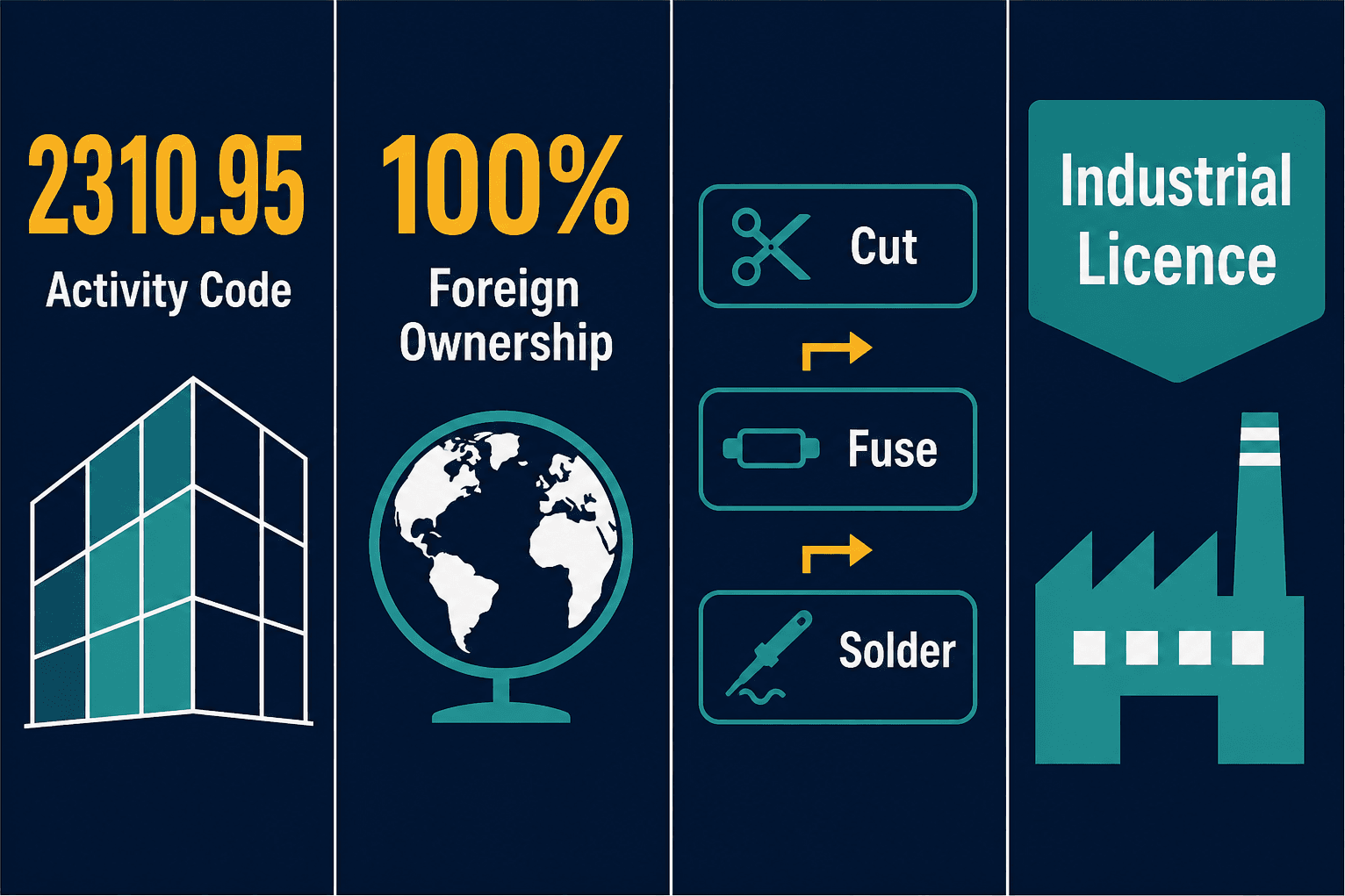
This code covers the manufacturing and shaping of decorative or coloured glass, including cutting, fusing, and soldering processes. It excludes glass trading and installation, which require separate licences.
Choose an Industrial Trade Licence
Because stained glass forming is production-based, businesses need an industrial or manufacturing licence rather than a commercial one. This brings specific facility, zoning, and compliance obligations.
Decide Between Mainland or Free Zone
Mainland setup requires registration with the Dubai Department of Economy and Tourism, while free zone setup follows the relevant authority's process. Free zones like Dubai South Business Hub offer up to 100% foreign ownership and streamlined registration.
Select the Right Legal Structure
Entrepreneurs can choose from an LLC, sole establishment, or free zone entity depending on jurisdiction and ownership goals. This decision affects licensing steps and long-term flexibility.
Secure a Compliant Workshop Space
A suitable production facility with proper ventilation, safety measures, and material storage is mandatory for glass manufacturing. The premises must meet local zoning regulations for industrial activity.
Register a Unique Trade Name
Before applying for a licence, check that your proposed business name is available and compliant with naming rules. This step must be completed early in the setup process.
Obtain Environmental Approvals
Heat-based glass manufacturing may require clearance from the Dubai Municipality Environment Department before operations begin. This approval ensures safety and environmental compliance for kiln and chemical processes.
Dubai's manufacturing sector welcomes specialised craft industries like stained glass forming, offering structured licensing pathways for artisans and industrial operators alike. Whether you are an experienced glass artisan or an entrepreneur entering the decorative glass production market, understanding the regulatory landscape is essential before you start your business in Dubai. This guide covers everything you need to know about activity code 2310.95 — Stained Glass Forming — including what it covers, who qualifies, licensing requirements, regulatory considerations, and why a free zone like Dubai South Business Hub can be a practical setup option.
📊 Key Facts at a Glance: Stained Glass Forming (Activity Code 2310.95)
Activity Code: 2310.95
Licence Type Required: Industrial / Manufacturing Trade Licence
Ownership: Up to 100% foreign ownership available in free zones
External Approval: Dubai Municipality – Environment Department (may apply)
Key Advantage of Free Zone: Streamlined registration, profit repatriation, logistics access
Setup Option: Dubai South Business Hub Free Zone
What Is Stained Glass Forming (Activity Code 2310.95)?
Stained glass forming refers to the manufacturing and shaping of coloured or decorative glass products intended for artistic, architectural, or functional use. Under Dubai's industrial activity framework, this activity is classified within glass and glass product manufacturing, carrying the specific code 2310.95.
The scope of this activity is broad and includes processes such as:
Cutting and shaping raw or coloured glass sheets
Fusing glass pieces using heat or kiln techniques
Soldering lead came or copper foil to assemble decorative panels
Creating finished glass pieces for windows, doors, partitions, and artistic installations
It is important to distinguish activity code 2310.95 from related but separate activities. This code specifically covers the production and forming of stained glass products. It does not extend to glass trading (the buying and selling of glass without production) or glass installation services, which fall under different activity codes. Entrepreneurs should confirm the full list of business activities in Dubai to ensure they select the correct code for their operations. For more detail, see our guide on building materials trading business in Dubai. For more detail, see our guide on crystal and glass products business in Dubai.
Licensing Requirements and Business Setup Considerations
Because stained glass forming is a production-based activity, it requires an industrial or manufacturing trade licence rather than a standard commercial licence. This distinction matters because industrial licences carry specific facility, zoning, and compliance obligations that commercial licences do not.
Key setup considerations include:
Jurisdiction choice: Mainland setup requires registration with the Dubai Department of Economy and Tourism (DET), while free zone setup follows the respective free zone authority's process.
Legal structure: Options include a Limited Liability Company (LLC), sole establishment, or a free zone entity, depending on your chosen jurisdiction and ownership preferences.
Facility requirements: A suitable workshop or production space compliant with local zoning regulations is mandatory. The premises must be appropriate for glass manufacturing operations, including adequate ventilation, safety provisions, and storage for materials.
Trade name registration: Before applying, you should check company name availability to ensure your proposed business name is available and compliant.
For further guidance on business registration frameworks in the UAE, the UAE Ministry of Economy provides official information on commercial and industrial licensing categories.
External Approvals: Dubai Municipality Environment Department
Manufacturing activities involving glass, chemicals, or heat-based processes may require environmental clearance before operations can commence. Specifically, the Dubai Municipality – Environment Department may need to review and approve your setup depending on the scale of production and the materials used in your stained glass forming process.
Triggers for environmental approval can include the use of chemical colourants, lead-based soldering materials, kiln operations, or waste disposal requirements associated with glass cutting. Applicants are strongly advised to confirm the specific approval requirements directly with Dubai Municipality before submitting their licence application. The UAE government portal provides a useful starting point for understanding environmental compliance obligations across industrial activities.
Typical Costs Involved in Getting Licensed
The total cost of obtaining a stained glass forming licence in Dubai depends on several variables, including your chosen jurisdiction, business structure, visa requirements, and facility type. Cost components typically include:
Trade licence fee: Varies between mainland (DET) and free zone authorities; confirmed at the time of application.
Establishment card: Required for hiring employees and processing visas.
Visa allocation fees: Based on the number of visas tied to your licence and workspace size.
Facility lease: Workshop or production space rental, which varies significantly by location and size.
Third-party approvals: Environmental assessments or other regulatory fees where applicable.
Equipment compliance: Costs associated with ensuring machinery and processes meet safety standards.
Free zone packages may bundle several of these costs, offering a more predictable upfront investment. To get an indicative figure tailored to your business structure, use the business setup cost calculator available online. Note that exact government fees should always be confirmed directly with the issuing authority, as these figures are updated periodically.
Who Can Conduct This Activity and Ownership Rules
Stained glass forming is open to both UAE nationals and foreign nationals, with ownership rules varying by jurisdiction:
Free zone entities: Foreign nationals can hold 100% ownership of their company without requiring a local partner or sponsor.
Mainland entities: Foreign ownership eligibility for industrial activities should be confirmed against current DET guidelines, as rules have evolved following recent UAE legislative reforms.
Professional qualifications: No mandatory professional qualification is specified for activity code 2310.95, though relevant trade experience in glass manufacturing is strongly advisable for operational credibility.
Visa eligibility: The number of residence visas you can sponsor is typically linked to your licence type, share capital structure, and the size of your leased facility.
For information on labour regulations, employment permits, and workforce requirements applicable to manufacturing businesses, the UAE Ministry of Human Resources and Emiratisation (MOHRE) is the authoritative source.
Setting Up at Dubai South Business Hub Free Zone
Dubai South Business Hub Free Zone offers industrial and manufacturing licence categories that can be suitable for activity code 2310.95 — Stained Glass Forming. Several operational factors make this free zone worth considering:
Strategic location: Proximity to Al Maktoum International Airport supports efficient import of raw glass materials and export of finished decorative products to regional and international markets.
Ownership benefits: Free zone setup provides 100% foreign ownership and the ability to repatriate profits, making it attractive for international entrepreneurs.
Streamlined registration: The free zone authority manages the registration process within a defined framework, reducing administrative complexity.
Logistics advantage: Access to the broader Dubai Trade logistics network provides operational advantages for businesses dependent on the movement of raw materials and finished goods.
Businesses interested in this route should verify directly with Dubai South Business Hub that stained glass forming (activity code 2310.95) is approved under their chosen licence package, and confirm whether any additional approvals — such as from Dubai Municipality — are required as part of the free zone application process.
Conclusion
Obtaining a stained glass forming licence in Dubai under activity code 2310.95 involves selecting the right jurisdiction, securing an industrial trade licence, meeting facility requirements, and obtaining any applicable environmental approvals from Dubai Municipality — with free zones like Dubai South Business Hub offering a streamlined, ownership-friendly path. With the right preparation and professional guidance, this specialised manufacturing activity can be established efficiently within Dubai's well-regulated business environment.
Contact Dubai South Business Hub to confirm licence eligibility for activity code 2310.95 and get a tailored cost breakdown for your stained glass forming business setup.
References
UAE Ministry of Economy (moet.gov.ae)
UAE government portal (u.ae)
UAE Ministry of Human Resources and Emiratisation (MOHRE) (mohre.gov.ae)
Dubai Trade (dubaitrade.ae)
Frequently Asked Questions